|
||||||||||||||||||||||||||||||
 |
||||||||||||||||||||||||||||||
|
||||||||||||||||||||||||||||||
|
||||||||||||||||||||||||||||||
 |
||||||||||||||||||||||||||||||
|
||||||||||||||||||||||||||||||
|
||||||||||||||||||||||||||||||
|
||||||||||||||||||||||||||||||
|
||||||||||||||||||||||||||||||
|
||||||||||||||||||||||||||||||
|
||||||||||||||||||||||||||||||
|
||||||||||||||||||||||||||||||
|
||||||||||||||||||||||||||||||
|
||||||||||||||||||||||||||||||



|
Page 1 |
|


| Chapter 1 | The Bible and the Priest of Rome |
| Chapter 2 | My First Schooldays at St. Thomas- The Monk and Celibacy |
| Chapter 3 | The Confession of Children |
| Chapter 4 | The Shepherd Whipped by His Sheep |
| Chapter 5 | The Priest, Purgatory, and the Poor Widow's Cow |
| Chapter 6 | Festivities in a Parsonage |
| Chapter 7 | Preparation for the First Communion- Initiation to Idolatry |
| Chapter 8 | The First Communion |
| Chapter 9 | Intellectual Education in the Roman Catholic College |
| Chapter 10 | Moral and Religious Instruction in the Roman Catholic Colleges |
| Chapter 11 | Protestant Children in the Convents and Nunneries of Rome |
| Chapter 12 | Rome and Education- Why does the Church of Rome hate the Common
Schools of the United States, and want to destroy them?- Why does she object to the reading of the Bible in the Schools? |
| Chapter 13 | Theology of the Church of Rome: its Anti-Christian Character |
| Chapter 14 | The Vow of Celibacy |
| Chapter 15 | The Impurities of the Theology of Rome |
|
|
|
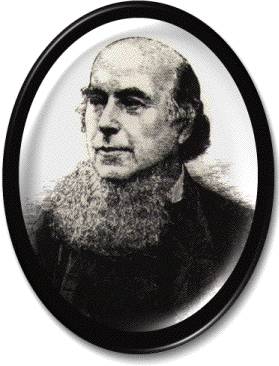
My father, Charles Chiniquy [pronounced, "Chi-ni-quay"], born in Quebec,
had studied in the Theological Seminary of that city, to prepare himself for the
priesthood. But a few days before making his vows, having been the witness of a great
iniquity in the high quarters of the church, he changed his mind, studied law, and
became a notary.
Married to Reine Perrault, daughter of Mitchel Perrault, in 1803 he settled at first
in Kamoraska, where I was born on the 30th July, 1809.
About four or five years later my parents emigrated to Murray Bay. That place was
then in its infancy, and no school had yet been established. My mother was, therefore,
my first teacher.
Before leaving the Seminary of Quebec my father had received from one of the Superiors,
as a token of his esteem, a beautiful French and Latin Bible. That Bible was the
first book, after the A B C, in which I was taught to read. My mother selected the
chapters which she considered the most interesting for me; and I read them every
day with the greatest attention and pleasure. I was even so much pleased with several
chapters, that I read them over and over again till I knew them by heart.
When eight or nine years of age, I had learned by heart the history of the creation
and fall of man; the deluge; the sacrifice of Isaac; the history of Moses; the plagues
of Egypt; the sublime hymn of Moses after crossing the Red Sea; the history of Samson;
the most interesting events of the life of David; several Psalms; all the speeches
and parables of Christ; and the whole history of the sufferings and death of our
Saviour as narrated by John.
I had two brothers, Louis and Achille; the first about four, the second about eight
years younger than myself. When they were sleeping or playing together, how many
delicious hours I have spent by my mother's side, in reading to her the sublime pages
of the divine book.
Sometimes she interrupted me to see if I understood what I read; and when my answers
made her sure that I understood it, she used to kiss me and press me on her bosom
as an expression of her joy.
One day, while I was reading the history of the sufferings of the Saviour, my young
heart was so much impressed that I could hardly enunciate the words, and my voice
trembled. My mother, perceiving my emotion, tried to say something on the love of
Jesus for us, but she could not utter a word her voice was suffocated by her sobs.
She leaned her head on my forehead, and I felt two streams of tears falling from
her eyes on my cheeks. I could not contain myself any longer. I wept also; and my
tears were mixed with hers. The holy book fell from my hands, and I threw myself
into my dear mother's arms.
No human words can express what was felt in her soul and in mine in that most blessed
hour! No! I will never forget that solemn hour, when my mother's heart was perfectly
blended with mine at the feet of our dying Saviour. There was a real perfume from
heaven in those my mother's tears which were flowing on me. It seemed then, as it
does seem to me today, that there was a celestial harmony in the sound of her voice
and in her sobs. Though more than half a century has passed since that solemn hour
when Jesus, for the first time, revealed to me something of His suffering and of
His love, my heart leaps with joy every time I think of it.
We were some distance from the church, and the roads, in the rainy days, were very
bad. On the Sabbath days the neighbouring farmers, unable to go to church, were accustomed
to gather at our house in the evening. Then my parents used to put me up on a large
table in the midst of the assembly, and I delivered to those good people the most
beautiful parts of the Old and New Testaments. The breathless attention, the applause
of our guests, and may I tell it often the tears of joy which my mother tried in
vain to conceal, supported my strength and gave me the courage I wanted, to speak
when so young before so many people. When my parents saw that I was growing tired,
my mother, who had a fine voice, sang some of the beautiful French hymns with which
her memory was filled.
Several times, when the fine weather allowed me to go to church with my parents,
the farmers would take me into their caleches (buggies) at the door of the temple,
and request me to give them some chapter of the Gospel. With a most perfect attention
they listened to the voice of the child, whom the Good Master had chosen to give
them the bread which comes from heaven. More than once, I remember, that when the
bell called us to the church, they expressed their regret that they could not hear
more.
On one of the beautiful spring days of 1818 my father was writing in his office,
and my mother was working with her needle, singing one of her favourite hymns, and
I was at the door, playing and talking to a fine robin which I had so perfectly trained
that he followed me wherever I went. All of a sudden I saw the priest coming near
the gate. The sight of him sent a thrill of uneasiness through my whole frame. It
was his first visit to our home.
The priest was a person below the common stature, and had an unpleasant appearance
his shoulders were large and he was very corpulent; his hair was long and uncombed,
and his double chin seemed to groan under the weight of his flabby cheeks.
I hastily ran to the door and whispered to my parents, "M. le Cur'e arrive ("Mr.
Curate is coming"). The last sound was hardly out of my lips when the Rev. Mr.
Courtois was at the door, and my father, shaking hands with him, gave him a welcome.
That priest was born in France, where he had a narrow escape, having been condemned
to death under the bloody administration of Robespierre. He had found a refuge, with
many other French priests, in England, whence he came to Quebec, and the bishop of
that place had given him the charge of the parish of Murray Bay.
His conversation was animated and interesting for the first quarter of an hour. It
was a real pleasure to hear him. But of a sudden his countenance
changed as if a dark cloud had come over his mind, and he stopped talking. My parents
had kept themselves on a respectful reserve with the priest. They seemed to have
no other mind than to listen to him. The silence which followed was exceedingly unpleasant
for all the parties. It looked like the heavy hour which precedes a storm. At length
the priest, addressing my faith, said, "Mr. Chiniquy, is it true that you and
your child read the Bible?"
"Yes, sir," was the quick reply, "my little boy and I read the Bible,
and what is still better, he has learned by heart a great number of its most interesting
chapters. If you will allow it, Mr. Curate, he will give you some of them."
"I did not come for that purpose," abruptly replied the priest; "but
do you not know that you are forbidden by the holy Council of Trent to read the Bible
in French."
"It makes very little difference to me whether I read the Bible in French, Greek,
or Latin," answered my father, "for I understand these languages equally
well."
"But are you ignorant of the fact that you cannot allow your child to read the
Bible?" replied the priest.
"My wife directs her own child in the reading of the Bible, and I cannot see
that we commit any sin by continuing to do in future what we have done till now in
that matter."
"Mr. Chiniquy," rejoined the priest, "you have gone through a whole
course of theology; you know the duties of a curate; you know it is my painful duty
to come here, get the Bible from you and burn it."
My grandfather was a fearless Spanish sailor (our original name was Etchiniquia),
and there was too much Spanish blood and pride in my father to hear such a sentence
with patience in his own house. Quick as lightning he was on his feet. I pressed
myself, trembling, near my mother, who trembled also.
At first I feared lest some very unfortunate and violent scene should occur; for
my father's anger in that moment was really terrible.
But there was another thing which affected me. I feared lest the priest should lay
his hands on my dear Bible, which was just before him on the table; for it was mine,
as it had been given me the last year as a Christmas gift.
Fortunately, my father had subdued himself after the first moment of his anger. He
was pacing the room with a double-quick step; his lips were pale and trembling, and
he was muttering between his teeth words which were unintelligible to any one of
us.
The priest was closely watching all my father's movements; his hands were convulsively
pressing his heavy cane, and his face was giving the sure evidence of a too well-grounded
terror. It was clear that the ambassador of Rome did not find himself infallibly
sure of his position on the ground he had so foolishly chosen to take; since his
last words he had remained as silent as a tomb.
At last, after having paced the room for a considerable time, my father suddenly
stopped before the priest, and said, "Sir, is that all you have to say here."
"Yes, sir," said the trembling priest.
"Well, sir," added my father, "you know the door by which you entered
my house: please take the same door and go away quickly."
The priest went out immediately. I felt an inexpressible joy when I saw that my Bible
was safe. I ran to my father's neck, kissed and thanked him for his victory. And
to pay him, in my childish way, I jumped upon the large table and recited, in my
best style, the fight between David and Goliath. Of course, in my mind, my father
was David and the priest of Rome was the giant whom the little stone from the brook
had stricken down.
Thou knowest, O God, that it is to that Bible, read on my mother's knees, I owe,
by thy infinite mercy, the knowledge of the truth to-day; that Bible had sent, to
my young heart and intelligence, rays of light which all the sophisms and dark errors
of Rome could never completely extinguish.
.
CHAPTER 2 Back
to Top
In the month of June, 1818, my parents sent me to an excellent school at St. Thomas.
One of my mother's sisters resided there, who was the wife of an industrious miller
called Stephen Eschenbach. They had no children, and they received me as their own
son.
The beautiful village of St. Thomas had already, at that time, a considerable population.
The tow fine rivers which unite their rapid waters in its very midst before they
fall into the magnificent basin from which they flow into the St. Lawrence, supplied
the water-power for several mills and factories.
There was in the village a considerable trade in grain, flour and lumber. The fisheries
were very profitable, and the game was abundant. Life was really pleasant and easy.
The families Tachez, Cazeault, Fournier, Dubord, Frechette, Tetu, Dupuis, Couillard,
Duberges, which were among the most ancient and notable of Canada, were at the head
of the intellectual and material movement of the place, and they were a real honour
to the French Canadian name.
I met there with one of my ancestors on my mother's side whose name was F. Amour
des Plaines. He was an old and brave soldier, and would sometimes show us the numerous
wounds he had received in the battles in which he had fought for his country. Though
nearly eighty years old, he sang to us the songs of the good old times with all the
vivacity of a young man.
The school of Mr. Allen Jones, to which I had been sent, was worthy of its wide-spread
reputation. I had never known any teacher who deserved more, or who enjoyed in a
higher degree the respect and confidence of his pupils.
He was born in England, and belonged to one of the most respectable families there.
He had received the best education which England could give to her sons. After having
gone through a perfect course of study at home, he had gone to Paris, where he had
also completed an academical course. He was perfectly master of the French and English
languages. And it was not without good reasons that he was surrounded by a great
number of scholars from every corner of Canada. The children of the best families
of St. Thomas were, with me, attending the school of Mr. Jones. But as he was a Protestant,
the priest was much opposed to him, and every effort was made by that priest to induce
my relatives to take me away from that school and send me to the one under his care.
The name of the priest was Loranger. He had a swarthy countenance, and in person
was lean and tall. His preaching had no attraction, and he was far from being popular
among the intelligent part of the people of St. Thomas.
Dr. Tachez, whose high capacity afterwards brought him to the head of the Canadian
Government, was the leading man of St. Thomas. Being united by the bonds of a sincere
friendship with his nephew, L. Cazeault, who was afterwards placed at the head of
the University of Laval, in Quebec, I had more opportunities of going to the house
of Mr. Tachez, where my young friend was boarding.
In those days Dr. Tachez had no need of the influence of the priests, and he frequently
gave vent to his supreme contempt for them. Once a week there was a meeting in his
house of the principal citizens of St. Thomas, where the highest questions of history
and religion were freely and warmly discussed; but the premises as well as the conclusions
of these discussions were invariably adverse to the priests and religion of Rome,
and too often to every form of Christianity.
Though these meetings had not entirely the character or exclusiveness of secret societies,
they were secret to a great extent. My friend Cazeault was punctual in telling me
the days and hours of the meetings, and I used to go with him to an adjoining room,
from which we could hear everything without being suspected. From what I heard and
saw in these meetings I most certainly would have been ruined, had not the Word of
God, with which my mother had filled my young mind and heart, been my shield and
strength. I was often struck with terror and filled with disgust at what I heard
in those meetings. But what a strange and deplorable thing! My conscience was condemning
me every time I listened to these impious discussions, while there was a strong craving
in me to hear them that I could not resist.
There was then in St. Thomas a personage who was unique in his character. He never
mixed with the society of the village, but was, nevertheless, the object of much
respectful attention and inquiry from every one. He was one of the former monks of
Canada, known under the name of Capucin or Recollets, whom the conquest of Canada
by Great Britain had forced to leave their monastery. He was a clock-maker, and lived
honourably by his trade. His little white house, in the very midst of the village,
was the perfection of neatness.
Brother Mark, as he was called, was a remarkably well-built man; high stature, large
and splendid shoulders, and the most beautiful hands I ever saw. His long black robe,
tied around his waist by a white sash, was remarkable for its cleanliness. His life
was really a solitary one, always alone with his sister, who kept his house.
Every day that the weather was propitious, Brother Mark spent a couple of hours in
fishing, and I myself was exceedingly fond of that exercise, I used to meet him often
along the banks of the beautiful rivers of St. Thomas.
His presence was always a good omen to me; for he was more expert than I in finding
the best places for fishing. As soon as he found a place where the fish were abundant,
he would make signs to me, or call me at the top of his voice, that I might share
in his good luck. I appreciated his delicate attention to me, and repaid him with
the marks of a sincere gratitude. The good monk had entirely conquered my young heart,
and I cherished a sincere regard for him. He often invited me to his solitary but
neat little home, and I never visited him without receiving some proofs of a sincere
kindness. His good sister rivaled him in overwhelming me with such marks of attention
and love as I could only expect from a dear mother.
There was a mixture of timidity and dignity in the manners of Brother Mark which
I have found in on one else. He was fond of children; and nothing could be more graceful
than his smile every time that he could see that I appreciated his kindness, and
that I gave him any proof of my gratitude. But that smile, and any other expression
of joy, were very transient. On a sudden he would change, and it was obvious that
a mysterious cloud was passing over his heart.
The pope had released the monks of the monastery to which he belonged, from their
vows of poverty and obedience. The consequence was that they could become independent,
and even rich by their own industry. It was in their power to rise to a respectable
position in the world by their honourable efforts. The pope had given them the permission
they wanted, that they might earn an honest living. But what a strange and incredible
folly to ask the permission of a pope to be allowed to live honourably on the fruits
of one's own industry!
These poor monks, having been released from their vows of obedience, were no longer
the slaves of a man; but were now permitted to go to heaven on the sole condition
that they would obey the laws of God and the laws of their country! But into what
a frightful abyss of degradation men must have fallen, to believe that they required
a license from Rome for such a purpose. This is, nevertheless, the simple and naked
truth. That excess of folly, and that supreme impiety and degradation are among the
fundamental dogmas of Rome. The infallible pope assures the world that there is no
possible salvation for any one who does not sincerely believe what he teaches in
this matter.
But the pope who had so graciously relieved the Canadian monks from their vows of
obedience and poverty, had been inflexible in reference to their vows of celibacy.
From this there was no relief.
The honest desires of the good monk to live according to the laws of God, with a
wife whom heaven might have given him, had become an impossibility the pope vetoed
it.
The unfortunate monk was bound to believe that he would be for ever damned if he
dared to accept as a gospel truth the Word of God which says:-
"Propter fornicationem autem, unusquisque uxorem suam habeat, unaquaque virum
suum habeat. (Vulgate Bible of Rome.) Nevertheless to avoid fornication let every
man have his own wife, and let every woman have her own husband." (I Cor. vii.
2.) That shining light which the world contains and which gives life to man, was
entirely shut out from Brother Mark. He was not allowed to know that God himself
had said, "It is not good that man should be alone, I will make him an help-meet
for him" (Gen. ii. 18.) Brother Mark was endowed with such a loving heart! He
could not be known without being loved; and he must have suffered much in that celibacy
which his faith in the pope had imposed upon him.
Far away from the regions of light, truth and life, that soul, tied to the feet of
the implacable modern Divinity, which the Romanists worship under the same name of
Sovereign Pontiff, was trying in vain to annihilate and destroy the instincts and
affections which God himself had implanted in him.
One day, as I was amusing myself, with a few other young friends, near the house
of Brother Mark, suddenly we saw something covered with blood thrown from a window,
and falling at a short distance from us. At the same instant we heard loud cries,
evidently coming from the monk's house: "O my God! Have mercy upon me! Save
me! I am lost!"
The sister of Brother Mark rushed out of doors and cried to some men who were passing
by: "Come to our help! My poor brother is dying! For God's sake make haste,
he is losing all his blood!"
I ran to the door, but the lady shut it abruptly and turned me out, saying, "We
do not want children here."
I had a sincere affection for the good brother. He had invariably been so kind to
me! I insisted, and respectfully requested to be allowed to enter. Though young and
weak, it seemed that my friendly feelings towards the suffering brother would add
to my strength, and enable me to be of some service. But my request was sternly rejected,
and I had to go back to the street, among the crowd which was fast gathering. The
singular mystery in which they were trying to wrap the poor monk, filled me with
trouble and anxiety.
But that trouble was soon changed into an unspeakable confusion when I heard the
convulsive laughing of the low people, and the shameful jokes of the crowd, after
the doctor had told the nature of the wound which was causing the unfortunate man
to bleed almost to death. I was struck with such horror that I fled away; I did not
want to know any more of that tragedy. I had already known too much!
Poor Brother Mark had ceased to be a man he had become an eunuch!
O cruel and godless church of Rome! How many souls hast thou deceived and tortured!
How many hearts hast thou broken with that celibacy which Satan alone could invent!
This unfortunate victim of a most degrading religion, did not, however, die from
his rash action: he soon recovered his usual health.
Having, meanwhile, ceased to visit him; some months later I was fishing along the
river in a very solitary place. The fish were abundant and I was completely absorbed
in catching them, when, on a sudden, I felt on my shoulder the gentle pressure of
a hand. It was Brother Mark's.
I thought I would faint through the opposite sentiments of surprise, of pain and
joy, which at the same time crossed my mind.
With an affectionate and trembling voice he said to me, "My dear child, why
do you not any more come to see me?"
I did not dare to look at him after he had addressed me those words. I liked him
on account of his acts of kindness to me. But the fatal hour when, in the street
before the door, I had suffered so much on his account that fatal hour was on my
heart as a mountain which I could not put away I could not answer him.
He then asked me again with the tone of a criminal who sues for mercy: "Why
is it, my dear child, that you do not come any longer to see me? you know that I
love you."
"Dear Brother Mark," I answered, "I will never forget your kindness
to me. I will for ever be grateful to you! I wish that it would be in my power to
continue, as formerly, to go and see you. But I cannot, and you ought to know the
reason why I cannot."
I had pronounced these words with downcast eyes. I was a child, with the timidity
and happy ignorance of a child. But the action of that unfortunate man had struck
me with such a horror that I could not entertain the idea of visiting him any more.
He spent two or three minutes without saying a word, and without moving. But I heard
his sobs and his cries, and his cries were those of despair and anguish, the like
of which I have never heard since.
I could not contain myself any longer, I was suffocating with suppressed emotion,
and I would have fallen insensible to the ground if two streams of tears had not
burst from my eyes. Those tears did me good they did him good also they told him
that I was still his friend.
He took me in his arms and pressed me to his bosom his tears were mixed with mine.
But I could not speak the emotions of my heart were too much for my age. I sat on
a damp and cold stone in order not to faint. He fell on his knees by my side.
Ah! if I were a painter I would make a most striking tableau of that scene. His eyes,
swollen and red with weeping, were raised to heaven, his hand lifted up in the attitude
of supplication: he was crying out with an accent which seemed as though it would
break my heart -
"Mon Dieu! Mon Dieu! que je suis malheureux!"
My God! My God! what a wretched man am I!
* * * * * * * * * * * * * * * * *
The twenty-five years that I have been a priest of Rome, have revealed to me the
fact that the cries of desolation I heard that day, were but the echo of the cries
of desolation which go out from almost every nunnery, every parsonage and every house
where human beings are bound by the ties of Romish Celibacy.
God knows that I am a faithful witness of what my eyes have seen and my ears have
heard, when I say to the multitudes which the Church of Rome has bewitched with her
enchantments: Wherever there are nuns, monks and priests who live in forced violation
of the ways which God had appointed for man to walk in, there are torrents of tears,
there are desolated hearts, there are cries of anguish and despair which say in the
words of brother Mark:
"Oh! que je suis malheureux!"
Oh! how miserable and wretched I am!
.
CHAPTER 3 Back
to Top
No words can express to those who have never had any experience in the matter,
the consternation, anxiety and shame of a poor Romish child, when he hears, for the
first time, his priest saying from the pulpit, in a grave and solemn tone, "This
week, you will send your children to confession. Make them understand that this action
is one of the most important of their lives, and that for every one of them, it will
decide their eternal happiness or misery. Fathers and mothers, if, through your fault,
or his own, your child is guilty of a bad confession if he conceals his sins and
commences lying to the priest, who holds the place of God Himself, this sin is often
irreparable. The devil will take possession of his heart: he will become accustomed
to lie to his father confessor, or rather to Jesus Christ, of whom he is a representative.
His life will be a series of sacrileges; his death and eternity those of the reprobate.
Teach him, therefore, to examine thoroughly his actions, words and thoughts, in order
to confess without disguise."
I was in the church of St. Thomas when these words fell upon me like a thunderbolt.
I had often heard my mother say, when at home and my aunt since I had come to St.
Thomas, that upon the first confession depended my eternal happiness or misery. That
week was, therefore, to decide about my eternity.
Pale and dismayed, I left the church, and returned to the house of my relatives.
I took my place at the table, but could not eat, so much was I troubled. I went to
my room for the purpose of commencing my examination of conscience and to recall
all my sinful actions, words, and thoughts. Although I was scarcely over ten years
of age, this task was really overwhelming for me. I knelt down to pray to the Virgin
Mary for help; but I was so much taken up with the fear of forgetting something,
and of making a bad confession, that I muttered my prayers without the least attention
to what I said. It became still worse when I commenced counting my sins. My memory
became confused, my head grew dizzy; my heart beat with a rapidity which exhausted
me, and my brow was covered with perspiration. After a considerable length of time
spent in those painful efforts, I felt bordering on despair, from the fear that it
was impossible for me to remember everything. The night following was almost a sleepless
one; and when sleep did come, it could scarcely be called a sleep, but a suffocating
delirium. In a frightful dream, I felt as if I had been cast into hell, for not having
confessed all my sins to the priest. In the morning, I awoke, fatigued and prostrated
by the phantoms of that terrible night. In similar troubles of mind were passed the
three days which preceded my first confession. I had constantly before me the countenance
of that stern priest who had never smiled upon me. He was present in my thoughts
during the day, and in my dreams during the night, as the minister of an angry God,
justly irritated against me on account of my sins. Forgiveness had indeed been promised
to me, on condition of a good confession; but my place had also been shown to me
in hell, if any confession was not as near perfection as possible. Now, my troubled
conscience told me that there were ninety-nine chances against one, that my confession
would be bad, whether by my own fault I forgot some sins, or I was without that contrition
of which I had heard so much, but the nature and effects of which were a perfect
chaos in my mind.
Thus it was that the cruel and perfidious Church of Rome took away from my young
heart the good and merciful Jesus, whose love and compassion had caused me to shed
tears of joy when I was beside my mother. The Saviour whom that church made me to
worship, through fear, was not the Saviour who called little children unto Him, to
bless them and take them in His arms. Her impious hands were soon to torture and
defile my childish heart, and place me at the feet of a pale and severe looking man
worthy representative of a pitiless God. I was made to tremble with terror at the
footstool of an implacable divinity, while the gospel asked from me only tears of
love and joy, shed at the feet of the incomparable Friend of sinners. At length came
the day of confession; or rather of judgment and condemnation. I presented myself
to the priest.
Mr. Loranger was no longer priest of St. Thomas. He had been succeeded by Mr. Beaubien,
who did not favour our school any more than his predecessor. He had even taken upon
himself to preach a sermon against the heretical school, by which we had been excessively
wounded. His want of love for us, however, I must say, was fully reciprocated.
Mr. Beaubien had, then, the defect of lisping and stammering. This we often turned
into ridicule, and one of my favourite amusements was to imitate him, which brought
bursts of laughter from us all.
It had been necessary for me to examine myself upon the number of times I had mocked
him. This circumstance was not calculated to make my confession easier, or more agreeable.
At last the dreaded moment came. I knelt at the side of my confessor. My whole frame
trembled. I repeated the prayer preparatory to confession, scarcely knowing what
I said, so much was I troubled by fear.
By the instructions which had been given us before confession, we had been made to
believe that the priest was the true representative yes, almost the personification
of Jesus Christ. The consequence was, that I believed my greatest sin had been that
of mocking the priest. Having always been told that it was best to confess the greatest
sin first, I commenced thus: "Father, I accuse myself of having mocked a priest."
Scarcely had I uttered these words, "mocked a priest," when this pretended
representative of the humble Saviour, turning towards me, and looking in my face
in order to know me better, asked abruptly, "What priest did you mock, my boy?"
I would rather have chosen to cut out my tongue than to tell him to his face who
it was. I therefore kept silent for a while. By my silence made him very nervous
and almost angry. With a haughty tone of voice he said, "What priest did you
take the liberty of thus mocking?"
I saw that I had to answer. Happily his haughtiness had made me firmer and bolder.
I said, "Sir, you are the priest whom I mocked."
"But how many times did you take upon you to mock me, my boy?"
"I tried to find out," I answered, "but I never could."
"You must tell me how many times; for to mock one's own priest is a great sin."
"It is impossible for me to give you the number of times," answered I.
"Well, my child, I will help your memory by asking you questions. Tell me the
truth. Do you think you have mocked me ten times?"
"A great many times more, sir."
"Fifty times?"
"Many more still."
"A hundred times?"
"Say five hundred times, and perhaps more," answered I.
"Why, my boy, do you spend all your time in mocking me?"
"Not all; but unfortunately I do it very often."
"Well may you say unfortunately; for so to mock your priest, who holds the place
of our Lord Jesus Christ, is a great misfortune, and a great sin for you. But tell
me, my little boy, what reason have you for mocking me thus?"
In my examinations of conscience I had not foreseen that I should be obliged to give
the reasons for mocking the priest; and I was really thunderstruck by his questions.
I dared not answer, and I remained for a long time dumb, from the shame that overpowered
me. But with a harassing perseverance the priest insisted upon my telling why I had
mocked him; telling me that I should be damned if I did not tell the whole truth.
So I decided to speak, and said, "I mocked you for several things."
"What made you first mock me?" continued the priest.
"I laughed at you because you lisped. Among our pupils of our school, it often
happens that we imitate your preaching to excite laughter."
"Have you often done that?"
"Almost every day,especially in our holidays, and since you preached against
us."
"For what other reasons did you laugh at me, my little boy?"
For a long time I was silent. Every time I opened my mouth to speak courage failed
me. However, the priest continuing to urge me, I said at last, "It is rumoured
in town that you love girls; that you visit the Misses Richards every evening, and
this often makes us laugh."
The poor priest was evidently overwhelmed by my answer, and ceased questioning me
on this subject. Changing the conversation, he said:
"What are your other sins?"
I began to confess them in the order in which they came to my memory. But the feeling
of shame which overpowered me in repeating all my sins to this man was a thousand
times greater than that of having offended God. In reality this feeling of human
shame which absorbed my thought nay, my whole being left no room for any religious
feeling at all.
When I had confessed all the sins I could remember, the priest began to ask me the
strangest questions on matters about which my pen must be silent. I replied, "Father,
I do not understand what you ask me."
"I question you on the sixth commandment (seventh in the Bible). Confess all.
You will go to hell, if through your fault you omit anything."
Thereupon he dragged my thoughts to regions which, thank God, had hitherto been unknown
to me.
I answered him: "I do not understand you," or "I have never done these
things."
Then, skillfully shifting to some secondary matter, he would soon slyly and cunningly
come back to his favourite subject, namely, sins of licentiousness.
His questions were so unclean that I blushed, and felt sick with disgust and shame.
More than once I had been, to my regret, in the company of bad boys; but not one
of them had offended my moral nature so much as this priest had done. Not one of
them had ever approached the shadow of the things from which that man tore the veil,
and which he placed before the eye of my soul. In vain did I tell him that I was
not guilty of such things; that I did not even understand what he asked me; he would
not let me off. Like the vulture bent upon tearing the poor bird that falls into
his claws, that cruel priest seemed determined to defile and ruin my heart.
At last he asked me a question in a form of expression so bad that I was really pained.
I felt as if I had received a shock from an electric battery; a feeling of horror
made me shudder. I was so filled with indignation that speaking loud enough to be
heard by many, I told him: "Sir, I am very wicked; I have seen, heard and done
many things which I regret; but I never was guilty of what you mention to me. My
ears have never heard anything so wicked as what they have heard from your lips.
Please do not ask me any more of those questions; do not teach me any more evil than
I already know."
The remainder of my confession was short. The firmness of my voice had evidently
frightened the priest, and made him blush. He stopped short and began to give me
some good advice, which might have been useful to me if the deep wounds which his
questions had inflicted upon my soul had not so absorbed my thoughts as to prevent
me from giving attention to what he said.
He gave me a short penance and dismissed me.
I left the confessional irritated and confused. From the shame of what I had just
heard from the mouth of that priest I dared not life my eyes from the ground. I went
into a retired corner of the church to do my penance; that is, to recite the prayers
he had indicated to me. I remained for a long time in church. I had need of a calm
after the terrible trial through which I had just passed. But vainly sought I for
rest. The shameful questions which had been asked me, the new world of iniquity into
which I had been introduced, the impure phantoms by which my childish heart had been
defiled, confused and troubled my mind so strangely that I began to weep bitterly.
Why those tears? Why that desolation? Wept I over my sins? Alas! I confess it was
shame, my sins did not call forth these tears. And yet how many sins had I already
committed, for which Jesus shed His precious blood. But I confess my sins were not
the cause of my desolation. I was rather thinking of my mother, who had taken such
good care of me, and who had so well succeeded in keeping away from my thoughts those
impure forms of sin, the thoughts of which had just now defiled my heart. I said
to myself, "Ah! if my mother had heard those questions; if she could see the
evil thoughts which overwhelm me at this moment if she knew to what school she sent
me when she advised me in her last letter to go to confession, how her tears would
mingle with mine!" It seemed to me that my mother would love me not more that
she would see written upon my brow the pollution with which that priest had profaned
my soul.
Perhaps the feeling of pride was what made me weep. Or perhaps I wept because of
a remnant of that feeling of original dignity whose traces had still been left in
me. I felt so downcast by the disappointment of being removed farther from the Saviour
by that confessional which had promised to bring me nearer to Him. God only knows
what was the depth of my sorrow at feeling myself more defiled and more guilty after
than before my confession.
I left the church only when forced to do so by the shades of night, and came to my
uncle's house with that feeling of uneasiness caused by the consciousness of having
done a bad action, and by the fear of being discovered.
Though this uncle, as well as most of the principal citizens of the village of St.
Thomas, had the name of being a Roman Catholic, he yet did not believe a word of
the doctrines of the Roman Church. He laughed at the priests, their masses, their
purgatory, and especially their confession. He did not conceal that, when young,
he had been scandalized by the words and actions of a priest in the confessional.
He spoke to me jestingly. This increased my trouble and my grief. "Now,"
said he, "you will be a good boy. But if you have heard as many new things as
I did the first time I went to confess, you are a very learned boy;" and he
burst into laughter.
I blushed and remained silent. My aunt, who was a devoted Roman Catholic, said to
me, "Your heart is relieved, is it not, since you confessed all your sins?"
I gave her an evasive answer, but I could not conceal the sadness that overcame me.
I thought I was the only one from whom the priest had asked those polluting questions.
But great was my surprise, on the following day, when going to school I learned that
my fellow pupils had not been happier than I had been. The only difference was, that
instead of being grieved, they laughed at it. "Did the priest ask you such and
such questions?" they would demand, laughing boisterously. I refused to reply,
and said, "Are you not ashamed to speak of these things?"
"Ah! ah! how very scrupulous you are," continued they. "If it is not
a sin for the priest to speak to us on these matters, how can it be a sin for us?"
I stopped, confounded, not knowing what to say.
I soon perceived that even the young schoolgirls had not been less polluted and scandalized
by the questions of the priest than the boys. Although keeping at a distance, such
as to prevent us from hearing all they said, I could understand enough to convince
me that they had been asked about the same questions. Some of them appeared indignant,
while others laughed heartily.
I should be misunderstood where it supposed that I mean to convey the idea that this
priest was more to blame than others, or that he did more than fulfill the duties
of his ministry in asking these questions. Such, however, was my opinion at the time,
and I detested that man with all my heart until I knew better. I had been unjust
towards him, for this priest had only done his duty. He was only obeying the pope
and his theologians. His being a priest of Rome was, therefore, less in crime than
his misfortune. He was, as I have been myself, bound hand and foot at the feet of
the greatest enemy that the holiness and truth of God have ever had on earth the
pope.
The misfortune of Mr. Beaubien, like that of all the priests of Rome, was that of
having bound himself by terrible oaths not to think for himself, or to use the light
of his own reason.
Many Roman Catholics, even many Protestants, refuse to believe this. It is, notwithstanding,
a sad truth. The priest of Rome is an automaton a machine which acts, thinks and
speaks in matters of morals and of faith, only according to the order and the will
of the pope and of his theologians.
Had Mr. Beaubien been left to himself, he was naturally too much of a gentleman to
ask such questions. But no doubt he had read Liguori, Dens, Debreyne, authors approved
by the pope, and he was obliged to take darkness for light, and vice for virtue.
.
CHAPTER 4 Back
to Top
Shortly after the trial of auricular confession, my young friend, Louis Cazeault,
accosted me on a beautiful morning and said, "Do you know what happened last
night?"
"No," I answered. "What was the wonder?"
"You know that our priest spends almost all his evenings at Mr. Richard's house.
Everybody thinks that he goes there for the sake of the two daughters. Well, in order
to cure him of that disease, my uncle, Dr. Tache, and six others, masked, whipped
him without mercy and he was coming back at eleven o'clock at night. It is already
known by everyone in the village, and they split their sides with laughing."
My first feeling on hearing that news was one of joy. Ever since my first confession
I felt angry every time I thought of that priest. His questions had so wounded me
that I could not forgive him. I had enough self-control, however, to conceal my pleasure,
and I answered my friend:
"You are telling me a wicked story; I can't believe a word of it."
"Well," said young Cazeault, "come at eight o'clock this evening to
my uncle's. A secret meeting is to take place then. No doubt they will speak of the
pill given to the priest last night. We shall place ourselves in our little room
as usual and shall hear everything, our presence not being suspected. You may be
sure that it will be interesting."
"I will go," I answered, "but I do not believe a word of that story."
I went to school at the usual hour. Most of the pupils had preceded me. Divided into
groups of eight or ten, they were engaged in a most lively conversation. Bursts of
convulsive laughter were heard from every corner. I could very well see that something
uncommon had taken place in the village.
I approached several of these groups, and all received me with the question:
"Do you know that the priest was whipped last night as he was coming from the
Misses Richards'?"
"That is a story invented for fun," said I. "You were not there to
see him, were you? You therefore know nothing about it; for it anybody had whipped
the priest he would not surely boast of it."
"But we heard his screams," answered many voices.
"What! was he then screaming out?" I asked.
"He shouted out at the top of his voice, `Help, help! Murder!'"
"But you were surely mistaken about the voice," said I. "It was not
the priest who shouted, it was somebody else. I could never believe that anybody
would whip a priest in such a crowded village."
"But," said several, "we ran to his help and we recognized the priest's
voice. He is the only one who lisps in the village."
"And we saw him with our own eyes," said several.
The school bell put an end to this conversation. As soon as school was out I returned
to the house of my relatives, not wishing to learn any more about this matter. Although
I did not like this priest, yet I was much mortified by some remarks which the older
pupils made about him.
But it was difficult not to hear any more. On my arrival home I found my uncle and
aunt engaged in a very warm debate on the subject. My uncle wished to conceal the
fact that he was among those who had whipped him. But he gave the details so precisely,
he was so merry over the adventure, that it was easy to see that he had a hand in
the plot. My aunt was indignant, and used the most energetic expressions to show
her disapprobation.
That bitter debate annoyed me so that I did not stay long to hear it all. I withdrew
to my study.
During the remainder of the day I changed my resolution many times about my going
to the secret meeting in the evening. At one moment I would decide firmly not to
go. My conscience told me that, as usual, things would be uttered which it was not
good for me to her. I had refused to go to the two last meetings, and a silent voice,
as it were, told me I had done well. Then a moment after I was tormented by the desire
to know precisely what had taken place the evening before. The flagellation of a
priest in the midst of a large village was a fact too worthy of note to fail to excite
the curiosity of a child. Besides, my aversion to the priest, though I concealed
it as well as I could, made me wish to know whether everything was true on the subject
of the chastisement. But in the struggle between good and evil which took place in
my mind during that day, the evil was finally to triumph. A quarter of an hour before
the meeting my friend came to me and said:
"Make haste, the members of the association are coming."
At this call all my good resolutions vanished. I hushed the voice of my conscience,
and a few minutes later I was placed in an angle of that little room, where for more
than two hours I learned so many strange and scandalous things about the lives of
the priests of Canada.
Dr. Tache presided. He opened the meeting in a low tone of voice. At the beginning
of his discourse I had some difficulty to understand what he said. He spoke as one
who feared to be overheard when disclosing a secret to a friend. But after a few
preliminary sentences he forgot the rule of prudence which he had imposed upon himself,
and spoke with energy and power.
Mr. Etienne Tache was naturally eloquent. He seemed to speak on no question except
under the influence of the deepest conviction of its truth. His speech was passionate,
and the tone of his voice clear and agreeable. His short and cutting sentences did
not reach the ear only: they penetrated even the secret folds of the soul. He spoke
in substance as follows:
"Gentlemen, I am happy to see you here more numerously than ever. The grave
events of last night have, no doubt, decided many of you to attend debates which
some began to forsake, but the importance of which, it seems to me, increases day
by day.
"The question debated in our last meeting `The Priests' is one of life and death,
not only for our young and beautiful Canada, but in a moral point of view it is a
question of life and death for our families, and for every one of us in particular.
"There is, I know, only one opinion among us on the subject of priests; and
I am glad that this opinion is not only that of all educated men in Canada, but also
of learned France nay, of the whole world. The reign of the priest is the reign of
ignorance, of corruption, and of the most barefaced immorality, under the mask of
the most refined hypocrisy. The reign of the priest is the death of our schools;
it is the degradation of our wives, the prostitution of our daughters; it is the
reign of tyranny the loss of liberty.
"We have only one good school, I will not say in St. Thomas, but in all our
county. This school in our midst is a great honour to our village. Now see the energy
with which all the priests who come here work for the closing of that school. They
use every means to destroy that focus of light which we have started with so much
difficulty, and which we support by so many sacrifices.
"With the priest of Rome our children do not belong to us: he is their master.
Let me explain. The priest honours us with the belief that the bodies, the flesh
and bones of our children, are ours, and that our duty in consequence is to clothe
and feed them. But the nobler and more sacred part, namely, the intellect, the heart,
the soul, the priest claims as his own patrimony, his own property. The priest has
the audacity to tell us that to him alone it belongs to enlighten those intelligences,
to form those hearts, to fashion those souls as it may best suit him. He has the
impudence to tell us that we are too silly or perverse to know our duties in this
respect. We have not the right of choosing our school teachers. We have not the right
to send a single ray of light into those intellects, or to give to those souls who
hunger and thirst after truth a single crumb of that food prepared with so much wisdom
and success by enlightened men of all ages.
"By the confessional the priests poison the springs of life in our children.
They initiate them into such mysteries of iniquity as would terrify old galley slaves.
By their questions they reveal to them secrets of a corruption such as carries its
germs of death into the very marrow of their bones, and that from the earliest years
of their infancy. Before I was fifteen years old I had learned more real blackguardism
from the mouth of my confessor than I have learned ever since, in my studies and
in my life as a physician for twenty years.
"A few days ago I questioned my little nephew, Louis Cazeault, upon what he
had learned in his confession. He answered me ingenuously, and repeated things to
me which I would be ashamed to utter in your presence, and which you, fathers of
families, could not listen to without blushing. And just think, that not only of
little boys are those questions asked, but also of our dear little girls. Are we
not the most degraded of men if we do not set ourselves to work in order to break
the iron yoke under which the priest keeps our dear country, and by means of which
he keeps us, with our wives and children, at his feet like vile slaves.
"While speaking to you of the deleterious effects of the confessional upon our
children, shall I forget its effects upon our wives and upon ourselves? Need I tell
you that, for most women, the confessional is a rendezvous of coquetry and of love?
Do you not feel as I do myself, that by means of the confessional the priest is more
the master of the hearts of our wives than ourselves? Is not the priest the private
and public confidant of our wives? Do not our wives go invariably to the feet of
the priest, opening to him what is most sacred and intimate in the secrets of our
lives as husbands and as fathers? The husband belongs no more to his wife as her
guide through the dark and difficult paths of life: it is the priest! We are no more
their friends and natural advisers. Their anxieties and their cares they do not confide
to us. They do not expect from us the remedies for the miseries of this life. Towards
the priest they turn their thoughts and desires. He has their entire and exclusive
confidence. In a word, it is the priest who is the real husband of our wives! It
is he who has the possession of their respect and of their hearts to a degree to
which no one of us need ever aspire!
"Were the priest an angel, were he not made of flesh and bones just as we are,
were not his organization absolutely the same as our own, then might we be indifferent
to what might take place between him and our wives, whom he has at his feet, in his
hands even more, in his heart. But what does my experience tell me, not only as a
physician, but also as a citizen of St. Thomas? What does yours tell you? Our experience
tells us that the priest, instead of being stronger, is weaker than we generally
are with respect to women.
His sham vows of perfect chastity, far from rendering him more invulnerable to the
arrows of Cupid, expose him to be made more easily the victim of that god, so small
in form, but so dreadful a giant by the irresistible power of his weapons and the
extent of his conquests.
"As a matter of fact, of the last four priest who came to St. Thomas, have not
three seduced many of the wives and daughters of our most respectable families? And
what security have we that the priest who is now with us does not walk in the same
path? Is not the whole parish filled with indignation at the long nightly visits
made by him to two girls whose dissolute morals are a secret to nobody? And when
the priest does not respect himself, would we not be silly in continuing to give
him that respect of which he himself knows he is unworthy?
"At out last meeting the opinions were divided at the beginning of the discussion.
Many thought it would be well to speak to the bishop about the scandal caused by
those nightly visits. But the majority judged that such steps would be useless, since
the bishop would do one of two things, namely, he would either pay no attention to
our just complaints, as has often been the case, or he would remove this priest,
filling his place with one who would do no better. That majority, which became a
unanimity, acceded to my thought of taking justice into our own hands. The priest
is our servant. We pay him a large tithe. We have therefore claims upon him. He has
abused us, and does so every day by his public neglect of the most elementary laws
of morality. In visiting every night that house whose degradation is known to everybody,
he gives to youth an example of perversity the effects of which no one can estimate.
"It had been unanimously decided that he should be whipped. Without my telling
you by whom it was done, you may be assured that Mr. Beaubien's flagellation of last
night will never be forgotten by him!
"Heaven grant that this brotherly correction be a lesson to teach all the priests
of Canada that their golden reign is over, that the eyes of the people are opened,
and that their domination is drawing to an end!"
This discourse was listened to with deep silence, and Dr. Tache saw by the applause
that followed that his speech had been the expression of every one.
Next followed a gentleman named Dubord, who in substance spoke as follows:
"Mr. President, I was not among those who gave the priest the expression of
public feeling with the energetic tongue of the whip. I wish I had been, however;
I would heartily have co-operated in giving that lesson to the priest of Canada.
Let me give my reason.
"My daughter who is twelve years old, went to confession as did the others a
few weeks ago. It was against my will. I know by my own experience that of all actions
confession is the most degrading in a person's life. I can imagine nothing so well
calculated to destroy for every one's self-respect as the modern invention of the
confessional. Now, what is a person without self-respect especially a woman? Without
this all is lost to her for ever.
"In the confessional everything is corruption of the lowest grade.
"In the confessional, a girl's thoughts are polluted, her tongue is polluted,
her heart is polluted yes, and forever polluted! Do I need to tell you this? You
know it as well as I do. Though you are now all too intelligent to degrade yourselves
at the feet of a priest, though it is long since you have been guilty of that meanness,
not one of you have forgotten the lessons of corruption received, when young, in
the confessional. Those lessons were engraved on your memory, your thoughts, your
heart, and your souls like the scar left by the red-hot iron upon the brow of the
slave, to remain a perpetual witness of his shame and servitude. The confessional
is a place where one gets accustomed to hear, and repeat without a scruple, things
which would cause even a prostitute to blush!
"Why are Roman Catholic nations inferior to nations belonging to Protestantism?
Only in the confessional can the solution of that problem be found. And why are Roman
Catholic nations degraded in proportion to their submission to the priest? It is
because the oftener the individuals composing those nations go to confession, the
more rapidly they sink in the scale of intelligence and morality. A terrible example
of this I had in my own house.
"As I said a moment ago, I was against my daughter going to confession; but
her poor mother, who is under the control of the priest, earnestly wanted her to
go. Not to have a disagreeable scene in my house, I had to yield to the tears of
my wife.
"On the day following that of her confession they believed I was absent; but
I was in my office, with the door sufficiently open to allow me to hear what was
said. My wife and daughter had the following conversation:
"`What makes you so thoughtful and sad, my dear Lucy, since you went to confession?
It seems to me you should feel happier since you had the privilege of confession
your sins.'
"Lucy made no answer.
"After a silence of two or three minutes her mother said:
"`Why do you weep, dear child? Are you ill?'
"Still no answer from the child.
"You may well suppose that I was all attention. I had my suspicions about the
dreadful ordeal which had taken place. My heart throbbed with uneasiness and anger.
"After a short time my wife spoke to her child with sufficient firmness to force
her to answer. In a trembling voice and half suppressed with sobs my dear little
daughter answered:
"`Ah! mamma, if you knew what the priest asked me, and what he said to me in
the confessional, you would be as sad as I am.'
"`But what did he say to you? He is a holy man. You surely did not understand
him if you think he said anything to pain you.'
"`Dear mother,' as she threw herself into her mother's arms, `do not ask me
to confess what the priest said! He told to me things so shameful that I cannot repeat
them. But that which pains me most is the impossibility of banishing from my thoughts
the hateful things which he has taught me. His impure words are like the leeches
put upon the chest of my friend Louise they could not be removed without tearing
the flesh. What must have been his opinion of me to ask such questions!'
"My child said no more, and began to sob again.
"After a short silence my wife rejoined:
"`I'll go to the priest. I'll tell him to beware how he speaks in the confessional.
I have noticed myself that he goes too far with his questions. I, however thought
that he was more prudent with children. After the lesson that I'll give him, be sure
that you will have only to tell your sins, and that you will be no more troubled
by his endless questions. I ask of you, however, never to speak of this to anybody,
especially never let your poor father know anything about it; for he has little enough
religion already, and this would leave him without any at all.'
"I could contain myself no longer. I rose and abruptly entered the parlour.
My daughter threw herself, weeping, into my arms. My wife screamed with terror, and
almost fell into a swoon. I said to my child:
"If you love me, put your hand on my heart and promise me that you'll never
go to confession again. Fear God, my child; walk in His presence, for His eye seeth
you everywhere. Remember that day and night He is ready to forgive us. Never place
yourself again at the feet of a priest to be defiled and degraded by him!
"This my daughter promised me.
"When my wife had recovered from her surprise I said to her:
"Madam, for a long time the priest has been everything, and your husband nothing
to you. There is a hidden and terrible power that governs your thoughts and affections
as it governs your deeds-- it is the power of the priest. This you have often denied;
but providence has decided to-day that this power should be for ever broken for you
and for me. I want to be the ruler in my own house; and from this moment the power
of the priest over you must cease, unless you prefer to leave my house for ever.
The priest has reigned here too long! But now that I know he has stained and defiled
the soul of my daughter, his empire must fall! Whenever you go and take your heart
and secrets to the feet of the priest, be so kind as not to come back to the same
house with me."
Three other discourses followed that of Mr. Dubord, all of which were pregnant with
details and facts going to prove that the confessional was the principal cause of
the deplorable demoralisation of St. Thomas.
If, in addition to all that, I could have mentioned before that association what
I already know of the corrupting influences of that institution given to the world
by centuries of darkness, certainly the determination of its members to make use
of every means to abolish the usage would have been strengthened.
.
CHAPTER 5 Back
to Top
The day following that of the meeting at which Mr. Tache had given his reasons
for boasting that he had whipped the priest, I wrote to my mother: "For God's
sake, come for me; I can stay here no longer. If you knew what my eyes have seen
and my ears have heard for some time past, you would not delay your coming a single
day."
Indeed, such was the impression left upon me by that flagellation, and by the speeches
which I had heard, that had it not been for the crossing of the St. Lawrence, I would
have started for Murray Bay on the day after the secret meeting at which I had heard
things that so terribly frightened me. How I regretted the happy and peaceful days
spent with my mother in reading the beautiful chapters of the Bible, so well chosen
by her to instruct and interest me! What a difference there was between our conversations
after these readings, and the conversations I heard at St. Thomas!
Happily my parents' desire to see me again was as great as mine to go back to them.
So that a few weeks later my mother came for me. She pressed me to her heart, and
brought me back to the arms of my father.
I arrived at home on the 17th of July, 1821, and spent the afternoon and evening
till late by my father's side. With what pleasure did he see me working difficult
problems in algebra, and even in geometry! for under my teacher, Mr. Jones, I had
really made rapid progress in those branches. More than once I noticed tears of joy
in my father's eyes when, taking my slate, he saw that my calculations were correct.
He also examined me in grammar. "What an admirable teacher this Mr. Jones must
be," he would say, "to have advanced a child so much in the short space
of fourteen months!"
How sweet to me, but how short, were those hours of happiness passed between my good
mother and my father! We had family worship. I read the fifteenth chapter of Luke,
the return of the prodigal son. My mother then sang a hymn of joy and gratitude,
and I went to bed with my heart full of happiness to take the sweetest sleep of my
life. But, O God! what an awful awakening Thou hadst prepared for me!
About four o'clock in the morning heartrending screams fell upon my ear. I recognized
my mother's voice.
"What is the matter, dear mother?"
"Oh, my dear child, you have no more a father! He is dead!"
In saying these words she lost consciousness and fell on the floor!
While a friend who had passed the night with us gave her proper care, I hastened
to my father's bed. I pressed him to my heart, I kissed him, I covered him with my
tears, I moved his head, I pressed his hands, I tried to lift him up on his pillow:
I could not believe that he was dead! It seemed to me that even if dead he would
come back to life that God could not thus take my father away from me at the very
moment when I had come back to him after so long an absence! I knelt to pray to God
for the life of my father. But my tears and cries were useless. He was dead! He was
already cold as ice!
Two days after he was buried. My mother was so overwhelmed with grief that she could
not follow the funeral procession. I remained with her as her only earthly support.
Poor mother! How many tears thou hast shed! What sobs came from thine afflicted heart
in those days of supreme grief!
Though I was very young, I could understand the greatness of our loss, and I mingled
my tears with those of my mother.
What pen can portray what takes place in the heart of a woman when God takes suddenly
her husband away in the prime of his life, and leaves her alone, plunged in misery,
with three small children, two of whom are even too young to know their loss! How
long are the hours of the day for the poor widow who is left alone, and without means,
among strangers! How painful the sleepless night to the heart which has lost everything!
How empty a house is left by the eternal absence of him who was its master, support,
and father! Every object in the house and every step she takes remind her of her
loss and sinks the sword deeper which pierces her heart. Oh, how bitter are the tears
which flow from her eyes when her youngest child, who as yet does not understand
the mystery of death, throws himself into her arms and says: "Mamma, where is
papa? Why does he not come back? I am lonely!"
My poor mother passed through those heartrending trials. I heard her sobs during
the long hours of the day, and also during the longer hours of the night. Many times
I have seen her fall upon her knees to implore God to be merciful to her and to her
three unhappy orphans. I could do nothing then to comfort her, but love her, pray
and weep with her!
Only a few days had elapsed after the burial of my father when I saw Mr. Courtois,
the parish priest, coming to our house (he who had tried to take away our Bible from
us). He had the reputation of being rich, and as we were poor and unhappy since my
father's death, my first thought was that he had come to comfort and to help us.
I could see that my mother had the same hopes. She welcomed him as an angel from
heaven. The least gleam of hope is so sweet to one who is unhappy!
From his very first words, however, I could see that our hopes were not to be realized.
He tried to be sympathetic, and even said something about the confidence that we
should have in God, especially in times of trial; but his words were cold and dry.
Turning to me, he said:
"Do you continue to read the Bible, my little boy?"
"Yes, sir," answered I, with a voice trembling with anxiety, for I feared
that he would make another effort to take away that treasure, and I had no longer
a father to defend it.
Then, addressing my mother, he said:
"Madam, I told you that it was not right for you or your child to read that
book."
My mother cast down her eyes, and answered only by the tears which ran down her cheeks.
That question was followed by a long silence, and the priest then continued:
"Madam, there is something due for the prayers which have been sung, and the
services which you requested to be offered for the repose of your husband's soul.
I will be very much obliged to you if you pay me that little debt."
"Mr. Courtis," answered my mother, "my husband left me nothing but
debts. I have only the work of my own hands to procure a living for my three children,
the eldest of whom is before you. For these little orphans' sake, if not for mine,
do not take from us the little that is left."
"But, madam, you do not reflect. Your husband died suddenly and without any
preparation; he is therefore in the flames of purgatory. If you want him to be delivered,
you must necessarily unite your personal sacrifices to the prayers of the Church
and the masses which we offer."
"As I said, my husband has left me absolutely without means, and it is impossible
for me to give you any money," replied my mother.
"But, madam, your husband was for a long time the only notary of Mal Bay. He
surely must have made much money. I can scarcely think that he has left you without
any means to help him now that his desolation and sufferings are far greater than
yours."
"My husband did indeed coin much money, but he spent still more. Thanks to God,
we have not been in want while he lived. But lately he got this house built, and
what is still due on it makes me fear that I will lose it. He also bought a piece
of land not long ago, only half of which is paid and I will, therefore, probably
not be able to keep it. Hence I may soon, with my poor orphans, be deprived of everything
that is left us. In the meantime I hope, sir, that you are not a man to take away
from us our last piece of bread."
"But, madam, the masses offered for the rest of your husband's soul must be
paid for," answered the priest.
My mother covered her face with her handkerchief and wept.
As for me, I did not mingle my tears with hers this time. My feelings were not those
of grief, but of anger and unspeakable horror. My eyes were fixed on the face of
that man who tortured my mother's heart. I looked with tearless eyes upon the man
who added to my mother's anguish, and made her weep more bitterly than ever. My hands
were clenched, as if ready to strike. All my muscles trembled; my teeth chattered
as if from intense cold. My greatest sorrow was my weakness in the presence of that
big man, and my not being able to send him away from our house, and driving him far
away from my mother.
I felt inclined to say to him: "Are you not ashamed, you who are so rich, to
come to take away the last piece of bread from our mouths?" But my physical
and moral strength were not sufficient to accomplish the task before me, and I was
filled with regret and disappointment.
After a long silence, my mother raised her eyes, reddened with tears, towards the
priest and said:
"Sir, you see that cow in the meadow, not far from our house? Her milk and the
butter made from it form the principal part of my children's food. I hope you will
not take her away from us. If, however, such a sacrifice must be made to deliver
my poor husband's soul from purgatory, take her as payment of the masses to be offered
to extinguish those devouring flames."
The priest instantly arose, saying, "Very well, madam," and went out.
Our eyes anxiously followed him; but instead of walking towards the little gate which
was in front of the house, he directed his steps towards the meadow, and drove the
cow before him in the direction of his home.
At that sight I screamed with despair: "Oh, my mother! he is taking our cow
away! What will become of us?"
Lord Nairn had given us that splendid cow when it was three months old. Her mother
had been brought from Scotland, and belonged to one of the best breeds of that country.
I fed her with my own hands, and had often shared my bread with her. I loved her
as a child always loves an animal which he has brought up himself. She seemed to
understand and love me also. From whatever distance she could see me, she would run
to me to receive my caresses, and whatever else I might have to give her. My mother
herself milked her; and her rich milk was such delicious and substantial food for
us.
My mother also cried out with grief as she saw the priest taking away the only means
heaven had left her to feed her children.
Throwing myself into her arms, I asked her: "Why have you given away our cow?
What will become of us? We shall surely die of hunger?"
"Dear child," she answered. "I did not think the priest would be so
cruel as to take away the last resource which God had left us. Ah! if I had believed
him to be so unmerciful I would never have spoken to him as I did. As you say, my
dear child, what will become of us? But have you not often read to me in your Bible
that God is the Father of the widow and the orphan? We shall pray to that God who
is willing to be your father and mine: He will listen to us, and see our tears. Let
us kneel down and ask Him to be merciful to us, and to give us back the support which
the priest deprived us."
We both knelt down. She took my right hand with her left, and, lifting the other
hand towards heaven, she offered a prayer to the God of mercies for her poor children
such as I have never since heard. Her words were often choked by her sobs. But when
she could not speak with her voice, she spoke with her burning eyes raised to heaven,
and with her hand uplifted. I also prayed to God with her, and repeated her words,
which were broken by my sobs.
When her prayer was ended she remained for a long time pale and trembling. Cold sweat
was flowing on her face, and she fell on the floor. I thought she was going to die.
I ran for cold water, which I gave her, saying: "Dear mother! Oh, do not leave
me alone upon earth!" After drinking a few drops she felt better, and taking
my hand, she put it to her trembling lips; then drawing me near her, and pressing
me to her bosom, she said: "Dear child, if ever you become a priest, I ask of
you never to be so hard-hearted towards poor widows as are the priests of today."
When she said these words, I felt her burning tears falling upon my cheek.
The memory of these tears has never left me. I felt them constantly during the twenty-five
years I spent in preaching the inconceivable superstitions of Rome.
I was not better, naturally, than many of the other priests. I believed, as they
did, the impious fables of purgatory; and as well as they (I confess it to my shame),
if I refused to take, or if I gave back the money of the poor, I accepted the money
which the rich gave me for the masses I said to extinguish the flames of that fabulous
place. But the remembrance of my mother's words and tears has kept me from being
so cruel and unmerciful towards the poor widows as Romish priests are, for the most
part, obliged to be.
When my heart, depraved by the false and impious doctrines of Rome, was tempted to
take money from widows and orphans, under pretense of my long prayers, I then heard
the voice of my mother, from the depth of her sepulchre, saying, "My dear child,
do not be cruel towards poor widows and orphans, as are the priests of today."
If, during the days of my priesthood at Quebec, at Beauport, and Kamarouska, I have
given almost all that I had to feed and clothe the poor, especially the widows and
orphans, it was not owing to my being better than others, but it was because my mother
had spoken to me with words never to be forgotten. The Lord, I believe, had put into
my mother's mouth those words, so simple but so full of eloquence and beauty, as
one of His great mercies towards me. Those tears the hand of Rome has never been
able to wipe off: those words of my mother the sophisms of Popery could not make
me forget.
How long, O Lord, shall that insolent enemy of the gospel, the Church of Rome, be
permitted to fatten herself upon the tears of the widow and of the orphan by means
of that cruel and impious invention of paganism purgatory? Wilt Thou not be merciful
unto so many nations which are still the victims of that great imposture? Oh, do
remove the veil which covers the eyes of the priests and people of Rome, as Thou
hast removed it from mine! Make them to understand that their hopes of purification
must not rest on these fabulous fires, but only on the blood of the Lamb shed on
Calvary to save the world.
.
CHAPTER 6 Back
to Top
God had heard the poor widow's prayer. A few days after the priest had taken our
cow she received a letter from each of her two sisters, Genevieve and Catherine.
The former, who was married to Etienne Eschenbach, of St. Thomas, told her to sell
all she had and come, with her children, to live with her.
"We have no family," she said, "and God has given us the good things
of this life in abundance. We shall be happy to share them with you and your children."
The latter, married in Kamouraska to the Hon. Amaable Dionne wrote: "We have
learned the sad news of your husband's death. We have lately lost our only son. We
wish to fill the vacant place with Charles, your eldest. Send him to us. We shall
bring him up as our own child, and before long he will be your support. In the meantime,
sell by auction all you have, and go to St. Thomas with your two younger children.
There Genevieve and myself will supply your wants."
In a few days all our furniture was sold. Unfortunately, though I had carefully concealed
my cherished Bible, it disappeared. I could never discover what became of it. Had
mother herself, frightened by the threats of the priest, relinquished that treasure?
or had some of our relatives, believing it to be their duty, destroyed it? I do not
know. I deeply felt that loss, which was then irreparable to me.
On the following day, in the midst of bitter tears and sobs, I bade farewell to my
poor mother and young brothers. They went to St. Thomas on board a schooner, and
I crossed in a sloop to Kamouraska.
My uncle and aunt Dionne welcomed me with every mark of the most sincere affection.
Having soon made known to them that I wished to become a priest, I begun to study
Latin under the direction of Rev. Mr. Morin, vicar of Kamouraska. That priest was
esteemed to be a learned man. He was about forty or fifty years old, and had been
priest of a parish in the district of Montreal. But, as is the case with the majority
of priests, his vows of celibacy had not proved a sufficient guarantee against the
charms of one of his beautiful parishioners. This had caused a great scandal. He
consequently lost his position, and the bishop had sent him to Kamouraska, where
his past conduct was not so generally known. He was very good to me, and I soon loved
him with sincere affection.
One day, about the beginning of the year 1882, he called me aside and said:
"Mr. Varin (the parish priest) is in the habit of giving a great festival on
his birthday. Now, the principal citizens of the village wish on that occasion to
present him with a bouquet. I am appointed to write an address, and to choose some
one to deliver it before the priest. You are the one whom I have chosen. What do
you think of it?"
"But I am very young," I replied.
"Your youth will only give more interest to what we wish to say and do,"
said the priest.
"Well, I have no objection to do so, provided the piece be not too long, and
that I have it sufficiently soon to learn it well."
It was already prepared. The time of delivering it soon came. The best society of
Kamouraska, composed of about fifteen gentlemen and as many ladies, were assembled
in the beautiful parlours of the parsonage. Mr. Varin was in their midst. Suddenly
Squire Paschal Tache, the seigneur of the parish, and his lady entered the room,
holding me by each hand, and placed me in the midst of the guests. My head was crowned
with flowers, for I was to represent the angel of the parish, whom the people had
chosen to give to their pastor the expression of public admiration and gratitude.
When the address was finished, I presented to the priest the beautiful bouquet of
symbolical flowers prepared by the ladies for the occasion.
Mr. Varin was a small but well-built man. His thin lips were ever ready to smile
graciously. The remarkable whiteness of his skin was still heightened by the red
colour of his cheeks. Intelligence and goodness beamed from his expressive black
eyes. Nothing could be more amiable and gracious than his conversation during the
first quarter of an hour passed in his company. He was passionately fond of these
little fetes, and the charm of his manners could not be surpassed as the host of
the evening.
He was moved to tears before hearing half of the address, and the eyes of many were
moistened when the pastor, with a voice trembling and full of emotion, expressed
his joy and gratitude at being so highly appreciated by his parishioners.
As soon as the happy pastor had expressed his thanks, the ladies sang two or three
beautiful songs. The door of the dining-room was then opened, and we could see a
long table laden with the most delicious meats and wines that Canada could offer.
I had never before been present at a priest's dinner. The honourable position given
me at that little fete permitted me to see it in all its details, and nothing could
equal the curiosity with which I sought to hear and see all that was said and done
by thuds guests.
Besides Mr. Varin and his vicar, there were three other priests, who were artistically
placed in the midst of the most beautiful ladies of the company. The ladies, after
honouring us with their presence for an hour or so, left the table and retired to
the drawing-room. Scarcely had the last lady disappeared when Mr. Varin rose and
said:
"Gentlemen, let us drink to the health of these amiable ladies, whose presence
has thrown so many charms over the first part of our little fete."
Following the example of Mr. Varin each guest filled and emptied his long wine glass
in honour of the ladies.
Squire Tache then proposed "The health of the most venerable and beloved priest
of Canada, the Rev. Mr. Varin." Again the glasses were filled and emptied, except
mine; for I had been placed at he side of my uncle Dionne, who, sternly looking at
me as soon as I had emptied my first glass, said: "If you drink another I will
send you from the table. A little boy like you should not drink, but only touch the
glass with his lips."
It would have been difficult to count the healths which were drank after the ladies
had left us. After each health a song or a story was called for, several of which
were followed by applause, shouts of joy, and convulsive laughter.
When my turn to propose a health came, I wished to be excused, but they would not
exempt me. So I had to say about whose health I was most interested. I rose, and
turning to Mr. Varin, I said, "Let us drink to the health of our Holy Father,
the Pope."
Nobody had yet thought of our Holy Father the Pope, and the name, mentioned under
such circumstances by a child, appeared so droll to the priests and their merry guests
that they burst into laughter, stamped their feet, and shouted, "Bravo! bravo!
To the health of the Pope!" Everyone stood up, and at the invitation of Mr.
Varin, the glasses were filled and emptied as usual.
So many healths could not be drunk without their natural effect intoxication. The
first that was overcome was a priest, Noel by name. He was a tall man, and a great
drinker. I had noticed more than once, that instead of taking his wine glass he drank
from a large tumbler. The first symptoms of his intoxication, instead of drawing
sympathy from his friends, only increased their noisy bursts of laughter. He endeavored
to take a bottle to fill his glass, but his hand shook, and the bottle, falling on
the floor, was broken to pieces. Wishing to keep up his merriment he began to sing
a Bacchic song, but could not finish. He dropped his head on the table, quite overcome,
and trying to rise, he fell heavily upon his chair. While all this took place the
other priests and all the guests looked at him, laughing loudly. At last, making
a desperate effort, he rose, but after taking two or three steps, fell headlong on
the floor. His two neighbours went to help him, but they were not in a condition
to help him. Twice they rolled with him under the table. At length another, less
affected by the fumes of wine, took him by the feet and dragged him into an adjoining
room, where they left him.
This first scene seemed strange enough to me, for I had never before seen a priest
intoxicated. But what astonished me most was the laughter of the other priests over
that spectacle. Another scene, however, soon followed, which made me sadder. My young
companion and friend, Achilles Tache, had not been warned, as I had, only to touch
the wine with his lips. More than once he had emptied his glass. He also rolled upon
the floor before the eyes of his father, who was too full of wine to help him. He
cried aloud, "I am choking!" I tried to lift him up, but was not strong
enough. I ran for his mother. She came, accompanied by another lady, but the vicar
had carried him into another room, where he fell asleep after having thrown off the
wine he had taken.
Poor Achilles! he was learning, in the house of his own priest, to take the first
step of that life of debauchery and drunkenness which twelve or fifteen years later
was to rob him of his manor, take from him his wife and children, and to make him
fall a victim to the bloody hand of a murderer upon the solitary shores of Kamouraska!
This first and sad experience which I made of the real and intimate life of the Roman
Catholic priest was so deeply engraved on my memory that I still remember with shame
the bacchic song which that priest Morin had taught me, and which I sang on that
occasion. It commenced with these Latin words: -
Ego, in arte Bacchi,
Multum profeci:
Decies pintum vini
Hodie bibi.
I also remember one sung by Mr. Varin. Here it is: -
Savez-vous pourquoi, mes amis, (bis)
Nous sommes tous si rejouis? (bis)
Amis n'endoutez pas,
C'est qu'un repas
N'est bon.
Qu' apprete sans facon,
Mangeons a la gamelle.
Vive le son, vive le son,
Mangeons a la gamelle,
Vive le son du flacon!
When the priests and their friends had sung, laughed, and drank for more than
an hour, Mr. Vain rose and said, "The ladies must not be left along all the
evening. Will not our joy and happiness be doubled if they are pleased to share them
with us."
This proposition was received with applause, and we passed into the drawing-room,
where the ladies awaited us.
Several pieces of music, well executed, gave new life to this part of the entertainment.
This resource, however, was soon exhausted. Besides, some of the ladies could well
see that their husbands were half drunk, and they felt ashamed. Madam Tache could
not conceal the grief she felt, caused by what had happened to her dear Achilles.
Had she some presentiment, as may persons have, of the tears which she was to shed
one day on his account? Was the vision of a mutilated and bloody corpse the corpse
of her own drunken son fallen dead, under the blow of an assassin's dagger, before
her eyes?
Mr. Varin feared nothing more than an interruption in those hours of lively pleasure,
of which his life was full, and which took place in his parsonage.
"Well, well, ladies and gentlemen, let us entertain no dark thoughts of this
evening, the happiest of my life. Let us play blind man's bluff."
"Let us play blind man's bluff!" was repeated by everybody.
On hearing this noise, the gentlemen who were half asleep by the fumes of wine seemed
to awaken as if from a long dream. Young gentlemen clapped their hands; ladies, young
and old, congratulated one another on the happy idea.
"But whose eyes shall be covered first?" asked the priest.
"Yours, Mr. Varin," cried all the ladies. "We look to you for the
good example, and we shall follow it."
"The power and unanimity of the jury by which I am condemned cannot be resisted.
I feel that there is no appeal. I must submit."
Immediately one of the ladies placed her nicely-perfumed handkerchief over the eyes
of her priest, took him by the hand, led him to an angle of the room, and having
pushed him gently with her delicate hand, said, "Mr. Blindman! Let everyone
flee! Woe to him who is caught!"
There is nothing more curious and comical than to see a man walk when he is under
the influence of wine, especially if he wishes nobody to notice it. How stiff and
straight he keeps his legs! How varied and complicated, in order to keep his equilibrium,
are his motions to right and left! Such was the position of priest Varin. He was
not very drunk. Though he had taken a large quantity of wine he did not fall. He
carried with wonderful courage the weight with which he was laden. The wine which
he had drank would have intoxicated three ordinary men; but such was his capacity
for drinking that he could still walk without falling. However, his condition was
sadly betrayed by each step he took and by each word he spoke. Nothing, therefore,
was more comical than the first steps of the poor priest in his efforts to lay hold
of somebody in order to pass his band to him.
He would take one forward and two backward steps, and would then stagger to the right
and to the left. Everybody laughed to tears. One after another they would all either
pinch him or touch him gently on his hand, arm, or shoulder, and, passing rapidly
off, would exclaim, "Run away!" The priest went to the right and then to
the left, threw his arms suddenly now here and then there. His legs evidently bent
under their burden; he panted, perspired, coughed, and everyone began to fear that
the trial might be carried too far, and beyond propriety. But suddenly, by a happy
turn he caught the arm of a lady who in teasing him had come too near. In vain the
lady tries to escape. She struggles, turns round, but the priest's hand holds her
firmly.
While holding his victim with his right hand he wishes to touch her head with his
left, in order to know and name the pretty bird he has caught. But at that moment
his legs gave way. He falls, and drags with him his beautiful parishioner. She turns
upon him in order to escape, but he soon turns on her in order to hold her better.
All this, though the affair of a moment, was long enough to cause the ladies to blush
and cover their faces. Never in all my life did I see anything so shameful as that
scene. This ended the game.
Everyone felt ashamed. I make a mistake when I say everyone, because the men were
almost all too intoxicated to blush. The priests also were either too drunk or too
much accustomed to see such scenes to be ashamed.
On the following day every one of those priests celebrated mass, and ate what they
called the body and blood, the soul and divinity of Jesus Christ, just as if they
had spent the previous evening in prayer and meditation on the laws of God! Mr. Varin
was the arch-priest of the important part of the diocese of Quebec from La Riviere
Ouelle to Gaspe.
Thus, O perfidious Church of Rome, thou deceivest the nations who follow thee, and
ruinest even the priests whom thou makest thy slaves.
.
CHAPTER 7 Back
to Top
Nothing can exceed the care with which Roman Catholic priests prepare children
for their first communion. Two and three months are set apart every year for that
purpose. All that time the children between ten and twelve years of age are obliged
to go to Church almost every day, not only to learn by heart their catechism, but
to hear the explanations of all its teachings.
The priest who instructed us was the Rev. Mr. Morin, whom I have already mentioned.
He was exceedingly kind to children, and we respected and loved him sincerely. His
instructions to us were somewhat long; but we liked to hear him, for he always had
some new and interesting stories to give us.
The catechism taught as a preparation for our first communion was the foundation
of the idolatries and superstitions which the Church of Rome gives as the religion
of Christ. It is by means of that catechetical instruction that she obtains for the
Pope and his representatives that profound respect, I might say adoration, which
is the secret of her power and influence. With this catechism Rome corrupts the most
sacred truths of the Gospel. It is there that Jesus is removed from the hearts for
which He paid so great a price, and that Mary is put in His place. But the great
iniquity of substituting Mary for Jesus is so skilfully concealed, it is given with
colours so poetic and beautiful, and so well adapted to captivate human nature, that
it is almost impossible for a poor child to escape the snare.
One day the priest said to me, "Stand up, my child, in order to answer the many
important questions which I have to ask you."
I stood up.
"My child," he said, "when you had been guilty of some fault at home
who was the first to punish you your father or your mother?"
After a few moments of hesitation I answered, "My father."
"You have answered correctly, my child," said the priest. "As a matter
of fact, the father is almost always more impatient with his children, and more ready
to punish them, than the mother."
"Now, my child, tell us who punished you most severely your father or your mother?"
"My father," I said, without hesitation.
"Still true, my child. The superior goodness of a kind mother is perceived even
in the act of correction. Her blows are lighter than those of the father. Further,
when you had deserved to be chastised, did not one sometimes come between you and
your father's rod, taking it away from him and pacifying him?"
"Yes," I said; "mother did that very often, and saved me from severe
punishment more than once."
"That is so, my child, not only for you, but for all your companions here. Have
not your good mothers, my children, often saved you from your father's corrections
even when you deserved it? Answer me."
"Yes, sir," they all answered.
"One question more. When your father was coming to whip you, did you not throw
yourself into the arms of some one to escape?" "Yes, sir; when guilty of
something, more than once, I threw myself into my mother's arms as soon as I saw
my father coming to whip me. She begged pardon for me, and pleaded so well that I
often escaped punishment."
"You have answered well," said the priest. Then turning to the children,
he continued:
"You have a Father and a Mother in heaven, dear children. Your Father is Jesus,
and your Mother is Mary. Do not forget that a mother's heart is always more tender
and more prone to mercy than that of a father.
"Often you offend your Father by your sins; you make Him angry against you.
What takes place in heaven then? Your Father in heaven takes His rod to punish you.
He threatens to crush you down with His roaring thunder; He opens the gates of hell
to cast you into it, and you would have been damned long ago had it not been for
the loving Mother whom you have in heaven, who has disarmed your angry and irritated
Father. When Jesus would punish you as you deserve, the good Virgin Mary hastens
to Him and pacifies Him. She places herself between Him and you, and prevents Him
from smiting you. She speaks in your favour, she asks for your pardon and she obtains
it.
"Also, as young Chiniquy has told you, he often threw himself into the arms
of his mother to escape punishment. She took his part, and pleaded so well that his
father yielded and put away the rod. Thus, my children, when your conscience tells
you that you are guilty, that Jesus is angry against you and that you have good reason
to fear hell, hasten to Mary! Throw yourselves into the arms of that good mother;
have recourse to her sovereign power over Jesus, and be assured that you will be
saved through her!"
It is thus that the Pope and the priests of Rome have entirely disfigured and changed
the holy religion of the Gospel! In the Church of Rome it is not Jesus, but Mary,
who represents the infinite love and mercy of God for the sinner. The sinner is not
advised or directed to place his hope in Jesus, but in Mary, for his escape from
deserved chastisement! It is not Jesus, but Mary, who saves the sinner! Jesus is
always bent on punishing sinners; Mary is always merciful to them!
The Church of Rome has thus fallen into idolatry: she rather trusts in Mary than
in Jesus. She constantly invites sinners to turn their thoughts, their hopes, their
affections, not to Jesus, but to Mary!
By means of that impious doctrine Rome deceives the intellects, seduces the hearts,
and destroys the souls of the young for ever. Under the pretext of honouring the
Virgin Mary, she insults her by outraging and misrepresenting her adorable Son.
Rome has brought back the idolatry of old paganism under a new name. She has replaced
upon her altars the Jupiter Tonans of the Greeks and Romans, only she places upon
his shoulders the mantle and she writes on the forehead of her idol the name of Jesus,
in order the better to deceive the world!
.
CHAPTER 8 Back
to Top
For the Roman Catholic child, how beautiful and yet how sad is the day of his
first communion! How many joys and anxieties by turn rise in his soul when for the
first time he is about to eat what he has been taught to believe to be his God! How
many efforts has he to make, in order to destroy the manifest teachings of his own
rational faculties! I confess with deep regret that I had almost destroyed my reason,
in order to prepare myself for my first communion. Yes, I was almost exhausted when
the day came that I had to eat what the priest has assured us was the true body,
the true blood, soul and divinity of Jesus Christ. I was about to eat Him, not in
a symbolical or commemorative, but in a literal way. I was to eat His flesh, His
bones, His hands, His feet, His head, His whole body! I had to believe this or be
cast for ever into hell, while, all the time, my eyes, my hands, my mouth, my tongue,
my reason told me that what I was eating was only bread!
Has there ever been, or will there ever be, a priest or a layman to believe what
the Church of Rome teaches on this dreadful mystery of the Real Presence? Shall I
say that I believed in the real presence of Jesus Christ in the communion? I believed
in it as all those who are good Roman Catholics believe. I believed as a perfect
idiot or a corpse believes. Whatever is essential to a reasonable act of faith had
been destroyed in me on that point, as it is destroyed in every priest and layman
in the Church of Rome. My reason as well as my external senses had been, as much
as possible, sacrificed at the feet of that terrible modern god, the Pope! I had
been guilty of the incredibility foolish act, of which all good Roman Catholics are
guilty I had said to my intellectual faculties, and to all my senses, "Hush,
you are liars! I had believed to this day that you had been given to me by God in
order to enable me to walk in the dark paths of life, but, behold! the holy Pope
teaches me that you are only instruments of the devil to deceive me!"
What is a man who resigns his intellectual liberty, and who cares not to believe
in the testimony of his senses? Is he not acting the part of one who has no gift
or power of intelligence? A good Roman Catholic must reach that point! That was my
own condition on the day of my first communion.
When Jesus said, "If I had not come and spoken unto them they had not had sin;
but now they have no cloke for their sin....If I had not done among them the works
which none other man did, they had not had sin; but now have they both seen and hated
both Me and My Father" (John xv.22,24). He showed that the sin of the Jews consisted
in not having believed in what their eyes had seen and their ears had heard. But
behold, the Pope says to Roman Catholics that they must not believe in what their
hands undoubtedly handle and their eyes most clearly see! The Pope sets aside the
testimony most approved by Jesus. The very witnesses invoked by the Son of God are
ignominiously turned out of court by the Pope as false witnesses!
As the moment of taking the communion drew near, two feelings were at war in my mind,
each struggling for victory. I rejoiced in the thought that I would soon have full
possession of Jesus Christ, but at the same time I was troubled and humbled by the
absurdity which I had to believe before receiving that sacrament. Though scarcely
twelve years old, I had sufficiently accustomed myself to reflect on the profound
darkness which covered that dogma. I had been also greatly in the habit of trusting
my eyes, and I thought that I could easily distinguish between a small piece of bread
and a full-grown man!
Besides, I extremely abhorred the idea of eating human flesh and drinking human blood,
even when they assured me that they were the flesh and blood of Jesus Christ Himself.
But what troubled me most was the idea of that God, who was represented to me as
being so great, so glorious, so holy, being eaten by me like a piece of common bread!
Terrible then was the struggle in my young heart, were joy and dread, trust and fear,
faith and unbelief by turns had the upper hand.
While that secret struggle, known only to God and to myself, was going on, I had
often to wipe off the cold perspiration which came on my brow. With all the strength
of my soul I prayed to God and the Holy Virgin to be merciful unto me, to help, and
give me sufficient strength and light to pass over these hours of anguish.
The Church of Rome is evidently the most skillful human machine the world has ever
seen. Those who guide her in the dark paths which she follows are often men of deep
thought. They understand how difficult it would be to get calm, honest and thinking
minds to receive that monstrous dogma of the real corporal presence of Jesus Christ
in the communion. They well foresaw the struggle which would take place even in the
minds of children at the supreme moment when they would have to sacrifice their reason
on the altar of Rome. In order to prevent those struggles, always so dangerous to
the Church, nothing has been neglected to distract the mind and draw the attention
to other subjects than that of the communion itself.
First, at the request of the parish priest, helped by the vanity of the parents themselves,
the children are dressed as elegantly as possible. They young communicant is clothed
in every way best calculated to flatter his own vanity also. The church building
is pompously decorated. The charms of choice vocal and instrumental music form a
part of the fete. The most odorous incense burns around the altar and ascends in
a sweetsmelling cloud towards heaven. The whole parish is invited, and people come
from every direction to enjoy a most beautiful spectacle. Priests from the neighbouring
churches are called, in order to add to the solemnity of the day. The officiating
priest is dressed in the most costly attire. This is the day on which silver and
gold altar cloths are displayed before the eyes of the wondering spectators. Often
a lighted wax taper is placed in the hand of each young communicant, which itself
would be sufficient to draw his whole attention; for a single false motion would
be sufficient to set fire to the clothes of his neighbour, or his own, a misfortune
which has happened more than once in my presence.
Now, in the midst of that new and wonderful spectacle of singing Latin Psalms, not
a word of which he understands; in view of gold and silver ornaments, which glitter
everywhere before his dazzled eyes; busy with the holding of the lighted taper, which
keeps him constantly in fear of being burned alive can the young communicant think
for a moment of what he is about to do?
Poor child! his mind, ears, eyes, nostrils are so much taken up with those new, striking
and wonderful things that, while his imagination is wandering from one object to
another, the moment of communion arrives, without leaving him time to think of what
he is about to do! He opens his mouth, and the priest puts upon his tongue a flat
thin cake of unleavened bread, which either firmly sticks to his palate or otherwise
melts in his mouth, soon to go down into his stomach just like the food he takes
three times a day!
The first feeling of the child, then, is that of surprise at the thought that the
Creator of heaven and earth, the upholder of the universe, the Saviour of the world,
could so easily pass down his throat!
Now, follow those children to their homes after that great and monstrous comedy.
See their gait! Listen to their conversation and their bursts of laughter! Study
their manners, their coming in, their going out, their glances of satisfaction on
their fine clothes, and the vanity which they manifest in return for the congratulations
they receive on their fine dresses. Notice the lightness of their actions and conversation
immediately after their communion, and tell me if you find anything indicating that
they believed in the terrible dogma they have been taught.
No, they have not believed in it, neither will they ever do so with the firmness
of faith which is accomplished by intelligence. The poor child thinks he believes,
and he sincerely tries to do so. He believes in it as much as it is possible to believe
in a most monstrous and ridiculous story, opposed to the simplest notions of truth
and common sense. He believes as Roman Catholics believe. He believes as an idiot
believes!!
That first communion has made of him, for the rest of his life, a real machine in
the hands of the Pope. It is the first but most powerful link of that long chain
of slavery which the priest and the Church pass around his neck. The Pope holds the
end of that chain, and with it he will make his victim go right or left at his pleasure,
in the same way that we govern the lower animals. If those children have made a good
first communion they will be submissive to the Pope, according to the energetic word
of Loyola. They will be in the hands of the traveler they will have no will, no thought
of their own!
And if God does not work a miracle to bring them out from that bondage which is a
thousand times worse than the Egyptian, they will remain in that state during the
rest of their lives.
My soul has known the weight of those chains. It has felt the ignominy of that slavery!
But the great Conqueror of souls has cast down a merciful eye upon me. He has broken
my chains, and with His holy Word He has made me free.
May His name be for ever blessed.
.
CHAPTER 9 Back
to Top
I finished, at the College of Nicolet, in the month of August, 1829, my classical
course of study which I had begun in 1822. I could easily have learned in three or
four years what was taught in these seven years.
It took us three years to study the Latin grammar, when twelve months would have
sufficed for all we learned of it. It is true that during that time we were taught
some of the rudiments of the French grammar, with the elements of arithmetic and
geography. But all this was so superficial, that our teachers often seemed more desirous
to pass away our time than to enlarge our understandings.
I can say the same thing of the Belles Letters and of rhetoric, which we studied
two years. A year of earnest study would have sufficed to learn what was taught us
during these twenty-four months. As for the two years devoted to the study of logic,
and of the subjects classed under the name of philosophy, it would not have been
too long a time if those questions of philosophy had been honestly given us. But
the student in the college of the Church of Rome is condemned to the torments of
Tantalus. He has, indeed, the refreshing waters of Science put to his lips, but he
is constantly prevented from tasting them. To enlarge and seriously cultivate the
intelligence in a Roman Catholic college is a thing absolutely out of the question.
More than that, all the efforts of the principals in their colleges and convents
tend to prove to the pupil that his intelligence is his greatest and most dangerous
enemy that it is like an untamable animal, which must constantly be kept in chains.
Every day the scholar is told that his reason was not given him that he might be
guided by it, but only that he may know the hand of the man by whom he must be guided.
And that hand is none other than the Pope's. All the resources of language, all the
most ingenious sophisms, all the passages of both the Fathers and the Holy Scriptures
bearing on this question are arranged and perverted with inconceivable art to demonstrate
to the pupil that his reason has no power to teach him anything else than that it
must be subjected to the Supreme Pontiff of Rome, who is the only foundation of truth
and light given by God to guide the intelligence and to enlighten and save the world.
Rome, in her colleges and convents, brings up, or raises up, the youth from their
earliest years; but to what height does she permit the young man or woman to be raised?
Never higher than the feet of the Pope!! As soon as his intelligence, guided by the
Jesuit, has ascended to the feet of the Pope, it must remain there, prostrate itself
and fall asleep.
The Pope! That is the great object towards which all the intelligence of the Roman
Catholics must be converged. It is the sun of the world, the foundation and the only
support of Christian knowledge and civilization.
What a privilege it is to be lazy, stupid, and sluggish in a college of Rome! How
soon such an one gets to the summit of science, and becomes master of all knowledge.
One needs only to kiss the feet of the Pope, and fall into a perfect slumber there!
The Pope thinks for him! It is he (the Pope) who will tell him what he can and should
think, and what he can and should believe!
I had arrived at that degree of perfection at the end of my studies, and J.B. Barthe,
Esq., M.P.P., being editor of one of the principal papers of Montreal in 1844, could
write in his paper when my "Manual of Temperance" was published: "Mr.
Chiniquy has crowned his apostleship of temperance by that work, with that ardent
and holy ambition of character of which he gave us so many tokens in his collegiate
life, where we have been so many years the witness of his piety, when he was the
model of his fellow-students, who had called him the Louis de Gonzague of Nicolet."
These words of the Montreal Member of Parliament mean only that, wishing to be saved
as St. Louis de Gonzague, I had blindly tied myself to the feet of my superiors.
I had, as much as possible, extinguished all the enlightenments of my own mind to
follow the reason and the will of my superiors. These compliments mean that I was
walking like a blind man whom his guide holds by the hand.
Though my intelligence often revolted against the fables with which I was nurtured,
I yet forced myself to accept them as gospel truths; and though I often rebelled
against the ridiculous sophisms which were babbled to me as the only principles of
truth and Christian philosophy, yet as often did I impose silence on my reason, and
force it to submit to the falsehoods which I was obliged to take for God's truth!
But, as I have just confessed it, notwithstanding my goodwill to submit to my superiors,
there were times of terrible struggle in my soul, when all the powers of my mind
seemed to revolt against the degrading fetters which I was forced to forge for myself.
I shall never forget the day when, in the following terms, I expressed to my Professor
of Philosophy, the Rev. Charles Harper, doubts which I had conceived concerning the
absolute necessity of the inferior to submit his reason to his superior. "When
I shall have completely bound myself to obey my superior, if he abuses his authority
over me to deceive me by false doctrines, or if he commands me to do things which
I consider wrong and dishonest, shall I not be lost if I obey him?"
He answered: "You will never have to give an account to God for the actions
that you do by the order of your legitimate superiors. If they were to deceive you,
being themselves deceived, they alone would be responsible for the error which you
would have committed. Your sin would not be imputed to you as long as you follow
the golden rule which is the base of all Christian philosophy and perfection humility
and obedience!"
Little satisfied with that answer, when the lesson was over I expressed my reluctance
to accept such principles to several of my fellow-students. Among them was Joseph
Turcot, who died some years ago when, I think, he was Minister of Public Works in
Canada.
He answered me: "The more I study what they call their principles of Christian
philosophy and logic, the more I think that they intend to make asses of every one
of us!"
On the following day I opened my heart to the venerable man who was our principal
the Rev. Mr. Leprohon. I used to venerate him as a saint and to love him as a father.
I frankly told him that I felt very reluctant in submitting myself to the crude principles
which seemed to lead us into the most abject slavery, the slavery of our reason and
intelligence. I wrote down his answer, which I give here:
"My dear Chiniquy, how did Adam and Eve lose themselves in the Garden of Eden,
and how did they bring upon us all the deluge of evils by which we are overwhelmed?
Is it not because they raised their miserable reason above that of God? They had
the promise of eternal life if they had submitted their reason to that of their Supreme
Master.They were lost on account of their rebelling against the authority, the reason
of God. Thus it is today. All the evils, the errors, the crimes by which the world
is over flooded come from the same revolt of the human will and reason against the
will and reason of God. God reigns yet over a part of the world, the world of the
elect, through the Pope, who controls the teachings of our infallible and holy Church.
In submitting ourselves to God, who speaks to us through the Pope, we are saved.
We walk in the paths of truth and holiness. But we would err, and infallibly perish,
as soon as we put our reason above that of our superior, the Pope, speaking to us
in person, or through some of our superiors who have received from him the authority
to guide us."
"But," said I, "if my reason tells me that the Pope, or some of those
other superiors who are put by him over me, are mistaken, and that they command me
something wrong, would I not be guilty before God if I obey them?"
"You suppose a thing utterly impossible," answered Mr. Leprohon, "for
the Pope and the bishops who are united to him have the promise of never failing
in the faith. They cannot lead you into any errors, nor command you to believe or
do something contrary to the teachings of the Gospel, God would not ask of you any
account of an error committed when you are obeying your legitimate superior."
I had to content myself with that answer, which I put down word for word in my note-book.
But in spite of my respectful silence, the Rev. Mr. Leprohon saw that I was yet uneasy
and sad. In order to convince me of the orthodoxy of his doctrines, he instantly
put into my hands the two works of De Maistre, "Le Pape" and "Les
Soirees de St. Petersburgh," where I found the same doctrines supported. My
superior was honest in his convictions. He sincerely believed in the sound philosophy
and Christianity of his principles, for he had found them in these books approved
by the "infallible Popes."
I will mention another occurrence to show the inconceivable intellectual degradation
to which we had been dragged at the end of seven years of collegiate studies. About
the year 1829 the curate of St. Anne de la Parade wrote to our principal, Rev. Mr.
Leprohon, to ask the assistance of the prayers of all the students of the College
of Nicolet in order to obtain the discontinuance of the following calamity: "For
more than three weeks one of the most respectable farmers was in danger of losing
all his horses from the effects of a sorcery! From morning, and during most of the
night, repeated blows of whips and sticks were heard falling upon these poor horses,
which were trembling, foaming and struggling! We can see nothing! The hand of the
wizard remains invisible. Pray for us, that we may discover the monster, and that
he may be punished as he deserves."
Such were the contents of the priest's letter; and as my superior sincerely believed
in that fable I also believed it, as well as all the students of the college who
had a true piety. On that shore of abject and degrading superstitions I had to land
after sailing seven years in the bark called a college of the Church of Rome!
The intellectual part of the studies in a college of Rome, and it is the same in
a convent, is therefore entirely worthless. Worse than that, the intelligence is
dwarfed under the chains by which it is bound. If the intelligence does sometimes
advance, it is in spite of the fetters placed upon it; it is only like some few noble
ships which, through the extraordinary skill of their pilots, go ahead against wind
and tide.
I know that the priests of Rome can show a certain number of intelligent men in every
branch of science who have studied in their colleges. But these remarkable men had
from the beginning secretly broken for themselves the chains with which their superiors
had tried to bind them. For peace' sake they had outwardly followed the rules of
the house, but they had secretly trampled under the feet of their noble souls the
ignoble fetters which had been prepared for their understanding. True children of
God and light, they had found the secret of remaining free even when in the dark
cells of a dungeon!
Give me the names of the remarkable and intelligent men who have studied in a college
of Rome, and have become real lights in the firmament of science, and I will prove
that nine-tenths of them have been persecuted, excommunicated, tortured, some even
put to death for having to think for themselves.
Galileo was a Roman Catholic, and he is surely one of the greatest men whom science
claims as her most gifted sons. But was he not sent to a dungeon? Was he not publicly
flogged by the hands of the executioner? Had he not to ask pardon from God and man
for having dared to think differently from the Pope about the motion of the earth
around the sun!
Copernicus was surely one of the greatest lights of his time, but was he not censured
and excommunicated for his admirable scientific discoveries?
France does not know any greater genius among her most gifted sons than Pascal. He
was a Catholic. But he lived and died excommunicated.
The Church of Rome boasts of Bossuet, the Bishop of Meaux, as one of the greatest
men she ever had. Yes; but has not Veuillot, the editor of the Univers, who knows
his man well, confessed and declared before the world that Bossuet was a disguised
Protestant?
Where can we find a more amiable or learned writer than Montalembert, who has so
faithfully and bravely fought the battle of the Church of Rome in France during more
than a quarter of a century? But has he not publicly declared on his death-bed that
that Church was an apostate and idolatrous Church from the day that she proclaimed
the dogma of the Infallibility of the Pope? Has he not virtually died an excommunicated
man for having said with his last breath that the Pope was nothing else than a false
god?
Those pupils of Roman Catholic colleges of whom sometimes the priests so imprudently
boast, have gone out from the hands of their Jesuit teachers to proclaim their supreme
contempt for the Roman Catholic priesthood and Papacy. They have been near enough
to the priest to know him. They have seen with their own eyes that the priest of
Rome is the most dangerous, the most implacable enemy of intelligence, progress and
liberty; and if their arm be not paralyzed by cowardice, selfishness, or hypocrisy,
those pupils of the colleges of Rome will be the first to denounce the priesthood
of Rome and demolish her citadels.
Voltaire studied in a Roman Catholic college, and it was probably when at their school
he nerved himself for the terrible battle he has fought against Rome. That Church
will never recover from the blow which Voltaire has struck at her in France.
Cavour, in Italy, had studied in a Roman Catholic college also, and under that very
roof it is more than probable that his noble intelligence had sworn to break the
ignominious fetters with which Rome had enslaved his fair country. The most eloquent
of the orators of Spain, Castelar, studied in a Roman Catholic college; but hear
with what eloquence he denounces the tyranny, hypocrisy, selfishness and ignorance
of the priests.
Papineau studied under the priests of Rome in their college at Montreal. From his
earliest years that Eagle of Canada could see and know the priests of Rome as they
are; he has weighed them in the balance; he has measured them; he has fathomed the
dark recesses of their anti-social principles; he has felt his shoulders wounded
and bleeding under the ignominious chains with which they dragged our dear Canada
in the mire for nearly two centuries. Papineau was a pupil of the priests; and I
have heard several priests boasting of that as a glorious thing. But the echoes of
Canada are still repeating the thundering words with which Papineau denounced the
priests as the most deadly enemies of the education and liberty of Canada! He was
one of the first men of Canada to understand that there was no progress, no liberty
possible for our beloved country so long as the priests would have the education
of our people in their hands. The whole life of Papineau was a struggle to wrest
Canada from their grasp. Everyone knows how he constantly branded them, without pity,
during his life, and the whole world has been the witness of the supreme contempt
with which he has refused their services, and turned them out at the solemn hour
of his death!
When, in 1792, France wanted to be free, she understood that the priests of Rome
were the greatest enemies of her liberties. She turned them out from her soil or
hung them to her gibbets. If today that noble country of our ancestors is stumbling
and struggling in her tears and her blood if she has fallen at the feet of her enemies
if her valiant arm has been paralyzed, her sword broken, and her strong heart saddened
above measure, is it not because she had most imprudently put herself again under
the yoke of Rome?
Canada's children will continue to flee from the country of their birth so long as
the priest of Rome holds the influence which is blasting everything that falls within
his grasp, on this continent as well as in Europe; and the United States will soon
see their most sacred institutions fall, one after the other, if the Americans continue
to send their sons and daughters to the Jesuit colleges and nunneries.
When, in the warmest days of summer, you see a large swamp of stagnant and putrid
water, you are sure that deadly miasma will spread around, that diseases of the most
malignant character, poverty, sufferings of every kind, and death will soon devastate
the unfortunate country; so, when you see Roman Catholic colleges and nunneries raising
their haughty steeples over some commanding hills or in the midst of some beautiful
valleys, you may confidently expect that the self-respect and the many virtues of
the people will soon disappear intelligence, progress, prosperity will soon wane
away, to be replaced by superstition, idleness, drunkenness, Sabbath-breaking, ignorance,
poverty and degradation of every kind. The colleges and nunneries are the high citadels
from which the Pope darts his surest missiles against the rights and liberties of
nations. The colleges and nunneries are the arsenals where the most deadly weapons
are night and day prepared to fight and destroy the soldiers of liberty all over
the world.
The colleges and nunneries of the priests are the secret places where the enemies
of progress, equality and liberty are holding their councils and fomenting that great
conspiracy the object of which is to enslave the world at the feet of the Pope.
The colleges and nunneries of Rome are the schools where the rising generations are
taught that it is an impiety to follow the dictates of their own conscience, hear
the voice of their intelligence, read the Word of God, and worship their Creator
according to the rules laid down in the Gospel.
It is in the colleges and nunneries of Rome that men learn that they are created
to obey the Pope in everything-- that the Bible must be burnt, and that liberty must
be destroyed at any cost all over the world.
.
CHAPTER 10 Back
to Top
In order to understand what kind of moral education students in Roman Catholic
colleges receive, one must only be told that from the beginning to the end they are
surrounded by an atmosphere in which nothing but Paganism is breathed. The models
of eloquence which we learned by heart were almost exclusively taken from Pagan literature.
In the same manner Pagan models of wisdom, of honour, of chastity were offered to
our admiration. Our minds were constantly fixed on the masterpieces which Paganism
has left. The doors of our understanding were left open only to receive the rays
of light which Paganism has shed on the world. Homer, Socrates, Lycurgus, Virgil,
Horace, Cicero, Tacitus, Caesar, Xenophon, Demosthenes, Alexander, Lucretia, Regulus,
Brutus, Jupiter, Venus, Minerva, Mars, Diana, ect., ect., crowded each other in our
thoughts, to occupy them and be their models, examples and masters for ever.
It may be said that the same Pagan writers, orators and heroes are studied, read
and admired in Protestant colleges. But there the infallible antidote, the Bible,
is given to the students. Just as nothing remains of the darkness of night after
the splendid morning sun has arisen on the horizon, so nothing of the fallacies,
superstitions and sophisms of Paganism can trouble or obscure the mind on which that
light from heaven, the Word of God, comes every day with its millions of shining
rays. How insignificant is the Poetry of Homer when compared with the sublime songs
of Moses! How pale is the eloquence of Demosthenes, Cicero, Virgil, ect., when read
after Job, David or Solomon! How quickly crumble down the theories which those haughty
heathens of old wanted to raise over the intelligence of men when the thundering
voice from Sinai is heard; when the incomparable songs of David, Solomon, Isaiah
or Jeremiah are ravishing the soul which is listening to their celestial strains!
It is a fact that Pagan eloquence and philosophy can be but very tasteless to men
accustomed to be fed with the bread which comes down from heaven, whose souls are
filled with the eloquence of God, and whose intelligence is fed with the philosophy
of heaven.
But, alas! for me and my fellow-students in the college of Rome! No sun ever appeared
on the horizon to dispel the night in which our intelligence was wrapped. The dark
clouds with which Paganism had surrounded us were suffocating us, and no breath from
heaven was allowed to come and dispel them. Moses with his incomparable legislation,
David and Solomon with their divine poems, Job with his celestial philosophy, Jeremiah,
Isaiah and Daniel with their sublime songs, Jesus Christ Himself with His soul-saving
Gospel, as well as His apostles Peter, John, Jude, James and Paul these were all
put in the Index! They had not the liberty to speak to us, and we were forbidden,
absolutely forbidden, to read and hear them!
It is true that the Church of Rome, as an offset to that, gave us her principles,
precepts, fables and legends that we might be attached to her, and that she might
remain the mistress of our hearts. But these doctrines, practices, principles and
fables seemed to us so evidently borrowed from Paganism they were so cold, so naked,
so stripped of all true poetry, that if the Paganism of the ancients was not left
absolute master of our affections, it still claimed a large part of our souls. To
create in us a love for the Church of Rome our superiors depended greatly on the
works of Chateaubriand. The "Genie du Christianisme" was the book of books
to dispel all our doubts, and attach us to the Pope's religion. But this author,
whose style is sometimes really beautiful, destroyed, by the weakness of his logic,
the Christianity which he wanted to build up. We could easily see that Chateaubriand
was not sincere, and his exaggerations were to many of us a sure indication that
he did not believe in what he said. The works of De Maistre, the most important history-falsificator
of France, were also put into our hands as a sure guide in philosophical and historical
studies. The "Memoirs du Conte Valmont," with some authors of the same
stamp, were much relied upon by our superiors to prove to us that the dogmas, precepts
and practices of the Roman Catholic religion were brought from heaven.
It was certainly our desire as well as our interest to believe them. But how our
faith was shaken, and how we felt troubled when Livy, Tacitus, Cicero, Virgil, Homer,
ect., gave us the evidence that the greater part of these things had their root and
their origin in Paganism.
For instance, our superiors had convinced us that scapulars, medals, holy water,
ect., would be of great service to us in battling with the most dangerous temptations,
as well as in avoiding the most common dangers of life. Consequently, we all had
scapulars and medals, which we kept with the greatest respect, and even kissed morning
and evening with affection, as if they were powerful instruments of the mercy of
God to us. How great, then, was our confusion and disappointment when we discovered
in the Greek and Latin historians that those scapulars and medals and statuettes
were nothing but a remnant of Paganism, and that the worshipers of Jupiter, Minerva,
Diana and Venus believed themselves also free, as we did, from all calamity when
they carried them in honour of these divinities! The further we advanced in the study
of Pagan antiquity, the more we were forced to believe that our religion, instead
of being born at the foot of Calvary, was only a pale and awkward imitation of Paganism.
The modern Pontifex Maximus (the Pope of Rome), who, as we were assured, was the
successor of St. Peter, the Vicar of Jesus Christ, resembled the "Pontifex Maximus"
of the great republic and empire of Rome as much as two drops of water resemble each
other. Had not our Pope preserved not only the name, but also the attributes, the
pageantry, the pride, and even the garb of that high pagan priest? Was not the worship
of the saints absolutely the same as the worship of the demigods of olden time? Was
not our purgatory minutely described by Virgil? Were not our prayers to the Virgin
and to the saints repeated, almost in the same words, by the worshipers who repeated
them every day before the images which adorned our churches? Was not our holy water
in use among the idolaters, and for the same purpose for which it was used among
us?
We know by history the year in which the magnificent temple consecrated to all the
gods, bearing the name of Pantheon, had been built at Rome. We were acquainted with
the names of several of the sculptors who had carved the statues of the gods in that
heathen temple, at whose feet the idolaters bowed respectfully, and words cannot
express he shame we felt on learning that the Roman Catholics of our day, under the
very eyes and with the sanction of the Pope, still prostrated themselves before the
same idols, in the same temple, and to obtain the same favours!
When we asked each other the question, "What is the difference between the religion
of heathen Rome and that of the Rome of today?" more than one student would
answer: "The only difference is in the name. The idolatrous temples are the
same: the idols have not left their places. Today, as formerly, the same incense
burns in their honour? Nations are still prostrated at their feet to give them the
same homage and to ask of them the same favours; but instead of calling this statue
Jupiter, we call it Peter; and instead of calling that one Minerva or Venus, it is
called St. Mary. It is the old idolatry coming to us under Christian names."
I earnestly desired to be an honest and sincere Roman Catholic. These impressions
and thoughts distracted me greatly, inasmuch as I could find nothing in reason to
diminish their force. Unfortunately many of the books placed in our hands by our
superiors to confirm our faith, form our moral character, and sustain our piety and
our confidence in the dogmas of the Church of Rome, had a frightful resemblance to
the histories I had read of the gods and goddesses. The miracles attributed to the
Virgin Mary often appeared to be only a reproduction of the tricks and deceits by
which the priests of Jupiter, Venus, Minerva, ect., used to obtain their ends and
grant the requests of their worshipers. Some of those miracles of the Virgin Mary
equaled, if they did not surpass, in absurdity and immorality what mythology taught
us among the most hideous accounts of the heathen gods and goddesses.
I could cite hundreds of such miracles which shocked my faith and caused me to blush
in secret at the conclusion to which I was forced to come, in comparing the worship
of ancient and modern Rome. I will only quote three of these modern miracles, which
are found in one of the books the best approved by the Pope, entitled "The Glories
of Mary."
First miracle. The great favour bestowed by the Holy Virgin upon a nun named Beatrix,
of the Convent of Frontebraldo, show how merciful she is to sinners. This fact is
related by Cesanus, and by Father Rho. This unfortunate nun, having been possessed
by a criminal passion for a young man, determined to leave her convent and elope
with him. She was the doorkeeper of the convent, and having placed the keys of the
monastery at the feet of a statue of the Holy Virgin she boldly went out, and then
led a life of prostitution during fifteen years in a far off place.
"One day, accidentally meeting the purveyor of her convent, and thinking she
would not be recognized by him, she asked him news of Sister Beatrix.
"`I know her well,' answered this man; `she is a holy nun, and is mistress of
the novices.'
"At these words Beatrix was confused; but to understand what it meant she changed
her clothing, and going to the convent, enquired after Sister Beatrix.
"The Holy Virgin instantly appeared to her in the form of the statue at whose
feet she had placed the keys at her departure. The Divine Mother spoke to her in
this wise: `Know, Beatrix, that in order to preserve your honour I have taken your
place and done your duty since you have left your convent. My daughter, return to
God and be penitent, for my Son is still waiting for you. Try, by the holiness of
your life, to preserve the good reputation which I have earned you.' Having thus
spoken, the Holy Virgin disappeared. Beatrix reentered the monastery, donned her
religious dress, and, grateful for the mercies of Mary, she led the life of a saint."
("Glories of Mary," chap. vi., sec. 2.)
Second miracle. Rev. Father Rierenberg relates that there existed in a city called
Aragona a beautiful and noble girl by the name of Alexandra, whom two young men loved
passionately. One day, maddened by the jealousy each one had of the other, they fought
together, and both were killed. Their parents were so infuriated at the young girl,
the author of these calamities, that they killed her, cut her head off, and threw
her into a well. A few days after St. Dominic, passing by the place, was inspired
to approach the well and to cry out, "Alexandra, come here!" The head of
the deceased immediately placed itself upon the edge of the well, and entreated St.
Dominic to hear its confession. Having heard it, the Saint gave her the communion
in the presence of a great multitude of people, and then he commanded her to tell
them why she had received so great a favour.
She answered that, though she was in a state of mortal sin when she was decapitated,
yet as she had a habit of reciting the holy rosary, the Virgin had preserved her
life.
The head, full of life, remained on the edge of the well two days before the eyes
of a great many people, and then the soul went to purgatory. But fifteen days after
this the soul of Alexandra appeared to St. Dominic, bright and beautiful as a star,
and told him that one of the surest means of removing souls from purgatory was the
recitation of the rosary in their favour. ("Glories of Mary," chap. viii.,
sec. 2)
Third miracle. "A servant of Mary one day went into one of her churches to pray,
without telling her husband about it. Owing to a terrible storm she was prevented
from returning home that night. Harassed by the fear that her husband would be angry,
she implored Mary's help. But on returning home she found her husband full of kindness.
After asking her husband a few questions on the subject she discovered that during
that very night the Divine Mother had taken her form and features and had taken her
place in all the affairs of the household! She informed her husband of the great
miracle, and they both became very much devoted to the Holy Virgin." (Glories
of Mary," Examples of Protection, 40.)
Persons who have never studied in a Roman Catholic college will hardly believe that
such fables were told us as an appeal for us to become Christians. But, God knows,
I tell the truth. Is not a profanation of a holy word to say that Christianity is
the religion taught the students in Rome's colleges?
After reading the monstrous metamorphoses of the gods of Olympus, the student feels
a profound pity for the nations who have lived so long in the darkness of Paganism.
He cannot understand how so many millions of men were, for such a long time, deceived
by such crude fables. With joy his thoughts are turned to the God of Calvary, there
to receive light and life. He feels, as it were, a burning desire to nourish himself
with the words of life, fallen from the lips of the "great victim." But
here comes the priest of the college, who places himself between the student and
Christ, and instead of allowing him to be nourished with the Bread of Life he offers
him fables, husks with which to appease his hunger. Instead of allowing him to slake
his thirst from the waters which flow from the fountains of eternal life, he offers
him a corrupt beverage!
God alone knows what I have suffered during my studies to find myself absolutely
deprived of the privilege of eating this bread of life His Holy Word!
During the last years of my studies my superiors often confided to me the charge
of the library. Once it happened that, as the students were taking a holiday, I remained
alone in the college, and shutting myself up in the library I began to examine all
the books. I was not a little surprised to discover that the books which were the
most proper to instruct us stood on the catalogue of the library marked among the
forbidden books. I felt an inexpressible shame on seeing with my own eyes that none
but the most indifferent books were placed in our hands that we were permitted to
read authors of the third rank only (if this expression is suitable to such whose
only merit consisted in flattering the Popes, and in concealing or excusing their
crimes). Several students more advanced than myself, had already made the observation
to me, but I did not believe them. Self-love gave me the hope that I was as well
educated as one could be at my age. Until then I had spurned the idea that, with
the rest of the students, I was the victim of an incredible system of moral and intellectual
blindness.
Among the forbidden books of the college I found a splendid Bible. It seemed to be
of the same edition as the one whose perusal had made the hours pass away so pleasantly
when I was at home with my mother. I seized it with the transports of a miser finding
a lost treasure. I lifted it to my lips, and kissed it respectfully. I pressed it
against my heart, as one embraces a friend from whom he has long been separated.
This Bible brought back to my memory the most delightful hours of my life. I read
in its divine pages till the scholars returned.
The next day Rev. Mr. Leprohon, our director, called me to his room during the recreation,
and said: "You seem to be troubled, and very sad today. I noticed that you remained
alone while the other scholars were enjoying themselves so well. Have you any cause
of grief? or are you sick?"
I could not sufficiently express my love and respect for this venerable man. He was
at the same time my friend and benefactor. For four years he and Rev. Mr. Brassard
had been paying my board; for, owing to a misunderstanding between myself and my
uncle Dionne, he had ceased to maintain me at college. By reading the Bible the previous
day I had disobeyed my benefactor, Mr. Leprohon; for when he entrusted me with the
care of the library he made me promise not to read the books in the forbidden catalogue.
It was painful to me to sadden him by acknowledging that I had broken my word of
honour, but it pained me far more to deceive him by concealing the truth. I therefore
answered him: "You are right in supposing that I am uneasy and sad. I confess
there is one thing which perplexes me greatly among the rules that govern us. I never
dared to speak to you about it: but as you wish to know the cause of my sadness,
I will tell you. You have placed in our hands, not only to read, but to learn by
heart, books which are, as you know, partly inspired by hell, and you forbid us to
read the only book whose every word is sent from heaven! You permit us to read books
dictated by the spirit of darkness and sin, and you make it a crime for us to read
the only book written under the dictation of the Spirit of light and holiness. This
conduct on your part, and on the part of all the superiors of the college, disturbs
and scandalizes me! Shall I tell you, your dread of the Bible shakes my faith, and
causes me to fear that we are going astray in our Church."
Mr. Leprohon answered me: "I have been the director of this college for more
than twenty years, and I have never heard from the lips of any of the students such
remarks and complaints as you are making to me today. Have you no fear of being the
victim of a deception of the devil, in meddling with a question so strange and so
new for a scholar whose only aim should be to obey his superiors?"
"It may be" said I, "that I am the first to speak to you in this manner,
for it is very probable that I am the only student in this college who has read the
Holy Bible in his youthful days. I have already told you there was a Bible in my
father's house, which disappeared only after his death, though I never could know
what became of it. I can assure you that the perusal of that admirable book has done
me a good that is still felt. It is, therefore, because I know by a personal experience
that there is no book in the world so good, and so proper to read, that I am extremely
grieved, and even scandalized, by the dread you have of it. I acknowledge to you
I spent the afternoon of yesterday in the library reading the Bible. I found things
in it which made me weep for joy and happiness things that did more good to my soul
and heart than all you have given me to read for six years. And I am so sad today
because you approve of me when I read the words of the devil, and condemn me when
I read the Word of God."
My superior answered: "Since you have read the Bible, you must know that there
are things in it on matters of such a delicate nature that it is improper for a young
man, and more so for a young lady, to read them."
"I understand," answered I; "but these delicate matters, of which
you do not want God to speak a word to us, you know very well that Satan speaks to
us about them day and night. Now, when Satan speaks about and attracts our thoughts
towards an evil and criminal thing, it is always in order that we may like it and
be lost. But when the God of purity speaks to us of evil things (of which it is pretty
much impossible for men to be ignorant), He does it that we may hate and abhor them,
and He gives us grace to avoid them. Well, then, since you cannot prevent the devil
from whispering to us things so delicate and dangerous to seduce us, how dare you
hinder God from speaking of the same things to shield us from their allurements?
Besides, when my God desires to speak to me Himself on any question whatever, where
is your right to obstruct His word on its way to my heart?"
Though Mr Leprohon's intelligence was as much wrapped up in the darkness of the Church
of Rome as it could be, his heart had remained honest and true; and while I respected
and loved him as my father, though differing from him in opinion, I knew he loved
me as if I had been his own child. He was thunderstruck by my answer. He turned pale,
and I saw tears about to flow from his eyes. He sighed deeply, and looked at me some
time reflectingly, without answering. At last he said: "My dear Chiniquy, your
answer and your arguments have a force that frightens me, and if I had no other but
my own personal ideas to disprove them, I acknowledge I do not know how I would do
it. But I have something better than my own weak thoughts. I have the thoughts of
the Church, and of our Holy father the Pope. They forbid us to put the Bible in the
hands of our students. This should suffice to put an end to your troubles. To obey
his legitimate superiors in all things and everywhere is the rule a Christian scholar
like you should follow; and if you have broken it yesterday, I hope it will be the
last time that the child whom I love better than myself will cause me such pain."
On saying this he threw his arms around me, clasped me to his heart, and bathed my
face in tears. I wept also. Yes, I wept abundantly.
But God knoweth, that through the regret of having grieved my benefactor and father
caused me to shed tears at that moment, yet I wept much more on perceiving that I
would no more be permitted to read His Holy Word.
If, therefore, I am asked what moral and religious education we received at college,
I will ask in return, What religious education can we receive in an institution where
seven years are spent without once being permitted to read the Gospel of God? The
gods of the heathen spoke to us daily by their apostles and disciples Homer, Virgil,
Pindar, Horace! and the God of the Christians had not permission to say a single
word to us in that college!
Our religion, therefore, could be nothing by Paganism disguised under a Christian
name. Christianity in a college or convent of Rome is such a strange mixture of heathenism
and superstition, both ridiculous and childish, and of shocking fables, that the
majority of those who have not entirely smothered the voice of reason cannot accept
it. A few do, as I did, all in their power, and succeed to a certain extent, in believing
only what the superior tell them to believe. They close their eyes and permit themselves
to be led exactly as if they were blind, and a friendly hand were offering to guide
them. But the greater number of students in Roman Catholic colleges cannot accept
the bastard Christianity which Rome presents to them. Of course, during the studies
they follow its rules, for the sake of peace; but they have hardly left college before
they proceed to join and increase the ranks of the army of skeptics and infidels
which overruns France, Spain, Italy and Canada which overruns, in fact, all the countries
where Rome has the education of the people in her hands.
I must say, though with a sad heart, that moral and religious education in Roman
Catholic colleges is worse and void, for from them has been excluded the only true
standard of morals and religion, The Word of God!
.
CHAPTER 11 Back
to Top
We read in the history of Paganism that parents were often, in those dark ages,
slaying their children upon the altars of their gods, to appease their wrath or obtain
their favours. But we now see a strange thing. It is that of Christian parents forcing
their children into the temples and to the very feet of the idols of Rome, under
the fallacious notion of having them educated! While the Pagan parent destroyed only
the temporal life of his child, the Christian parent, for the most part, destroys
his eternal life. The Pagan was consistent: he believed in the almighty power and
holiness of his gods; he sincerely thought that they ruled the world, and that they
blessed both the victims and those who offered them. But where is the consistency
of the Protestant who drags his child and offers him as a sacrifice on the altars
of the Pope! Does he believe in his holiness or in his supreme and infallible power
of governing the intelligence? Then why does he not go and throw himself at his feet
and increase the number of his disciples? The Protestants who are guilty of this
great wrong are wont to say, as an excuse, that the superiors of colleges and convents
have assured them that their religious convictions would be respected, and that nothing
should be said or done to take away or even shake the religion of their children.
Our first parents were not more cruelly deceived by the seductive words of the serpent
than the Protestants are this day by the deceitful promises of the priests and nuns
of Rome.
I had been myself the witness of the promise given by our superior to a judge of
the State of New York, when, a few days later that same superior, the Rev. Mr. Leprohon,
said to me: "You know some English, and this young man knows French enough to
enable you to understand each other. Try to become his friend and to bring him over
to our holy religion. His father is a most influential man in the United States,
and that, his only son, is the heir of an immense fortune. Great results for the
future of the Church in the neighbouring republic might follow his conversion."
I replied: "Have you forgotten the promise you have made to his father, never
to say or do anything to shake or take away the religion of that young man?"
My superior smiled at my simplicity, and said: "When you shall have studied
theology you will know that Protestantism is not a religion, but that it is the negation
of religion. Protesting cannot be the basis of any doctrine. Thus, when I promised
Judge Pike that the religious convictions of his child should be respected, and that
I would not do anything to change his faith, I promised the easiest thing in the
world, since I promised not to meddle with a thing which has no existence."
Convinced, or rather blinded by the reasoning of my superior, which is the reasoning
of every superior of a college or nunnery, I set myself to work from that moment
to make a good Roman Catholic of that young friend; and I would probably have succeeded
had not a serious illness forced him, a few months after, to go home, where he died.
Protestants who may read these lines will, perhaps, be indignant against the deceit
and knavery of the superior of the college of Nicolet. But I will say to those Protestants,
It is not on that man, but on yourselves, that you must pour your contempt. The Rev.
Mr. Leprohon was honest. He acted conformably to principles which he thought good
and legitimate, and for which he would have cheerfully given the last drop of his
blood. He sincerely believed that your Protestantism is a mere negation of all religion,
worthy of the contempt of every true Christian. It was not the priest of Rome who
was contemptible, dishonest and a traitor to his principles, but it was the Protestant
who was false to his Gospel and to his own conscience by having his child educated
by the servants of the Pope. Moreover, can we not truthfully say that the Protestant
who wishes to have his children bred and educated by a Jesuit or a nun is a man of
no religion? and that nothing is more ridiculous than to hear such a man begging
respect for his religious principles! A man's ardent desire to have his religious
convictions respected is best known by his respecting them himself.
The Protestant who drags his children to the feet of the priests of Rome is either
a disguised infidel or a hypocrite. It is simply ridiculous for such a man to speak
of his religious convictions or beg respect for them. His very humble position a
the feet of a Jesuit or a nun, begging respect for his faith, is a sure testimony
that he has none to lose. If he had any he would not be there, an humble and abject
suppliant. He would take care to be where there could be no danger to his dear child's
immortal soul.
When I was in the Church of Rome, we often spoke of the necessity of making superhuman
efforts to attract young Protestants into our colleges and nunneries, as the shortest
and only means of ruling the world before long. And as the mother has in her hands,
still more than the father, the destinies of the family and of the world, we were
determined to sacrifice everything in order to build nunneries all over the land,
where the young girls, the future mothers of our country, would be moulded in our
hands and educated according to our views.
Nobody can deny that this is supreme wisdom. Who will not admire the enormous sacrifices
made by Romanists in order to surround the nunneries with so many attractions that
it is difficult to refuse them preference above all other female scholastic establishments?
One feels so well in the shade of these magnificent trees during the hot days of
summer! It is so pleasant to live near this beautiful sheet of water, or the rapid
current of that charming river, or to have constantly before one's eye the sublime
spectacle of the sea! What a sweet perfume the flowers of that parterre diffuse around
that pretty and peaceful convent! And, besides, who can withstand the almost angelic
charms of the Lady Superior! How it does one good to be in the midst of those holy
nuns, whose modesty, affable appearance and lovely smile present such a beautiful
spectacle, that one would think of being at heaven's gate rather than in a world
of desolation and sin!
O foolish man! Thou art always the same ever ready to be seduced by glittering appearances
ever ready to suppress the voice of thy conscience at the first view of a deductive
object!
One day I had embarked in the boat of a fisherman on the coast of one of those beautiful
islands which the hand of God has placed at the mouth of the Gulf of St. Lawrence.
In a few minutes the white sail, full-blown by the morning breeze, had carried us
nearly a mile from the shore. There we dropped our anchor, and soon our lines, carried
by the current, offered the deceitful bait to the fishes. But not one would come.
One would have thought that the sprightly inhabitants of these limpid waters had
acted in concert to despise us. In vain did we move our lines to and fro to attract
the attention of the fishes; not one would come! We were tired. We lamented the prospect
of losing our time, and of being laughed at by our friends on the shore who were
waiting the result of our fishing to dine. Nearly one hour was spent in his manner,
when the captain said, "Indeed, I will make the fishes come."
Opening a box, he took out handfuls of little pieces of finely-cut fishes and threw
them broadcast on the water.
I was looking at him with curiosity, and I received with a feeling of unbelief the
promise of seeing, in a few moments, more mackerel than I could pick up. These particles
of fish, falling upon the water, scattered themselves in a thousand different ways.
The rays of the sun, sporting among these numberless fragments, and thousands of
scales, gave them a singular whiteness and brilliancy. They appeared like a thousand
diamonds, full of movement and life, that sported and rolled themselves, running
at each other, while rocking upon the waves.
As these innumerable little objects withdrew from us they looked like the milky way
in the firmament. The rays of the sun continued to be reflected upon the scales of
the fishes in the water, and to transform them into as many pearls, whose whiteness
and splendor made an agreeable contrast with the deep green colour of the sea.
While looking at that spectacle, which was so new to me, I felt my line jerked out
of my hands, and soon had the pleasure of seeing a magnificent mackerel lying at
my feet. My companions were as fortunate as I was. The bait so generously thrown
away had perfectly succeeded in bringing us not only hundreds, but thousands of fishes,
and we caught as many of them as the boat could carry.
The Jesuits and the nuns are the Pope's cleverest fishermen, and the Protestants
are the mackerel caught upon their baited hooks. Never fisherman knew better to prepare
the perfidious bait than the nuns and Jesuits, and never were stupid fishes more
easily caught than Protestants in general.
The priests of Rome themselves boast that more than half of the pupils of the nuns
are the children of Protestants, and that seven-tenths of those Protestant children,
sooner or later, become the firmest disciples and the true pillars of Popery in the
United States. It is with that public and undeniable fact before them that the Jesuits
have prophesied that before twenty-five years the Pope will rule that great republic;
and if there is not a prompt change their prophecy will probably be accomplished.
"But," say many Protestants, "where can we get safer securities that
the morals of our girls will be sheltered than in those convents? The faces of those
good nuns, their angelic smiles, even their lips, from which seems to flow a perfume
from heaven are not these the unfailing signs that nothing will taint the hearts
of our dear children when they are under the care of those holy nuns?" Angelic
smiles! Lips from which flow a perfume from heaven! Expressions of peace and holiness
of the good nuns! Delusive allurements! Cruel deceptions! Mockery of comedy! Yes,
all these angelic smiles, all these expressions of joy and happiness, are but allurements
to deceive honest but too trusting men!
I believed myself for a long time that there was something true in all the display
of peace and happiness which I saw reflected in the faces of a good number of nuns.
But how soon my delusions passed away when I read with my own eyes, in a book of
the secret rules of the convent, that one of their rules is always, especially in
the presence of strangers, to have an appearance of joy and happiness, even when
the soul is overwhelmed with grief and sorrow! The motives given to the nuns, for
thus wearing a continual mask, is to secure the esteem and respect of the people,
and to win more securely the young ladies to the convent!
All know the sad end of life of one of the most celebrated female comedians of the
American Theatre. She had acted her part in the evening with a perfect success. She
appeared so handsome, and so happy on the stage! Her voice was such a perfect harmony;
her singing was so merry and lively with mirth! Two hours later she was a corpse!
She had poisoned herself on leaving the theatre! For some time her heart was broken
with grief which she could not bear.
Thus it is with the nun in her cell! forced to play a sacrilegious comedy to deceive
the world and to bring new recruits to the monastery. And the Protestants, the disciples
of the Gospel, the children of light, suffer themselves to be deceived by this impious
comedy.
The poor nun's heart is often full of sorrow, and her soul is drowned in a sea of
desolation; but she is obliged, under oath, always to appear gay! Unfortunate victim
of the most cruel deception that has ever been invented, that poor daughter of Eve,
deprived of all the happiness that heaven has given, tortured night and day by honest
aspirations which she is told are unpardonable sins, she has not only to suppress
in herself the few buds of happiness which God has left in her soul; but, what is
more cruel, she is forced to appear happy in anguish of shame and of deception.
Ah! if the Protestants could know, as I do, how much the hearts of those nuns bleed,
how much those poor victims of the Pope feel themselves wounded to death, how almost
every one of them die at an early age, broken-hearted, instead of speaking of their
happiness and holiness, they would weep at their profound misery. Instead of helping
Satan to build up and maintain those sad dungeons by giving both their gold and their
children, they would let them crumble into dust, and thus check the torrents of silent
though bitter tears which those cells hide from our view.
I was traveling in 1851 over the vast prairies of Illinois in search of a spot which
would suit us the best for the colony which I was about to found. One day my companions
and myself found ourselves so wearied by the heat that we resolved to wait for the
cool night in the shade of a few trees around a brook. The night was calm; there
were no clouds in the sky, and the moon was beautiful. Like the sailor upon the sea,
we had nothing but our compass to regulate our course on those beautiful and vast
prairies. But the pen cannot express the emotions I felt while looking at that beautiful
sky and those magnificent deserts opened to our view. We often came to sloughs which
we thought deeper than they really were, and of which we would keep the side for
fear of drowning our horses. Many a time did I get down from the carriage and stop
to contemplate the wonders which those ponds presented to our view.
All the splendours of the sky seemed brought down in those pure and limpid waters.
The moon and the stars seemed to have left their places in the firmament to bathe
themselves in those delightful lakelets. All the purest, the most beautiful things
of the heavens seemed to come down to hide themselves in those tranquil waters as
if in search of more peace and purity.
A few days later I was retracing my steps. It was day-time; and, following the same
route, I was longing to get to my charming little lakes. But during the interval
the heat had been great, the sun very hot, and my beautiful sheets of water had been
dried up. My dear little lakes were nowhere to be seen.
And what did I find instead? Innumerable reptiles, with the most hideous forms and
filthy colours! No brilliant start, no clear moon were there any more to charm my
eyes. There was nothing left but thousands of little toads and snakes, at the sight
of which I was filled with disgust and horror!
Protestants! when upon life's way you are tempted to admire the smiling lips and
unstained faces of the Pope's nuns, please think of those charming lakes which I
saw in the prairies of Illinois, and remember the innumerable reptiles and toads
that swarm at the bottom of those deceitful waters.
When, by the light of Divine truth, Protestants see behind these perfect mockeries
by which the nun conceals with so much care the hideous misery which devours her
heart, they will understand the folly of having permitted themselves to be so easily
deceived by appearances. Then they will bitterly weep for having sacrificed to that
modern Paganism the future welfare of their children, of their families, and of their
country!
"But," says one, "the education is so cheap in the nunnery."
I answer, "The education in convents, were it twice cheaper than it is now,
would still cost twice more than it is worth. It is in this circumstance that we
can repeat and apply the old proverb, `Cheap things are always too highly paid for.'"
In the first place, the intellectual education in the nunnery is completely null.
The great object of the Pope and the nuns is to captivate and destroy the intelligence.
The moral education is also of no account; for what kind of morality can a young
girl receive from a nun who believes that she can live as she pleases as long as
she likes it that nothing evil can come to her, neither in this life nor in the next,
provided only she is devout to the Virgin Mary?
Let Protestants read the "Glories of Mary," by St. Liguori, a book which
is in the hands of every nun and every priest, and they will understand what kind
of morality is practiced and taught inside the walls of the Church of Rome. Yes;
let them read the history of that lady who was so well represented at home by the
Holy Virgin, that her husband did not perceive that she had been absent, and they
will have some idea of what their children may learn in a convent.
.
CHAPTER 12 Back
to Top
The word education is a beautiful word. It comes from the Latin educare, which
means to raise up, to take from the lowest degrees to the highest spheres of knowledge.
The object of education is, then, to feed, expand, raise, enlighten, and strengthen
the intelligence.
We hear the Roman Catholic priests making use of that beautiful word education as
often, in not oftener, than the Protestant. But that word "education" has
a very different meaning among the followers of the Pope than among the disciples
of the Gospel. And that difference, which the Protestants ignore, is the cause of
the strange blunders they make every time they try to legislate on that question
here, as well as in England or in Canada.
The meaning of the word education among Protestants is as far from the meaning of
that same word among Roman Catholics as the southern pole is from the northern pole.
When a Protestant speaks of education, that word is used and understood in its true
sense. When he sends his little boy to a Protestant school, he honestly desires that
he should be reared up in the spheres of knowledge as much as his intelligence will
allow. When that little boy is going to school, he soon feels that he has been raised
up to some extent, and he experiences a sincere joy, a noble pride, for this new,
though at first very modest raising; but he naturally understands that this new and
modest upheaval is only a stone to step on and raise himself to a higher degree of
knowledge, and he quickly makes that second step with an unspeakable pleasure. When
the son of a Protestant has acquired a little knowledge, he wants to acquire more.
When he has learned what this means, he wants to know what that means also. Like
the young eagle, he trims his wings for a higher flight, and turns his head upward
to go farther up in the atmosphere of knowledge. A noble and mysterious ambition
has suddenly seized his young soul. Then he begins to feel something of that unquenchable
thirst for knowledge which God Himself has put in the breast of every child of Adam,
a thirst of knowledge, however, which will never be perfectly realized except in
heaven.
The object of education, then, is to enable man to fulfill that kingly mission of
ruling, subduing the world, under the eyes of his Creator.
Let us remember that it is not from himself, nor from any angel, but it is from God
Himself that man has received that sublime mission. Yes, it is God Himself who has
implanted in the bosom of humanity the knowledge and aspirations of those splendid
destinies which can be attained only by "Education."
What a glorious impulse is this that seizes hold of the newly-awakened mind, and
leads the young intelligence to rise higher and pierce the clouds that hide from
his gaze the splendours of knowledge that lay concealed beyond the gloom of this
nether sphere! That impulse is a noble ambition; it is that part of humanity that
assimilates itself to the likeness of the great Creator; that impulse which education
has for its mission to direct in its onward and upward march, is one of the most
precious gifts of God to man. Once more, the glorious mission of education is to
foster these thirstings after knowledge and lead man to accomplish his high destiny.
It ought to be a duty with both Roman Catholics and Protestants to assist the pupil
in his flight toward the regions of science and learning. But is it so? No. When
you, Protestants, send you children to school, you put no fetters to their intelligence;
they rise with fluttering wings day after day. Though their flight at first is slow
and timid, how happy they feel at every new aspect of their intellectual horizon!
How their hearts beat with an unspeakable joy when they begin to hear voices of applause
and encouragement from every side saying to them, "Higher, higher, higher!"
When they shake their young wings to take a still higher flight, who can express
their joy when they distinctly hear again the voices of a beloved mother, of a dear
father, of a venerable pastor, cheering them and saying, "Well done! Higher
yet, my child, higher!"
Raising themselves with more confidence on their wings, they then soar still higher,
in the midst of the unanimous concert of the voices of their whole country encouraging
them to the highest flight. It is then that the young man feels his intellectual
strength tenfold multiplied. He lifts himself on his eagle wings, with a renewed
confidence and power, and soars up still higher, with his heart beating with a noble
and holy joy. For from the south and north, from the east and west, the echoes bring
to his ears the voices of the admiring multitudes "Rise higher, higher yet!"
He has now reached what he thought, at first, to be the highest regions of thought
and knowledge: but he hears again the same stimulating cries from below, encouraging
him to a still higher flight toward the loftiest dominion of knowledge and philosophy,
till he enters the regions where lies the source of all truth, and light, and life.
For he had also heard the voice of his God speaking through His Son Jesus Christ,
crying, "Come unto Me! Fear Not! Come unto Me! I am the light, the way! Come
to this higher region where the Father, with the Son and the Spirit, reign in endless
light!"
Thus does the Protestant scholar, making use of his intelligence as the eagle of
his wing, go on from weakness unto strength, from the timid flutter to the bold confident
flight, from one degree to another still higher, from one region of knowledge to
another still higher, till he loses himself in that ocean of light and truth and
life which is God.
In the Protestant schools no fetters are put on the young eagle's wings; there is
nothing to stop him in his progress, or paralyze his movements and upward flights.
It is the contrary: he receives every kind of encouragement in his flight.
Thus it is that the only truly great nations in the world are Protestants! Thus it
is the truly powerful nations in the world are Protestants! Thus it is that the only
free nations in the world are Protestants! The Protestant nations are the only ones
that acquit themselves like men in the arena of this world; Protestant nations only
march as giants at the head of the civilized world. Everywhere they are the advanced
guard in the ranks of progress, science and liberty, leaving far behind the unfortunate
nations whose hands are tied by the ignominious iron chains of Popery.
After we have seen the Protestant scholar raising himself, on his eagle wings, to
the highest spheres of intelligence, happiness, and light, and marching unimpeded
toward his splendid destinies, let us turn our eyes toward the Roman Catholic student,
and let us consider and pity him in the supreme degradation to which he is subjected.
That young Roman Catholic scholar is born with the same bright intelligence as the
Protestant one; he is endowed by his Creator with the same powers of mind as his
Protestant meighbour; he has the same impulses, the same noble aspirations implanted
by the hand of God in his breast. He is sent to school apparently, like the Protestant
boy, to receive what is called "Education." He at first understands that
word in its true sense; he goes to school in the hope of being raised, elevated as
high as his intelligence and his person efforts will allow. His heart beats with
joy, when at once the first rays of light and knowledge come to him; he feels a holy,
a noble pride at every new step he makes in his upward progress; he longs to learn
more, he wants to rise higher; he also takes up his wings, like the young eagle,
and soars up higher.
But here begin the disappointments and tribulations of the Roman Catholic student;
for he is allowed to raise himself yes, but when he has raised himself high enough
to be on a level with the big toes of the Pope he hears piercing, angry, threatening
cries coming from every side "Stop! stop! Do not rise yourself higher than the
toes of the Holy Pope!....Kiss those holy toes,....and stop your upward flight! Remember
that the Pope is the only source of science, knowledge, and truth!....The knowledge
of the Pope is the ultimate limit of learning and light to which humanity can attain....You
are not allowed to know and believe what his Holiness does not know and believe.
Stop! stop! Do not go an inch higher than the intellectual horizon of the Supreme
Pontiff of Rome, in whom only is the plenitude of the true science which will save
the world."
Some will perhaps answer me here: "Has not Rome produced great men in every
department of science?" I answer, Yes; as I have once done before. Rome can
show us a long list of names which shine among the brightest lights of the firmament
of science and philosophy. She can show us her Copernicus, her Galileos, her Pascals,
her Bossuets, her Lamenais, ect., ect. But it is at their risk and peril that those
giants of intelligence have raised themselves into the highest regions of philosophy
and science. It is in spite of Rome that those eagles have soared up above the damp
and obscure horizon where the Pope offers his big toes to be kissed and worshipped
as the ne plus ultra of human intelligence; and they have invariably been punished
for their boldness.
On the 22 of June, 1663, Galileo was obliged to fall on his knees in order to escape
the cruel death to which he was to be condemned by the order of the Pope; and he
signed with his own hand the following retraction: "I abjure, curse, and detest
the error and heresy of the motion of the earth," ect., ect.
That learned man had to degrade himself by swearing a most egregious lie, namely,
that the earth does not move around the sun. Thus it is that the wings of that giant
eagle of Rome were clipped by the scissors of the Pope. That mighty intelligence
was bruised, fettered, and, as much as it was possible to the Church of Rome, degraded,
silenced, and killed. But God would not allow that such a giant intellect should
be entirely strangled by the bloody hands of that implacable enemy of light and truth
the Pope. Sufficient strength and life had remained in Galileo to enable him to say,
when rising up, "This will not prevent the earth from moving!"
The infallible decree of the infallible Pope, Urban VIII, against the motion of the
earth is signed by the Cardinals Felia, Guido, Desiderio, Antonio, Bellingero, and
Fabriccioi. It says: "In the name and by the authority of Jesus Christ, the
plenitude of which resides in His Vicar, the Pope, that the proposition that the
earth is not the centre of the world, and that it moves with a diurnal motion is
absurd, philosophically false, and erroneous in faith."
What a glorious thing for the Pope of Rome to be infallible! He infallibly knows
that the earth does not move around the sun! And what a blessed thing for the Roman
Catholics to be governed and taught by such an infallible being. In consequence of
that infallible decree, you will admire the following act of human submission of
two celebrated Jesuit astronomers, Lesueur and Jacquier: "Newton assumes in
his third book the hypothesis of the earth moving around the sun. The proposition
of that author could not be explained, except through the same hypothesis: we have,
therefore, been forced to act a character not our own. But we declare our entire
submission to the decrees of the Supreme Pontiffs of Rome against the motion of the
earth." (Newton's "Principia," vol. iii., p.450.)
Here you see two learned Jesuits, who have written a very able work to prove that
the earth moves around the sun; but, trembling at the thunders of the Vatican, which
are roaring on their heads and threaten to kill them, they submit to the decrees
of the Popes of Rome against the motion of the earth. These two learned Jesuits tell
a most contemptible and ridiculous lie to save themselves from the implacable wrath
of that great light-extinguisher whose throne is in the city of the seven hills.
Had the Newtons, the Franklins, the Fultons, the Morses been Romanists, their names
would have been lost in the obscurity which is the natural heritage of the abject
slaves of the Popes. Being told from their infancy that no one had any right to make
use of his "private judgment," intelligence and conscience in the research
of truth, they would have remained mute and motionless at the feet of the modern
and terrible god of Rome, the Pope. But they were Protestants! In that great and
glorious word "Protestant" is the secret of the marvelous discoveries with
which they had read a book which told them that they were created in the image of
God, and that that great God had sent His eternal Son Jesus to make them free from
the bondage of man. They had read in that Protestant book (for the Bible is the most
Protestant book in the world) that man had not only a conscience, but an intelligence
to guide him; they had learned that that intelligence and conscience had no other
master but God, no other guide but God, no other light but God. On the walls of their
Protestant schools the Son of God had written the marvelous words: "Come unto
Me; I am the Light, the Way, the Life."
But when the Protestant nations are marching with such giant strides to the conquest
of the world, why is it that the Roman Catholic nations not only remain stationary,
but give evidence of a decadence which is, day after day, more and more appalling
and remediless? Go to their schools and give a moment of attention to the principles
which are sown in the young intelligences of their unfortunate slaves, and you will
have the key to tat sad mystery.
What is not only the first, but the daily school lesson taught to the Roman Catholic?
Is it not that one of the greatest crimes which a man can commit is to follow his
"private judgment?" which means that he has eyes, but cannot see; ears,
but he cannot hear; and intelligence, but he cannot make use of it in the research
of truth and light and knowledge, without danger of being eternally damned. His superiors
which mean the priest and the Pope must see for him, hear for him, and think for
him. Yes, the Roman Catholic is constantly told in his school that the most unpardonable
and damnable crime is to make use of his own intelligence and follow his own private
judgment in the research of truth. He is constantly reminded that man's own private
judgment is his greatest enemy. Hence all his intellectual and conscientious efforts
must be brought to fight down, silence, kill his "private judgment." It
is by the judgment of his superiors the priest, the bishop and the pope that he must
be guided in everything.
Now, what is a man who cannot make use of his "private personal judgment?"
Is he not a slave, an idiot, an ass? And what is a nation composed of men who do
not make use of their private personal judgment in the research of truth and happiness,
if not a nation of brutes, slaves and contemptible idiots?
But as this will look like an exaggeration on my part, allow me to force the Church
of Rome to come here and speak for herself. Please pay attention to what she has
to say about the intellectual faculties of men. Here are the very words of the so-called
Saint Ignatius Loyola, the founder of the Jesuit Society:-
"As for holy obedience, this virtue must be perfect in every point in execution,
in will, in intellect; doing which is enjoined with all celerity, spiritual joy and
perseverance; persuading ourselves that everything is just, suppressing every repugnant
thought and judgment of one's own in a certain obedience; and let every one persuade
himself, that he who lives under obedience should be moved and directed, under Divine
Providence, by his superior, just as if he were a corpse (perinde asi cadaver esset)
which allows itself to be moved and led in every direction."
Some one will, perhaps, ask me what can be the object of the popes and the priests
of Rome in degrading the Roman Catholics in such a strange way that they turn them
into moral corpses? Why not let them live? The answer is a very easy one. The great,
the only object of the thoughts and workings of the Pope and the priests is to raise
themselves above the rest of the world. They want to be high! high above the heads
not only of the common people, but of the kings and emperors of the world. They want
to be not only as high, but higher than God. It is when speaking of the Pope that
the Holy Ghost says: "He opposeth and exalted himself above all that is called
God, shewing himself that he is God." (2 Thess. ii.4). To attain their object,
the priests have persuaded their millions and millions of slaves that they were mere
corpses; that they must have no will, no conscience, no intelligence of their own,
just "as corpses which allow themselves to be moved and led in any way, without
any resistance." When this has been once gained, they have made a pyramid of
all those motionless, inert corpses which is so high, that though its feet are on
the earth, its top goes to the skies, in the very abode of the old divinities of
the Pagan world, and putting themselves and their popes at the top of that marvelous
pyramid, the priests say to the rest of the world: "Who among you are as high
as we are? Who has ever been raised by God as a priest and a pope? Where are the
kings and the emperors whose thrones are as elevated as ours? Are we not at the very
top of humanity?" Yes! yes! I answer to the priests of Rome, you are high, very
high indeed! No throne on earth has ever been so sublime, so exalted as yours. Since
the days of the tower of Babel, the world has not seen such a huge fabric. Your throne
is higher than anything we know. But it is a throne of corpses!!!
And if you want to know what other use is made of those millions and millions of
corpses, I will tell it to you. There is no manure so rich as dead carcasses. Those
millions of corpses serve to manure the gardens of the priests, the bishops and the
popes, and make their cabbages grow. And what fine cabbages grow in the Pope's garden!
But that you may better understand the degrading tendencies of the principles which
are as the fundamental stone of the moral and intellectual education of Rome, let
me put before your eyes another extract of the Jesuit teachings, which I take again
from the "Spiritual Exercises," as laid down by their founder, Ignatius
Loyola: "That we may in all things attain the truth, that we may not err in
anything, we ought ever to hold as a fixed principle that what I see white I believe
to be black, if the superior authorities of the Church define it to be so."
You all know that it is the avowed desire of Rome to have public education in the
hands of the Jesuits. She says everywhere that they are the best, the model teachers.
Why so?
Because they more boldly and more successfully than any other of her teachers aim
at the destruction of the intelligence and conscience of their pupils. Rome proclaims
everywhere that the Jesuits are the most devoted, the most reliable of her teachers;
and she is right, for when a man has been trained a sufficient time by them, the
most perfectly becomes a moral corpse. His superiors can do what they please with
him. When he knows that a thing is white as snow, he is ready to swear that it is
black as ink if his superior tells him so. But some may be tempted to think of these
degrading principles are exclusively taught by the Jesuits; that they are not the
teachings of the Church, and that I do an injustice to the Roman Catholics when I
give, as a general iniquity, what is the guilt of the Jesuits only. Listen to the
words of that infallible Pope Gregory XVI., in his celebrated Encyclical of the 15th
of August, 1832:"If the holy Church so requires, let us sacrifice our own opinions,
our knowledge, our intelligence, the splendid dreams of our imagination, and the
most sublime attainments of the human understanding."
It is when considering those anti-social principles of Rome that Mr. Gladstone wrote,
not long ago: "No more cunning plot was ever devised against the freedom, the
happiness and the virtue of mankind than Romanism." ("Letter to Earl Aberdeen.")
Now, Protestants, do you begin to see the difference of the object of education between
a Protestant and a Roman Catholic school? Do you begin to understand that there is
as great a distance between the word "Education" among you, and the meaning
of the same word in the Church of Rome, than between the southern and the northern
poles! By education you mean to raise man to the highest sphere of manhood. Rome
means to lower him below the most stupid brutes. By education you mean to teach man
that he is a free agent, that liberty within the limits of the laws of God and of
his country is a gift secured to every one; you want to impress every man with the
noble thought that it is better to die a free man than to live a slave. Rome wants
to teach that there is only one man who is free, the Pope, and that all the rest
are born to be his abject slaves in thought, will and action.
Now, that you may still more understand to what a bottomless abyss of human degradation
and moral depravity these anti-Christian and antisocial principles of Rome lead her
poor blind slaves, read what Liguori says in his book "The Nun Sanctified":
"The principal and most efficacious means of practicing obedience due to superiors,
and of rendering it meritorious before God, is to consider that in obeying them we
obey God Himself, and that by despising their commands we despise the authority of
our Divine Master. When, thus, a religious receives a precept from her prelate, superior
or confessor, she should immediately execute it, not only to please them but principally
to please God, whose will is made known to her by their command. In obeying their
command, in obeying their directions, she is more certainly obeying the will of God
than if an angel came down from heaven to manifest His will to her. Bear this always
in your mind, that the obedience which you practice to your superior is paid to God.
If, then, you receive a command from one who holds the place of God, you should observe
it with the same diligence as if it came from God Himself. Blessed Egidus used to
say that it is more meritorious to obey man for the love of God than God Himself.
It may be added that there is more certainty of doing the will of God by obedience
to our superior than by obedience to Jesus Christ, should He appear in person and
give His commands. St. Phillip de Neri used to say that religious shall be most certain
of not having to render an account of the actions performed through obedience; for
these the superiors only who commanded them shall be held accountable." The
Lord said once to St. Catherine of Sienne, "Religious will not be obliged to
render an account to me of what they do through obedience; for that I will demand
an account from the superior. This doctrine is conformable to Sacred Scripture: `Behold,
says the Lord, as clay is in the potter's hand, so are you in My hands, O Israel!'
(Jeremiah xviii. 6.) A religious man must be in the hands of the superiors to be
moulded as they will. Shall the clay say to Him that fashioneth it, What art Thou
making? The Potter ought to answer `Be silent; it is not your business to inquire
what I do, but to obey and to receive whatever form I please to give you.'"
I ask you, American Protestants, what would become of your fair country if you were
blind enough to allow the Church of Rome to teach the children of the United States?
What kind of men and women can come out of such schools? What future of shame, degradation,
and slavery you prepare for your country if Rome does succeed in forcing you to support
such schools? What kind of women would come out from the schools of nuns who would
teach them that the highest pitch of perfection in a woman is when she obeys her
superior, the priest, in everything he commands her! that your daughter will never
be called to give an account to God for the actions she will have done to please
and obey her superior, the priest, the bishop, or the Pope? That the affairs of her
conscience will be arranged between God and that superior, and that she will never
be asked why she had done this or that, when it will be to gratify the pleasures
of the superior and obey his command that she has done it. Again, what kind of men
and citizens will come out from the schools of those Jesuits who believe and teach
that a man has attained the perfection of manhood only when he is a perfect spiritual
corpse before his superior; when he obeys the priest with the perfection of a cadaver,
that has neither life nor will in itself.
.
CHAPTER 13 Back
to Top
Talleyrand, one of the most celebrated Roman Catholic bishops of France, once
said, "Language is the art of concealing one's thoughts." Never was there
a truer expression, if it had reference to the awful deceptions practiced by the
Church of Rome under the pompous name of "Theological studies."
Theology is the study of the knowledge of the laws of God. Nothing, then, is more
noble than the study of theology. How solemn were my thoughts and elevated my aspirations
when, in 1829, under the guidance of the Rev. Messrs. Rimbault and Leprohon, I commenced
my theological coarse of study at Nicolet, which I was to end in 1833!
I supposed that my books of theology were to bring me nearer to my God by the more
perfect knowledge I would acquire, in their study, of His holy will and His sacred
laws. My hope was that they would be to my heart what the burning coal, brought by
the angel of the Lord, was to the lips of the prophet of old.
The principal theologians which we had in our hands were "Les Conferences d'Anger,"
Bailly, Dens, St. Thomas, but above all Liguori, who has since been canonized. Never
did I open one without offering up a fervent prayer to God and to the Virgin Mary
for the light and grace of which I would be in need for myself and for the people
whose pastor I was to become.
But how shall I relate my surprise when I discovered that, in order to accept the
principles of the theologians which my Church gave me for guides I had to put away
all principles of truth, of justice, of honour and holiness! What long and painful
efforts it cost me to extinguish, one by one, the lights of truth and of reason kindled
by the hand of my merciful God in my intelligence. For to study theology in the Church
of Rome signifies to learn to speak falsely, to deceive, to commit robbery, to perjure
one's self! It means how to commit sins without shame, it means to plunge the soul
into every kind of iniquity and turpitude without remorse!
I know that Roman Catholics will bravely and squarely deny what I now say. I am aware
also that a great many Protestants, too easily deceived by the fine whitewashing
of the exterior walls of Rome, will refuse to believe me. Nevertheless they may rest
assured it is true, and my proof will be irrefutable. The truth may be denied by
many, but my witnesses cannot be contradicted by any one. My witnesses are even infallible.
They are none other than the Roman Catholic theologians themselves, approved by infallible
Popes! These very men who corrupted my heart, perverted my intelligence and poisoned
my soul, as they have done with each and every priest of their Church, will be my
witnesses, my only witnesses. I will just now forcibly bring them before the world
to testify against themselves!
Liguori, in his treatise on oaths, Question 4, asks if it is allowable to use ambiguity,
or equivocal words, to deceive the judge when under oath, and at no. 151 he answers:
"These things being established, it is a certain and common opinion amongst
all divines that for a just cause it is lawful to use equivocation in the propounded
modes, and to confirm it (equivocation) with an oath.... Now a just cause is any
honest end in order to preserve good things for the spirit, or useful things for
the body."*
"The accused, or a witness not properly interrogated, can sear that he does
not know a crime, which in reality he does know, by understanding that he does not
know the crime, concerning which he can be legitimately enquired of, or that he does
not know it so as to give evidence concerning it."**
When the crime is very secret and unknown to all, Liguori says the culprit or the
witness must deny it under oath. "The same is true, if a witness on another
ground is not bound to depose; for instance, if the crime appear to himself to be
free from blame. Or if he knew a crime which he is bound to keep secret, when no
scandal may have gone abroad." ***
"Make an exception in a trial where the crime is altogether concealed. For then
he can, yea, the witness is bound to say that the accused did not commit the crime.
And the same course the accused can adopt, if the proof be not complete, ect., because
then the judge does not legitimately interrogate."****
Liguori asks himself, "Whether the accused legitimately interrogated, can deny
a crime, even with an oath, if the confession of the crime would be attended with
great disadvantage." The saint replies:"Elbel, ect., denies that he can,
and indeed more probably because the accused is then bound for the general good to
undergo the loss. But sufficiently probable Lugo, ect., with many others, say, that
the accused, if in danger of death, or of prison, or of perpetual exile, the loss
of property, the danger of the galleys, and such like, can deny the crime even with
an oath (at least without great sin) by understanding that he did not commit it so
that he is bound to confess it, only let there be a hope of avoiding the punishment."
*
"He who hath sworn that he would keep a secret, does not sin against the oath
by revealing that secret when he cannot conceal it without great loss to himself,
or to another, because the promise of secrecy does not appear to bind, unless under
this condition, if it does not injure me."
"He who hath sworn to a judge that he would speak what he knew, is not bound
to reveal concealed things. The reason is manifest." **
Liguori says whether a woman, accused of the crime of adultery, which she has really
committed, may deny it under oath? He answers: "She is able to assert equivocally
that she did not break the bond of matrimony, which truly remains. And if sacramentally
she confessed adultery, she can answer, `I am innocent of this crime,' because by
confession it was taken away. So Card, who, however, here remarks that she cannot
affirm it with an oath, because in asserting anything the probability of a deed suffices,
but in swearing certainty is required. To this it is replied that in swearing moral
certainty suffices, as we said above. Which moral certainty of the remission of sin
can indeed be had, when any, morally well disposed, receives the sacrament of penance."***
Liguori maintains that one may commit a minor crime in order to avoid a greater crime.
He says, "Hence Sanchez teaches, ect., that it is lawful to persuade a man,
determined to slay some one, that he should commit theft or fornication." *
"Whether is it lawful for a servant to open the door for a harlot? Croix denies
it, but more commonly Bus. ect., with others answer that it is lawful."
"Whether from fear of death, or of great loss, it may be lawful for a servant
to stoop his shoulders, or to bring a ladder for his master ascending to commit fornication,
to force open the door, and such like? Viva, ect., deny it, and others, because,
as they say, such actions are never lawful, inasmuch as they are intrinsically evil.
But Busemb, ect., speak the contrary, whose opinion, approved of by reason, appears
to me the more probable."**
"But the salmanticenses say that a servant can, according to his own judgment,
compensate himself for his labour, if he without doubt judge that he was deserving
of a larger stipend. Which indeed appears sufficiently probable to me, and to other
more modern learned men, if the servant, or any other hired person, be prudent, and
capable of forming a correct judgment, and be certain concerning the justice of the
compensation, all danger of mistake being removed." ***
"A poor man, absconding with goods for his support, can answer the judge that
he has nothing. In like manner an heir who has concealed his goods without an inventory,
if he is not bound to settle with his creditors from them, can say to a judge that
he has not concealed anything in his own mind meaning those goods with which he is
bound to satisfy his creditors." *
Liguori, in Dubium II., considers what may be the quantity of stolen property necessary
to constitute mortal sin. He says:-
"There are various opinions concerning this matter. Navar too scrupulously has
fixed the half of regalem, others with too great laxity have fixed ten aureos. Tol.,
ect., moderately have fixed two regales, although less might suffice, if it would
be a serious loss."**
"Whether it be mortal sin to steal a small piece of a relic? There is no doubt
but that in the district of Rome it is a mortal sin, since Clement VIII. and Paul
V. have issued an excommunication against those who, the rectors of the churches
being unwilling, steal some small relic: otherwise Croix probably says, ect., if
any one should steal any small thing out of the district [of Rome], not deforming
the relic itself nor diminishing its estimation; unless it may be some rare or remarkable
relic, as for example, the holy cross, the hair of the Blessed Virgin, ect."
***
"If any one on an occasion should steal only a moderate sum either from one
or more, not intending to acquire any notable sum, neither to injure his neighbour
to a great extent by several thefts, he does not sin grievously, nor do these, taken
together, constitute a mortal sin; however, after it may have amounted to a notable
sum, by detaining it, he can commit mortal sin. But even this mortal sin may be avoided,
if either then he be unable to restore, or have the intention of making restitution
immediately, of those things which he then received."****
"This opinion of Bus. is most probable, viz., if many persons steal small quantities,
that none of them commit grievous sin, although they may be mutually aware of their
conduct, unless they do it by concert: also Habert, ect., hold this view; and this,
although each should steal at the same time. The reason is, because then no one person
is the cause of injury, which, per accidens, happens by the others to the master."
*
Liguori, speaking of children who steal from their parents, says:"Salas, ect.,
say that a son does not commit grievous sin, who steals 20 or 30 aurei from a father
possessing yearly 1500 aureos, and Lugo does not disprove of it. If the father be
not tenacious, and the son have grown up and receive it for honest purposes. Less,
ect., say that a son stealing two or three aureos from a rich father does not sin
grievously; Bannez says that fifty aureos are required to constitute a grievous sin
who steals from a rich father; but this opinion, Lug, ect., reject, unless perchance
he is the son of a prince; in which case Holzm. consents."**
The theologians of Rome assure us that we may, and even that we must, conceal and
disguise our faith.
"Notwithstanding, indeed although it is not lawful to lie, or to feign what
is not, nevertheless it is lawful to dissemble what is, or to cover the truth with
words, or other ambiguous and doubtful signs for a just cause, and when there is
not a necessity of confessing. It is the common opinion."***
"Whence, if thus he may be able to deliver himself from a troublesome investigation,
it is lawful (as Kon has it), for generally it is not true that he who is interrogated
by public authority is publicly bound to profess the faith, unless when that is necessary,
lest he may appear to those present to deny the faith."****
"When you are not asked concerning the faith, not only is it lawful, but often
more conducive to the glory of God and the utility of your neighbour to cover the
faith than to confess it; for example, if concealed among heretics you may accomplish
a greater amount of good; or if, from the confession of the faith more of evil would
follow for example, great trouble, death, the hostility of a tyrant, the peril of
defection, if you should be tortured. Whence it is often rash to offer one's self
willingly." * The Pope has the right to release from all oaths.
"As for an oath made for a good and legitimate object, it seems that there should
be no power capable of annulling it. However, when it is for the good of the public,
a matter which comes under the immediate jurisdiction of the Pope, who has the supreme
power over the Church, the Pope has full power to release from that oath." (St.
Thomas, Quest. 89, art. 9, vol. iv.)
The Roman Catholics have not only the right, but it is their duty to kill heretics.
"Excommunicatus privatur omni civili communicatione fidelium, ita ut ipsi non
possit cum aliis, et si non sit toleratus, etiam aliis cum ipso non possint communicare;
idque in casibus hoc versu comprehensis, Os, orare, communio, mensa negatur."
Translated: "Any man excommunicated is deprived of all civil communication with
the faithful, in such a way that if he is not tolerated they can have no communication
with him, as it is in the following verse, `It is forbidden to kiss him, pray with
him, salute him, to eat or to do any business with him.'" (St. Liguori, vol.
ix., page 62.)
"Quanquam heretici tolerandi non sunt ipso illorum demerito, usque tamen ad
secundam correptionem expectandi sunt, ut ad sanam redeant ecclesiae fidem; qui vero
post secundam correptionem in suo errore obstinati permanent, non modo excommunicationis
sententia, sed etiam saecularibus principibus exterminandi tradendi sunt."
Translated: "Though heretics must not be tolerated because they deserve it,
we must bear with them till, by a second admonition, they may be brought back to
the faith of the Church. But those who, after a second admonition, remain obstinate
in their errors must not only be excommunicated, but they must be delivered to the
secular powers to be exterminated."
"Quanquam heretici revertentes, semper recipiendi sint ad poenitentiam quoties
cujque relapsi furint; non tamen semper sunt recipiendi et restituendi ad bonorum
hujus vitae participation nem...recipiuntur ad poenitentiam...non tamen ut liberentur
a sententia mortis."
Translated: "Though the heretics who repent must always be accepted to penance,
as often as they have fallen, they must not in consequence of that always be permitted
to enjoy the benefits of this life. When they fall again they are admitted to repent.
But the sentence of death must not be removed." (St. Thomas, vol. iv., page
91.)
"Quum quis per sententiam denuntiatur propter apostasiam excommunicatus, ipso
facto, ejus subditi a dominio et juramento fidelitatis ejus liberati sunt."
"When a man is excommunicated for his apostasy, it follows from that very fact
that all those who are his subjects are released from the oath of allegiance by which
they were bound to obey him." (St. Thomas, vol. iv., page 91.)
Every heretic and Protestant is condemned to death, and every oath of allegiance
to a government which is Protestant or heretic is abrogated by the Council of Lateran,
held in A.d. 1215. Here is the solemn decree and sentence of death, which has never
been repealed, and which is still in force:
"We excommunicate and anathematize every heresy that exalts itself against the
holy, orthodox and Catholic faith, condemning all heretics, by whatever name they
may be known; for though their faces differ, they are tied together by their tails.
Such as are condemned are to be delivered over to the existing secular powers, to
receive due punishment. If laymen, their goods must be confiscated. If priests, they
shall be first degraded from their respective orders, and their property applied
to the use of the church in which they have officiated. Secular powers of all ranks
and degrees are to be warned, induced, and, if necessary, compelled by ecclesiastical
censure, to swear that they will exert themselves to the utmost in the defense of
the faith, and extirpate all heretics denounced by the Church who shall be found
in their territories. And whenever any person shall assume government, whether it
be spiritual or temporal, he shall be bound to abide by this decree.
"If any temporal lord, after being admonished and required by the Church, shall
neglect to clear his territory of heretical depravity, the metropolitan and the bishops
of the province shall unite in excommunicating him. Should he remain contumacious
for a whole year, the fact shall be signified to the Supreme Pontiff, who will declare
his vassals released from their allegiance from that time, and will bestow the territory
on Catholics to be occupied by them, on the condition of exterminating the heretics
and preserving the said territory in the faith.
"Catholics who shall assume the cross for the extermination of heretics shall
enjoy the same indulgences and be protected by the same privileges as are granted
to those who go to the help of the Holy Land. We decree, further, that all who may
have dealings with heretics, and especially such as receive, defend, or encourage
them, shall be excommunicated. He shall not be eligible to any public office. He
shall not be admitted as a witness. He shall neither have the power to bequeath his
property by will, nor to succeed to any inheritance. He shall not bring any action
against any person, but anyone can bring an action against him. Should he be a judge,
his decision shall have no force, nor shall any cause be brought before him. Should
he be an advocate, he shall not be allowed to plead. Should he be a lawyer, no instruments
made by him shall be held valid, but shall be condemned with their author."
But why let my memory and my thoughts linger any longer in these frightful paths,
where murderers, liars, perjurers and thieves are assured by the theologians of the
Church of Rome that they can lie, steal, murder and perjure themselves as much as
they like, without offending God, provided they commit those crimes according to
certain rules approved by the Pope for the good of the Church!
I should have to write several large volumes were I to quote all the Roman Catholic
doctors and theologians who approve of lying, of perjury, of adultery, theft and
murder, for the greatest glory of God and the good of the Roman Church! But I have
quoted enough for those who have eyes to see and ears to hear.
With such principles, is it a wonder that all the Roman Catholic nations, without
a single exception, have declined so rapidly?
The great Legislator of the World, the only Saviour of nations, has said: "Man
shall not live by bread alone, but by every word that proceedeth out of the mouth
of God."
A nation can be great and strong only according to the truths which form the basis
of her faith and life. "Truth" is the only bread which God gives to the
nations that they may prosper and live. Deceitfulness, duplicity, perjury, adultery,
theft, murder, are the deadly poisons which kill the nations.
Then, the more the priests of Rome, with their theology, are venerated and believed
by the people, the sooner that people will decay and fall. "The more priests
the more crimes," a profound thinker has said; for then the more hands will
be at work to pull down the only sure foundations of society.
How can any man be sure of the honesty of his wife as long as a hundred thousand
priests tell her that she may commit any sin with her neighbour in order to prevent
him from doing something worse? or when she is assured that, though guilty of adultery,
she can swear that she is pure as an angel!
What will it avail to teach the best principles of honour, decency and holiness to
a young girl, when she is bound to go many times a year to a bachelor priest, who
is bound in conscience to give her the most infamous lessons of depravity under the
pretext of helping her to confess all her sins?
How will the rights of justice be secured, and how can the judges and the juries
protect the innocent and punish the guilty, so long as the witnesses are told by
one hundred thousand priests that they can conceal the truth, give equivocal answers,
and even perjure themselves under a thousand pretexts?
What government, either monarchical or republican, can be sure of a lease of existence?
how can they make their people walk with a firm step in the ways of light, progress,
and liberty, as long as there is a dark power over them which has the right, at every
hour of the day or night, to break and dissolve all the most sacred oaths of allegiance?
Armed with his theology, the priest of Rome has become the most dangerous and determined
enemy of truth, justice, and liberty. He is the most formidable obstacle to every
good Government, as he is, without being aware of it, the greatest enemy of God and
man.
.
CHAPTER 14 Back
to Top
Were I to write all the ingenious tricks, pious lies, shameful stories called
miracles, and sacrilegious perversions of the Word of God made use of by superiors
of seminaries and nunneries to entice poor victims into the trap of perpetual celibacy,
I should have to write ten large volumes, instead of a short chapter.
Sometimes the trials and obligations of married life are so exaggerated that they
may frighten the strongest heart. At other times the joys, peace and privileges of
celibacy are depicted with such brilliant colours that they fill the coldest mind
with enthusiasm.
The Pope takes his victim to the top of a high mountain, and there shows him all
the honours, praise, wealth, peace and joys of this world, united to the most glorious
throne of heaven, and then tells him: "I will give you all those things if you
fall at my feet, promise me an absolute submission, and swear never to marry in order
to serve me better."
Who can refuse such glorious things? But before entirely shutting their eyes, so
that they may not see the bottomless abyss into which they are to fall, the unfortunate
victims sometimes have forebodings and presentiments of the terrible miseries which
are in store for them. The voice of their conscience, intelligence and common sense
has not always been so fully silenced as the superior desired.
At the very time when the tempter is whispering his lying promises into their ears,
their Heavenly Father is speaking to them of the ceaseless trials, the shameful falls,
the tedious days, the dreary nights, and the cruel and insufferable burdens which
are concealed behind the walls where the sweet yoke of the good Master is exchanged
for the burdens of heartless men and women.
As formerly, the human victims crowned with flowers, when dragged to the foot of
the altar of their false gods, often cried out with alarm and struggled to escape
from the bloody knife of the heathen priest, so at the approach of the fatal hour
at which the impious vow is to be made, the young victims often feel their hearts
fainting and filled with terror. With pale cheeks, trembling lips and cold-dropping
sweat they ask their superiors, "Is it possible that our merciful God requires
of us such a sacrifice?"
Oh! how the merciless priest of Rome then becomes eloquent in depicting celibacy
as the only way to heaven, or in showing the eternal fires of hell ready to receive
cowards and traitors who, after having put their hand to the plough of celibacy,
look back! He speaks of the disappointment and sadness of so many dear friends, who
expected better things of them. He points out to them their own shame when they will
again be in a world which will have nothing for them but sneers for their want of
perseverance and courage. He overwhelms them with a thousand pious lies about the
miracles wrought by Christ in favour of his virgins and priests. He bewitches them
by numerous texts of Scripture, which he brings as evident proof of the will of God
in favour of their taking the vows of celibacy, though they have not the slightest
reference to such vows.
The text of which the strangest abuses are made by the superiors to persuade the
young people of both sexes to bind themselves by those shameful vows is Matthew xix.
12, 13, "For there are eunuchs which were born from their mother's womb; and
there are some eunuchs which were made eunuchs of men; and there are eunuchs which
have made themselves eunuchs for the kingdom of heaven's sake. He that is able to
receive it, let him receive it."
Upon one occasion our superior made a very pressing appeal to our religious feelings
from this text, to induce us to make the vow of celibacy and become priests. But
the address, though delivered with a great deal of zeal, seemed to us deficient in
logic.
The next day was a day of rest (conge). The students in theology who were preparing
themselves for the priesthood, with me, talked seriously of the singular arguments
of the last address. It seemed to them that the conclusions could not in any way
be drawn from the selected text, and therefore determined to respectfully present
their objections and their views, which were also mine, to the superior; and I was
chosen to speak for them all.
At the next conference, after respectfully asking and obtaining permission to express
our objections with our own frank and plain sentiments, I spoke about as follows:
"Dear and venerable sir: You told us that the following words of Christ, `There
be eunuchs which have made themselves eunuchs for the kingdom of heaven's sake,'
show us evidently that we must make the vow of celibacy and make ourselves eunuchs
if we want to become priests. Allow us to tell you respectfully, that it seems to
us that the mind of our Saviour was very different from yours when He pronounced
these words. In our humble opinion, the only object of the Son of God was to warn
His disciples against one of the most damnable errors which were to endanger the
very existence of nations. He was foretelling that there would be men so wicked and
blind as to preach that the best way for men to go to heaven would be to make eunuchs
of themselves. Allow us to draw your attention to the fact that in that speech Jesus
Christ neither approves or disapproves of the idea of gaining a throne in heaven
by becoming eunuchs. He leaves us to our common sense and to some clearer parts of
Scripture to see whether or not He approves of those who would make eunuchs of themselves
to gain a crown in heaven. Must we not interpret this text as we interpret what Jesus
said to His apostles, `The time cometh that whosoever killeth you will think that
he doeth God service' (John xvi. 1,2).
Allow us to put these two texts fact to face:
"'There are eunuchs which have "'The time cometh that whosoever made themselves
eunuchs for the killeth you will think that he kingdom of heaven's sake' doeth God
service' (Matt. xix. 12,13.) (John xvi. l,2).
"Because our Saviour has said that there would be men who would think that they
would please God (and of course gain a place in heaven) by killing His disciples,
are we, therefore, allowed to conclude that it would be our duty to kill those who
believe and follow Christ? Surely not!
"Well, it seems to us that we are not to believe that the best way to go to
heaven is to make ourselves eunuchs, because our Saviour said that some men had got
that criminal and foolish notion into their mind!
"Christian nations have always looked with horror upon those who have voluntarily
become eunuchs. Common sense, as well as the Word of God, condemns those who thus
destroy in their own bodies that which God in His wisdom gave them for the wisest
and holiest purposes. Would it not, therefore, be a crime which every civilized and
Christian nation would punish, to preach publicly and with success to the people
that one of the surest ways for man to go to heaven would be to make himself a eunuch.
How can we believe that our Saviour could ever sanction and such a practice?
"Moreover, if being eunuchs would make the way to heaven surer and more easy,
would not God be unjust for depriving us of the privilege of being born eunuchs,
and thus being made ripe fruits for heaven?
"It seems to us that that text does not in any way require us to believe that
an eunuch is nearer the kingdom of God than He who lives just according to the laws
which God gave to man in the earthly paradise. If it was not good for man to be without
his wife when he was so holy and strong as he was in the Garden of Eden, how can
it be good now that he is so weak and sinful? "Our Saviour clearly shows that
He finds no sanctifying power in the state of an eunuch, in His answer to the young
man who asked Him, `Good Master, what must I do that I may have eternal life?"
(Matt. xix. 16). Did the good Master answer him in the language we heard from you
two days ago, namely, that the best way to have eternal life is to make yourself
an eunuch make a solemn vow never to marry? No; but He said, `Keep the commandments!'
But where is the commandment of God, in the Old or New Testament, to induce us to
make such a vow as that of celibacy? The promise of a place in heaven is not attached
in any way to the vow of celibacy. Christ has not a word about that doctrine.
"Allow us to respectfully ask, if the views concerning the vows of celibacy
entertained by Christ had been like yours, is it possible that He would have forgotten
to mention them when He answered the solemn question of that young man? Is it possible
that He would not have said a single word about a thing which you have represented
to us as being of such vital importance to those who sincerely desire to know what
to do to be saved? Is it not strange that the Church should attach such an importance
to that vow of celibacy, when we look in vain for such an ordinance in both the Old
and New Testaments? How can we understand the reasons or the importance of such a
strict and, we dare say, unnatural obligation in our day, when we know very well
that the holy apostles themselves were living with their wives, and that the Saviour
had not a word of rebuke for them on that account?"
This free expression of our common views on the vows of celibacy evidently took our
superior by surprise. He answered me, with an accent of indignation which he could
not suppress: "Is that all you have to say?"
"It is not quite all we have to say," I answered; "but before we go
further we would be much gratified to receive from you the light we want on the difficulties
which I have just stated."
"You have spoken as a true heretic," replied Mr. Leprohon, with an unusual
vivacity; "and were it not for the hope which I entertain that you have said
these things to receive the light you want than to present and support the heretical
side of such an important question, I would at once denounce you to the bishop. You
speak of the Holy Scriptures just as a Protestant would do. You appeal to them as
the only source of Christian truth and knowledge. Have you forgotten that we have
the holy traditions to guide us, the authority of which is equal to that of the Scriptures?
"You are correct when you say that we do not find any direct proof in the Bible
to enforce the vows of celibacy upon those who desire to consecrate themselves to
the service of the Church. But if we do not find the obligation of that vow in the
Bible, we find it in the holy traditions of the Church.
"It is an article of faith that the vow of celibacy is ordered by Jesus Christ,
through His Church. The ordinances of the Church, which are nothing but the ordinances
of the Son of God, are clear on that subject, and bind our consciences just as the
commandments of God upon Mount Sinai; for Christ has said, those who do not hear
the Church must be looked upon as heathen and publicans. There is no salvation to
those who do not submit their reason to the teachings of the Church.
"You are not required to understand all the reasons for the vow of celibacy;
but you are bound to believe in its necessity and holiness, as the Church has pronounced
her verdict upon that question. It is not your business to argue about those matters;
but your duty is to obey the Church, as dutiful children obey a kind mother.
"But who can have any doubt about the necessity of the vows of celibacy, when
we remember that Christ had ordered His apostles to separate themselves from their
wives? a fact on which no doubt can remain after hearing St. Peter say to our Saviour,
`Behold, we have forsaken all and follow Thee; what shall we have, therefore?' (Matt.
xix. 27). Is not the priest the true representative of Christ on earth? In his ordination,
is not the priest made the equal and in a sense the superior of Christ? for when
he celebrates Mass he commands Christ, and that very Son of God is bound to obey!
It is not in the power of Christ to resist the orders of the priest. He must come
down from heaven every time the priest orders Him. The priest shuts Him up in the
holy tabernacles or takes Him out of them, according to his own will.
"By becoming priests of the New Testament you will be raised to a dignity which
is much above that of angels. From these sublime privileges flows the obligation
to the priest to raise himself to a degree of holiness much above the level of the
common people a holiness equal to that of the angels. Has not our Saviour, when speaking
of the angels, said, `Neque nubent neque nubentur?' They marry not, nor are given
in marriage. Surely, since the priests are the messengers and angels of God, on earth
they must be clad with angelic holiness and purity.
"Does not Paul say that the state of virginity is superior to that of marriage?
Does not that saying of the apostle show that the priest, whose hands every day touch
the divine body and blood of Christ, must be chaste and pure, and must not be defiled
by the duties of married life? That vow of celibacy is like a holy chain, which keeps
us above the filth of this earth and ties us to heaven. Jesus Christ, through His
Holy Church, commands that vow to His priests as the most efficacious remedy against
the inclinations of our corrupt nature.
"According to the holy Fathers, the vow of celibacy is like a strong high tower,
from the top of which we can fight our enemies, and be perfectly safe from their
darts and weapons.
"I will be happy to answer you other objections, if you have any more,"
said Mr. Leprohon.
"We are much obliged to you for your answers," I replied, "and we
will avail ourselves of your kindness to present you with some other observations.
"And, firstly, we thank you for having told us that we find nothing in the Word
of God to support the vows of celibacy, and that it is only by the traditions of
the Church that we can prove their necessity and holiness. It was our impression
that you desired us to believe that the necessity of that vow was founded on the
Holy Scriptures. If you allow it, we will discuss the traditions another time, and
will confine ourselves today to the different texts to which you referred in favour
of celibacy.
"When Peter says, `We have given up everything,' it seems to us that he had
no intention of saying that he had for ever given up his wife by a vow. For St. Paul
positively says, many years after, that Peter had his wife; that he was not only
living with her in his own house, but was traveling with her when preaching the gospel.
The words of Scripture are of such evidence on that subject that they can neither
be obscured by any shrewd explanation nor by any tradition, however respectable it
may appear.
"Though you know the words of Paul on that subject, you will allow us to read
them: `Have we not power to eat and drink? have we not power to lead about a sister,
a wife, as well as other apostles and as the brethren of the Lord, and Cephas?' (I
Cor. ix. 4, 5). St. Peter saying `We have forsaken everything' could not then mean
that he had made a vow of celibacy, and that he would never live with his wife as
a married man. Evidently the words of Peter mean only that Jesus had the first place
in his heart that everything else, even the dearest objects of his love, as father,
mother, wife, were only secondary in his affections and thoughts.
"Your other text about the angels who do not marry, from which you infer the
obligation and law on the vow of celibacy, does not seem to us to bear on that subject
as much as you have told us. For, be kind enough to again read the text: `Jesus answered
and said to them, Ye do err, not knowing the Scriptures, nor the power of God. For
in the resurrection they neither marry nor are given in marriage; but are as the
angels of God in heaven' (Matt. xxii. 29, 30). You see that when our Saviour speaks
of men who are like angels, and who do not marry, He takes care to observe that He
speaks of the state of men after the resurrection. If the Church had the same rule
for us that Christ mentioned for the angelic men to whom He refers, and would allow
us to make a vow never to marry after the resurrection, we would not have the slightest
objection to such a vow.
"You see that our Saviour speaks of a state of celibacy; but He does not intimate
that that state is to begin on this side of the grave. Why does not our Church imitate
and follow the teachings of our Saviour? Why does she enforce a state of celibacy
before the resurrection, while Christ postpones the promulgation of this law till
after that great day?
"Christ speaks of a perpetual celibacy only in heaven! On what authority, then,
does our Church enforce that celibacy on this side of the grave, when we still carry
our souls in earthly vessels?
"You tell us that the vow of celibacy is the best remedy against the inclinations
of our corrupt nature; but do you not fear that your remedy makes war against the
great one which God prepared in His wisdom? Do we not read in our own vulgate: `Propter
fornicationem autem unus quisque uxorem snam habeat, et unaquaque virum suum'? "To
avoid fornication let every man have his own wife, and let every woman have her own
husband' (2 Cor. vii. 2).
"Is it not too strange, indeed, that God does tell us that the best remedy He
had prepared against the inclinations of our corrupt nature is in the blessings of
a holy marriage. `Let every man have his own wife, and every woman her own husband.'
But now our Church has found another remedy, which is more accordant to the dignity
of man and the holiness of God, and that remedy is the vow of celibacy!"
The sound of my last words were still on my lips when our venerable superior, unable
any longer to conceal his indignation, abruptly interrupted me, saying:
"I do exceedingly regret to have allowed you to go so far. This is not a Christian
and humble discussion between young Levites and their superior, to receive from him
the light they want. It is the exposition and defense of the most heretical doctrines
I have ever heard. Are you ashamed, when you try to make us prefer your interpretation
of the Holy Scriptures to that of the Church? Is it to you, or to His holy Church,
that Christ promised the light of the Holy Ghost? It is you who have to teach the
Church, or the Church who must teach you? Is it you who will govern and guide the
Church, or the Church who will govern and guide you?
"My dear Chiniquy, if there is not a great and prompt change in you and in those
whom you pretend to represent, I fear much for you all. You show a spirit of infidelity
and revolt which frightens me. Just like Lucifer, you rebel against the Lord! Do
you not fear to share the eternal pains of his rebellion?
"Whence have you taken the false and heretical notions you have, for instance,
about the wives of the apostles? Do you not know that you are supporting a Protestant
error, when you say that the apostles were living with their wives in the usual way
of married people? It is true that Paul says that the apostles had women with them,
and that they were even traveling with them. But the holy traditions of the Church
tell us that those women were holy virgins, who were traveling with the apostles
to serve and help them in different ways. They were ministering to their different
wants washing their underclothes, preparing their meals, just like the housekeeper
whom the priests have today. It is a Protestant impiety to think and speak otherwise.
"But only a word more, and I am done. If you accept the teaching of the Church,
and submit yourselves as dutiful children to that most holy Mother, she will raise
you to the dignity of the priesthood, a dignity much above kings and emperors in
this world. If you serve her with fidelity, she will secure to you the respect and
veneration of the whole world while you live, and procure your a crown of glory in
heaven.
"But if you reject her doctrines, and persist in your rebellious views against
one of the most holy dogmas; if you continue to listen to the voice of your own deceitful
reason rather than to the voice of the Church, in the interpretation of the Holy
Scriptures, you become heretics, apostates and Protestants; you will lead a dishonoured
life in this world, and you will be lost for all eternity."
Our superior left us immediately after these fulminating words. Some of the theological
students, after this exit, laughed heartily, and thanked me for having so bravely
fought and gained so glorious a victory. Two of them, disgusted by the sophisms and
logical absurdities of our superior, left the seminary a few days after. The rest,
with me had not the moral courage to follow their example, but remained, stunned
by the last words of our superior.
I went to my room and fell on my knees, with a torrent of tears falling from my eyes.
I was really sorry for having wounded his feelings, but still more so for having
dared for a moment to oppose my own feeble and fallible reason to the mighty and
infallible intelligence of my Church!
At first it appeared to me that I was only combating, in a respectful way, against
my old friend, Rev. Mr. Leprohon; but I had received it from his own lips that I
had really fought against the Lord!
After spending a long and dark night of anguish and remorse, my first action, the
next day, was to go to confession, and ask my confessor, with tears of regret, pardon
for the sin I had committed and the scandal I had given.
Had I listened to the voices of my conscience, I certainly would have left the seminary
that day; for they told me that I had confounded my superior and pulverized all his
arguments. Reason and conscience told me that the vow of celibacy was a sin against
logic, morality and God; that that vow could not be sustained by any argument from
the Holy Scriptures, logic or common sense. But I was a most sincere Roman Catholic.
I had therefore to fight a new battle against my conscience and intelligence, so
as to subdue and silence them for ever! Many a time it was my hope, before this,
to have succeeded in slaughtering them at the foot of the altar of my Church; but
that day, far from being for ever silenced and buried, they had come out again with
renewed force, to waken me from the terrible illusions in which I was living. Nevertheless,
after a long and frightful battle, my hope was that they were perfectly subdued and
buried under the feet of the holy Fathers, the learned theologians and the venerable
popes, whose voice I was determined now to follow. I felt a real calm after that
struggle. It was evidently the silence of death, although my confessor told me it
was the peace of God. More than ever I determined to have no knowledge, no thought,
no will, no light, no desires, no science but that which my Church would give me
through my superior. I was fallible, she was infallible! I was a sinner, she was
the immaculate spouse of Jesus Christ! I was weak, she had more power than the great
waters of the ocean! I was but an atom, she was covering the world with her glory!
What, therefore, could I have to fear in humbling myself at her feet, to live of
her life, to be strong of her strength, wise of her wisdom, holy with her holiness?
Had not my superior repeatedly told me that no error, no sin would be imputed to
me as long as I obeyed my Church and walked in her ways?
With these sentiments of a most profound and perfect respect for my Church, I irrevocably
consecrated myself to her services on the 4th of May, 1832, by making the vow of
celibacy and accepting the office of sub-deacon.
.
CHAPTER 15 Back
to Top
"The mother of harlots and abominations." Rev. xvii. 5.
Constrained by the voice of my conscience to reveal the impurities of the theology
of the Church of Rome, I feel, in doing so, a sentiment of inexpressible shame. They
are of such a loathsome nature, that often they cannot be expressed in any living
language.
However great may have been the corruptions in the theologies and priests of paganism,
there is nothing in their records which can be compared with the depravity of those
of the Church of Rome. Before the day on which the theology of Rome was inspired
by Satan, the world had certainly witnessed many dark deeds; but vice had never been
clothed with the mantle of theology: the most shameful forms of iniquity had never
been publicly taught in the schools of the old pagan priest, under the pretext of
saving the world. No! neither had the priests nor the idols been forced to attend
meetings where the most degrading forms of iniquity were objects of the most minute
study, and that under the pretext of glorifying God.
Let those who understand Latin read "The Priest, the Women, and the Confessional,"
and decide as to whether or not the sentiments therein contained are not enough to
shock the feelings of the most depraved. And let it be remembered that all those
abominations have to be studied, learned by heart and thoroughly understood by men
who have to make a vow never to marry! For it is not till after his vow of celibacy
that the student in theology is initiated into those mysteries of iniquity.
Has the world ever witnessed such a sacrilegious comedy? A young man about twenty
years of age has been enticed to make a vow of perpetual celibacy, and the very next
day the Church of Rome put under the eye of his soul the most infamous spectacle!
She fills his memory with the most disgusting images! She tickles all his senses
and pollutes his ears, not by imaginary representations, but by realities which would
shock the most abandoned in vice!
For, let it be well understood, that it is absolutely impossible for one to study
those questions of Roman Theology, and fathom those forms of iniquity without having
his body as well as his mind plunged into a state the most degrading. Moreover, Rome
does not even try to conceal the overwhelming power of this kind of teaching; she
does not even attempt to make it a secret from the victims of her incomparable depravity,
but bravely tells them that the study of those questions will act with an irresistible
power upon their organs, and without a blush says, "that pollution must follow!!!"
But in order that the Church of Rome may more certainly destroy her victims, and
that they may not escape from the abyss which she has dug under their feet, she tells
them, "There is no sin for you in those pollutions!" (Dens, vol. i. p.
315.)
But Rome must bewitch so as the better to secure their destruction. She puts to their
lips the cup of her enchantments, the more certainly to kill their souls, dethrones
God from their consciences, and abrogates His eternal laws of holiness. What answer
does Rome give to those who reproach her with the awful impurity of theology. "My
theological works," she answers, "are all written in Latin; the people
cannot read them. No evil, no scandal, therefore, can come from them!" But this
answer is a miserable subterfuge. Is this not the public acknowledgment that her
theology would be exceedingly injurious to the people if it were read and understood
by them?
By saying, "My theological works are written in Latin, therefore the people
cannot be defiled, as they do not understand them," Rome does acknowledge that
these works would only act as a pestilence among the people, were they read and understood
by them. But are not the one hundred thousand priests of Rome bound to explain in
every known tongue, and present to the mind of every nation, the theology contained
in those books? Are they not bound to make every polluting sentence in them flow
into the ears, imaginations, hearts and minds of all the married and unmarried women
whom Rome holds in her grasp?
I exaggerate nothing when I say that not fewer than half a million women every day
are compelled to hear in their own language, almost every polluting sentence and
impure notion of the diabolical sciences.
And here I challenge, most fearlessly, the Church of Rome to deny what I say, when
I state that the daily average of women who go to confession to each priest, is ten.
But let us reduce the number to five. Then the one hundred thousand priest who are
scattered over the whole world, hear the confession of five hundred thousand women
every day! Well, now, out of one hundred women who confess, there are at least ninety-nine
whom the priest is bound in conscience to pollute, by questioning them on the matters
mentioned in the Latin pages at the end of this chapter. How can one be surprised
at the rapid downfall of the nations who are under the yoke of the Pope.
The public statistics of the European, as well of American nations, show that there
is among Roman Catholics nearly double the amount of prostitution, bastardy, theft,
perjury, and murder than is found among Protestant nations. Where must we, then,
look for the cause of those stupendous facts, if not in the corrupt teachings of
the theology of Rome. How can the Roman Catholic nations hope to raise themselves
in the scale of Christian dignity and morality as long as there remain one hundred
thousand priests in their midst, bound in conscience every day to pollute the minds
and the hearts of their mothers, their wives and their daughters!
And here let me say, once for all, that I am not induced to speak as I do from any
motive of contempt or unchristian feeling against the theological professors who
have initiated me into those mysteries of iniquity. The Rev. Messrs. Raimbault and
Leprohon were, and in my mind they still are, as respectable as men can be in the
Church of Rome. As I have been myself, and as all the priests of Rome are, they were
plunged without understanding it, into the abyss of the most stolid ignorance. They
were crushed, as I was myself, under a yoke which bound their understanding to the
dust, and polluted their hearts without measure. We were embarked together on a ship,
the first appearance of which was really magnificent, but the bottom of which was
irremediably rotten. Without the true Pilot on board we were left to perish on unknown
shoals. Out of this sinking ship the hand of God alone, in His providence rescued
me. I pity those friends of my youth, but despise them? hate them? No! Never! Never!
Every time out theological teachers gave us our lessons, it was evident that they
blushed in the inmost part of their souls. Their consciences as honest men were evidently
forbidding them, on the one hand, to open their mouths on such matters, while, on
the other hand, as slaves and priests of the Pope, they were compelled to speak without
reserve.
After our lessons in theology, we students used to be filled with such a sentiment
of shame that sometimes we hardly dared to look at each other: and, when alone in
our rooms, those horrible pictures were affecting our hearts, in spite of ourselves,
as the rust affects and corrodes the hardest and purest steel. More than one of my
fellow-students told me, with tears of shame and rage, that they regretted to have
bound themselves by perpetual oaths to minister at the altars of the Church.
One day one of the students, called Desaulnier, who was sick in the same room with
me, asked me: "Chiniquy, what do you think of the matters which are the objects
of our present theological studies? Is it not a burning shame that we must allow
our minds to be so polluted?"
"I cannot sufficiently tell you my feelings of disgust," I answered. "Had
I known sooner that we were to be dragged over such a ground, I certainly never would
have nailed my future to the banners under which we are irrevocably bound to live."
"Do you know," said Desaulnier, "that I am determined never to consent
to be ordained a priest; for when I think of the fact that the priest is bound to
confer with women on all of these polluting matters, I feel an insurmountable disgust
and shame."
"I am not less troubled," I replied. "My head aches and my heart sinks
within me when I hear our theologians telling us that we will be in conscience bound
to speak to females on these impure subjects. But sometimes this looks to me as if
it were a bad dream, the impure phantoms of which will disappear at the first awakening.
Our Church, which is so pure and holy that she can only be served by the spotless
virgins, surely cannot compel us to pollute our lips, thoughts, souls, and even our
bodies, by speaking to strange women on matters so defiling!"
"But we are near the hour at which the good Mr. Leprohon is in the habit of
visiting us. Will you," I said, "promise to stand by me in what I will
ask him on this subject? I hope to get from him a pledge that we will not be compelled
to be polluted in the confessional by the women who will confess to us. The purity
and holiness of our superior is of such a high character, that I am sure he has never
said a word to females on those degrading matters. In spite of all the theologians,
Mr. Leprohon will allow us to keep our tongues and our hearts, as well as our bodies,
pure in the confessional."
"I have had the desire to speak to him upon this subject for some time,"
rejoined Desaulnier, "but my courage failed me every time I attempted to do
so. I am glad, therefore, that you are to break the ice, and I will certainly support
you, as I have a longing desire to know something more in regard to the mysteries
of the confessional. If we are at liberty never to speak to women on these horrors,
I will consent to serve the Church as a priest; but if not, I will never be a priest."
A few minutes after this our superior entered to kindly enquire how we had rested
the night before. Having thanked him for his kindness, I opened the volumes of Dens
and Liguori which were on our table, and, with a blush, putting my fingers on one
of the infamous chapters referred to, I said to him:
"After God, you have the first place in my heart since my mother's death, and
you know it. I take you, not only as my benefactor, but also, as it were, as my father
and mother. You will therefore tell me all I want to know in these my hours of anxiety,
through which God is pleased to make me pass. To follow your advice, not to say your
commands, I have lately consented to receive the order of sub-deacon, and I have
in consequence taken the vow of perpetual celibacy. But I will not conceal the fact
from you, I had not a clear understanding of what I was doing; and Desaulnier has
just stated to me, that until recently he had no more idea of the nature of that
promise, nor of the difficulties which we now see ahead of us in our priestly life
than I had.
"But Dens, Liguori and St. Thomas have given us notions quite new in regard
to many things. They have directed our minds to the knowledge of the laws which are
in us, as well as in every other child of Adam. They have, in a word, directed our
minds into regions which were quite new and unexplored by us; and I dare say that
every one of those whom we have known, whether in this house or elsewhere, who have
made the same vow, could tell you the same tale.
"However, I do not speak for them; I speak only for myself and Desaulnier. For
God's sake, please tell us if we will be bound in conscience to speak in the confessional,
to the married and unmarried females, on such impure and defiling questions as are
contained in the theologians before us?"
"Most undoubtedly," replied Rev. Mr. Leprohon; "because the learned
and holy theologians whose writings are in your hands are positive on that question.
It is absolutely necessary that you should question your female penitents on such
matters; for, as a general thing, girls and married women are too timid to confess
those sins, of which they are even more frequently guilty than men, therefore they
must be helped by questioning them."
"But have you not," I rejoined, "induced us to make an oath that we
should always remain pure and undefiled? How is it then, that today you put us in
such a position that it is almost impossibility for us to be true to our sacred promise?
For the theologians are unanimous that those questions put by us to our female penitents,
together with the recital of their secret sins, will act with such an irresistible
power upon us that we will be polluted.
"Would it not be better for us to experience those things in the holy bonds
of marriage, with our wives, and according to the laws of God, than in company and
conversation with strange women? Because, if we are to believe the theologians which
are in our hands, no priest not even you, my dear Mr. Leprohon can hear the confessions
of women without being defiled."
Here Desaulnier interrupted me, and said: "My dear Mr. Leprohon, I concur in
everything Chiniquy has just been telling you. Would we not be more chaste and pure
by living with our lawful wives, than by daily exposing ourselves in the confessional
in company of women whose presence will irresistibly drag us into the most shameful
pit of impurity? I ask you, my dear sir, what will become of my vow of perfect and
perpetual chastity, when the seducing presence of my neighbour's wife, or the enchanting
words of his daughter, will have defiled me through the confessional. After all,
I may be looked upon by the people as a chaste man; but what will I be in the eyes
of God? The people may entertain the thought that I am a strong and honest man; but
will I not be a broken reed? Will God not be the witness that the irresistible temptations
which will have assailed me when hearing the secret sins of some sweet and tempting
woman, will have deprived me of that glorious crown of chastity for which I have
so dearly paid? Men will think that I am an angel of purity; but my own conscience
will tell me that I am nothing but a skillful hypocrite. For according to all the
theologians, the confessional is the tomb of the chastity of priests!! If I hear
the confession of women, I will be like all other priests, in a tomb, well painted
and gilded on the outside, but within full or corruption."
Francis Desaulnier, just as he had foretold me, refused to be a priest. He remained
all his life in the orders of sub-deaconate, in the College of Nicolet, as a Professor
of Philosophy. He was a man who seldom spoke in conversation, but thought very much.
It seems to me that I still see him there, under that tall centenary tree, alone,
during the long hours of intermission, and many long days during our holidays, while
the rest of the students passed hither and thither, singing and playing, on the enchanting
banks of the river of Nicolet.
He was a good logician and a profound mathematician; and although affable to everyone,
he was not communicative. I was probably the only one to whom he opened his mind
concerning the great questions of Christianity faith, history, the Church and her
discipline. He repeatedly said to me: "I wish I had never opened a book of theology.
Our theologians are without heart, soul or logic. Many of them approve of theft,
lies and perjury; others drag us without a blush, into the most filthy pits of iniquity.
Every one of them would like to make an assassin of every Catholic. According to
their doctrine, Christ is nothing but a Corsican brigand, whose blood-thirsty disciples
are bound to destroy all the heretics with fire and sword. Were we acting according
to the principles of those theologians, we would slaughter all Protestants with the
same coolness of blood as we would shoot down the wolf which crosses our path. With
their hand still reddened with the blood of St. Bartholomew, they speak to us of
charity, religion and God, as if there were neither of them in the world."
Desaulnier was looked upon as "un homme singulier" at Nicolet. He was really
an exception to all the men in the seminary. For example: Though it was the usage
and the law that ecclesiastics should receive the communion every month, and upon
every great feast day of the Church, yet he would scarcely take the communion once
a year. But let me return to the interview with our superior.
Desaulnier's fearless and energetic words had evidently made a very painful impression
upon our superior. It was not a usual thing for His disciples in theology thus to
take upon themselves to speak with such freedom as we both did on this occasion.
He did not conceal his pain at what he called our unbecoming and unchristian attack
upon some of the most holy ordinances of the Church; and after he had refuted Desaulnier
in the best way he could, he turned to me and said: "My dear Chiniquy, I have
repeatedly warned you against the habit you have of listening to your own frail reasoning,
when you should only obey as a dutiful child. Were we to believe you, we would immediately
set ourselves to work to reform the Church and abolish the confession of women to
priests; we would throw all our theological books into the fire and have new one
written, better adapted to your fancy. What does all this prove? Only one thing,
and that is, that the devil of pride is tempting you as he has tempted all the so-called
Reformers, and destroyed them as he would you. If you do not take care, you will
become another Luther!
"The Theological books of St. Thomas, Liguori and Dens have been approved by
the Church. How, therefore, do you not see the ridicule and danger of your position.
On one side, then, I see all our holy popes, the two thousand Catholic bishops, all
our learned theologians and priests, backed up by over two hundred millions of Roman
Catholics drawn up as an innumerable army to fight the battles of the Lord; and on
the other side what do I see? Nothing by my small, though very dear Chiniquy!
"How, then, is it that you do not fear, when with your weak reasoning you oppose
the mighty reasoning and light of so many holy popes, and venerable bishops and learned
theologians? Is it not just as absurd for you to try to reform the Church by your
small reason, as it is for the grain of sand which is found at the foot of the great
mountain to try to turn that mighty mountain out of its place? or for the small drop
of water to attempt to throw the boundless ocean out of its bed, or try to oppose
the running tides of the Polar seas?
"Believe me, and take my friendly advice," continued our superior, "before
it is too late. Let the small grain of sand remain still at the foot of the majestic
mountain; and let the humble drop of water consent to follow the irresistible currents
of the boundless seas, and everything will be in order.
"All the good priests who have heard the confessions of women before us have
been satisfied and have had their souls saved, even when their bodies were polluted;
for those carnal pollutions are nothing but human miseries, which cannot defile a
soul which desires to remain united to God. Are the rays of the sun defiled by coming
down into the mud? No! The rays remain pure, and return spotless to the shining orb
whence they came. So the heart of a good priest as I hope my dear Chiniquy will be
will remain pure and holy in spite of the accidental and unavoidable defilement of
the flesh.
"Apart from these things, in your ordination you will receive a special grace
which will change you into another man; and the Virgin Mary, to whom you will constantly
address yourself, will obtain for you a perfect purity from her Son.
"The defilement of the flesh spoken of by the theologians, and which, I confess,
is unavoidable when hearing the confessions of women, must not trouble you; for they
are not sinful, as Dens and Liguori assure us. (Dens. vol. i., pages 299, 300.)
"But enough on that subject. I forbid you to speak to me any more on those idle
questions, and, as much as my authority is anything to you both, I forbid you to
say a word more to each other on that matter!!"
It was my fond hope that my dear and so much venerated Mr. Leprohon would answer
me with some good and reasonable arguments; but he, to my surprise, silenced the
voice of our conscience by un coup d'etat.
Nevertheless, the idea of that miserable grain of sand which so ridiculously attempted
to remove the stately mountain, and also of that all but imperceptible drop of water
which attempted to oppose itself to the onward motion of the vast ocean, singularly
struck and humbled me. I remained silent and confused, though not convinced.
This was not all. Those rays of the sun, which could not be defiled even when going
down into the mud, after bewildering one by their glittering appearance, left my
soul more in the dark than ever. I could not resist the presentiment that I was in
the presence of an imposition, and of a glittering sophism. But I had neither sufficient
learning, moral courage, nor grace from God clearly to see through that misty cloud
and to expel it from my mind.
Almost every month of the ten years which I had passed in the seminary of Nicolet,
priests of the district of Three Rivers and elsewhere were sent by the bishops to
spend two or three weeks in doing penances for having bastards by their nieces, their
housekeepers, or their fair penitents. Even not long before this conversation with
our director, the curate of St. Francois, the Rev. Mr. Amiot, had in the very same
week two children by two of his fair penitents, both of whom were sisters. One of
those girls gave birth to her child at the parsonage the very night on which the
bishop was on his episcopal visit to that parish. These public and undeniable facts
were not much in harmony with those beautiful theories of our venerable director
concerning the rays of the sun, which "remained pure and undefiled even when
warming and vivifying the mud of our planet." The facts had frequently occurred
to my mind while Mr. Leprohon was speaking, and I was tempted more than once to ask
him respectfully if he really thought these "shining rays," the priests,
had thus come into the mire, and would then return, like the rays of the sun, without
taking back with them something of the mire in which they had been so strangely wallowing.
But my respect for Mr. Leprohon sealed my lips.
When I returned to my room I fell on my knees to ask God to pardon me for having,
for the moment, thought otherwise than the popes and theologians of Rome. I again
felt angry with myself for having dared, for a single moment, to have arrayed my
poor little and imperceptible grain of sand drop of water and personal and contemptible
understanding against that sublime mountain of strength, that vast ocean of learning,
and that immensely divine wisdom of the popes!
But, alas! I was not yet aware that when Jesus in His mercy sends into a perishing
soul a single ray of His grace, that there is more light and wisdom in that soul
than in all the popes and their theologians!
I was then taught what the real foundation of the Church of Rome is, and sincerely
believed that to think for myself was a damnable impiety that to look and see with
my own eyes, and understand with my own mind, was an unpardonable sin. To be saved
I had to believe, not what I considered to be the truth, but what the popes told
me to be the truth. I had to look and see every object of faith, just as every true
Roman Catholic of today has to look and see the same, through the Pope's eyes or
those of his theologians.
However absurd and impious this belief may be, yet it was mine, and it is also the
belief of every true member of the Church of Rome today. The glorious light and grace
of God could not possibly flow directly from Him to me; they had to pass through
the Pope and his Church, which were my only mountain of strength and only ocean of
light. It was, then, my firm belief that there was an impassable abyss between myself
and God, and that the Pope and his Church were the only bridge by which I could have
communication with Him. That stupendously high and most sublime mountain, the Pope,
was between myself and God: and all that was allowed my poor soul was to raise itself
and travel with great difficulty till it attained the foot of that holy mountain,
the Pope, and, prostrating itself there in the dust, ask him to let me know what
my yet distant God would have me to do. The promises of mercy, truth, light, and
life were all vested in this great mountain, the Pope, from whom alone they could
descend upon my poor soul!
Darkness, ignorance, uncertainty, and eternal loss were my lot, the very moment I
ceased worshiping at the feet of the Pope! The God of Heaven was not my God; He was
only the God of the Pope! The Saviour of the world was not my Saviour; He was only
the Pope's. Therefore it was through the Pope only that I could receive Christ as
my Saviour, and to the Pope alone had I to go to know the way, the truth, and the
life of my soul!
God alone knows what a dark and terrible night I passed after this meeting! I had
again to smother my conscience, dismantle my reason, and bring them all under the
turpitudes of the theologies of Rome, which are so well calculated to keep the world
fettered in ignorance and superstition.
But God saw the tears with which I bedewed my pillow that night. He heard the cry
of my agonizing soul, and in His infinite love and mercy determined to come to my
rescue, and save me. If He saw fit to leave me many years more in the slavery of
Egypt, it was that I might better know the plagues of that land of darkness, and
the iron chains which are there prepared for poor lost souls.
When the hour of my deliverance came, the Lord took me by the hand and helped me
to cross the Red Sea. He brought me to the Land of Promise a land of peace, life,
and joy which passeth all understanding.
.
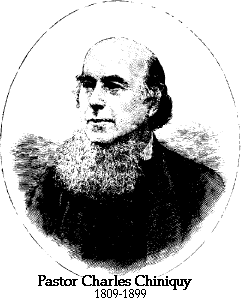
Foot Notes
CHAPTER 13
Page 73 - 78 [All Latin]
Introduction ---New Window
CHAPTERS 1-15 of page 1 (this page)
CHAPTERS 16-31 of page 2 ---New Window
CHAPTERS 32-45 of page 3 ---New Window
CHAPTERS 46-58 of page 4 ---New Window
CHAPTERS 59-67 of page 5 ---New Window
 |
|---|
| [Random ] [List ] [Add/Join ] |

 An
Earnest Appeal to Roman Catholics ---New Window
An
Earnest Appeal to Roman Catholics ---New Window

 (Part 1) The Purpose and History of Babylon the Great ---New Window (Part 2) The Reformation and the Church of Rome ---New Window
 Charles Chiniquy (1809-1899): "Rome is... that Modern Babylon"
-Fifty Years in the Church of Rome, (1886). John Wycliffe (1324-1384): "the supreme authority of Scripture...
Christ's law sufficeth by itself to rule Christ's Church." -On the Truth
and Meaning of Scripture, (c.1380). Martin Luther wrote, "I know that the Papacy is none other than
the kingdom of Babylon, and the violence of Nimrod the mighty hunter" -The
Babylonish Captivity of the Church, (October 6th 1520). Alexander Hislop: "Rome as the Apocalyptic Babylon... Let every
Christian henceforth and for ever treat it as an outcast from the pale of Christianity.
Instead of speaking of it as a Christian Church, let it be recognised and regarded
as the Mystery of Iniquity, yea, as the very Synagogue of Satan." -The Two
Babylons: Or, The Papal Worship Proved to be the Worship of Nimrod and His Wife,
(1853) James A. Wylie (1808-1890): "From the fourth century... the Bible
began to be hidden from the people... the clergy usurped authority over the members
of the Church... While the, 'living oracles' [Scripture] were neglected, the zeal
of the clergy began to spend itself upon rites and ceremonies borrowed from the pagans.
These were multiplied to such a degree, that [even] Augustine complained that they
were 'less tolerable than the yoke of the Jews under the law.'" -History
of Protestantism, vol. 1, pgs. 16,18, (1878). (Part
3) The Ecumenical Movement and the Church of Rome ---New Window (Part
4) Come Out of Her, My People ---New Window (Part 5) Billy Graham: Christianity's Modern
Balaam ---New
Window (Part 6) The Final Judgment of the Great
Whore ---New Window
Charles Chiniquy (1809-1899): "Rome is... that Modern Babylon"
-Fifty Years in the Church of Rome, (1886). John Wycliffe (1324-1384): "the supreme authority of Scripture...
Christ's law sufficeth by itself to rule Christ's Church." -On the Truth
and Meaning of Scripture, (c.1380). Martin Luther wrote, "I know that the Papacy is none other than
the kingdom of Babylon, and the violence of Nimrod the mighty hunter" -The
Babylonish Captivity of the Church, (October 6th 1520). Alexander Hislop: "Rome as the Apocalyptic Babylon... Let every
Christian henceforth and for ever treat it as an outcast from the pale of Christianity.
Instead of speaking of it as a Christian Church, let it be recognised and regarded
as the Mystery of Iniquity, yea, as the very Synagogue of Satan." -The Two
Babylons: Or, The Papal Worship Proved to be the Worship of Nimrod and His Wife,
(1853) James A. Wylie (1808-1890): "From the fourth century... the Bible
began to be hidden from the people... the clergy usurped authority over the members
of the Church... While the, 'living oracles' [Scripture] were neglected, the zeal
of the clergy began to spend itself upon rites and ceremonies borrowed from the pagans.
These were multiplied to such a degree, that [even] Augustine complained that they
were 'less tolerable than the yoke of the Jews under the law.'" -History
of Protestantism, vol. 1, pgs. 16,18, (1878). (Part
3) The Ecumenical Movement and the Church of Rome ---New Window (Part
4) Come Out of Her, My People ---New Window (Part 5) Billy Graham: Christianity's Modern
Balaam ---New
Window (Part 6) The Final Judgment of the Great
Whore ---New WindowIn the Book of Revelation, we find a description
of Babylon the Great (17:1-18), her final destruction (18:1-24), and the rejoicing
in Heaven at the judgment of the Great Whore (19:1-4)... Antichrist turns against
Babylon the Great 8-9 days prior to the End of the Tribulation Week... "Come out of her, My people, that ye be not partakers of her
sins, and that ye receive not of her plagues" (Revelation
18:4). This most important
message of God to those who would be preserved from Divine Destruction is to COME
OUT OF BABYLON NOW.
End of Series.
For more material
related to this topic
please see

---New Window

Section Index for Voices
of Philadelphia

.
Homepage  Holy Bible
.Jehovah Jesus
Timeline .Prophecy Philadelphia Fellowship Promises Stories Poetry Links
Holy Bible
.Jehovah Jesus
Timeline .Prophecy Philadelphia Fellowship Promises Stories Poetry Links

Purpose ||.What's New
|| Tribulation Topics || Download Page || Today's Entry
Topical Links:
Salvation || Catholicism || Sound Doctrine || Prayer
Privacy Policy
.