|
||||||||||||||||||||||||||||||
 |
||||||||||||||||||||||||||||||
|
||||||||||||||||||||||||||||||
|
||||||||||||||||||||||||||||||
 |
||||||||||||||||||||||||||||||
|
||||||||||||||||||||||||||||||
|
||||||||||||||||||||||||||||||
|
||||||||||||||||||||||||||||||
|
||||||||||||||||||||||||||||||
|
||||||||||||||||||||||||||||||
|
||||||||||||||||||||||||||||||
|
||||||||||||||||||||||||||||||
|
||||||||||||||||||||||||||||||
|
||||||||||||||||||||||||||||||

The Possibilities of Prayer

|
. |
|

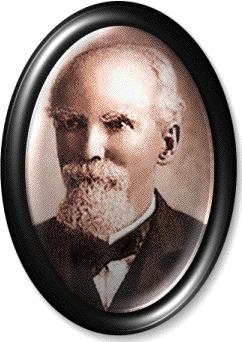
"HOW vast are the possibilities of prayer! How wide is its reach! What great things are accomplished by this divinely appointed means of grace! It lays its hand on Almighty God and moves Him to do what He would not otherwise do if prayer was not offered. It brings things to pass which would never otherwise occur. The story of prayer is the story of great achievements. Prayer is a wonderful power placed by Almighty God in the hands of His saints, which may be used to accomplish great purposes and to achieve unusual results. Prayer reaches to everything, takes in all things great and small which are promised by God to the children of men. The only limits to prayer are the promises of God and His ability to fulfill those promises. 'Open thy mouth wide and I will fill it.'" --E. M. Bounds
.

To avoid broken links, due to file length, please wait for the page to
load completely
before selecting a link.
Because this page is self-contained,
you may go off line after loading.
Thanks.
Table of Contents
I. THE MINISTRY OF PRAYER
II. PRAYER AND THE PROMISES
III. PRAYER AND THE PROMISES (Continued)
IV. PRAYER -- ITS POSSIBILITIES
V. PRAYER -- ITS POSSIBILITIES (Continued)
VI. PRAYER -- ITS POSSIBILITIES (Continued)
VII. PRAYER -- ITS WIDE RANGE
VIII. PRAYER -- FACTS AND HISTORY
IX. PRAYER -- FACTS AND HISTORY (Continued)
X. ANSWERED PRAYER
XI. ANSWERED PRAYER (Continued)
XII. ANSWERED PRAYER (Continued)
XIII. PRAYER MIRACLES
XIV. WONDERS OF GOD THROUGH PRAYER
XV. PRAYER AND DIVINE PROVIDENCE
XVI. PRAYER AND DIVINE PROVIDENCE (Continued)
"Prayer should be the breath of our breathing, the thought of our thinking, the soul of our feeling, and the life of our living, the sound of our hearing, the growth of our growing. Prayer in its magnitude is length without end, width without bounds, height without top, and depth without bottom. Illimitable in its breadth, exhaustless in height, fathomless in depths and infinite in extension."
-- Homer W. Hodge
THE ministry of prayer has been the peculiar distinction of all of God's saints.
This has been the secret of their power. The energy and the soul of their work has
been the closet. The need of help outside of man being so great, man's natural inability
to always judge kindly, justly, and truly, and to act the Golden Rule, so prayer
is enjoined by Christ to enable man to act in all these things according to the Divine
will. By prayer, the ability is secured to feel the law of love, to speak according
to the law of love, and to do everything in harmony with the law of love.
God can help us. God is a Father. We need God's good things to help us to "do
justly, to love mercy, and to walk humbly before God." We need Divine aid to
act brotherly, wisely, and nobly, and to judge truly, and charitably. God's help
to do all these things in God's way is secured by prayer. "Ask, and ye shall
receive; seek, and ye shall find; knock, and it shall be opened unto you." In
the marvellous output of Christian graces and duties, the result of giving ourselves
wholly to God, recorded in the twelfth chapter of Romans, we have the words, "Continuing
instant in prayer," preceded by "rejoicing in hope, patient in tribulation,"
followed by, "Distributing to the necessity of the saints, given to hospitality."
Paul thus writes as if these rich and rare graces and unselfish duties, so sweet,
bright, generous, and unselfish, had for their center and source the ability to pray.
This is the same word which is used of the prayer of the disciples which ushered
in Pentecost with all of its rich and glorious blessings of the Holy Spirit. In Colossians,
Paul presses the word into the service of prayer again, "Continue in prayer,
and watch in the same with thanksgiving." The word in its background and root
means strong, the ability to stay, and persevere steadfast, to hold fast and firm,
to give constant attention to.
In Acts, chapter six, it is translated, "Give ourselves continually to prayer."
There is in it constancy, courage, unfainting perseverance. It means giving such
marked attention to, and such deep concern to a thing, as will make it conspicuous
and controlling.
This is an advance in demand on "continue." Prayer is to be incessant,
without intermission, assiduously, no check in desire, in spirit or in act, the spirit
and the life always in the attitude of prayer. The knees may not always be bended,
the lips may not always be vocal with words of prayer, but the spirit is always in
the act and intercourse of prayer.
There ought to be no adjustment of life or spirit for closet hours. The closet spirit
should sweetly rule and adjust all times and occasions. Our activities and work should
be performed in the same spirit which makes our devotion and which makes our closet
time sacred. "Without intermission, incessantly, assiduously," describes
an opulence, and energy, and unabated and ceaseless strength and fulness of effort;
like the full and exhaustless and spontaneous flow of an artesian stream. Touch the
man of God who thus understands prayer, at any point, at any time, and a full current
of prayer is seen flowing from him.
But all these untold benefits, of which the Holy Spirit is made to us the conveyor,
go back in their disposition and results to prayer. Not on a little process and a
mere performance of prayer is the coming of the Holy Spirit and of His great grace
conditioned, but on prayer set on fire, by an unquenchable desire, with such a sense
of need as cannot be denied, with a fixed determination which will not let go, and
which will never faint till it wins the greatest good and gets the best and last
blessing God has in store for us.
The First Christ, Jesus, our Great High Priest, forever blessed and adored be His
Name, was a gracious Comforter, a faithful Guide, a gifted Teacher, a fearless Advocate,
a devoted Friend, and an all powerful Intercessor. The other, "another Comforter,"
the Holy Spirit, comes into all these blessed relations of fellowship, authority
and aid, with all the tenderness, sweetness, fulness and efficiency of the First
Christ.
Was the First Christ the Christ of prayer? Did He offer prayers and supplications,
with strong crying and tears unto God? Did He seek the silence, the solitude and
the darkness that He might pray unheard and unwitnessed save by heaven, in His wrestling
agony, for man with God? Does He ever live, enthroned above at the Father's right
hand, there to pray for us?
Then how truly does the other Christ, the other Comforter, the Holy Spirit, represent
Jesus Christ as the Christ of prayer! This other Christ, the Comforter, plants Himself
not in the waste of the mountain nor far into the night, but in the chill and the
night of the human heart, to rouse it to the struggle, and to teach it the need and
form of prayer. How the Divine Comforter, the Spirit of Truth, puts into the human
heart the burden of earth's almighty need, and makes the human lips give voice to
its mute and unutterable groanings!
What a mighty Christ of prayer is the Holy Spirit! How He quenches every flame in
the heart but the flame of heavenly desire! How He quiets, like a weaned child, all
the self-will, until in will, in brain, and in heart, and by mouth, we pray only
as He prays. "Making intercession for the saints, according to the will of God."
.
.
Back to Top
II. PRAYER AND THE PROMISES
"You need not utterly despair even of those who for the present 'turn again and rend you.' For if all your arguments and persuasives fail, there is yet another remedy left, and one that is frequently found effectual, when no other method avails. This is prayer. Therefore, whatsoever you desire or want, either for others or for your own soul, 'Ask, and it shall be given you.'"
-- John Wesley
WITHOUT the promise prayer is eccentric and baseless. Without prayer, the promise
is dim, voiceless, shadowy, and impersonal. The promise makes prayer dauntless and
irresistible. The Apostle Peter declares that God has given to us "exceeding
great and precious promises." "Precious" and "exceeding great"
promises they are, and for this very cause we are to "add to our faith,"
and supply virtue. It is the addition which makes the promises current and beneficial
to us. It is prayer which makes the promises weighty, precious and practical. The
Apostle Paul did not hesitate to declare that God's grace so richly promised was
made operative and efficient by prayer. "Ye also helping together by prayer
for us."
The promises of God are "exceeding great and precious," words which clearly
indicate their great value and their broad reach, as grounds upon which to base our
expectations in praying. Howsoever exceeding great and precious they are, their realization,
the possibility and condition of that realization, are based on prayer. How glorious
are these promises to the believing saints and to the whole Church! How the brightness
and bloom, the fruitage and cloudless midday glory of the future beam on us through
the promises of God! Yet these promises never brought hope to bloom or fruit to a
prayerless heart. Neither could these promises, were they a thousandfold increased
in number and preciousness, bring millennium glory to a prayerless Church. Prayer
makes the promise rich, fruitful and a conscious reality.
Prayer as a spiritual energy, and illustrated in its enlarged and mighty working,
makes way for and brings into practical realization the promises of God.
God's promises cover all things which pertain to life and godliness, which relate
to body and soul, which have to do with time and eternity. These promises bless the
present and stretch out in their benefactions to the illimitable and eternal future.
Prayer holds these promises in keeping and in fruition. Promises are God's golden
fruit to be plucked by the hand of prayer. Promises are God's incorruptible seed,
to be sown and tilled by prayer.
Prayer and the promises are interdependent. The promise inspires and energizes prayer,
but prayer locates the promise, and gives it realization and location. The promise
is like the blessed rain falling in full showers, but prayer, like the pipes, which
transmit, preserve and direct the rain, localizes and precipitates these promises,
until they become local and personal, and bless, refresh and fertilize. Prayer takes
hold of the promise and conducts it to its marvellous ends, removes the obstacles,
and makes a highway for the promise to its glorious fulfillment.
While God's promises are "exceeding great and precious," they are specific,
clear and personal. How pointed and plain God's promise to Abraham:
But Rebekah through whom the promise is to flow is childless. Her barren womb
forms an invincible obstacle to the fulfillment of God's promise. But in the course
of time children are born to her.
Isaac becomes a man of prayer through whom the promise is to be realized, and so
we read:
Isaac's praying opened the way for the fulfilment of God's promise, and carried
it on to its marvellous fulfillment, and made the promise effectual in bringing forth
marvellous results.
God spoke to Jacob and made definite promises to him:
Jacob promptly moves out on the promise, but Esau confronts him with his awakened vengeance and his murderous intention, more dreadful because of the long years, unappeased and waiting. Jacob throws himself directly on God's promise by a night of prayer, first in quietude and calmness, and then when the stillness, the loneliness and the darkness of the night are upon him, he makes the all-night wrestling prayer.
God's being is involved, His promise is at stake, and much is involved in the
issue. Esau's temper, his conduct and his character are involved. It is a notable
occasion. Much depends upon it. Jacob pursues his case and presses his plea with
great struggles and hard wrestling. It is the highest form of importunity. But the
victory is gained at last. His name and nature are changed and he becomes a new and
different man. Jacob himself is saved first of all. He is blessed in his life and
soul. But more still is accomplished. Esau undergoes a radical change of mind. He
who came forth with hate and revenge in his heart against his own brother, seeking
Jacob's destruction, is strangely and wonderfully affected, and he is changed and
his whole attitude toward his brother becomes radically different. And when the two
brothers meet, love takes the place of fear and hate, and they vie with each other
in showing true brotherly affection.
The promise of God is fulfilled. But it took that all night of importunate praying
to do the deed. It took that fearful night of wrestling on Jacob's part to make the
promise sure and cause it to bear fruit. Prayer wrought the marvellous deed. So prayer
of the same kind will produce like results in this day. It was God's promise and
Jacob's praying which crowned and crowded the results so wondrously.
"Go show thyself to Ahab and I will send rain on the earth," was God's
command and promise to His servant Elijah after the sore famine had cursed the land.
Many glorious results marked that day of heroic faith and dauntless courage on Elijah's
part. The sublime issue with Israel had been successful, the fire had fallen, Israel
had been reclaimed, the prophets of Baal had been killed, but there was no rain.
The one thing, the only thing, which God had promised, had not been given. The day
was declining, and the awestruck crowds were faint, and yet held by an invisible
hand.
Elijah turns from Israel to God and from Baal to the one source of help for a final
issue and a final victory. But seven times is the restless eagerness of the prophet
stayed. Not till the seventh repeated time is his vigilance rewarded and the promise
pressed to its final fulfillment. Elijah's fiery, relentless praying bore to its
triumphant results the promise of God, and rain descended in full showers.
Our prayers are too little and feeble to execute the purposes or to claim the
promises of God with appropriating power. Marvellous purposes need marvellous praying
to execute them. Miracle-making promises need miracle-making praying to realize them.
Only Divine praying can operate Divine promises or carry out Divine purposes. How
great, how sublime, and how exalted are the promises God makes to His people! How
eternal are the purposes of God! Why are we so impoverished in experience and so
low in life when God's promises are so "exceeding great and precious"?
Why do the eternal purposes of God move so tardily? Why are they so poorly executed?
Our failure to appropriate the Divine promises and rest our faith on them, and to
pray believingly is the solution. "We have not because we ask not." "We
ask and receive not because we ask amiss."
Prayer is based on the purpose and promise of God. Prayer is submission to God. Prayer
has no sigh of disloyalty against God's will. It may cry out against the bitterness
and the dread weight of an hour of unutterable anguish: "If it be possible,
let this cup pass from me." But it is surcharged with the sweetest and promptest
submission. "Yet not my will, but thine be done."
But prayer in its usual uniform and deep current is conscious conformity to God's
will, based upon the direct promise of God's Word, and under the illumination and
application of the Holy Spirit. Nothing is surer than that the Word of God is the
sure foundation of prayer. We pray just as we believe God's Word. Prayer is based
directly and specifically upon God's revealed promises in Christ Jesus. It has no
other ground upon which to base its plea. All else is shadowy, sandy, fickle. Not
our feelings, not our merits, not our works, but God's promise is the basis of faith
and the solid ground of prayer.
The converse of this proposition is also true. God's promises are dependent and conditioned upon prayer to appropriate them and make them a conscious realization. The promises are inwrought in us, appropriated by us, and held in the arms of faith by prayer. Let it be noted that prayer gives the promises their efficiency, localizes and appropriates them, and utilizes them. Prayer puts the promises to practical and present uses. Prayer puts the promises as the seed in the fructifying soil. Promises, like the rain, are general. Prayer embodies, precipitates, and locates them for personal use. Prayer goes by faith into the great fruit orchard of God's exceeding great and precious promises, and with hand and heart picks the ripest and richest fruit. The promises, like electricity, may sparkle and dazzle and yet be impotent for good till these dynamic, life-giving currents are chained by prayer, and are made the mighty forces which move and bless.
.
.
Back to Top
III. PRAYER AND THE PROMISES (Continued)
"Every promise of Scripture is a writing of God, which may be pleaded before Him with this reasonable request: 'Do as Thou hast said.' The Creator will not cheat His creature who depends upon His truth; and, far more, the Heavenly Father will not break His word to His own child. 'Remember the word unto Thy servant, on which Thou hast caused me to hope,' is most prevalent pleading. It is a double argument: It is Thy Word, wilt Thou not keep it? Why hast Thou spoken of it if Thou wilt not make it good? Thou hast caused me to hope in it; wilt Thou disappoint the hope which Thou hast Thyself begotten in me?"
-- C. H. Spurgeon
THE great promises find their fulfillment along the lines of prayer. They inspire
prayer, and through prayer the promises flow out to their full realization and bear
their ripest fruit.
The magnificent and sanctifying promise in Ezekiel, thirty-sixth chapter, a promise
finding its full, ripe, and richest fruit in the New Testament, is an illustration
of how the promise waits on prayer:
"Then will I sprinkle clean water upon you, and ye shall be clean; from all
your filthiness, and from all your idols will I cleanse you. A new heart also will
I give you, and a new spirit will I put within you; and I will take away the stony
heart out of your flesh, and I will give you a heart of flesh. And I will put my
Spirit within you, and cause you to walk in my statutes, and ye shall keep my judgments
and do them. And ye shall dwell in the land that I gave to your fathers; and ye shall
be my people, and I will be your God."
And concerning this promise, and this work, God definitely says:
The more truly men have prayed for these rich things, the more fully have they entered
into this exceeding great and precious promise, for in its initial, and final results
as well as in all of its processes, realized, it is entirely dependent on prayer.
No new heart ever throbbed with its pulsations of Divine life in one whose lips
have never sought in prayer with contrite spirit, that precious boon of a perfect
heart of love and cleanness. God never has put His Spirit into the realm of a human
heart which had never invoked by ardent praying the coming and indwelling of the
Holy Spirit. A prayerless spirit has no affinity for a clean heart. Prayer and a
pure heart go hand in hand. Purity of heart follows praying, while prayer is the
natural, spontaneous outflowing of a heart made clean by the blood of Jesus Christ.
In this connection let it be noted that God's promises are always personal and specific.
They are not general, indefinite, vague. They do not have to do with multitudes and
classes of people in a mass, but are directed to individuals. They deal with persons.
Each believer can claim the promise as his own. God deals with each one personally.
So that every saint can put the promises to the test. "Prove me now herewith,
saith the Lord." No need of generalizing, nor of being lost in vagueness. The
praying saint has the right to put his hand upon the promise and claim it as his
own, one made especially to him, and one intended to embrace all his needs, present
and future.
Jeremiah once said, speaking of the captivity of Israel and of its ending, speaking for Almighty God:
But this strong and definite promise of God was accompanied by these words, coupling
the promise with prayer: "Then shall ye call upon me, and ye shall go and pray
unto me, and I will hearken unto you. And ye shall seek me and find me, when ye shall
search for me with all your heart." This seems to indicate very clearly that
the promise was dependent for its fulfillment on prayer.
In Daniel we have this record, "I, Daniel, understood by books the number of
the years whereof the word of the Lord came to Jeremiah, the prophet, that he would
accomplish seventy years in the desolations of Jerusalem. And I set my face unto
the Lord God to seek by prayer and supplications with fastings and sackcloth and
ashes."
So Daniel, as the time of the captivity was expiring, set himself in mighty prayer
in order that the promise should be fulfilled and the captivity be brought to an
end. It was God's promise by Jeremiah and Daniel's praying which broke the chains
of Babylonish captivity, set Israel free and brought God's ancient people back to
their native land. The promise and prayer went together to carry out God's purpose
and to execute His plans.
God had promised through His prophets that the coming Messiah should have a forerunner.
How many homes and wombs in Israel had longed for the coming to them of this great
honour! Perchance Zacharias and Elizabeth were the only ones who were trying to realize
by prayer this great dignity and blessing. At least we do know that the angel said
to Zacharias, as he announced to him the coming of this great personage, "Thy
prayer is heard." It was then that the word of the Lord as spoken by the prophets
and the prayer of the old priest and his wife brought John the Baptist into the withered
womb, and into the childless home of Zacharias and Elizabeth.
The promise given to Paul, engraven on his apostolic commission, as related by him
after his arrest in Jerusalem, when he was making his defense before King Agrippa,
was on this wise: "Delivering thee from the people and from the Gentiles, unto
whom I now send thee.'' How did Paul make this promise efficient? How did he make
the promise real? Here is the answer. In trouble by men, Jew and Gentile, pressed
by them sorely, he writes to his brethren at Rome, with a pressing request for prayer:
Their prayers, united with his prayer, were to secure his deliverance and secure
his safety, and were also to make the apostolic promise vital and cause it to be
fully realized.
All is to be sanctified and realized by the Word of God and prayer. God's deep and
wide river of promise will turn into the deadly miasma or be lost in the morass,
if we do not utilize these promises by prayer, and receive their full and life-giving
waters into our hearts.
The promise of the Holy Spirit to the disciples was in a very marked way the "Promise
of the Father," but it was only realized after many days of continued and importunate
praying. The promise was clear and definite that the disciples should be endued with
power from on high, but as a condition of receiving that power of the Holy Spirit,
they were instructed to "tarry in the city of Jerusalem till ye be endued with
power from on high." The fulfillment of the promise depended upon the "tarrying."
The promise of this "enduement of power" was made sure by prayer. Prayer
sealed it to glorious results. So we find it written, "These continued with
one accord, in prayer and supplication, with the women." And it is significant
that it was while they were praying, resting their expectations on the surety of
the promise, that the Holy Spirit fell upon them and they were all "filled with
the Holy Ghost." The promise and the prayer went hand in hand.
After Jesus Christ made this large and definite promise to His disciples, He ascended
on high, and was seated at His Father's right hand of exaltation and power. Yet the
promise given by Him of sending the Holy Spirit was not fulfilled by His enthronement
merely, nor by the promise only, nor by the fact that the Prophet Joel had foretold
with transported raptures of the bright day of the Spirit's coming. Neither was it
that the Spirit's coming was the only hope of God's cause in this world. All these
all-powerful and all-engaging reasons were not the immediate operative cause of the
coming of the Holy Spirit. The solution is found in the attitude of the disciples.
The answer is found in the fact that the disciples, with the women, spent several
days in that upper room, in earnest, specific, continued prayer. It was prayer that
brought to pass the famous day of Pentecost. And as it was then, so it can be now.
Prayer can bring a Pentecost in this day if there be the same kind of praying, for
the promise has not exhausted its power and vitality. The "promise of the Father"
still holds good for the present-day disciples.
Prayer, mighty prayer, united, continued, earnest prayer, for nearly two weeks, brought
the Holy Spirit to the Church and to the world in Pentecostal glory and power. And
mighty continued and united prayer will do the same now.
Nor must it be passed by that the promises of God to sinners of every kind and
degree are equally sure and steadfast, and are made real and true by the earnest
cries of all true penitents. It is just as true with the Divine promises made to
the unsaved when they repent and seek God, that they are realized in answer to the
prayers of broken-hearted sinners, as it is true that the promises to believers are
realized in answer to their prayers. The promise of pardon and peace was the basis
of the prayers of Saul of Tarsus during those days of darkness and distress in the
house of Judas, when the Lord told Ananias in order to allay his fears, "Behold
he prayeth."
The promise of mercy and an abundant pardon is tied up with seeking God and caring
upon Him by Isaiah:
The praying sinner receives mercy because his prayer is grounded on the promise
of pardon made by Him whose right it is to pardon guilty sinners. The penitent seeker
after God obtains mercy because there is a definite promise of mercy to all who seek
the Lord in repentance and faith. Prayer always brings forgiveness to the seeking
soul. The abundant pardon is dependent upon the promise made real by the promise
of God to the sinner.
While salvation is promised to him who believes, the believing sinner is always a
praying sinner. God has no promise of pardon for a prayerless sinner just as He has
no promise for the prayerless professor of religion. "Behold he prayeth"
is not only the unfailing sign of sincerity and the evidence that the sinner is proceeding
in the right way to find God, but it is the unfailing prophecy of an abundant pardon.
Get the sinner to praying according to the Divine promise, and he then is near the
kingdom of God. The very best sign of the returning prodigal is that he confesses
his sins and begins to ask for the lowliest place in his father's house.
It is the Divine promise of mercy, of forgiveness and of adoption which gives the
poor sinner hope. This encourages him to pray. This moves him in distress to cry
out, "Jesus, thou Son of David, have mercy upon me."
How large are the promises made to the saint! How great the promises given to poor, hungry-hearted, lost sinners, ruined by the fall! And prayer has arms sufficient to encompass them all, and prove them. How great the encouragement to all souls, these promises of God! How firm the ground on which to rest our faith! How stimulating to prayer! What firm ground on which to base our pleas in praying!
.
.
Back to Top
IV. PRAYER -- ITS POSSIBILITIES
"The Holy Ghost comes down into our hearts sometimes in prayer with a beam from heaven, whereby we see more at once of God and His glory, more astounding thoughts and enlarged apprehensions God, many beams meeting in one and falling to the center of our hearts. By these coming downs or divine influxes, God slides into our hearts by beams of Himself; we come not to have communion with God by way of many broken thoughts put together, but there is a contraction of many beams from heaven, which is shed into our souls, so that we know more of God and have more communion with Him in a quarter-hour than we could know in a year by the way of wisdom only."
-- Thos. Goodwin
HOW vast are the possibilities of prayer! How wide is its reach! What great things
are accomplished by this divinely appointed means of grace! It lays its hand on Almighty
God and moves Him to do what He would not otherwise do if prayer was not offered.
It brings things to pass which would never otherwise occur. The story of prayer is
the story of great achievements. Prayer is a wonderful power placed by Almighty God
in the hands of His saints, which may be used to accomplish great purposes and to
achieve unusual results. Prayer reaches to everything, takes in all things great
and small which are promised by God to the children of men. The only limits to prayer
are the promises of God and His ability to fulfill those promises. "Open thy
mouth wide and I will fill it."
The records of prayer's achievements are encouraging to faith, cheering to the expectations
of saints, and an inspiration to all who would pray and test its value. Prayer is
no mere untried theory. It is not some strange unique scheme, concocted in the brains
of men, and set on foot by them, an invention which has never been tried nor put
to the test. Prayer is a Divine arrangement in the moral government of God, designed
for the benefit of men and intended as a means for furthering the interests of His
cause on earth, and carrying out His gracious purposes in redemption and providence.
Prayer proves itself. It is susceptible of proving its virtue by those who pray.
Prayer needs no proof other than its accomplishments. "If any man will do his
will, he shall know of the doctrine." If any man will know the virtue of prayer,
if he will know what it will do, let him pray. Let him put prayer to the test.
What a breadth is given to prayer! What heights it reaches! It is the breathing of
a soul inflamed for God, and inflamed for man. It goes as far as the Gospel goes,
and is as wide, compassionate and prayerful as is that Gospel.
How much of prayer do all these unpossessed, alienated provinces of earth demand
in order to enlighten them, to impress them and to move them toward God and His Son,
Jesus Christ? Had the professed disciples of Christ only have prayed in the past
as they ought to have done, the centuries would not have found these provinces still
bound in death, in sin, and in ignorance. Alas! how the unbelief of men has limited
the power of God to work through prayer! What limitations have disciples of Jesus
Christ put upon prayer by their prayerlessness! How the Church, with her neglect
of prayer, has hedged about the Gospel and shut up doors of access!
Prayer possibilities open doors for the entrance of the Gospel: "Withal praying
also for us that God would open to us a door of utterance." Prayer opened for
the Apostles doors of utterance, created opportunities and made openings to preach
the Gospel. The appeal by prayer was to God, because God was moved by prayer. God
was thereby moved to do His own work in an enlarged way and by new ways. Prayer possibility
gives not only great power, and opens doors to the Gospel, but gives facility as
well to the Gospel. Prayer makes the Gospel to go fast and to move with glorious
fastness. A Gospel projected by the mighty energies of prayer is neither slow, lazy
nor dull. It moves with God's power, with God's effulgence and with angelic swiftness.
"Brethren, pray for us that the word of the Lord may have free course and be
glorified," is the request of the Apostle Paul, whose faith reached to the possibilities
of prayer for the preached Word. The Gospel moves altogether too slowly, often timidly,
and with feeble steps. What will make this Gospel go rapidly like a race runner?
What will give this Gospel Divine effulgence and glory, and cause it to move worthy
of God and of Christ? The answer is at hand. Prayer, more prayer, better prayer will
do the deed. This means of grace will give fast going, splendour and divinity to
the Gospel.
The possibilities of prayer reach to all things. Whatever concerns man's highest
welfare, and whatever has to do with God's plans and purposes concerning men on earth,
is a subject for prayer. In "whatsoever ye shall ask," is embraced all
that concerns us or the children of men and God. And whatever is left out of "whatsoever"
is left out of prayer. Where will we draw the lines which leave out or which will
limit the word "whatsoever"? Define it, and search out and publish the
things which the word does not include. If "whatsoever" does not include
all things, then add to it the word "anything." "If ye shall ask anything
in my name, I will do it."
What riches of grace, what blessings, spiritual and temporal, what good for time
and eternity, would have been ours had we learned the possibilities of prayer and
our faith had taken in the wide range of the Divine promises to us to answer prayer!
What blessings on our times and what furtherance to God's cause had we but learned
how to pray with large expectations! Who will rise up in this generation and teach
the Church this lesson? It is a child's lesson in simplicity, but who has learned
it well enough to put prayer to the test? It is a great lesson in its matchless and
universal good. The possibilities of prayer are unspeakable, but the lesson of prayer
which realizes and measures up to these possibilities, who has learned?
In His discourse in John, fifteenth chapter, our Lord seems to connect friendship
for Him with that of prayer, and His choosing of His disciples seemed to have been
with a design that through prayer they should bear much fruit.
Jesus puts fruit-bearing and fruit-remaining, ripe, unwithered, and rich fruit,
that prayer might come to its full possibilities in order that the Father might give.
Here we have again the undefined and unlimited word, "whatsoever," as covering
the rights and the things for which we are to pray in the possibilities of prayer.
We have still another declaration from Jesus:
Here is a very definite exhortation from our Lord to largeness in praying. Here
we are definitely urged by Him to ask for large things, and announced with the dignity
and solemnity indicated by the double amen, "Verily, Verily." Why these
marvellous urgencies in this last recorded and vital conversation of our Lord with
His disciples? The answer is that our Lord might prepare them for the New Dispensation,
in which prayer was to have such marvellous results, and in which prayer was to be
the chief agency to conserve and make aggressive His Gospel.
In our Lord's language to His disciples about choosing them that should bear fruit,
in this affluent statement of our Lord, He clearly teaches us that this matter of
praying and fruit-bearing is not a petty business of our choice, or a secondary matter
in relation to other matters, but that He has chosen us for this very business of
praying. He had specially in mind our praying, and He has chosen us of His own Divine
selection, and He expects us to do this one thing of praying and to do it intelligently
and well. For He before says that He had made us His friends, and had brought us
into bosom confidence with Him, and also into free and full conference with Him.
The main object of choosing us as His disciples and of friendship for Him was that
we might be the better fitted to bear the fruit of prayer.
Let us not forget that we are noting the possibilities of the true praying ones.
"Anything" is the word of area and circumference. How far it reaches we
may not know. How wide it spreads, our minds fail to discover. What is there which
is not within its reach? Why does Jesus repeat and exhaust these words, all-inclusive
and boundless words, if He does not desire to emphasize the unbounded magnificence
and illimitable munificence of prayer? Why does He press men to pray, so that our
very poverty might be enriched and our limitless inheritance by prayer be secured?
We affirm with absolute certainty that Almighty God answers prayer. The vast possibilities
and the urgent necessity of prayer lie in this stupendous fact that God hears and
answers prayer. And God hears and answers all prayer. He hears and answers every
prayer, where the true conditions of praying are met. Either this is so or it is
not. If not, then is there nothing in prayer. Then prayer is but the recitation of
words, a mere verbal performance, an empty ceremony. Then prayer is an altogether
useless exercise. But if what we have said is true, then are there vast possibilities
in prayer. Then is it far reaching in its scope, and wide is its range. Then is it
true that prayer can lay its hand upon Almighty God and move Him to do great and
wonderful things.
The benefits, the possibilities and the necessity of prayer are not merely subjective
but are peculiarly objective in their character. Prayer aims at a definite object.
Prayer has a direct design in view. Prayer always has something specific before the
mind's eye. There may be some subjective benefits which accrue from praying, but
this is altogether secondary and incidental. Prayer always drives directly at an
object and seeks to secure a desired end. Prayer is asking, seeking and knocking
at a door for something we have not, which we desire, and which God has promised
to us.
Prayer is a direct address to God. "In everything let your requests be made
known unto God." Prayer secures blessings, and makes men better because it reaches
the ear of God. Prayer is only for the betterment of men when it has affected God
and moved Him to do something for men. Prayer affects men by affecting God. Prayer
moves men because it moves God to move men. Prayer influences men by influencing
God to influence them. Prayer moves the hand that moves the world.
The utmost possibilities of prayer have rarely been realized. The promises of
God are so great to those who truly pray, when He puts Himself so fully into the
hands of the praying ones, that it almost staggers our faith and causes us to hesitate
with astonishment. His promise to answer, and to do and to give "all things,"
"anything," "whatsoever," and "all things whatsoever,"
are so large, so great, so exceeding broad, that we stand back in amazement and give
ourselves to questioning and doubt. We "stagger at the promises through unbelief."
Really the promises of God to prayer have been pared down by us to our little faith,
and have been brought down to the low level of our narrow notions about God's ability,
liberality and resources. Let us ever keep in mind and never for one moment allow
ourselves to doubt the statement that God means what He says in all of His promises.
God's promises are His own word. His veracity is at stake in them. To question them
is to doubt His veracity. He cannot afford to prove faithless to His word. "In
hope of eternal life, which God that cannot lie, promised before the world began."
His promises are for plain people, and He means to do for all who pray just what
He says He will do. "For He is faithful that hath promised."
Unfortunately we have failed to lay ourselves out in praying. We have limited the
Holy One of Israel. The ability to pray can be secured by the grace and power of
the Holy Spirit, but it demands so strenuous and high a character that it is a rare
thing for a man or woman to be on "praying ground and on pleading terms with
God." It is as true to-day as it was in the days of Elijah, that "the fervent,
effectual prayer of a righteous man availeth much." How much such a prayer avails,
who can tell?
The possibilities of prayer are the possibilities of faith. Prayer and faith are
Siamese twins. One heart animates them both. Faith is always praying. Prayer is always
believing. Faith must have a tongue by which it can speak. Prayer is the tongue of
faith. Faith must receive. Prayer is the hand of faith stretched out to receive.
Prayer must rise and soar. Faith must give prayer the wings to fly and soar. Prayer
must have an audience with God. Faith opens the door, and access and audience are
given. Prayer asks. Faith lays its hand on the thing asked for.
God's omnipotent power is the basis of omnipotent faith and omnipotent praying. "All
things are possible to him that believeth," and "all things whatsoever"
are given to him who prays. God's decree and death yield readily to Hezekiah's faith
and prayer. When God's promise and man's praying are united by faith, then "nothing
shall be impossible." Importunate prayer is so all-powerful and irresistable
that it obtains promises, or wins where the prospect and the promise seem to be against
it. In fact, the New Testament promise includes all things in heaven and in earth.
God, by promise, puts all things He possesses into man's hands. Prayer and faith
put man in possession of this boundless inheritance.
Prayer is not an indifferent or a small thing. It is not a sweet little privilege.
It is a great prerogative, far-reaching in its effects. Failure to pray entails losses
far beyond the person who neglects it. Prayer is not a mere episode of the Christian
life. Rather the whole life is a preparation for and and the result of prayer. In
its condition, prayer is the sum of religion. Faith is but a channel of prayer. Faith
gives it wings and swiftness. Prayer is the lungs through which holiness breathes.
Prayer is not only the language of spiritual life, but makes its very essence and
forms its real character.
.
.
Back to Top
V. PRAYER -- ITS POSSIBILITIES (Continued)
"He who has the spirit of prayer has the highest interest in the court of heaven. And the only way to retain it is to keep it in constant employment. Apostasy begins in the closet. No man ever backslid from the life and power of Christianity who continued constant and fervent in private prayer. He who prays without ceasing is likely to rejoice evermore."
-- Adam Clarke
AFTER a comprehensive and cursory view of the possibilities of prayer, as mapped
out in what has been said, it is important to descend to particulars, to Bible facts
and principles in regard to this great subject. What are the possibilities of prayer
as disclosed by Divine revelation? The necessity of prayer and its being are coexistent
with man. Nature, even before a clear and full revelation, cries out in prayer. Man
is, therefore prayer is. God is, therefore prayer is. Prayer is born of the instincts,
the needs and the cravings and the very being of man.
The prayer of Solomon at the dedication of the temple is the product of inspired
wisdom and piety, and gives a lucid and powerful view of prayer in the wideness of
its range, the minuteness of its details, and its abounding possibilities and its
urgent necessity. How minute and exactly comprehending is this prayer! National and
individual blessings are in it, and temporal and spiritual good is embraced by it.
Individual sins, national calamities, sins, sickness, exile, famine, war, pestilence,
mildew, drought, insects, damage to crops, whatever affects husbandry, enemies-whatsoever
sickness, one's own sore, one's own guilt, one's own sin -- one and all are in this
prayer, and all are for prayer.
For all these evils, prayer is the one universal
remedy. Pure praying remedies all ills, cures all diseases, relieves all situations,
however dire, most calamitous, most fearful and despairing. Prayer to God, pure praying,
relieves dire situations because God can relieve when no one else can. Nothing is
too hard for God. No cause is hopeless which God undertakes. No case is mortal when
Almighty God is the physician. No conditions are despairing which can deter or
defy God. [Bold emphasis by WStS]
Almighty God heard this prayer of Solomon, and committed Himself to undertake, to
relieve and to remedy if real praying be done, despite all adverse and inexorable
conditions. He will always relieve, answer and bless if men will pray from the heart,
and if they will give themselves to real, true praying.
After Solomon had finished his magnificent, illimitable and all-comprehending prayer,
this is the record of what God said to him:
God put no limitation to His ability to save through true praying. No hopeless conditions, no accumulation of difficulties, and no desperation in distance or circumstance can hinder the success of real prayer. The possibilities of prayer are linked to the infinite rectitude and to the omnipotent power of God. There is nothing too hard for God to do. God is pledged that if we ask, we shall receive. God can withhold nothing from faith and prayer.
The many statements of God's Word fully set forth the possibilities and far-reaching
nature of prayer. How full of pathos! "Call upon me in the day of trouble; I
will deliver thee, and thou shalt glorify me." Again, read the cheering words:
"He shall call upon me, and I will answer him; I will be with him in trouble;
I will deliver him and honour him."
How diversified the range of trouble! How almost infinite its extent! How universal
and dire its conditions! How despairing its waves! Yet the range of prayer is as
great as trouble, is as universal as sorrow, as infinite as grief. And prayer can
relieve all these evils which come to the children of men. There is no tear which
prayer cannot wipe away or dry up. There is no depression of spirits which it cannot
relieve and elevate. Where is no despair which it cannot dispel.
"Call unto me, and I will answer thee, and show thee great things and difficult,
which thou knowest not." How broad these words of the Lord, how great the promise,
how cheering to faith! They really challenge the faith of the saint. Prayer always
brings God to our relief to bless and to aid, and brings marvellous revelations of
His power. What impossibilities are there with God? Name them. "Nothing,"
He says, "is impossible to the Lord." And all the possibilities in God
are in prayer.
Samuel, under the Judges of Israel, will fully illustrate the possibility and the
necessity of prayer. He himself was the beneficiary of the greatness of faith and
prayer in a mother who knew what praying meant. Hannah, his mother, was a woman of
mark, in character and in piety, who was childless. That privation was a source of
worry and weakness and grief. She sought unto God for relief, and prayed and poured
out her soul before the Lord. She continued her praying, in fact she multiplied her
praying, to such an extent that to Old Eli she seemed to be intoxicated, almost beside
herself in the intensity of her supplications. She was specific in her prayers. She
wanted a child. For a man child she prayed.
And God was specific in His answer. A man child God gave her, a man indeed he became.
He was the creation of prayer, and grew himself to a man of prayer. He was a mighty
intercessor, especially in emergencies in the history of God's people. The epitome
of his life and character is found in the statement, "Samuel cried unto the
Lord for Israel, and the Lord heard him." The victory was complete, and the
Ebenezer was the memorial of the possibilities and necessity of prayer.
Again, at another time, Samuel called unto the Lord, and thunder and rain came out
of season in wheat harvest. Here are some statements concerning this mighty intercessor,
who knew how to pray, and whom God always regarded when he prayed: "Samuel cried
unto the Lord all night."
Says he at another time in speaking to the Lord's people, "Moreover, as for
me, God forbid that I should sin against the Lord in ceasing to pray for you."
These great occasions show how this notable ruler of Israel made prayer a habit,
and that this was a notable and conspicuous characteristic of his dispensation. Prayer
was no strange exercise to Samuel. He was accustomed to it. He was in the habit of
praying, knew the way to God, and received answers from God. Through him and his
praying God's cause was brought out of its low, depressed condition, and a great
national revival began, of which David was one of its fruits.
Samuel was one of the notable men of the Old Dispensation who stood out prominently
as one who had great influence with God in prayer. God could not deny him anything
he asked of Him. Samuel's praying always affected God, and moved God to do what would
not have otherwise been done had he not prayed. Samuel stands out as a striking illustration
of the possibilities of prayer. He shows conclusively the achievements of prayer.
Jacob is an illustration for all time of the commanding and conquering forces of
prayer. God came to him as an antagonist. He grappled Jacob, and shook him as if
he were in the embrace of a deadly foe. Jacob, the deceitful supplanter, the wily,
unscrupulous trader, had no eyes to see God. His perverted principles, and his deliberate
overreaching and wrong-doing had blinded his vision.
To reach God, to know God, and to conquer God, that was the demand of this critical
hour. Jacob was alone, and all night witnessed to the intensity of the struggle,
its changing issues, and its veering fortunes, as well as the receding and advancing
lines in the conflict. Here was the strength of weakness, the power of self-despair,
the energy of perseverance, the elevation of humility, and the victory of surrender.
Jacob's salvation issued from the forces which he massed in that all-night conflict.
He prayed and wept and importuned until the fiery hate of Esau's heart died and it
was softened into love. A greater miracle was wrought on Jacob than on Esau. His
name, his character and his destiny were all changed by that all-night praying. Here
is the record of the results of that night's praying struggle: "As a prince
hast thou power with God and with men, and hast prevailed." "By his strength
he had power with God, yea, he had power over the angel and prevailed."
What forces lie in importunate prayer! What mighty results are gained by it in one
night's struggle in praying! God is affected and changed in attitude, and two men
are transformed in character and destiny.
.
.
Back to Top
VI. PRAYER -- ITS POSSIBILITIES (Continued)
"Satan dreads nothing but prayer... The Church that lost its Christ was full of good works. Activities are multiplied that meditation may be ousted, and organizations are increased that prayer may have no chance. Souls may be lost in good works, as surely as in evil ways. The one concern of the devil is to keep the saints from praying. He fears nothing from prayerless studies, prayerless work, prayerless religion. He laughs at our toil, mocks at our wisdom, but trembles when we pray."
-- Samuel Chadwick
THE possibilities of prayer are seen in its results in temporal matters. Prayer
reaches to everything which concerns man, whether it be his body, his mind or his
soul. Prayer embraces the very smallest things of life. Prayer takes in the wants
of the body, food, raiment, business, finances, in fact everything which belongs
to this life, as well as those things which have to do with the eternal interests
of the soul. Its achievements are seen not only in the large things of earth, but
more especially in what might be called the little things of life. It brings to pass
not only large things, speaking after the manner of men, but also the small things.
Temporal matters are of a lower order than the spiritual, but they concern us greatly.
Our temporal interests make up a great part of our lives. They are the main source
of our cares and worries. They have much to do with our religion. We have bodies,
with their wants, their pains, their disabilities and their limitations. That which
concerns our bodies necessarily engages our minds. These are subjects of prayer,
and prayer takes in all of them, and large are the accomplishments of prayer in this
realm of our king.
Our temporal matters have much to do with our health and happiness. They form our
relations. They are tests of honesty and belong to the sphere of justice and righteousness.
Not to pray about temporal matters is to leave God out of the largest sphere of our
being. He who cannot pray in everything, as we are charged to do by Paul in Philippians,
fourth chapter, has never learned in any true sense the nature and worth of prayer.
To leave business and time out of prayer is to leave religion and eternity out of
it. He who does not pray about temporal matters cannot pray with confidence about
spiritual matters. He who does not put God by prayer in his struggling toil for daily
bread will never put Him in his struggle for heaven. He who does not cover and supply
the wants of the body by prayer will never cover and supply the wants of his soul.
Both body and soul are dependent on God, and prayer is but the crying expression
of that dependence.
The Syrophenician woman prayed for the health things. In fact the Old Testament is
but the record of God in dealing with His people through the Divine appointment of
prayer. Abraham prayed that Sodom might be saved from destruction. Abraham's servant
prayed and received God's direction in choosing a wife for Isaac. Hannah prayed,
and Samuel was given unto her. Elijah prayed, and no rain came for three years. And
he prayed again, and the clouds gave rain. Hezekiah was saved from a mortal sickness
by his praying. Jacob's praying saved him from Esau's revenge. The Old Bible is the
history of prayer for temporal blessings as well as for spiritual blessings.
In the New Testament we have the same principles illustrated and enforced. Prayer
in this section of God's Word covers the whole realm of good, both temporal and spiritual.
Our Lord, in His universal prayer, the prayer for humanity, in every clime, in every
age and for every condition, puts in it the petition, "Give us this day our
daily bread." This embraces all necessary earthly good.
In the Sermon on the Mount, a whole paragraph is taken up by our Lord about food
and raiment, where He is cautioned against undue care or anxiety for these things,
and at the same time encouraging to a faith which takes in and claims all these necessary
bodily comforts and necessaries. And this teaching stands in close connection with
His teachings about prayer. Food and raiment are taught as subjects of prayer. Not
for one moment is it even hinted that they are things beneath the notice of a great
God, nor too material and earthly for such a spiritual exercise as prayer.
The Syrophenician woman prayed for the health of her daughter. Peter prayed for Dorcas
to be brought back to life. Paul prayed for the father of Publius on his way to Rome,
when cast on the island by a shipwreck, and God healed the man who was sick with
a fever. He urged the Christians at Rome to strive with him together in prayer that
he might be delivered from bad men. When Peter was put in prison by Herod, the Church
was instant in prayer that Peter might be delivered from the prison, and God honoured
the praying of these early Christians. John prayed that Gaius might "prosper
and be in health, even as his soul prospered."
The Divine directory in James, fifth chapter, says: "Is any among you afflicted,
let him pray. Is any sick among you? Let him call for the elders of the Church, and
let them pray over him."
Paul, in writing to the Philippians, fourth chapter, says: "Be careful for nothing;
but in everything, by prayer and supplication, with thanksgiving, let your requests
be made known to God." This provides for all kinds of cares business cares,
home cares, body cares, and soul cares. All are to be brought to God by prayer, and
at the mercy seat our minds and souls are to be disburdened of all that affects us
or causes anxiety or uneasiness. These words of Paul stand in close connection with
what he says about temporal matters specially: "But now I rejoiced in the Lord
greatly that now at the last your care of me hath flourished again: wherein ye were
also careful, but ye lacked opportunity. Not that I speak in respect to want, for
I have learned in whatsoever state I am, therewith to be content."
And Paul closes his Epistle to these Christians with the words, which embrace all
temporal needs as well as spiritual wants:
Unbelief in the doctrine that prayer covers all things which have to do with the
body and business affairs, breeds undue anxiety about earth's affairs, causes unnecessary
worry, and creates very unhappy states of mind. How much needless care would we save
ourselves if we but believed in prayer as the means of relieving those cares, and
would learn the happy art of casting all our cares in prayer upon God, "who
careth for us!" Unbelief in God as one who is concerned about even the smallest
affairs which affect our happiness and comfort limits the Holy One of Israel, and
makes our lives altogether devoid of real happiness and sweet contentment.
We have in the instance of the failure of the disciples to cast the devil out of
the lunatic son, brought to them by his father, while Jesus was on the Mount of Transfiguration,
a suggestive lesson of the union of faith, prayer and fasting, and the failure to
reach the possibilities and obligations of an occasion. The disciples ought to have
cast the devil out of the boy. They had been sent out to do this very work, and had
been empowered by their Lord and Master to do it. And yet they signally failed. Christ
reproved them with sharp upbraidings for not doing it. They had been sent out on
this very specific mission. This one thing was specified by our Lord when He sent
them out. Their failure brought shame and confession on them, and discounted their
Lord and Master and His cause. They brought Him into disrepute, and reflected very
seriously upon the cause which they represented. Their faith to cast out the devil
had signally failed, simply because it had not been nurtured by prayer and fasting.
Failure to pray broke the ability of faith, and failure came because they had not
the energy of a strong authoritative faith.
The promise reads, and we cannot too often refer to it, for it is the very basis
of our faith and the ground on which we stand when we pray: "All things whatsoever
ye ask in prayer, believing, ye shall receive." What enumeration table can tabulate,
itemize, and aggregate "all things whatsoever"? The possibilities of prayer
and faith go to the length of the endless chain, and cover the unmeasurable area.
In Hebrews, eleventh chapter, the sacred penman, wearied with trying to specify the
examples of faith, and to recite the wonderful exploits of faith, pauses a moment,
and then cries out, giving us almost unheard-of achievements of prayer and faith
as exemplified by the saints of the olden times. Here is what he says:
What an illustrious record is this! What marvellous accomplishments, wrought not by armies, or by man's superhuman strength, nor by magic, but all accomplished simply by men and women noted alone for their faith and prayer! Hand in hand with these records of faith's illimitable range are the illustrious records of prayer, for they are all one. Faith has never won a victory nor gained a crown where prayer was not the weapon of the victory, and where prayer did not jewel the crown. If "all things are possible to him that believeth," then all things are possible to him that prayeth.
.
.
Back to Top
VII. PRAYER -- ITS WIDE RANGE
"Nothing so pleases God in connection with our prayer as our praise... and nothing so blesses the man who prays as the praise which he offers. I got a great blessing once in China in this connection. I had received bad and sad news from home, and deep shadows had covered my soul. I prayed, but the darkness did not vanish. I summoned myself to endure, but the darkness only deepened. Just then I went to an inland station and saw on the wall of the mission home these words: 'Try Thanksgiving.' I did, and in a moment every shadow was gone, not to return. Yes, the Psalmist was right, 'It is a good thing to give thanks unto the Lord.'"
-- Henry W. Frost
THE possibilities of prayer are gauged by faith in God's ability to do. Faith
is the one prime condition by which God works. Faith is the one prime condition by
which man prays. Faith draws on God to its full extent. Faith gives character to
prayer. A feeble faith has always brought forth feeble praying. Vigorous faith creates
vigorous praying. At the close of a parable, "And he spake a parable unto them
to this end, that men always ought to pray, and not to faint," in which He stressed
the necessity of vigorous praying, Christ asks this pointed question, "When
the Son of Man cometh, shall he find faith on the earth?"
In the case of the lunatic child which the father brought first to the disciples,
who could not cure him, and then to the Lord Jesus Christ, the father cried out with
all the pathos of a declining faith and of a great sorrow, "If thou canst do
anything for us, have compassion on us and help us." And Jesus said unto him,
"If thou canst believe, all things are possible to him that believeth."
The healing turned on the faith in the ability of Christ to heal the boy. The ability
to do was in Christ essentially and eternally, but the doing of the thing turned
on the ability of the faith. Great faith enables Christ to do great things.
We need a quickening faith in God's power. We have hedged God in till we have little
faith in His power. We have conditioned the exercise of His power till we have a
little God, and a little faith in a little God.
The only condition which restrains God's power, and which disables Him to act, is
unfaith. He is not limited in action nor restrained by the conditions which limit
men.
The conditions of time, place, nearness, ability and all others which could possibly
be named, upon which the actions of men hinge, have no bearing on God. If men will
look to God and cry to Him with true prayer, He will hear and can deliver, no matter
how dire soever may be the state, how remediless their conditions may be.
Strange how God has to school His people in His ability to do! He made a promise
to Abraham and Sarah that Isaac would be born. Abraham was then nearly one hundred
years old, and Sarah was barren by natural defect, and had passed into a barren,
wombless age. She laughed at the thought of having a child as preposterous. God asked,
"Why did Sarah laugh? Is anything too hard for the Lord?" And God fulfilled
His promise to these old people to the letter.
Moses hesitated to undertake God's purpose to liberate Israel from Egyptian bondage,
because of his inability to talk well. God checks him at once by an inquiry:
When God said He would feed the children of Israel a whole month with meat, Moses
questioned His ability to do it. The Lord said unto Moses, "Is the Lord's hand
waxed short? Thou shalt see now whether my word shall come to pass unto thee or not."
Nothing is too hard for the Lord to do. As Paul declared, "He is able to do
exceeding abundantly above all that we can ask or think." Prayer has to do with
God, with His ability to do. The possibility of prayer is the measure of God's ability
to do.
The "all things," the "all things whatsoever," and the "anything,"
are all covered by the ability of God. The urgent entreaty reads, "Ask whatsoever
ye will," because God is able to do anything and all things that my desires
may crave, and that He has promised. In God's ability to do, He goes far beyond man's
ability to ask. Human thoughts, human words, human imaginations, human desires and
human needs, cannot in any way measure God's ability to do.
Prayer in its legitimate possibilities goes out on God Himself. Prayer goes out with
faith not only in the promise of God, but faith in God Himself, and in God's ability
to do. Prayer goes out not on the promise merely, but "obtains promises,"
and creates promises.
Elijah had the promise that God would send the rain, but no promise that He would
send the fire. But by faith and prayer he obtained the fire, as well as the rain,
but the fire came first.
Daniel had no specific promise that God would make known to him the dream of the
king, but he and his associates joined in united prayer, and God revealed to Daniel
the king's dream and the interpretation, and their lives were spared thereby.
Hezekiah had no promise that God would cure him of his desperate sickness which threatened
his life. On the contrary the word of the Lord came to him by the mouth of the prophet,
that he should die. However, he prayed against this decree of Almighty God, with
faith, and he succeeded in obtaining a reversal of God's word and lived.
God makes it marvellous when He says by the mouth of His prophet: "Thus saith
the Lord, the Holy One of Israel and his Maker: Ask me of things to come, concerning
my sons, and concerning the work of my hands, command ye me." And in this strong
promise in which He commits Himself into the hands of His praying people, He appeals
in it to His great creative power: "I have created the earth and made man upon
it. I, even my hands, have stretched out the heavens, and all their hosts have I
commanded."
The majesty and power of God in making man and man's world, and constantly upholding
all things, are ever kept before us as the basis of our faith in God, and as an assurance
and urgency to prayer. Then God calls us away from what He Himself has done, and
turns our minds to Himself personally. The infinite glory and power of His Person
are set before our contemplation: "Remember ye not the former things neither
consider the things of old?" He declares that He will do a "new thing,"
that He does not have to repeat Himself, that all He has done neither limits His
doing nor the manner of His doing, and that if we have prayer and faith, He will
so answer our prayers and so work for us, that His former work shall not be remembered
nor come into mind. If men would pray as they ought to pray, the marvels of the past
would be more than reproduced. The Gospel would advance with a facility and power
it has never known. Doors would be thrown open to the Gospel, and the Word of God
would have a conquering force rarely if ever known before.
If Christians prayed as Christians ought, with strong commanding faith, with earnestness
and sincerity, men, God-called men, God-empowered men everywhere, would be all burning
to go and spread the Gospel world-wide. The Word of the Lord would run and be glorified
as never known heretofore. The God-influenced men, the God-inspired men, the God-commissioned
men, would go and kindle the flame of sacred fire for Christ, salvation and heaven,
everywhere in all nations, and soon all men would hear the glad tidings of salvation
and have an opportunity to receive Jesus Christ as their personal Saviour. Let us
read another one of those large illimitable statements in God's Word, which are a
direct challenge to prayer and faith:
What a basis have we here for prayer and faith, illimitable, measureless in breadth,
in depth and in height! The promise to give us all things is backed up by the calling
to our remembrance of the fact that God freely gave His only Begotten Son for our
redemption. His giving His Son is the assurance and guarantee that He will freely
give all things to him who believes and prays.
What confidence have we in this Divine statement for inspired asking! What holy boldness
we have here for the largest asking! No commonplace tameness should restrain our
largest asking. Large, larger, and largest asking magnifies grace and adds to God's
glory. Feeble asking impoverishes the asker, and restrains God's purposes for the
greatest good and obscures His glory.
How enthroned, magnificent and royal the intercession of our Lord Jesus Christ at
His Father's right hand in heaven! The benefits of His intercession flow to us through
our intercessions. Our intercession ought to catch by contagion, and by necessity
the inspiration and largeness of Christ's great work at His Father's right hand.
His business and His life are to pray. Our business and our lives ought to be to
pray, and to pray without ceasing. Failure in our intercession affects the fruits
His intercession. Lazy, heartless, feeble, and indifferent praying by us mars and
hinders the effects of Christ's praying.
.
.
Back to Top
VIII. PRAYER -- FACTS AND HISTORY
"The particular value of private prayer consists in being able to approach God with more freedom, and unbosom ourselves more fully than in any other way. Between us and God there are private and personal interests, sins to confess and wants to be supplied, which it would be improper to disclose to the world. This duty is enforced by the example of good men in all ages."
-- Amos Binney
THE possibilities of prayer are established by the facts and the history of prayer. Facts are stubborn things. Facts are the true things. Theories may be but speculations. Opinions may be wholly at fault. But facts must be deferred to. They cannot be ignored. What are the possibilities of prayer judged by the facts? What is the history of prayer? What does it reveal to us? Prayer has a history, written in God's Word and recorded in the experiences and lives of God's saints. History is truth teaching by example. We may miss the truth by perverting the history, but the truth is in the facts of history.
God reveals the truth by the facts. God reveals Himself by the facts of religious
history. God teaches us His will by the facts and examples of Bible history. God's
facts, God's Word and God's history are all in perfect harmony, and have much of
God in them all. God has ruled the world by prayer; and God still rules the world
by the same divinely ordained means.
The possibilities of prayer cover not only individuals but reach to cities and nations.
They take in classes and peoples. The praying of Moses was the one thing which stood
between the wrath of God against the Israelites and His declared purpose to destroy
them and the execution of that Divine purpose, and the Hebrew nation still survived.
Notwithstanding Sodom was not spared, because ten righteous men could not be found
inside its limits, yet the little city of Zoar was spared because Lot prayed for
it as he fled from the storm of fire and brimstone which burned up Sodom. Nineveh
was saved because the king and its people repented of their evil ways and gave themselves
to prayer and fasting.
Paul in his remarkable prayer in Ephesians, chapter three, honours the illimitable
possibilities of prayer and glorifies the ability of God to answer prayer. Closing
that memorable prayer, so far-reaching in its petitions, and setting forth the very
deepest religious experience, he declares that "God is able to do exceeding
abundantly above all that we can ask or think." He makes prayer all-inclusive,
comprehending all things, great and small. Where is no time nor place which prayer
does not cover and sanctify. All things in earth and in heaven, everything for time
and for eternity, all are embraced in prayer. Nothing is too great and nothing is
too small to be subject of prayer. Prayer reaches down to the least things of life
and includes the greatest things which concern us.
One of the most important, far-reaching, peace-giving, necessary and practical prayer possibilities we have in Paul's words in Philippians, chapter four, dealing with prayer as a cure for undue care:
"Cares" are the epidemic evil of mankind. They are universal in their
reach. They belong to man in his fallen condition. The predisposition to undue anxiety
is the natural result of sin. Care comes in all shapes, at all times, and from all
sources. It comes to all of every age and station. There are the cares of the home
circle, from which there is no escape save in prayer. There are the cares of business,
the cares of poverty, and the cares of riches. Ours is an anxious world, and ours
is an anxious race. The caution of Paul is well addressed, "In nothing be anxious."
This is the Divine injunction, and that we might be able to live above anxiety and
freed from undue care, "In everything, by prayer and supplication, let your
requests be made known unto God." This is the divinely prescribed remedy for
all anxious cares, for all worry, for all inward fretting.
The word, "careful," means to be drawn in different directions, distraction,
anxious, disturbed, annoyed in spirit. Jesus had warned against this very thing in
the Sermon on the Mount, where He had earnestly urged His disciples, "Take no
thought for the morrow," in things concerning the needs of the body. He was
endeavouring to show them the true secret of a quiet mind, freed from anxiety and
unnecessary care about food and raiment. To-morrow's evils were not to be considered.
He was simply teaching the same lesson found in Psalm 37: 3, "Trust in the Lord,
and do good; so shalt thou dwell in the land, and verily thou shalt be fed."
In cautioning against the fears of to-morrow's prospective evils, and the material
wants of the body, our Lord was teaching the great lesson of an implicit and childlike
confidence in God. "Commit thy way unto the Lord: trust also in him, and he
shall bring it to pass."
Paul's direction is very specific, "Be careful for nothing." Be careful
for not one thing. Be careful for not anything, for any condition, chance or happening.
Be troubled about not anything which creates one disturbing anxiety. Have a mind
freed from all anxieties, all cares, all fretting, and all worries. Cares divide,
distract, bewilder, and destroy unity, forces and quietness of mind. Cares are fatal
to weak piety and are enfeebling to strong piety. What great need to guard against
them and learn the one secret of their cure, even prayer!
What boundless possibilities there are in prayer to remedy the situation of mind
of which Paul is speaking! Prayer over everything can quiet every distraction, hush
every anxiety, and lift every care from care-enslaved lives and from care-bewildered
hearts. The prayer specific is the perfect cure for all ills of this character which
belong to anxieties, cares and worries. Only prayer in everything can drive dull
care away, relieve of unnecessary heart burdens, and save from the besetting sin
of worrying over things which we cannot help. Only prayer can bring into the heart
and mind the "peace which passeth all understanding," and keep mind and
heart at ease, free from carking care.
Oh, the needless heart burdens borne by fretting Christians! How few know the real
secret of a happy Christian life, filled with perfect peace, hid from the storms
and billows of a fretting careworn life! Prayer has a possibility of saving us from
"carefulness," the bane of human lives. Paul in writing to the Corinthians
says, "I would have you without carefulness," and this is the will of God.
Prayer has the ability to do this very thing. "Casting all your care on him,
for he careth for you," is the way Peter puts it, while the Psalmist says, "Fret
not thyself in any wise to do evil." Oh, the blessedness of a heart at ease
from all inward care, exempt from undue anxiety, in the enjoyment of the peace of
God which passeth all understanding!
Paul's injunction which includes both God's promise and His purpose, and which immediately
precedes his entreaty to be "careful for nothing," reads on this wise:
In a world filled with cares of every kind, where temptation is the rule, where there are so many things to try us, how is it possible to rejoice always? We look at the naked, dry command, and we accept it and reverence it as the Word of God, but no joy comes. How are we to let our moderation, our mildness, and our gentleness be universally and always known? We resolve to be benign and gentle. We remember the nearness of the Lord, but still we are hasty, quick, hard and salty. We listen to the Divine charge, "Be careful for nothing," yet still we are anxious, care-worn, care-eaten, and care-tossed. How can we fulfill the Divine word, so sweet and so large in promise, so beautiful in the eye, and yet so far from being realized? How can we enter upon the rich patrimony of being true, honest, just, pure, and possess lovely things? The recipe is infallible, the remedy is universal, and the cure is unfailing. It is found in the words which we have so often herein referred to of Paul:
This joyous, care-free, peaceful experience bringing the believer into a joyousness,
living simply by faith day by day, is the will of God. Writing to the Thessalonians,
Paul tells them: "Rejoice evermore; pray without ceasing, and in everything
give thanks, for this is the will of God in Christ Jesus concerning you." So
that not only is it God's will that we should find full deliverance from all care
and undue anxiety, but He has ordained prayer as the means by which we can reach
that happy state of heart.
The Revised Version makes some changes in the passage of Paul, about which we have
been speaking. The reading there is" In nothing be anxious," and "the
peace of God shall guard your hearts and your minds." And Paul puts the antecedent
in the air of prayer, which is "Rejoice in the Lord always." That is, be
always glad in the Lord, and be happy with Him. And that you may thus be happy, "Be
careful for nothing." This rejoicing is the doorway for prayer, and its pathway
too. The sunshine and buoyancy of joy in the Lord are the strength and boldness of
prayer, the peans of its victory. "Moderation" makes the rainbow of prayer.
The word means mildness, fairness, gentleness, sweet reasonableness. The Revised
Version changes it to "forbearance," with the margin reading "gentleness."
What rare ingredients and beautiful colourings! These are colourings and ingredients
which make a strong and beautiful character and a wide and positive reputation. A
rejoicing, gentle spirit, positive in reputation, is well fitted for prayer, rid
of the distractions and unrest of care.
.
.
Back to Top
IX. PRAYER -- FACTS AND HISTORY (Continued)
"The neglect of prayer is a grand hindrance to holiness. 'We have not because we ask not.' Oh, how meek and gentle, how lowly in heart, how full of love both to God and to man, might you have been at this day, if you had only asked! If you had continued instant in prayer! Ask, that you may thoroughly experience and perfectly practice the whole of that religion which our Lord has so beautifully described in the Sermon on the Mount."
-- John Wesley
IT is to the closet Paul directs us to go. The unfailing remedy for all carking,
distressing care is prayer. The place where the Lord is at hand is the closet of
prayer. There He is always found, and there He is at hand to bless, to deliver and
to help. The one place where the Lord's presence and power will be more fully realized
than any other place is the closet of prayer.
Paul gives the various terms of prayer, supplication and giving of thanks as the
complement of true praying. The soul must be in all of these spiritual exercises.
There must be no half-hearted praying, no abridging its nature, and no abating its
force, if we would be freed from this undue anxiety which causes friction and internal
distress, and if we would receive the rich fruit of that peace which passeth all
understanding. He who prays must be an earnest soul, all round in spiritual attributes.
"In everything, let your requests be made known unto God," says Paul. Nothing
is too great to be handled in prayer, or to be sought in prayer. Nothing is too small
to be weighed in the secret councils of the closet, and nothing is too little for
its final arbitrament. As care comes from every source, so prayer goes to every source.
As there are no small things in prayer, so there are no small things with God. He
who counts the hairs of our head, and who is not too lofty and high to notice the
little sparrow which falls to the ground, is not too great and high to note everything
which concerns the happiness, the needs and the safety of His children. Prayer brings
God into what men are pleased to term the little affairs of life. The lives of people
are made up of these small matters, and yet how often do great consequences come
from small beginnings?
As everything by prayer is to be brought to the notice of Almighty God, so we
are assured that whatever affects us concerns Him. How comprehensive is this direction
about prayer! "In everything by prayer." There is no distinction here between
temporal and spiritual things. Such a distinction is against faith, wisdom and reverence.
God rules everything in nature and in grace. Man is affected for time and eternity
by things secular as well as by things spiritual. Man's salvation hangs on his business
as well as on his prayers. A man's business hangs on his prayers just as it hangs
on his diligence.
The chief hindrances to piety, the wiliest and the deadliest temptations of the devil,
are in business, and lie alongside the things of time. The heaviest, the most confusing
and the most stupefying cares lie beside secular and worldly matters. So in everything
which comes to us and which concerns us, in everything which we want to come to us,
and in everything which we do not want to come to us, prayer is to be made for all.
Prayer blesses all things, brings all things, relieves all things and prevents all
things. Everything as well as every place and every hour is to be ordered by prayer.
Prayer has in it the possibility to affect everything which affects us. Here are
the vast possibilities of prayer.
How much is the bitter of life sweetened by prayer! How are the feeble made strong
by prayer! Sickness flees before the health of prayer. Doubts, misgivings, and trembling
fears retire before prayer. Wisdom, knowledge, holiness and heaven are at the command
of prayer. Nothing is outside of prayer. It has the power to gain all things in the
provision of our Lord Jesus Christ. Paul covers all departments and sweeps the entire
field of human concernment, conditions, and happenings by saying, "In everything
by prayer."
Supplications and thanksgiving are to be joined with prayer. It is not the dignity
of worship, the gorgeousness of ceremonials, the magnificence of its ritual, nor
the plainness of its sacraments, which avail. It is not simply the soul's hallowed
and lowly abasement before God, neither the speechless awe, which benefits in this
prayer service, but the intensity of supplication, the looking and the lifting of
the soul in ardent plea to God for the things desired and for which request is made.
The radiance and gratitude and utterance of thanksgiving must be there. This is not
simply the poetry of praise, but the deep-toned words and the prose of thanks. There
must be hearty thanks, which remembers the past, sees God in it, and voices that
recognition in sincere thanksgiving. The hidden depths within must have utterance.
The lips must speak the music of the soul. A heart enthused of God, a heart illumined
by His presence, a life guided by His right hand, must have something to say for
God in gratitude. Such is to recognize God in the events of past life, to exalt God
for His goodness, and to honour God who has honoured it.
"Make known your requests unto God." The "requests" must be made
known unto God. Silence is not prayer. Prayer is asking God for something which we
have not, which we desire, and which He has promised to give in answer to prayer.
Prayer is really verbal asking. Words are in prayer. Strong words and true words
are found in prayer. Desires in prayer are put in words. The praying one is a pleader.
He urges his prayer by arguments, promises, and needs.
Sometimes loud words are in prayer. The Psalmist said, "Evening, morning and
at noon will I pray, and cry aloud." The praying one wants something which he
has not got. He wants something which God has in His possession, and which he can
get by praying. He is beggared, bewildered, oppressed and confused. He is before
God in supplication, in prayer, and in thanksgiving. These are the attitudes, the
incense, the paraphernalia, and the fashion of this hour, the court attendance of
his soul before God.
"Requests" mean to ask for one's self. The man is in a strait. He needs
something, and he needs it badly. Other help has failed. It means a plea for something
to be given which has not been done. The request is for the Giver, -- not alone His
gifts but Himself. The requests of the praying one are to be made known unto God.
The requests are to be brought to the knowledge of God. It is then that cares fly
away, anxieties disappear, worries depart, and the soul gets at ease. Then it is
there steals into the heart "the peace of God that passeth all understanding."
In James, chapter five, we have another marvellous description of prayer and its possibilities. It has to do with sickness and health, sin and forgiveness, and rain and drouth. Here we have James' directory for praying:
Here is prayer for one's own needs and intercessory prayer for others; prayer
for physical needs and prayer for spiritual needs; prayer for drouth and prayer for
rain; prayer for temporal matters and prayer for spiritual things. How vast the reach
of prayer! How wonderful under these words its possibilities!
Here is the remedy for affliction and depression of every sort, and here we find
the remedy for sickness and for rain in the time of drouth. Here is the way to obtain
forgiveness of sins. A stroke of prayer paralyzes the energies of nature, stays its
clouds, rain and dew, and blasts field and farm like the simoon. Prayer brings clouds,
and rain and fertility to the famished and wasted earth.
The general statement, "The effectual, fervent prayer of a righteous man availeth
much," is a statement of prayer as an energetic force. Two words are used. One
signifies power in exercise, operative power, while the other is power as an endowment.
Prayer is power and strength, a power and strength which influences God, and is most
salutary, widespread and marvellous in its gracious benefits to man. Prayer influences
God. The ability of God to do for man is the measure of the possibility of prayer.
.
.
Back to Top
X. ANSWERED PRAYER
"In his 'Soldier's Pocket Book,' Lord Wolseley says if a young officer wishes to get on, he must volunteer for the most hazardous duties and take every possible chance of risking his life. It was a spirit and courage like that which was shown in the service of God by a good soldier of Jesus Christ named John McKenzie who died a few years ago. One evening when he was a lad and eager for work in the Foreign Mission field he knelt down at the foot of a tree in the Ladies' Walk on the banks of the Lossie at Elgin and offered up this prayer: 'O Lord send me to the darkest spot on earth.' And God heard him and sent him to South Africa where he laboured many years first under the London Missionary Society and then under the British Government as the first Resident Commissioner among the natives of Bechuanaland."
-- J. O. Struthers
IT is answered prayer which brings praying out of the realm of dry, dead things,
and makes praying a thing of life and power. It is the answer to prayer which brings
things to pass, changes the natural trend of things, and orders all things according
to the will of God. It is the answer to prayer which takes praying out of the regions
of fanaticism, and saves it from being Eutopian, or from being merely fanciful. It
is the answer to prayer which makes praying a power for God and for man, and makes
praying real and divine. Unanswered prayers are training schools for unbelief, an
imposition and a nuisance, an impertinence to God and to man.
Answers to prayer are the only surety that we have prayed aright. What marvellous
power there is in prayer! What untold miracles it works in this world! What untold
benefits to men does it secure to those who pray! Why is it that the average prayer
by the million goes a begging for an answer?
The millions of unanswered prayers are not to be solved by the mystery of God's will.
We are not the sport of His sovereign power. He is not playing at "make-believe"
in His marvellous promises to answer prayer. The whole explanation is found in our
wrong praying. "We ask and receive not because we ask amiss." If all unanswered
prayers were dumped into the ocean, they would come very near filling it. Child of
God, can you pray? Are your prayers answered? If not, why not? Answered prayer is
the proof of your real praying.
The efficacy of prayer from a Bible standpoint lies solely in the answer to prayer.
The benefit of prayer has been well and popularly maximized by the saying, "It
moves the arm which moves the universe." To get unquestioned answers to prayer
is not only important as to the satisfying of our desires, but is the evidence of
our abiding in Christ. It becomes more important still. The mere act of praying is
no test of our relation to God. The act of praying may be a real dead performance.
It may be the routine of habit. But to pray and receive clear answers, not once or
twice, but daily, this is the sure test, and is the gracious point of our vital connection
with Jesus Christ. Read our Lord's words in this connection:
To God and to man, the answer to prayer is the all-important part of our praying.
The answer to prayer, direct and unmistakable, is the evidence of God's being. It
proves that God lives, that there is a God, an intelligent being, who is interested
in His creatures, and who listens to them when they approach Him in prayer. There
is no proof so clear and demonstrative that God exists than prayer and its answer.
This was Elijah's plea: "Hear me, O Lord, hear me, that this people may know
that thou art the Lord God."
The answer to prayer is the part of prayer which glorifies God. Unanswered prayers
are dumb oracles which leave the praying ones in darkness, doubt and bewilderment,
and which carry no conviction to the unbeliever. It is not the act or the attitude
of praying which gives efficacy to prayer. It is not abject prostration of the body
before God, the vehement or quiet utterance to God, the exquisite beauty and poetry
of the diction of our prayers, which do the deed. It is not the marvellous array
of argument and eloquence in praying which makes prayer effectual. Not one or all
of these are the things which glorify God. It is the answer which brings glory to
His Name.
Elijah might have prayed on Carmel's heights till this good day with all the fire
and energy of his soul, and if no answer had been given, no glory would have come
to God. Peter might have shut himself up with Dorcas' dead body till he himself died
on his knees, and if no answer had come, no glory to God nor good to man would have
followed, but only doubt, blight and dismay. Answer to prayer is the convincing proof
of our right relations to God. Jesus said at the grave of Lazarus:
The answer of His prayer was the proof of His mission from God, as the answer
to Elijah's prayer was made to the woman whose son he raised to life. She said, "Now
by this I know that thou art a man of God." He is highest in the favour of God
who has the readiest access and the greatest number of answers to prayer from Almighty
God.
Prayer ascends to God by an invariable law, even by more than law, by the will, the
promise and the presence of a personal God. The answer comes back to earth by all
the promise, the truth, the power and the love of God.
Not to be concerned about the answer to prayer is not to pray. What a world of waste
there is in praying. What myriads of prayers have been offered for which no answer
is returned, no answer longed for, and no answer is expected! We have been nurturing
a false faith and hiding the shame of our loss and inability to pray, by the false,
comforting plea that God does not answer directly or objectively, but indirectly
and subjectively. We have persuaded ourselves that by some kind of hocus pocus of
which we are wholly unconscious in its process and its results, we have been made
better. Conscious that God has not answered us directly, we have solaced ourselves
with the delusive unction that God has in some impalpable way, and with unknown results,
given us something better. Or we have comforted and nurtured our spiritual sloth
by saying that it is not God's will to give it to us. Faith teaches God's praying
ones that it is God's will to answer prayer. God answers all prayers and every prayer
of His true children who truly pray.
The emphasis in the Scriptures is always given to the answer to prayer. All things
from God are given in answer to prayer. God Himself, His presence, His gifts and
His grace, one and all, are secured by prayer. The medium by which God communicates
with men is prayer. The most real thing in prayer, its very essential end, is the
answer it secures. The mere repetition of words in prayer, the counting of beads,
the multiplying mere words of prayer, as works of supererogation, as if there was
virtue in the number of prayers to avail, is a vain delusion, an empty thing, a useless
service. Prayer looks directly to securing an answer. This is its design. It has
no other end in view.
Communion with God of course is in prayer. There is sweet fellowship there with our
God through His Holy Spirit. Enjoyment of God there is in praying, sweet, rich and
strong. The graces of the Spirit in the inner soul are nurtured by prayer, kept alive
and promoted in their growth by this spiritual exercise. But not one nor all of these
benefits of prayer have in them the essential end of prayer. The divinely appointed
channel through which all good and all grace flows to our souls and bodies is prayer.
Prayer is divinely ordained as the means by which all temporal and spiritual good
are gained to us. Prayer is not an end in itself. It is not something done to be
rested in, something we have done, about which we are to congratulate ourselves.
It is a means to an end. It is something we do which brings us something in return,
without which the praying is valueless. Prayer always aims at securing an answer.
We are rich and strong, good and holy, beneficent and benignant, by answered prayer.
It is not the mere performance, the attitude, nor the words of prayer, which bring
benefit to us, but it is the answer sent direct from heaven. Conscious, real answers
to prayer bring real good to us. This is not praying merely for self, or simply for
selfish ends. The selfish character cannot exist when the prayer conditions are fulfilled.
It is by these answered prayers that human nature is enriched. The answered prayer
brings us into constant and conscious communion with God, awakens and enlarges gratitude,
and excites the melody and lofty inspiration of praise. Answered prayer is the mark
of God in our praying. It is the exchange with heaven, and it establishes and realizes
a relationship with the unseen. We give our prayers in exchange for the Divine blessing.
God accepts our prayers through the atoning blood and gives Himself, His presence
and His grace in return.
All holy affections are affected by answered prayers. By the answers to prayer all
holy principles are matured, and faith, love and hope have their enrichment by answered
prayer. The answer is found in all true praying. The answer is in prayer strongly
as an aim, a desire expressed, and its expectation and realization give importunity
and realization to prayer. It is the fact of the answer which makes the prayer, and
which enters into its very being. To seek no answer to prayer takes the desire, the
aim, and the heart out of prayer. It makes praying a dead, stockish thing, fit only
for dumb idols. It is the answer which brings praying into Bible regions, and makes
it a desire realized, a pursuit, an interest, that clothes it with flesh and blood,
and makes it a prayer, throbbing with all the true life of prayer, affluent with
all the paternal relations of giving and receiving, of asking and answering.
God holds all good in His own hands. That good comes to us through our Lord Jesus
Christ because of His all atoning merits, by asking it in His name. The only and
the sole command in which all the others of its class belong, is "Ask, seek,
knock." And the one and sole promise is its counterpart, its necessary equivalent
and results: "It shall be given -- ye shall find -- it shall be opened unto
you."
God is so much involved in prayer and its hearing and answering, that all of His
attributes and His whole being are centered in that great fact. It distinguishes
Him as peculiarly beneficent, wonderfully good, and powerfully attractive in His
nature. "O thou that hearest prayer! To thee shall all flesh come."
Not only does the Word of God stand surety for the answer to prayer, but all the attributes of God conspire to the same end. God's veracity is at stake in the engagements to answer prayer. His wisdom, His truthfulness and His goodness are involved. God's infinite and inflexible rectitude is pledged to the great end of answering the prayers of those who call upon Him in time of need. Justice and mercy blend into oneness to secure the answer to prayer. It is significant that the very justice of God comes into play and stands hard by God's faithfulness in the strong promise God makes of the pardon of sins and of cleansing from sin's pollutions:
God's kingly relation to man, with all of its authority, unites with the fatherly
relation and with all of its tenderness to secure the answer to prayer.
Our Lord Jesus Christ is most fully committed to the answer of prayer. "Whatsoever
ye shall ask in my name, that will I do, that the Father may be glorified in the
Son." How well assured the answer to prayer is, when that answer is to glorify
God the Father! And how eager Jesus Christ is to glorify His Father in heaven! So
eager is He to answer prayer which always and everywhere brings glory to the Father,
that no prayer offered in His name is denied or overlooked by Him. Says our Lord
Jesus Christ again, giving fresh assurance to our faith, "If ye shall ask anything
in my name, I will do it." So says He once more, "Ask what ye will, and
it shall be done unto you."
.
.
Back to Top
XI. ANSWERED PRAYER (Continued)
"Constrained at the darkest hour to confess humbly that without God's help I was helpless, I vowed a vow in the forest solitude that I would confess His aid before men. A silence as a death was around me; it was midnight, I was weakened by illness, prostrated with fatigue and worn with anxiety for my white and black companions, whose fate was a mystery. In this physical and mental distress I besought God to give me back my people. Nine hours later we were exulting with rapturous joy. In full view of all was the crimson flag with the crescent and beneath its waving folds was the long-lost rear column."
-- Henry M. Stanley
GOD has committed Himself to us by His Word in our praying. The Word of God is
the basis and the inspiration and the heart of prayer. Jesus Christ stands as the
illustration of God's Word, its illimitable good in promise as well as in realization.
God takes nothing by halves. He gives nothing by halves. We can have the whole of
Him when He has the whole of us. His words of promise are so far-reaching, and so
all-comprehending, that they seem to have deadened our comprehension and have paralyzed
our praying. This appears when we consider those large words, when He almost exhausts
human language in promises, as in "whatever," "anything," and
in the all-inclusive "whatsoever," and "all things." These oft-repeated
promises, so very great, seem to daze us, and instead of allowing them to move us
to asking, testing, and receiving, we turn away full of wonder, but empty handed
and with empty hearts.
We quote another passage from our Lord's teaching about prayer. By the most solemn
verification, He declares as follows:
Twice in this passage He declares the answer, and pledging His Father, "He
will give it to you," and declaring with impressive and most suggestive iteration,
"Ask, and ye shall receive." So strong and so often did Jesus declare and
repeat the answer as an inducement to pray, and as an inevitable result of prayer,
the Apostles held it as so fully and invincibly established, that prayer would be
answered, they held it to be their main duty to urge and command men to pray. So
firmly were they established as to the truth of the law of prayer as laid down by
our Lord, that they were led to affirm that the answer to prayer was involved in
and necessarily bound up with all right praying. God the Father and Jesus Christ,
His Son, are both strongly committed by all the truth of their word and by the fidelity
of their character, to answer prayer.
Not only do these and all the promises pledge Almighty God to answer prayer, but
they assure us that the answer will be specific, and that the very thing for which
we pray will be given.
Our Lord's invariable teaching was that we receive that for which we ask, and obtain
that for which we seek, and have that door opened at which we knock. This is according
to our Heavenly Father's direction to us, and His giving to us for our asking. He
will not disappoint us by not answering, neither will He deny us by giving us some
other thing for which we have not asked, or by letting us find some other thing for
which we have not sought, or by opening to us the wrong door, at which we were not
knocking. If we ask bread, He will give us bread. If we ask an egg, He will give
us an egg. If we ask a fish, He will give us a fish. Not something like bread, but
bread itself will be given unto us. Not something like a fish, but a fish will be
given. Not evil will be given us in answer to prayer, but good.
Earthly parents, though evil in nature, give for the asking, and answer to the crying
of their children. The encouragement to prayer is transferred from our earthly father
to our Heavenly Father, from the evil to the good, to the supremely good; from the
weak to the omnipotent, our Heavenly Father, centering in Himself all the highest
conceptions of Fatherhood, abler, readier, and much more than the best, and much
more than the ablest earthly father. "How much more," who can tell? Much
more than our earthly father, will He supply all our needs, give us all good things,
and enable us to meet every difficult duty and fulfill every law, though hard to
flesh and blood, but made easy under the full supply of our Father's beneficent and
exhaustless help.
Here we have in symbol and as initial, more than an intimation of the necessity,
not only of perseverance in prayer, but of the progressive stages of intentness and
effort in the outlay of increasing spiritual force. Asking, seeking, and knocking.
Here is an ascending scale from the mere words of asking, to a settled attitude of
seeking, resulting in a determined, clamorous and vigorous direct effort of praying.
Just as God has commanded us to pray always, to pray everywhere, and to pray in everything,
so He will answer always, everywhere and in everything. God has plainly and with
directness committed Himself to answer prayer. If we fulfill the conditions of prayer,
the answer is bound to come. The laws of nature are not so invariable and so inexorable
as the promised answer to pray. The ordinances of nature might fail, but the ordinances
of grace can never fail. There are no limitations, no adverse conditions, no weakness,
no inability, which can or will hinder the answer to prayer. God's doing for us when
we pray has no limitations, is not hedged about, by provisos in Himself, or in the
peculiar circumstances of any particular case. If we really pray, God masters and
defies all things and is above all conditions. God explicitly says, "Call unto
me, and I will answer." There are no limitations, no hedges, no hindrances in
the way of God fulfilling the promise. His word is at stake. His word is involved.
God solemnly engages to answer prayer. Man is to look for the answer, be inspired
by the expectation of the answer, and may with humble boldness demand the answer.
God, who cannot lie, is bound to answer. He has voluntarily placed Himself under
obligation to answer the prayer of him who truly prays.
The prophets and the men of God of Old Testament times were unshaken in their
faith in the absolute certainty of God fulfilling His promises to them. They rested
in security on the word of God, and had no doubt whatever either as to the fidelity
of God in answering prayer or of His willingness or ability. So that their history
is marked by repeated asking and receiving at the hands of God.
The same is true of the early Church. They received without question the doctrine
their Lord and Master had so often affirmed that the answer to prayer was sure. The
certainty of the answer to prayer was as fixed as God's Word was true. The Holy Ghost
dispensation was ushered in by the disciples carrying this faith into practice. When
Jesus told them to "Tarry at Jerusalem till they were endued with power from
on high," they received it as a sure promise that if they obeyed the command,
they would certainly receive the Divine power. So in prayer for ten days they tarried
in the upper room, and the promise was fulfilled. The answer came just as Jesus said.
So when Peter and John were arrested for healing the man who sat at the beautiful
gate of the temple, after being threatened by the rulers in Jerusalem, they were
released. "And being let go, they went to their own company," they went
to those with whom they were in affinity, those of like minds, and not to men of
the world. Still believing in prayer and its efficacy, they gave themselves to prayer,
the prayer itself being recorded in Acts, chapter four. They recited some things
to the Lord, and "when they had prayed, the place was shaken where they were
assembled together, and they were filled with the Holy Ghost, and they spake the
word of God with boldness."
Here they were refilled for this special occasion with the Holy Ghost. The answer
to prayer responded to their faith and prayer. The fullness of the Spirit always
brings boldness. The cure for fear in the face of threatenings of the enemies of
the Lord is being filled with the Spirit. This gives power to speak the word of the
Lord with boldness. This gives courage and drives away fear.
.
.
Back to Top
XII. ANSWERED PRAYER (Continued)
"A young man had been called to the foreign field. He had not been in the habit of preaching, but he knew one thing, how to prevail with God; and going one day to a friend he said: 'I don't see how God can use me on the field. I have no special talent.' His friend said: 'My brother, God wants men on the field who can pray. There are too many preachers now and too few prayers.' He went. In his own room in the early dawn a voice was heard weeping and pleading for souls. All through the day, the shut door and the hush that prevailed made you feel like walking softly, for a soul was wrestling with God. Yet to this home, hungry souls would flock, drawn by some irresistible power. Ah, the mystery was unlocked. In the secret chamber lost souls were pleaded for and claimed. The Holy Ghost knew just where they were and sent them along."
-- J. Hudson Taylor
WE put it to the front. We unfold it on a banner never to be lowered or folded,
that God does hear and answer prayer. God has always heard and answered prayer. God
will forever hear and answer prayer. He is the same yesterday, to-day and forever,
ever blessed, ever to be adored. Amen. He changes not. As He has always answered
prayer, so will He ever continue to do so.
To answer prayer is God's universal rule. It is His unchangeable and irrepealable
law to answer prayer. It is His invariable, specific and inviolate promise to answer
prayer. The few denials to prayer in the Scriptures are the exceptions to the general
rule, suggestive and startling by their fewness, exception and emphasis.
The possibilities of prayer, then, lie in the great truth, illimitable in its broadness,
fathomless in its depths, exhaustless in its fullness, that God answers every prayer
from every true soul who truly prays. God's Word does not say, "Call unto me,
and you will thereby be trained into the happy art of knowing how to be denied. Ask,
and you will learn sweet patience by getting nothing." Far from it. But it is
definite, clear and positive: "Ask, and it shall be given unto you."
We have this case among many in the Old Testament:
And God readily granted him the things which he had requested. Hannah, distressed
in soul because she was childless, and desiring a man child, repaired to the house
of prayer, and prayed, and this is the record she makes of the direct answer she
received: "For this child I prayed, and the Lord hath given me the petition
which I asked of him."
God's promises and purposes go direct to the fact of giving for the asking. The answer
to our prayers is the motive constantly presented in the Scriptures to encourage
us to pray and to quicken us in this spiritual exercise. Take such strong, clear
passages as these:
This is Jesus Christ's law of prayer. He does not say, "Ask, and something
shall be given you." Nor does He say, "Ask, and you will be trained into
piety." But it is that when you ask, the very thing asked for will be given.
Jesus does not say, "Knock, and some door will be opened." But the very
door at which you are knocking will be opened. To make this doubly sure, Jesus Christ
duplicates and reiterates the promise of the answer: "For every one that asketh,
receiveth; and he that seeketh, findeth; and to him that knocketh, it shall be opened."
Answered prayer is the spring of love, and is the direct encouragement to pray. "I
love the Lord because he hath heard my voice and my supplications. Because he hath
inclined his ear unto me, therefore will I call upon him as long as I live."
The certainty of the Father's giving is assured by the Father's relation, and by
the ability and goodness of the Father. Earthly parents, frail, infirm, and limited
in goodness and ability, give when the child asks and seeks. The parental heart responds
most readily to the cry for bread. The hunger of the child touches and wins the father's
heart. So God, our Heavenly Father, is as easily and strongly moved by our prayers
as the earthly parent. "If ye being evil, know how to give good gifts unto your
children, how much more shall your father in heaven give good gifts unto them that
ask him?" "Much more," just as much more does God's goodness, tenderness
and ability exceed that of man's.
Just as the asking is specific, so also is the answer specific. The child does not
ask for one thing and get another. He does not cry for bread, and get a stone. He
does not ask for an egg, and receive a scorpion. He does not ask for a fish, and
get a serpent. Christ demands specific asking. He responds to specific praying by
specific giving.
To give the very thing prayed for, and not something else, is fundamental to Christ's
law of praying. No prayer for the cure of blind eyes did He ever answer by curing
deaf ears. The very thing prayed for is the very thing which He gives. The exceptions
to this are confirmatory of this great law of prayer. He who asks for bread gets
bread, and not a stone. If he asks for a fish, he receives a fish, and not a serpent.
No cry is so pleading and so powerful as the child's cry for bread. The cravings
of hunger, the appetite felt, and the need realized, all create and propel the crying
of the child. Our prayers must be as earnest, as needy, and as hungry as the hungry
child's cry for bread. Simple, artless and direct and specific must be our praying,
according to Christ's law of prayer and His teaching of God's Fatherhood. The illustration
and enforcement of the law of prayer are found in the specific answers given to prayer.
Gethsemane is the only seeming exception. The prayer of Jesus Christ in that awful
hour of darkness and hell was conditioned on these words, "If it be possible,
let this cup pass from me." But beyond these utterances of our Lord was the
soul and life prayer of the willing, suffering Divine victim, "Nevertheless
not as I will, but as thou wilt." The prayer was answered, the angel came, strength
was imparted, and the meek sufferer in silence drank the bitter cup.
Two cases of unanswered prayer are recorded in the Scriptures in addition to the
Gethsemane prayer of our Lord. The first was that of David for the life of his baby
child, but for good reasons to Almighty God the request was not granted. The second
was that of Paul for the removal of the thorn in the flesh, which was denied. But
we are constrained to believe these must have been notable as exceptions to God's
rule, as illustrated in the history of prophet, priest, apostle and saint, as recorded
in the Divine Word. There must have been unrevealed reasons which moved God to veer
from His settled and fixed rule to answer prayer by giving the specific thing prayed
for.
Our Lord did not hold the Syrophenician woman in the school of unanswered prayer
in order to test and mature her faith, neither did He answer her prayer by healing
or saving her husband. She asks for the healing of her daughter, and Christ healed
the daughter. She received the very thing for which she asked the Lord Jesus Christ.
It was in the school of answered prayer our Lord disciplined and perfected her faith,
and it was by giving her a specific answer to her prayer. Her prayer centered on
her daughter. She prayed for the one thing, the healing of her child. And the answer
of our Lord centered likewise on the daughter.
We tread altogether too gingerly upon the great and precious promises of God, and
too often we ignore them wholly. The promise is the ground on which faith stands
in asking of God. This is the one basis of prayer. We limit God's ability. We measure
God's ability and willingness to answer by prayer by the standard of men. We limit
the Holy One of Israel. How full of benefaction and remedy to suffering mankind are
the promises as given us by James in his Epistle, fifth chapter! How personal and
mediate do they make God in prayer! They are a direct challenge to our faith. They
are encouraging to large expectations in all the requests we make of God. Prayer
affects God in a direct manner, and has its aim and end in affecting Him. Prayer
takes hold of God, and induces Him to do large things for us, whether personal or
relative, temporal or spiritual, earthly or heavenly.
The great gap between Bible promises to prayer and the income from praying is almost
unspeakably great, so much so that it is a prolific source of infidelity. It breeds
unbelief in prayer as a great moral force, and begets doubt really as to the efficacy
of prayer. Christianity needs to-day, above all things else, men and women who can
in prayer put God to the test and who can prove His promises. When this happy day
for the world begins, it will be earth's brightest day, and will be heaven's dawning
day on earth. These are the sort of men and women needed in this modern day in the
Church. It is not educated men who are needed for the times. It is not more money
that is required. It is not more machinery, more organization, more ecclesiastical
laws, but it is men and women who know how to pray, who can in prayer lay hold upon
God and bring Him down to earth, and move Him to take hold of earth's affairs mightily
and put life and power into the Church and into all of its machinery.
The Church and the world greatly need saints who can bridge this wide gap between
the praying done and the small number of answers received. Saints are needed whose
faith is bold enough and sufficiently far-reaching to put God to the test. The cry
comes even now out of heaven to the people of the present-day Church, as it sounded
forth in the days of Malachi: "Prove me now herewith, saith the Lord of hosts."
God is waiting to be put to the test by His people in prayer. He delights in being
put to the test on His promises. It is His highest pleasure to answer prayer, to
prove the reliability of His promises. Nothing worthy of God nor of great value to
men will be accomplished till this is done.
Our Gospel belongs to the miraculous. It was projected on the miraculous plane. It
cannot be maintained but by the supernatural. Take the supernatural out of our holy
religion, and its life and power are gone, and it degenerates into a mere mode of
morals. The miraculous is Divine power. Prayer has in it this same power. Prayer
brings this Divine power into the ranks of men and puts it to work. Prayer brings
into the affairs of earth a supernatural element. Our Gospel when truly presented
is the power of God. Never was the Church more in need of those who can and will
test Almighty God. Never did the Church need more than now those who can raise up
everywhere memorials of God's supernatural power, memorials of answers to prayer,
memorials of promises fulfilled. These would do more to silence the enemy of souls,
the foe of God and the adversary of the Church than any modern scheme or present-day
plan for the success of the Gospel. Such memorials reared by praying people would
dumbfound God's foes, strengthen weak saints, and would fill strong saints with triumphant
rapture. The most prolific source of infidelity, and that which traduces and hinders
praying, and that which obscures the being and glory of God most effectually, is
unanswered prayer. Better not to pray at all than to go through a dead form, which
secures no answer, brings no glory to God, and supplies no good to man. Nothing so
indurates the heart and nothing so blinds us to the unseen and the eternal, as this
kind of prayerless praying.
.
.
Back to Top
XIII. PRAYER MIRACLES
"George Benfield, a driver on the Midland Railway, living at Derby, was standing on the footplate oiling his engine, the train being stationary, when his foot slipped; he fell on the space between the lines. He heard the express coming on, and had only time enough to lie full length on the 'six-foot' when it rushed by, and he escaped unhurt. He returned to his home in the middle of the night and as he was going upstairs he heard one of his children, a girl about eight years old, crying and sobbing. 'Oh, father,' she said, 'I thought somebody came and told me that you were going to be killed, and I got out of bed and prayed that God would not let you die.' Was it only a dream, a coincidence? George Benfield and others believed that he owed his life to that prayer."
-- Dean Hole
THE earthly career of our Lord Jesus Christ was no mere episode, a sort of interlude,
in His eternal life. What He was and what He did on earth was neither abnormal nor
divergent, but characteristic. What He was and what He did on earth is but the figure
and the illustration of what He is and what He is doing in heaven. He is "the
same yesterday and to-day, and forever." This statement is the Divine summary
of the eternal unity and changelessness of His character. His earthly life was made
up largely of hearing and answering prayer. His heavenly life is devoted to the same
Divine business. Really the Old Testament is the record of God hearing and answering
prayer. The whole Bible deals largely with this all important subject.
Christ's miracles are object lessons. They are living pictures. They talk to us.
They have hands which take hold of us. Many valuable lessons do these miracles teach
us. In their diversity, they refresh us. They show us the matchless power of Jesus
Christ, and at the same time discover to us His marvellous compassion for suffering
humanity. These miracles disclose to us His ability to endlessly diversify His operations.
God's method in working with man is not the same in all cases. He does not administer
His grace in rigid ruts. There is endless variety in His movements. There is marvellous
diversity in His operations. He does not fashion His creations in the same mould.
Just so our Lord is not circumscribed in His working nor trammelled by models. He
works independently. He is His own architect. He furnishes His own patterns which
have unlimited variety.
When we consider our Lord's miracles, we discover that quite a number were performed
unconditionally. At least there were no conditions accompanying them so far as the
Divine record shows. At His own instance, without being solicited to do so, in order
to glorify God and to manifest His own glory and power, this class of miracles was
wrought. Many of His mighty works were performed at the moving of His compassion
and at the call of suffering and need, as well as at the call of His power. But a
number of them were performed by Him in answer to prayer. Some were wrought in answer
to the personal prayers of those who were afflicted. Others were performed in answer
to the prayers of the friends of those who were afflicted. Those miracles wrought
in answer to prayer are very instructive in the uses of prayer.
In these conditional miracles, faith holds the primacy and prayer is faith's vicegerent.
We have an illustration of the importance of faith as the condition on which the
exercise of Christ's power was based, or the channel through which it flowed, in
the incident of a visit He made to Nazareth with its results, or rather its lack
of results. Here is the record of the case:
Those people at Nazareth may have prayed our Lord to raise their dead, or open the eyes of the blind, or heal the lepers, but it was all in vain. The absence of faith, however much of performance may be seen, restrains the exercise of God's power, paralyzes the arm of Christ, and turns to death all signs of life. Unbelief is the one thing which seriously hinders Almighty God in doing mighty works. Matthew's record of this visit to Nazareth says, "And he did not any mighty works there because of their unbelief." Lack of faith ties the hands of Almighty God in His working among the children of men. Prayer to Christ must always be based, backed and impregnated with faith. The miracle of miracles in the earthly career of our Lord, the raising of Lazarus from the dead, was remarkable for its prayer accompaniment. It was really a prayer issue, something after the issue between the prophets of Baal and Elijah. It was not a prayer for help. It was one of thanksgiving and assured confidence. Let us read it:
It was a prayer mainly for the benefit of those who were present, that they might
know that God was with Him because He had answered His prayers, and that faith in
God might be radiated in their hearts.
Answered prayers are sometimes the most convincing and faith-creating forces. Unanswered
prayers chill the atmosphere and freeze the soil of faith. If Christians knew how
to pray so as to have answers to their prayers, evident, immediate, and demonstrative
answers from God, faith would be more widely diffused, would become more general,
would be more profound, and would be a much more mighty force in the world.
What a valuable lesson of faith and intercessory prayer does the miracle of the healing
of the centurion's servant bring to us! The simplicity and strength of the faith
of this Roman officer are remarkable, for He believed that it was not needful for
our Lord to go directly to his house in order to have his request granted, "But
speak the word only, and my servant shall be healed." And our Lord puts His
mark upon this man's faith by saying, "Verily I say unto you, I have not found
so great faith, no, not in Israel." This man's prayer was the expression of
his strong faith, and such faith brought the answer promptly.
The same invaluable lesson we get from the prayer miracle of the case of the Syrophenician
woman who went to our Lord in behalf of her stricken daughter, making her daughter's
case her own, by pleading, "Lord, help me." Here was importunity, holding
on, pressing her case, refusing to let go or to be denied. A strong case it was of
intercessory prayer and its benefits. Our Lord seemingly held her off for a while
but at last yielded, and put His seal upon her strong faith: "O woman, great
is thy faith! Be it unto thee even as thou wilt." What a lesson on praying for
others and its large benefits!
Individual cases could be named, where the afflicted persons interceded for themselves,
illustrations of wonderful things wrought by our Lord in answer to the cries of those
who were afflicted. As we read the Evangelists' record, the pages fairly glisten
with records of our Lord's miracles wrought in answer to prayer, showing the wonderful
things accomplished by the use of this divinely appointed means of grace.
If we turn back to Old Testament times, we have no lack of instances of prayer miracles.
The saints of those days were well acquainted with the power of prayer to move God
to do great things. Natural laws did not stand in the way of Almighty God when He
was appealed to by His praying ones. What a marvellous record is that of Moses as
those successive plagues were visited upon Egypt in the effort to make Pharaoh let
the children of Israel go that they might serve God! As one after another of these
plagues came, Pharaoh would beseech Moses, "Entreat the Lord your God that he
may take away this death." And as the plagues themselves were miracles, prayer
removed them as quickly as they were sent by Almighty God. The same hand which sent
these destructive agencies upon Egypt was moved by the prayers of His servant Moses
to remove these same plagues. And the removal of the plagues in answer to prayer
was as remarkable a display of Divine power as was the sending of the plagues in
the first instance. The removal in answer to prayer would do as much to show God's
being and His power as would the plagues themselves. They were miracles of prayer.
All down the line in Old Testament days we see these prayer miracles. God's praying
servants had not the least doubt that prayer would work marvellous results and bring
the supernatural into the affairs of earth. Miracles and prayer went hand in hand.
They were companions. The one was the cause, the other was the effect. The one brought
the other into existence. The miracle was the proof that God heard and answered prayer.
The miracle was the Divine demonstration that God, who was in heaven, interfered
in earth's affairs, intervened to help men, and worked supernaturally if need be
to accomplish His purposes in answer to prayer.
Passing to the days of the early Church, we find the same Divine record of prayer
miracles. The sad news came to Peter that Dorcas was dead and he was wanted at Joppa.
Promptly he made his way to that place. Peter put everybody out of the room, and
then he kneeled down and prayed, and with faith said, "Tabitha, arise,"
and she opened her eyes and sat up. Knee work on the part of Peter did the work.
Prayer brought things to pass and saved Dorcas for further work on earth.
Paul was on that noted journey to Rome under guard, and had been shipwrecked on an
island. The chief man of the island was Publius, and his old father was critically
ill of a bloody flux. Paul laid his hands on the old man, and prayed for him, and
God came to the rescue and healed the sick man. Prayer brought the thing desired
to pass. God interfered with the laws of nature, either suspending or setting them
aside for a season, and answered the prayer of this praying servant of His. And the
answer to prayer among those heathen people convinced them that a supernatural power
was at work among them. In fact so true was this that they seemed to think a supernatural
being had come among them.
Peter was put in prison by Herod after he had killed James with the sword. The young
Church was greatly concerned, but they neither lost heart nor gave themselves over
to needless fretting and worrying. They had learned before this from whence their
help came. They had been schooled in the lesson of prayer. God had intervened before
in the behalf of His servants and interfered when His cause was at stake. "Prayer
was made without ceasing of the Church unto God for him." An angel on swift
wings comes to the rescue, and in a marvellous and supernatural way releases Peter
and leaves the prison doors locked. Locks and prison doors and an unfriendly king
cannot stand in the way of Almighty God when His people cry in prayer unto Him. Miracles
if need be will be wrought in their behalf to fulfill His promises and to carry forward
His plans. After this order does the Word of God illustrate and enlarge and confirm
the possibilities of prayer by what may be termed "Prayer miracles."
How quickly to our straits follow our enlargements! God wrought a wonderful work
through Samson in enabling him with a crude instrument, the jaw bone of an ass, to
slay a thousand men, giving him a great deliverance. Shortly afterward he was abnormally
thirsty, and he was unable to obtain any water. It seemed as if he would perish with
thirst. God had saved him from the hands of the Philistines. Could he not as well
save him from thirst? So Samson cried unto the Lord, and "God clave a hollow
place that was in the jaw, and there came water thereout, and when he had drunk,
his spirit came again and he revived." God could bring water out of the jaw
bone just as well as He could give victory by it to Samson. God could change that
which had been death-dealing to His enemies and make it life-giving to His servant.
God can and will work a miracle in answer to prayer in order to deliver His friends,
sooner than He will work one to destroy His enemies. He does both, however, in answer
to prayer.
All natural forces are under God's control. He did not create the world and put it
under law, and then retire from it, to work out its own destiny, irrespective of
the welfare of His intelligent creatures. Natural laws are simply God's laws, by
which He governs and regulates all things in nature. Nature is nothing but God's
servant. God is above nature, God is not the slave of nature. This being true, God
can and will suspend the working of nature's laws, can hold them in abeyance by His
almighty hand, can for the time being set them aside, to fulfill His higher purposes
in redemption. It is no violation of nature's laws when, in answer to prayer, He
who is above nature makes nature His servant, and causes nature to tarry out His
plans and purposes.
This is the explanation of that wonderful prayer miracle of Old Testament times,
when Joshua, in the strength and power of the Lord God, commanded the sun and moon
to stand still in order to give time to complete the victory over the enemies of
Israel. Why should it be thought a thing incredible that the God of nature and of
grace should interfere with His own natural laws for a short season in answer to
prayer, and for the good of His cause? Is God tied hand and foot? Has He so circumscribed
Himself that He cannot operate the law of prayer? Is the law of nature superior to
the law of prayer? Not by any means. He is the God of prayer as well as the God of
nature. Both prayer and nature have God as their Maker, their Ruler and their Executor.
And prayer is God's servant, just as nature is His servant.
The prayer force in God's government is as strong as any other force, and all natural
and other forces must give way before the force of prayer. Sun, moon and stars are
under God's control in answer to prayer. Rain, sunshine and drouth obey His will.
"Fire and hail, snow and vapour, stormy wind fulfilling his word." Disease
and health are governed by Him. All, all things in heaven and earth, are absolutely
under the control of Him who made heaven and earth, and who governs all things according
to His own will.
Prayer still works miracles among men and brings to pass great things. It is as true
now as when James wrote his Epistle, "The fervent, effectual prayer of a righteous
man availeth much." And when the records of eternity are read out to an assembled
world, then will it appear how much prayer has wrought in this world. Little is now
seen of the fruits of prayer compared to all that it has accomplished and is accomplishing.
At the judgment day, then will God disclose the things which were brought to pass
in this world through the prayers of the saints. Many occurrences which are now taken
as a matter of course will then be seen to have happened because of the Lord's praying
ones.
The work of George Muller in Bristol, England, was a miracle of the nineteenth century.
It will take the opening of the books at the great judgment day to disclose all he
wrought through prayer. His orphanage, in which hundreds of fatherless and motherless
children were cared for, to sustain which this godly man never asked any one for
money with which to pay its running expenses, is a marvel of modern times. His practice
was always to ask God for just what was needed, and the answers which came to him
read like a record of apostolic times. He prayed for everything and trusted implicitly
to God to supply all his needs. And it is a matter of record that never did he and
the orphans ever lack for any good thing.
Of a holy man who has done so much for Christ and suffering humanity, it was said
at the grave about him:
Luther is quoted as once saying: "The Christian's trade is praying."
Certainly, for a great reason, the preacher's trade should be praying. We fear greatly
that many preachers know nothing of this trade of praying, and hence they never succeed
at this trade. A severe apprenticeship in the trade of praying must be served in
order to become a journeyman in it. Not only is it true that there are few journeymen
at work at this praying trade, but numbers have never even been apprentices at praying.
No wonder so little is accomplished by them. God and the supernatural are left out
of their programmes.
Many do not understand this trade of praying because they have never learned it,
and hence do not work at it. Many miracles ought to be worked by our praying. Why
not? Is the arm of the Lord shortened that He cannot save? Is His ear heavy that
He cannot hear? Has prayer lost its power because iniquity abounds and the love of
many has grown cold? Has God changed from what He once was? To all these queries
we enter an emphatic negative. God can as easily to-day work miracles by praying
as He did in the days of old. "I am the Lord; I change not." "Is anything
too hard for the Lord?"
He who works miracles by praying will first of all work the chief miracle on himself.
Oh, that we might fully understand well the Christian's trade of praying, and follow
the trade day by day and thus make to ourselves great spiritual wealth!
.
.
Back to Top
XIV. WONDERS OF GOD THROUGH PRAYER
"Wisdom and Revelation distinguished by Experience and Scripture. By Experience. Take a weak understanding (but one exceeding holy), having little knowledge of God by way of discursive wisdom and laying this thing to that, and so knowing God: such poor soul is oftentimes hardly able to speak wisely and he will know more of God in one prayer than a great scholar (though also very holy) hath known of Him in all his life; God often deals thus with the weak who are very holy; for if such were shut up to knowing God by way of a sanctified reason, large understandings would have infinite advantage of them and they would grow little in grace and holiness; therefore God makes a supply by breaking in upon their spirits by such irradiations as these."
-- Thos. Goodwin
IN the fearful contest in this world between God and the devil, between good and
evil, and between heaven and hell, prayer is the mighty force for overcoming Satan,
giving dominion over sin, and defeating hell. Only praying leaders are to be counted
on in this dreadful conflict. Praying men alone are to be put to the front. These
are the only sort who are able to successfully contend with all the evil forces.
The "prayers of all saints" are a perpetual force against all the powers
of darkness. These prayers are a mighty energy in overcoming the world, the flesh
and the devil and in shaping the destiny of God's movements, to overcome evil and
get the victory over the devil and all his works. The character and energy of God's
movements lie in prayer. Victory is to come at the end of praying.
The wonders of God's power are to be kept alive, made real and present, and repeated
only by prayer. God is not now so evident in the world, so almighty in manifestation
as of old, not because miracles have passed away, nor because God has ceased to work,
but because prayer has been shorn of its simplicity, its majesty, and its power.
God still lives, and miracles still live while God lives and acts, for miracles are
God's ways of acting. Prayer is dwarfed, withered and petrified when faith in God
is staggered by doubts of His ability, or through the shrinking caused by fear. When
faith has a telescopic, far-off vision of God, prayer works no miracles, and brings
no marvels of deliverance. But when God is seen by faith's closest, fullest eye,
prayer makes a history of wonders.
Think about God. Make much of Him, till He broadens and fills the horizon of faith.
Then prayer will come into its marvellous inheritance of wonders. The marvels of
prayer are seen when we remember that God's purposes are changed by prayer, God's
vengeance is stayed by prayer, and God's penalty is remitted by prayer. The whole
range of God's dealing with man is affected by prayer. Here is a force which must
be increasingly used, that of prayer, a force to which all the events of life ought
to be subjected.
To "pray without ceasing," to pray in everything, and to pray everywhere
-- these commands of continuity are expressive of the sleepless energy of prayer,
of the exhaustless possibilities of prayer, and of its exacting necessity. Prayer
can do all things. Prayer must do all things.
Prayer is asking God for something, and for something which He has promised. Prayer is using the divinely appointed means for obtaining what we need and for accomplishing what God proposes to do on earth.
And prayer brings to us blessings which we need, and which only God can give,
and which prayer can alone convey to us.
In their broadest fullness, the possibilities of prayer are to be found in the very
nature of prayer. This service of prayer is not a mere rite, a ceremony through which
we go, a sort of performance. Prayer is going to God for something needed and desired.
Prayer is simply asking God to do for us what He has promised us He will do if we
ask Him. The answer is a part of prayer, and is God's part of it. God's doing the
thing asked for is as much a part of the prayer as the asking of the thing is prayer.
Asking is man's part. Giving is God's part. The praying belongs to us. The answer
belongs to God.
Man makes the plea and God makes the answer. The plea and the answer compose the
prayer. God is more ready, more willing and more anxious to give the answer than
man is to give the asking. The possibilities of prayer lie in the ability of man
to ask large things and in the ability of God to give large things.
God's only condition and limitation of prayer is found in the character of the one
who prays. The measure of our faith and praying is the measure of His giving. Like
as our Lord said to the blind man, "According to your faith be it unto you,"
so it is the same in praying, "According to the measure of your asking, be it
unto you." God measures the answer according to the prayer. He is limited by
the law of prayer in the measure of the answers He gives to prayer. As is the measure
of prayer, so will be the answer.
If the person praying has the characteristics which warrant praying, then the possibilities
are illimitable. They are declared to be "all things whatsoever." Here
is no limitation in character or kind, in circumference or condition. The man who
prays can pray for anything and for everything, and God will give everything and
anything. If we limit God in the asking, He will be limited in the giving.
Looking ahead, God declares in His Word that the wonder of wonders will be so great
in the last days that everything animate and inanimate will be excited by His power:
But these days of God's mighty working, the days of His magnificent and wonder-creating power, will be days of magnificent praying.
It has ever been so. God's marvellous, miracle-working times have been times of marvellous, miracle-working praying. The greatest thing in God's worship by His own estimate is praying. Its chief service and its distinguishing feature is prayer:
This was true under all the gorgeous rites and parade of ceremonies under the
Jewish worship. Sacrifice, offering and the atoning blood were all to be impregnated
with prayer. The smoke of burnt offering and perfumed incense which filled God's
house was to be but the flame of prayer, and all of God's people were to be anointed
priests to minister at His altar of prayer. So all things were to be done with mighty
prayer, because mighty prayer was the fruitage and inspiration of mighty faith. But
much more is it now true every way under the more simple service of the Gospel.
The course of nature, the movements of the planets, and the clouds, have yielded
to the influence of prayer, and God has changed and checked the order of the sun
and the seasons under the mighty energies of prayer. It is only necessary to note
the remarkable incident when Joshua, through this divine means of prayer, caused
the sun and the moon to stand still in order that a more complete victory could be
given to the armies of Israel in the contest with the armies of the Amorites.
If we believe God's word, we are bound to believe that prayer affects God, and affects
Him mightily; that prayer avails, and that prayer avails mightily. There are wonders
in prayer because there are wonders in God. Prayer has no talismanic influence. It
is no mere fetish. It has no so-called powers of magic. It is simply making known
our requests to God for things agreeable to His will in the name of Christ. It is
just yielding our requests to a Father, who knows all things, who has control of
all things, and who is able to do all things. Prayer is infinite ignorance trusting
to the wisdom of God. Prayer is the voice of need crying out to Him who is inexhaustible
in resources. Prayer is helplessness reposing with childlike confidence on the word
of its Father in heaven. Prayer is but the verbal expression of the heart of perfect
confidence in the infinite wisdom, the power and the riches of Almighty God, who
has placed at our command in prayer everything we need. How all the gracious results
of such gracious times are to come to the world through prayer, we are taught in
God's Word. God's heart seems to overflow with delight at the prospect of thus blessing
His people. By the mouth of the Prophet Joel, God thus speaks:
What wonderful material things are these which God proposes to bestow upon His people! They are marvellous temporal blessings He promises to bestow on them. They almost astonish the mind when they are studied. But God does not restrict His large blessings to temporal things. Looking down the ages, He foresees Pentecost, and makes these exceeding great and precious promises concerning the outpouring of the Holy Spirit, these very words being quoted by Peter on that glad day of Pentecost:
But these marvellous blessings will not be bestowed upon the people by sovereign power, nor be given unconditionally. God's people must do something precedent to such glorious results. Fasting and prayer must play an important part as conditions of receiving such large blessings. By the mouth of the same prophet, God thus speaks:
Prayer reaches even as far as does the presence of God go. It reaches everywhere because God is everywhere. Let us read from Psalm 139:1:
This may be said as truly of prayer as it is said of the God of prayer. The mysteries
of death have been fathomed by prayer, and its victims have been brought back to
life by the power of prayer, because God holds dominion over death, and prayer reaches
where God reigns. Elisha and Elijah both invaded the realms of death by their prayers,
and asserted and established the power of God as the power of prayer. Peter by prayer
brings back to life the saintly Dorcas to the early Church. Paul doubtless exercised
the power of prayer as he fell upon and embraced Eutychus who fell out of the window
when Paul preached at night.
Our Lord several times explicitly declared the far-reaching possibilities and the
illimitable nature of prayer as covering "all things whatsoever." The conditions
of prayer are exalted into a personal union with Himself. That successful praying
glorified God was the condition upon which labourers of first quality and sufficient
in numbers were to be secured in order to press forward God's work in the world.
The giving of all good things is conditioned upon asking for them. The giving of
the Holy Spirit to God's children is based upon the asking of the children of God.
God's will on earth can only be secured by prayer. Daily bread is obtained and sanctified
by prayer. Reverence, forgiveness of sins, and deliverance from the evil one, and
salvation from temptation, are in the hands of prayer.
The first jewelled foundation Christ lays as the basic principle of His religion
in the Sermon on the Mount reads on this wise: "Blessed are the poor in spirit,
for theirs is the kingdom of heaven." As prayer follows from the inner sense
of need, and prayer is the utterance of a deep poverty-stricken spirit, so it is
evident he who is "poor in spirit" is where he can pray and where he does
pray.
Prayer is a tremendous force in the world. Take this picture of prayer and its wonderful
possibilities. God's cause is quiet and motionless on the earth. An angel, strong
and impatient to be of service, waits round about the throne of God in heaven, and
in order to move things on earth and give impetus to the movements of God's cause
in this world, he gathers all the prayers of all God's saints in all ages, and puts
them before God just like Aaron used to cloud, flavour and sweeten himself with the
delicious incense when he entered the holy sanctuary, made awful by the immediate
presence of God. The angel impregnates all the air with that holy offering of prayers,
and then takes its fiery body and casts it on the earth.
Note the remarkable result. "There were voices and thunderings and lightnings
and an earthquake." What tremendous force is this which has thus convulsed the
earth? The answer is that it is the "prayers of the saints," turned loose
by the angel round about the throne, who has charge of those prayers. This mighty
force is prayer, like the power of earth's mightiest dynamite.
Take another fact showing the wonders of prayer wrought by Almighty God in answer
to the praying of His true prophet. The nation of God's people was fearfully apostate
in head and heart and life. A man of God went to the apostate king with the fearful
message which meant so much to the land, "There shall not be rain nor dew these
years but according to my word." Whence this mighty force which can stay the
clouds, seal up the rain, and hold back the dew? Who is this who speaks with such
authority? Is there any force which can do this on earth? Only one, and that force
is prayer, wielded in the hands of a praying prophet of God. It is he who has influence
with God and over God in prayer, who thus dares to assume such authority over the
forces of nature. This man Elijah is skilled in the use of that tremendous force.
"And Elijah prayed earnestly, and it rained not on the earth for three years
and six months."
But this is not all the story. He who could by prayer lock up the clouds and seal
up the rain, could also unlock. the clouds and unseal the rain by the same mighty
power of prayer. "And he prayed again, and the heaven gave rain, and the earth
gave forth her fruit."
Mighty is the power of prayer. Wonderful are its fruits. Remarkable things are brought
to pass by men of prayer. Many are the wonders of prayer wrought by an Almighty hand.
The evidences of prayer's accomplishments almost stagger us. They challenge our faith.
They encourage our expectations when we pray.
From a cursory compend like this, we get a bird's-eye view of the large possibilities
of prayer and the urgent necessity of prayer. We see how God commits Himself into
the hands of those who truly pray. Great are the wonders of prayer because great
is the God who hears and answers prayer. Great are these wonders because great are
the rich promises made by a great God to those who pray.
We have seen prayer's far-reaching possibilities and its absolute, unquestioned necessity,
and we have also seen that the foregoing particulars and elaboration were requisite
in order to bring the subject more clearly, truly and strongly before our minds.
The Church more than ever needs profound convictions of the vast importance of prayer
in prosecuting the work committed to it. More praying must be done and better praying
if the Church shall be able to perform the difficult, delicate and responsible task
given to it by her Lord and Master. Defeat awaits a non-praying Church. Success is
sure to follow a Church given to much prayer. The supernatural element in the Church,
without which it must fail, comes only through praying. More time, in this busy bustling
age, must be given to prayer by a God-called Church. More thought must be given to
prayer in this thoughtless, silly age of superficial religion. More heart and soul
must be in the praying that is done if the Church would go forth in the strength
of her Lord and perform the wonders which is her heritage by Divine promise.
It might be in order to give an instance or two in the life of Rev. John Wesley, showing some remarkable displays of spiritual power. Many times it is stated this noted man gathered his company together, and prayed all night, or till the mighty power of God came upon them. It was at a Watch Night service, at Fetter Lane, December 31, 1738, when Charles and John Wesley, with Whitfield, sat up till after midnight singing and praying. This is the account:
On another occasion, Mr. Wesley gives us this account:
Often does this godly man make the record to this effect, "We continued in
ministering the Word and in prayer and praise till morning."
One of his all-night wrestlings in prayer alone with God is said to have greatly
affected a Catholic priest, who was really awakened by the occurrence to a realization
of his spiritual condition.
As often as God manifested His power in Scriptural times in working wonders through
prayer, He has not left Himself without witness in modern times. Prayer brings the
Holy Spirit upon men to-day in answer to importunate, continued prayer just as it
did before Pentecost. The wonders of prayer have not ceased.
.
.
Back to Top
XV. PRAYER AND DIVINE PROVIDENCE
"Again a poor soul is tempted to doubt the being of a God; arguments by way of reason and wisdom may convince him he may get a little light from them; but sometimes God will come into his soul with an immediate beam and scatter all his doubts, more than a thousand arguments can do; the way of wisdom thus of knowing there is a God, that unties the knot; but the other cuts it in pieces presently; so it is in all temptations else a man goes the way of wisdom and sanctified reason, and looks into his own heart and there sees the work of grace and argues from all God's dealings with him; yet all these satisfy not a man: but God comes with a light in his spirit and all his bolts and shackles are knocked off in a moment; here we see the way of Wisdom and the way of Revelation."
-- Thos. Goodwin
PRAYER and the Divine providence are closely related. They stand in close companionship.
They cannot possibly be separated. So closely connected are they that to deny one
is to abolish the other. Prayer supposes a providence, while providence is the result
of and belongs to prayer. All answers to prayer are but the intervention of the providence
of God in the affairs of men. Providence has to do specially with praying people.
Prayer, providence and the Holy Spirit are a trinity, which cooperate with each other
and are in perfect harmony with one another. Prayer is but the request of man for
God through the Holy Spirit to interfere in behalf of him who prays.
What is termed providence is the Divine superintendence over earth and its affairs.
It implies gracious provisions which Almighty God makes for all His creatures, animate
and inanimate, intelligent or otherwise. Once admit that God is the Creator and Preserver
of all men, and concede that He is wise and intelligent, and logically we are driven
to the conclusion that Almighty God has a direct superintendence of those whom He
has created and whom He preserves in being. In fact creation and preservation suppose
a superintending providence. What is called Divine providence is simply Almighty
God governing the world for its best interests, and overseeing everything for the
good of mankind.
Men talk about a "general providence" as separate from a "special
providence." There is no general providence but what is made up of special providences.
A general supervision on the part of God supposes a special and individual supervision
of each person, yea, even every creature, animal and all alike.
God is everywhere, watching, superintending, overseeing, governing everything in
the highest interest of man, and carrying forward His plans and executing His purposes
in creation and redemption. He is not an absentee God. He did not make the world
with all that is in it, and turn it over to so-called natural laws, and then retire
into the secret places of the universe having no regard for it or for the working
of His laws. His hand is on the throttle. The work is not beyond His control. Earth's
inhabitants and its affairs are not running independent of Almighty God.
Any and all providences are special providences, and prayer and this sort of providences
work hand in hand. God's hand is in everything. None are beyond Him nor beneath His
notice. Not that God orders everything which comes to pass. Man is still a free agent,
but the wisdom of Almighty God comes out when we remember that while man is free,
and the devil is abroad in the land, God can superintend and overrule earth's affairs
for the good of man and for His glory, and cause even the wrath of man to praise
Him.
Nothing occurs by accident under the superintendence of an all-wise and perfectly
just God. Nothing happens by chance in God's moral or natural government. God is
a God of order, a God of law, but none the less a superintendent in the interest
of His intelligent and redeemed creatures. Nothing can take place without the knowledge
of God.
Jesus Christ sets this matter at rest when He says, "Are not two sparrows
sold for a farthing? and one of them shall not fall on the ground without your Father.
But the very hairs of your head are all numbered. Fear ye not, therefore, ye are
of more value than many sparrows."
God cannot be ruled out of the world. The doctrine of prayer brings Him directly
into the world, and moves Him to a direct interference with all of this world's affairs.
To rule Almighty God out of the providences of life is to strike a direct blow at
prayer and its efficacy. Nothing takes place in the world without God's consent,
yet not in a sense that He either approves everything or is responsible for all things
which happen. God is not the author of sin.
The question is sometimes asked, "Is God in everything?" as if there are
some things which are outside of the government of God, beyond His attention, with
which He is not concerned. If God is not in everything, what is the Christian doing
praying according to Paul's directions to the Philippians?
Are we to pray for some things and about things with which God has nothing to
do? According to the doctrine that God is not in everything, then we are outside
the realm of God when "in everything we make our requests unto God."
Then what will we do with that large promise so comforting to all of God's saints
in all ages and in all climes, a promise which belongs to prayer and which is embraced
in a special providence: "And we know that all things work together for good
to them that love God"?
If God is not in everything, then what are the things we are to expect from the "all
things" which "work together for good to them that love God"? And
if God is not in everything in His providence what are the things which are to be
left out of our praying? We can lay it down as a proposition, borne out by Scripture,
which has a sure foundation, that nothing ever comes into the life of God's saints
without His consent. God is always there when it occurs. He is not far away. He whose
eye is on the sparrow is also upon His saints. His presence which fills immensity
is always where His saints are. "Certainly I will be with thee," is the
word of God to every child of His.
These evil things, unpleasant and afflictive, may come with Divine permission,
but God is on the spot, His hand is in all of them, and He sees to it that they are
woven into His plans. He causes them to be overruled for the good of His people,
and eternal good is brought out of them. These things, with hundreds of others, belong
to the disciplinary processes of Almighty God in administering His government for
the children of men.
The providence of God reaches as far as the realm of prayer. It has to do with everything
for which we pray. Nothing is too small for the eye of God, nothing too insignificant
for His notice and His care. God's providence has to do with even the stumbling of
the feet of His saints:
Read again our Lord's words about the sparrow, for He says, "Five sparrows
are sold for two farthings, and not one of them is forgotten before God." Paul
asks the pointed question, "Doth God care for oxen?" His care reaches to
the smallest things and has to do with the most insignificant matters which concern
men. He who believes in the God of providence is prepared to see His hand in all
things which come to him, and can pray over everything.
Not that the saint who trusts the God of providence, and who takes all things to
God in prayer, can explain the mysteries of Divine providence, but the praying ones
recognize God in everything, see Him in all that comes to them, and are ready to
say as John said to Peter at the Sea of Galilee, "It is the Lord."
Praying saints do not presume to interpret God's dealings with them nor undertake
to explain God's providences, but they have learned to trust God in the dark as well
as in the light, to have faith in God even when "cares like a wild deluge come,
and storms of sorrow fall."
"Though he slay me, yet will I trust him." Praying saints rest themselves
upon the words of Jesus to Peter, "What I do thou knowest not now, but thou
shalt know hereafter." None but the praying ones can see God's hands in the
providences of life. "Blessed are the pure in heart, for they shall see God,"
shall see God here in His providences, in His Word, in His Church. These are they
who do not rule God out of earth's affairs, and who believe God interferes with matters
of earth for them.
While God's providence is over all men, yet His supervision and administration of
His government are peculiarly in the interest of His people.
Prayer brings God's providence into action. Prayer puts God to work in overseeing
and directing earth's affairs for the good of men. Prayer opens the way when it is
shut up or straitened.
Providence deals more especially with temporalities. It is in this realm that the
providence of God shines brightest and is most apparent. It has to do with food and
raiment, with business difficulties, with strangely interposing and saving from danger,
and with helping in emergencies at very opportune and critical times.
The feeding of the Israelites during the wilderness journey is a striking illustration
of the providence of God in taking care of the temporal wants of His people. His
dealings with those people show how He provided for them in that long pilgrimage.
Our Lord teaches this same lesson of a providence which clothes and feeds His
people, in the Sermon on the Mount, when He says, "Take no thought what ye shall
eat, or what ye shall drink, nor yet for your body, what ye shall put on." Then
He directs attention to the fact that it is God's providence which feeds the fowls
of the air, clothes the lilies of the field, and asks if God does all this for birds
and flowers, will He not care for them?
All of this teaching leads up to the need of a childlike, implicit trust in an overruling
providence, which looks after the temporal wants of the children of men. And let
it be noted specially that all this teaching stands closely connected in the utterances
of our Lord with what He says about prayer, thus closely connecting a Divine oversight
with prayer and its promises. We have an impressive lesson on Divine providence in
the case of Elijah when he was sent to the brook Cherith, where God actually employed
the ravens to feed His prophet. Here was an interposition so plain that God cannot
be ruled out of life's temporalities. Before God will allow His servant to want bread,
He moves the birds of the air to do His bidding and take care of His prophet.
Nor was this all. When the brook ran dry, God sent him to a poor widow, who had just
enough meal and oil for the urgent needs of the good woman and her son. Yet she divided
with him her last morsel of bread. What was the result? The providence of God interposed,
and as long as the drouth lasted, the cruse of oil never failed nor did the meal
in the barrel give out.
The Old Testament sparkles with illustrations of the provisions of Almighty God for
His people, and show clearly God's overruling providence. In fact the Old Testament
is largely the account of a providence which dealt with a peculiar people, anticipating
their every temporal want, which ministered to them when in emergencies, and which
sanctified to them their troubles. It is worth while to read that old hymn of Newton's,
which has in it so much of the providence of God:
In fact many of our old hymns are filled with sentiments in song about a Divine
providence, which are worth while to be read and sung even in this day.
God is in the most afflictive and sorrowing events of life. All such events are subjects
of prayer, and this is so for the reason that everything which comes into the life
of the praying one is in the providence of God, and takes place under His superintending
hand. Some would rule God out of the sad and hard things of life. They tell us that
God has nothing to do with certain events which bring such grief to us. They say
that God is not in the death of children, that they die from natural causes, and
that it is but the working of natural laws.
Let us ask what are nature's laws but the laws of God, the laws by which God rules
the world? And what is nature anyway? And who made nature? How great the need to
know that God is above nature, is in control of nature, and is in nature? We need
to know that nature or natural laws are but the servants of Almighty God who made
these laws, and that He is directly in them, and they are but the Divine servants
to carry out God's gracious designs, and are made to execute His gracious purposes.
The God of providence, the God to whom the Christians pray, and the God who interposes
in behalf of the children of men for their good, is above nature, in perfect and
absolute control of all that belongs to nature. And no law of nature can crush the
life out of even a child without God giving His consent, and without such a sad event
occurring directly under His all-seeing eye, and without His being immediately present.
David believed this doctrine when he fasted and prayed for the life of his child,
for why pray and fast for a baby to be spared, if God has nothing to do with its
death should it die?
Moreover, "does care for oxen," and have a direct oversight of the sparrows
which fall to the ground, and yet have nothing to do with the going out of this world
of an immortal child? Still further, the death of a child, no matter if it should
come alone as some people claim by the operation of the laws of nature, let it be
kept in mind that it is a great affliction to the parents of the child. Where do
these innocent parents come in under any such doctrine? It becomes a great sorrow
to mother and father. Are they not to recognize the hand of God in the death of the
child? And is there no providence or Divine oversight in the taking away of their
child to them? David recognized the facts clearly that God had to do with keeping
his child in life; that prayer might avail in saving his child from death, and that
when the child died it was because God had ordered it. Prayer and providence in all
this affair worked in harmonious cooperation, and David thoroughly understood it.
No child ever dies without the direct permission of Almighty God, and such an event
takes place in His providence for wise and beneficent ends. God works it into His
plans concerning the child himself and the parents and all concerned. Moreover, it
is a subject of prayer whether the child lives or dies.
.
.
Back to Top
XVI. PRAYER AND DIVINE PROVIDENCE (Continued)
"A proper idea of prayer is the pouring out of the soul before God, with the hand of faith placed on the head of the Sacrificial Offering, imploring mercy, and presenting itself a free-will offering of itself unto God, giving up body, soul and spirit, to be guided and governed as may seem good to His heavenly wisdom, desiring only perfectly to love Him, and to serve Him with all its powers, at all times, while He has a being."
-- Adam Clarke
TWO kinds of providences are seen in God's dealings with men, direct providences
and permissive providences. God orders some things, others He permits. But when He
permits an afflictive dispensation to come into the life of His saint, even though
it originate in a wicked mind, and it be the act of a sinner, yet before it strikes
His saint and touches him, it becomes God's providence to the saint. In other words,
God consents to some things in this world, without in the least being responsible
for them, or in the least excusing him who originates them, many of them very painful
and afflictive, but such events or things always become to the saint of God the providence
of God to him. So that the saint can say in each and all of these sad and distressing
experiences, "It is the Lord; let him do what seemeth him good." Or with
the Psalmist, he may say, "I was dumb; I opened not my mouth, because thou didst
it."
This was the explanation of all of Job's severe afflictions. They came to him in
the providence of God, even though they had their origin in the mind of Satan, who
devised them and put them into execution. God gave Satan permission to afflict Job,
to take away his property, and to rob him of his children. But Job did not attribute
these things to blind chance, nor to accident, neither did he charge them to Satanic
agency, but said, "The Lord hath given, and the Lord hath taken away; blessed
be the name of the Lord." He took these things as coming from his God, whom
he feared and served and trusted.
And to the same effect are Job's words to his wife when she left God out of the question,
and wickedly told her husband, "Curse God and die." Job replied, "Thou
speakest as one of the foolish women speaketh. What! Shall we receive good at the
hand of God, and shall we not receive evil?"
It is no surprise under such a view of God's dealings with Job that it should be
recorded of this man of faith, "In all this did not Job sin with his lips,"
and in another place was it said, "In all this Job sinned not, nor charged God
foolishly." In nothing concerning God and the events of life do men talk more
foolishly and even wickedly than in ignorantly making up their judgments on the providences
of God in this world. O that we had men after the type of Job, who though afflictions
and privations are severe in the extreme, yet they see the hand of God in providence
and openly recognize God in it. The sequel to all these painful experiences are but
illustrations of that familiar text of Paul, "And we know that all things work
together for good to them that love God." Job received back more in the end
than was ever taken away from him. He emerged from under these tremendous troubles
with victory, and became till this day the exponent and example of great patience
and strong faith in God's providences. "Ye have heard of the patience of Job,"
rings down the line of Divine revelation. God took hold of the evil acts of Satan,
and worked them into His plans and brought great good out of them. He made evil work
out for good without in the least endorsing the evil or conniving at it.
We have the same gracious truth of Divine providence evidenced in the story of Joseph
and his brethren, who sold him wickedly into Egypt and forsook him and deceived their
old father. All this had its origin in their evil minds. And yet when it reached
God's plans and purposes, it became God's providence both to Joseph and to the future
of Jacob's descendants. Hear Joseph as he spoke to his brethren after he had discovered
himself to them down in Egypt, -- in which he traces all the painful events back
to the mind of God and made them have to do with fulfilling God's purposes concerning
Jacob and his posterity:
Cowper's well-known hymn might well be read in this connection, one verse of which is sufficient just now:
The very same line of argument appears in the betrayal of our Lord by Judas. Of
course it was the wicked act of an evil man, but it never touched our Lord till the
Father gave His consent, and God took the evil design of Judas and worked it into
His own plans for the redemption of the world. It did not excuse Judas in the least
that good came out of his wicked act, but it does magnify the wisdom and greatness
of God in so overruling it as that man's redemption was secured. It is so always
in God's dealings with man. Things which come to us from second causes are no surprise
to God, nor are they beyond His control. His hand can take hold of them in answer
to prayer and lie can make afflictions, from whatever quarter they may come, "work
for us a more exceeding and eternal weight of glory."
The providence of God goes before His saints, opens the way, removes difficulties,
solves problems and brings deliverances when escape seems hopeless. God brought Israel
out of Egypt by the hand of Moses, His chosen leader of that people. They came to
the Red Sea. But there were the waters in front, with no crossing nor bridges. On
one side were high mountains, and behind came the hosts of Pharaoh. Every avenue
of escape was closed. There seemed no hope. Despair almost reigned. But there was
one way open which men overlooked, and that was the upward way. A man of prayer,
Moses, the man of faith in God, was on the ground. This man of prayer, who recognized
God in providence, with commanding force, spoke to the people on this wise: "Fear
ye not; stand still and see the salvation of the Lord."
With this he lifted up his rod, and according to Divine command, he stretched his
hand over the sea. The waters divided, and the command issued forth, "Speak
unto the children of Israel that they go forward." And Israel went over the
sea dry shod. God had opened a way, and what seemed an impossible emergency was remarkably
turned into a wonderful deliverance. Nor is this the only time that God has interposed
in behalf of His people when their way was shut up.
The whole history of the Jews is the story of God's providence. The Old Testament
cannot be accepted as true without receiving the doctrine of a Divine, overruling
providence. The Bible is preeminently a Divine revelation. It reveals things. It
discovers, uncovers, brings to light things concerning God, His character and His
manner of governing this world, and its inhabitants, not discoverable by human reason,
by science or by philosophy. The Bible is a book in which God reveals Himself to
men. And this is particularly true when we consider God's care of His creatures and
His oversight of the world, His superintendence of its affairs. And to dispute the
doctrine of providence is to discredit the entire revelation of God's Word. Everywhere
this Word discovers God's hand in man's affairs.
The Old Testament especially, but also the New Testament, is the story of prayer
and providence. It is the tale of God's dealings with men of prayer, men of faith
in His direct interference in earth's affairs, and with God's manner of superintending
the world in the interest of His people and in carrying forward His work in His plans
and purposes in creation and redemption.
Praying men and God's providence go together. This was thoroughly understood by the
praying ones of the Scripture. They prayed over everything because God had to do
with everything. They took all things to God in prayer because they believed in a
Divine providence which had to do with all things. They believed in an ever present
God, who had not retired into the secret recesses of space, leaving His saints and
His creatures to the mercy of a tyrant, called nature, and its laws, blind, unyielding,
with no regard for any one who stood in its way. If that be the correct conception
of God, why pray to Him? He is too far away to hear them when they pray, and too
unconcerned to trouble Himself about those on earth.
These men of prayer had an implicit faith in a God of special providence, who would
gladly, promptly and readily respond to their cries for help in times of need and
in seasons of distress.
The so-called "laws of nature" did not trouble them in the least. God was
above nature, in control of nature, while nature was but the servant of Almighty
God. Nature's laws were but His own laws, since nature was but the offspring of the
Divine hand. Laws of nature might be suspended and no evil would result. Every intelligent
person is conversant every day when he sees man overruling and overcoming the law
of gravitation, and no one is surprised or raises his hand or voice in horror at
the thought of nature's laws being violated. God is a God of law and order, and all
His laws in nature, in providence and in grace work together in perfect accord, with
no clash nor disharmony.
God suspends or overcomes the laws of disease and rain often without or independent
of prayer. But quite often He does this in answer to prayer. Prayer for rain or for
dry weather is not outside the moral government of God, nor is it asking God to violate
any law which He has made, but only asking Him to give rain in His own way, according
to His own laws. So also the prayer for the rebuking of disease is not a request
at war with law either natural or otherwise, but is a prayer in accordance with law,
even the law of prayer, a law set in operation by Almighty God as the so-called natural
law which governs rain or which controls disease.
The believer in the law of prayer has strong ground on which to base his plea. And
the believer in a Divine providence, the companion of prayer, stands equally on strong
granite foundations, from which he need not be shaken. These twin doctrines stand
fast and will abide forever.
.
.
For additional reading related to this topic,
please see:

---New Window

Section Sub-Index for Bounds: Voices
of Philadelphia

.
Homepage  Holy Bible
.Jehovah Jesus
Timeline .Prophecy Philadelphia Fellowship Promises Stories Poetry Links
Holy Bible
.Jehovah Jesus
Timeline .Prophecy Philadelphia Fellowship Promises Stories Poetry Links

Purpose ||.What's New
|| Tribulation Topics || Download Page || Today's Entry
Topical Links:
Salvation || Catholicism || Sound Doctrine || Prayer
Privacy Policy
.