|
 |
|
|
 |
|
|
|
 |
|
| Phila |
delphia > Lectures on SYSTEMATIC THEOLOGY by Charles G. Finney (page 1 of 11) |
|
|
 |
|


|
|
Page 1
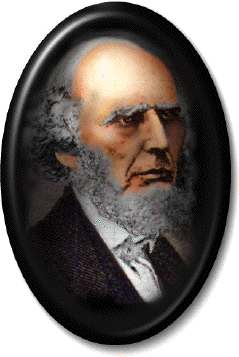
Charles G. Finney
1792-1875

A Voice from the Philadelphian Church Age
|

by Charles Grandison Finney
.
"SYSTEMATIC THEOLOGY" in 12 html pages-
Introduction ---New Window
LECTURES 1-7 of page 1
(this page)
LECTURES 8-16 of page 2
---New Window
LECTURES 17-30 of page 3 ---New Window
LECTURES 31-38 of page 4 ---New Window
LECTURES 39-47 of page 5 ---New Window
LECTURES 48-57 of page 6 ---New Window
LECTURES 58-67 of page 7 ---New Window
LECTURES 68-74 of page 8 ---New Window
LECTURES 75-80 of page 9 ---New Window
LECTURES 81-83 of page 10 ---New Window
APPENDIX on page 11 ---New Window
To avoid broken links, due to file length, please wait for the page to
load completely
before selecting ANY link below.
The links above can be used immediately.
Thanks.
Suggestions during load time:
Take a look at Mr. Finney's extensive
Table of Contents.
Table of Contents
page 1
LECTURE I.
Various classes of truths, and how the mind attains to a knowledge of them
LECTURE II. -- Moral Government.
Definition of the term law . . Distinction between physical and moral law . .
The essential attributes of moral law . . Subjectivity . . Objectivity . . Liberty,
as opposed to necessity . . Fitness . . Universality . . Impartiality . . Justice
. . Practicability . . Independence . . Immutability . . Unity . . Equity . . Expediency
. . Exclusiveness
LECTURE III. -- Moral Government--Continued.
Definition of the term government . . Distinction between moral and physical
government . . The fundamental reason of moral government . . Whose right it is to
govern . . What is implied in the right to govern . . Point out the limits of this
right . . What is implied in moral government . . Moral obligation . . The conditions
of moral obligation . . Remarks
LECTURE IV. -- Moral Government--Continued.
Man a subject of moral obligation . . Extent of moral obligation . . Shown by
an appeal to reason, or to natural theology, to what acts and states of mind moral
obligation cannot directly extend . . Shown to what acts and states of mind moral
obligation must directly extend . . To what acts and mental states moral obligation
indirectly extends
LECTURE V. -- Foundation of Moral Obligation.
What is intended by the foundation of moral obligation . . The extent of moral
obligation . . Remind you of the distinction between the ground and conditions of
obligation . . Points of agreement among the principal parties in this discussion
. . Wherein they disagree . . That the sovereign will of God is not the foundation
of moral obligation . . The theory of Paley . . The utilitarian philosophy
LECTURE VI. -- Foundation of Moral Obligation.
False Theories.
The theory that regards right as the foundation of moral obligation
LECTURE VII. -- Foundation of Moral Obligation.
False Theories.
The theory that the goodness or moral excellence of God is the foundation of
moral obligation
This lecture was typed in by Chris Delk.
.
SYSTEMATIC THEOLOGY.
LECTURE I. Back
to Top
HOW WE ATTAIN TO THE KNOWLEDGE OF CERTAIN TRUTHS.
ALL teaching and reasoning take certain truths as granted. That the unequivocal,
à priori affirmations of the reason are valid, for all the truths and principles
thus affirmed, must be assumed and admitted, or every attempt to construct a science,
of any kind, or to attain to certain knowledge upon any subject, is vain and even
preposterous. As I must commence my lectures on moral government by laying down certain
moral postulates, or axioms, which are, à priori, affirmed by the reason,
and therefore self-evident to all men, when so stated as to be understood, I will
spend a few moments in stating certain facts belonging more appropriately to the
department of psychology. Theology is so related to psychology, that the successful
study of the former without a knowledge of the latter, is impossible. Every theological
system, and every theological opinion, assumes something as true in psychology. Theology
is, to a great extent, the science of mind in its relations to moral law. God is
a mind or spirit: all moral agents are in his image. Theology is the doctrine of
God, comprehending his existence, attributes, relations, character, works, word,
government providential and moral, and, of course, it must embrace the facts of human
nature, and the science of moral agency. All theologians do and must assume the truth
of some system of psychology and mental philosophy, and those who exclaim most loudly
against metaphysics, no less than others.
There is a distinction between the mind's knowing a truth, and knowing that it knows
it. Hence I begin by defining self-consciousness.
Self-consciousness is the mind's recognition of itself. It is the noticing of, or
act of knowing itself. Its existence, attributes, acts, and states, with the attributes
of liberty or necessity which characterize those acts and states. Of this, I shall
frequently speak hereafter.
THE REVELATIONS OF SELF-CONSCIOUSNESS.
Self-consciousness reveals to us three primary faculties of mind, which we call intellect,
sensibility, and will. The intellect is the faculty of knowledge; the sensibility
is the faculty or susceptibility of feeling; the will is the executive faculty, or
the faculty of doing or acting. All thinking, perceiving, intuiting, reasoning, opining,
forming notions or ideas, belong to the intellect.
Consciousness reveals the various functions of the intellect, and also of the sensibility
and will. In this place, we shall attend only to the functions of the intellect,
as our present business is to ascertain the methods by which the intellect arrives
at its knowledges, which are given to us in self-consciousness.
Self-consciousness is, itself, of course, one of the functions of the intellect;
and here it is in place to say, that a revelation in consciousness is science, or
knowledge. What consciousness gives us we know. Its testimony is infallible and conclusive,
upon all subjects upon which it testifies.
Among other functions of the intellect, which I need not name, self-consciousness
reveals the three-fold, fundamental distinction of the sense, the reason, and the
understanding.
OF THE SENSE.
The sense is the power that perceives sensation and brings it within the field of
consciousness. Sensation is an impression made upon the sensibility by some object
without or some thought within the mind. The sense takes up, or perceives the sensation,
and this perceived sensation is revealed in consciousness. If the sensation is from
some object without the mind, as sound or colour, the perception of it belongs to
the outer sense. If from some thought, or mental exercise, the perception is of the
inner sense. I have said that the testimony of consciousness is conclusive, for all
the facts given by its unequivocal testimony. We neither need, nor can we have, any
higher evidence of the existence of a sensation, than is given by consciousness.
Our first impressions, thoughts, and knowledges, are derived from sense. But knowledge
derived purely from this source would, of necessity, be very limited.
OF THE REASON.
Self-consciousness also reveals to us the reason or the à priori function
of the intellect. The reason is that function of the intellect which immediately
beholds or intuits a class of truths which, from their nature, are not cognizable
either by the understanding or the sense. Such, for example, as the mathematical,
philosophical, and moral axioms, and postulates. The reason gives laws and first
principles. It gives the abstract, the necessary, the absolute, the infinite. It
gives all its affirmations by a direct beholding or intuition, and not by induction
or reasoning. The classes of truths given by this function of the intellect are self-evident.
That is, the reason intuits, or directly beholds them, as the faculty of sense intuits,
or directly beholds, a sensation. Sense gives to consciousness the direct vision
of sensation, and therefore the existence of the sensation is certainly known to
us. The reason gives to consciousness the direct vision of the class of truths of
which it takes cognizance; and of the existence and validity of these truths we can
no more doubt, than of the existence of our sensations.
Between knowledge derived from sense and from reason there is a difference: in one
case, consciousness gives us the sensation: it may be questioned whether the perceptions
of the sense are a direct beholding of the object of the sensation, and consequently
whether the object really exists, and is the real archetype of the sensation. That
the sensation exists we are certain, but whether that exists which we suppose to
be the object and the cause of the sensation, admits of doubt. The question is, does
the sense immediately intuit or behold the object of the sensation. The fact that
the report of sense cannot always be relied upon, seems to show that the perception
of sense is not an immediate beholding of the object of the sensation; sensation
exists, this we know, that it has a cause we know; but that we rightly know the cause
or object of the sensation, we may not know.
But in regard to the intuitions of the reason, this faculty directly beholds the
truths which it affirms. These truths are the objects of its intuitions. They are
not received at second hand. They are not inferences nor inductions, they are not
opinions, nor conjectures, nor beliefs, but they are direct knowings. The truths
given by this faculty are so directly seen and known, that to doubt them is impossible.
The reason, by virtue of its own laws, beholds them with open face, in the light
of their own evidence.
OF THE UNDERSTANDING.
The understanding is that function of the intellect that takes up, classifies and
arranges the objects and truths of sensation, under a law of classification and arrangement
given by the reason, and thus forms notions and opinions, and theories. The notions,
opinions, and theories of the understanding, may be erroneous, but there can be no
error in the à priori intuitions of the reason. The knowledges of the understanding
are so often the result of induction or reasoning, and fall so entirely short of
a direct beholding, that they are often knowledges only in a modified and restricted
sense.
Of the imagination, and the memory, &c., I need not speak in this place.
What has been said has, I trust, prepared the way for saying that the truths of theology
arrange themselves under two heads.
I. Truths which need proof.
II. Truths which need no proof.
I. Truths which need proof.
First. Of this class it may be said, in general, that to it belong all truths which
are not directly intuited by some function of the intellect in the light of their
own evidence.
Every truth that must be arrived at by reasoning or induction, every truth that is
attained to by other testimony than that of direct beholding, perceiving, intuiting,
or cognizing, is a truth belonging to the class that needs proof.
Second. Truths of demonstration belong to the class that needs proof. When truths
of demonstration are truly demonstrated by any mind, it certainly knows them to be
true, and affirms that the contrary cannot possibly be true. To possess the mind
of others with those truths, we must lead them through the process of demonstration.
When we have done so, they cannot but see the truth demonstrated. The human mind
will not ordinarily receive, and rest in, a truth of demonstration, until it has
demonstrated it. This it often does without recognizing the process of demonstration.
The laws of knowledge are physical. The laws of logic are inherent in every mind;
but in various states of developement in different minds. If a truth which needs
demonstration, and which is capable of demonstration, is barely announced, and not
demonstrated, the mind feels a dissatisfaction, and does not rest short of the demonstration
of which it feels the necessity. It is therefore of little use to dogmatize, when
we ought to reason, demonstrate, and explain. In all cases of truths, not self-evident,
or of truths needing proof, religious teachers should understand and comply with
the logical conditions of knowledge and rational belief; they tempt God when they
merely dogmatize, where they ought to reason, and explain, and prove, throwing the
responsibility of producing conviction and faith upon the sovereignty of God. God
convinces and produces faith, not by the overthrow of, but in accordance with, the
fixed laws of mind. It is therefore absurd and ridiculous to dogmatize and assert,
when explanation, illustration, and proof are possible, and demanded by the laws
of the intellect. To do this, and then leave it with God to make the people understand
and believe, may be at present convenient for us, but if it be not death to our auditors,
no thanks are due to us. We are bound to inquire to what class a truth belongs, whether
it be a truth which, from its nature and the laws of mind, needs to be illustrated,
or proved. If it does, we have no right merely to assert it, when it has not been
proved. Let us comply with the necessary conditions of a rational conviction, and
then leave the event with God.
To the class of truths that need proof belong those of divine revelation.
All truths known to man are divinely revealed to him in some sense, but I here speak
of truths revealed to man by the inspiration of the Holy Spirit. The Bible announces
many self-evident truths, and many truths of demonstration. These may, or might be
known, at least many of them, irrespective of the inspiration of the Holy Spirit.
But the class of truths of which I here speak, rest wholly upon the testimony of
God, and are truths of pure inspiration. Some of these truths are above reason, in
the sense that the reason can, à priori, neither affirm nor deny them.
When it is ascertained that God has asserted them, the mind needs no other evidence
of their truth, because by a necessary law of the intellect, all men affirm the veracity
of God. But for this necessary law of the intellect, men could not rest upon the
simple testimony of God, but would ask for evidence that God is to be believed. But
such is the nature of mind, as constituted by the Creator, that no moral agent needs
proof that God's testimony ought to be received. Let it be once settled that God
has declared a fact, or a truth, and this is, with every moral agent, all the evidence
he needs. The reason, from its own laws, affirms the perfect veracity of God, and
although the truth announced may be such that the reason, à priori, can neither
affirm, or deny it, yet when asserted by God, the reason irresistibly affirms that
God's testimony ought be received.
These truths need proof in the sense that it needs to be shown that they were given
by a divine inspiration. This fact demonstrated, the truths themselves need only
to be understood, and the mind necessarily affirms its obligation to believe them.
Under this head I might notice the probable or possible truths; that is, those that
are supported by such evidence as only shows them to be probable or possible, but
I forbear.
My present object more particularly is to notice--
II. Truths which need no proof.
These are à priori truths of reason, and truths of sense; that is, they are
truths that need no proof, because they are directly intuited or beheld by one of
these faculties.
The à priori truths of reason may be classed under the heads of first truths:
self-evident truths which are necessary and universal: and self-evident truths not
necessary and universal.
- 1. First truths have the following attributes.
- (1.) They are absolute or necessary truths, in the sense that the reason affirms
that they must be true. Every event must have an adequate cause. Space must be. It
is impossible that it should not be, whether any thing else were or not. Time must
be, whether there were any events to succeed each other in time or not. Thus necessity
is an attribute of this class.
(2.) Universality is an attribute of a first truth. That is, to truths of this class
there can be no exception. Every event must have a cause, there can be no event without
a cause.
(3.) First truths are truths of necessary and universal knowledge. That is, they
are not merely knowable, but they are known to all moral agents, by a necessary law
of their intellect.
That space and time are, and must be, that every event has and must have a cause,
and such like truths, are universally known and assumed by every moral agent, whether
the terms in which they are stated have ever been so much as heard by him, or not.
This last is the characteristic that distinguishes first truths from others merely
self-evident, of which we shall soon speak.
(4.) First truths are, of course, self-evident. That is, they are universally directly
beheld, in the light of their own evidence.
(5.) First truths are truths of the pure reason, and of course truths of certain
knowledge. They are universally known with such certainty as to render it impossible
for any moral agent to deny, forget, or practically overlook them. Although they
may be denied in theory, they are always, and necessarily, recognized in practice.
No moral agent, for example, can, by any possibility, practically deny, or forget,
or overlook the first truths that time and space exist and must exist, that every
event has and must have a cause.
It is, therefore, always to be remembered that first truths are universally assumed
and known, and in all our teachings, and in all our inquiries we are to take the
first truths of reason for granted. It is preposterous to attempt to prove them,
for the reason that we necessarily assume them as the basis and condition of all
reasoning.
The mind arrives at a knowledge of these truths by directly and necessarily beholding
them, upon condition of its first perceiving their logical condition. The mind beholds,
or attains to the conception of, an event. Upon this conception it instantly assumes,
whether it thinks of the assumption or not, that this event had, and that every event
must have, a cause.
The mind perceives, or has the notion of body. This conception necessarily developes
the first truth, space is and must be.
The mind beholds or conceives of succession; and this beholding, or conception, necessarily
developes the first truth, time is, and must be.
As we proceed we shall notice divers truths which belong to this class, some of which,
in theory, have been denied. Nevertheless, in their practical judgments, all men
have admitted them and given as high evidence of their knowing them, as they do of
knowing their own existence.
Suppose, for example, that the law of causality should not be, at all times or at
any time, a subject of distinct thought and attention. Suppose that the proposition
in words, should never be in the mind, that "every event must have a cause,"
or that this proposition should be denied. Still the truth is there, in the form
of absolute knowledge, a necessary assumption, an à priori affirmation, and
the mind has so firm a hold of it, as to be utterly unable to overlook, or forget,
or practically deny it. Every mind has it as a certain knowledge, long before it
can understand the language in which it is expressed, and no statement or evidence
whatever can give the mind any firmer conviction of its truth, than it had from necessity
at first. This is true of all the truths of this class. They are always, and necessarily,
assumed by all moral agents, whether distinctly thought of or not. And for the most
part this class of truths are assumed, without being frequently, or at least without
being generally, the object of thought or direct attention. The mind assumes them,
without a distinct consciousness of the assumption. For example, we act every moment,
and judge, and reason, and believe, upon the assumption that every event must have
a cause, and yet we are not conscious of thinking of this truth, nor that we assume
it, until something calls the attention to it.
First truths of reason, then, let it be distinctly remembered, are always and necessarily
assumed, though they may be seldom thought of. They are universally known, before
the words are understood, by which they may be expressed; and although they may never
be expressed in a formal proposition, yet the mind has as certain a knowledge of
them as it has of its own existence.
All reasoning proceeds upon the assumption of these truths. It must do so, of necessity.
It is preposterous to attempt to prove first truths to a moral agent; for, being
a moral agent, he must absolutely know them already, and if he did not, in no possible
way could he be put in possession of them, except by presenting to his perception
the chronological condition of their developement, and in no case could any thing
else be needed, for upon the occurrence of this perception, the assumption, or developement,
follows by a law of absolute and universal necessity. And until these truths are
actually developed, no being can be a moral agent.
There is no reasoning with one who calls in question the first truths of reason,
and demands proof of them. All reasoning must, from the nature of mind and the laws
of reasoning, assume the first-truths of reason as certain, and admitted, and as
the à priori condition of all logical deduction and demonstration. Some one
of these must be assumed as true, directly or indirectly, in every syllogism and
in every demonstration.
In all our future investigations we shall have abundant occasion for the application
and illustration of what has now been said of first truths of reason. If, at any
stage of our progress, we light upon a truth of this class, let it be borne in mind
that the nature of the truth is the preclusion, or, as lawyers would express it,
the estopple of all controversy.
To deny the reality of this class of truths, is to deny the validity of our most
perfect knowledge. The only question to be settled is, does the truth in question
belong to this class? There are many truths which men, all sane men, certainly know,
of which they not only seldom think, but which, in theory, they strenuously deny.
- 2. The second class of truths that need no proof are self-evident truths, possessing
the attributes of necessity and universality.
- Of these truths, I remark--
(1.) That they, like first truths, are affirmed by the pure reason, and not by the
understanding, nor the sense.
(2.) They are affirmed, like first truths, à priori; that is, they are directly
beheld or intuited, and not attained to by evidence or induction.
(3.) They are truths of universal and necessary affirmation, when so stated as to
be understood. By a law of the reason, all sane men must admit and affirm them, in
the light of their own evidence, whenever they are understood.
This class, although self-evident, when presented to the mind, are not, like first
truths, universally and necessarily known to all moral agents.
The mathematical axioms, and first principles, the à priori grounds and principles
of all science, belong to this class.
(4.) They are, like first truths, universal in the sense that there is no exception
to them.
(5.) They are necessary truths. That is, the reason affirms, not merely that they
are, but that they must be, true; that these truths cannot but be. The abstract,
the infinite, belong to this class.
To compel other minds to admit this class of truths, we need only to frame so perspicuous
a statement of them as to cause them to be distinctly perceived or understood. This
being done, all sound minds irresistibly affirm them, whether the heart is, or is
not, honest enough to admit the conviction.
- 3. A third class of truths that need no proof, are truths of rational intuition,
but possess not the attributes of universality and necessity.
- Our own existence, personality, personal identity, &c., belong to this class.
These truths are intuited by the reason, are self-evident, and given, as such, in
consciousness; they are known to self, without proof, and cannot be doubted. They
are at first developed by sensation, but not inferred from it. Suppose a sensation
to be perceived by the sense, all that could be logically inferred from this is,
that there is some subject of this sensation, but that I exist, and am the subject
of this sensation, does not logically appear. Sensation first awakes the mind to
self-consciousness; that is, a sensation of some kind first arouses the attention
of mind to the facts of its own existence and personal identity. These truths are
directly beheld and affirmed. The mind does not say, I feel, or I think, and therefore
I am, for this is a mere sophism; it is to assume the existence of the I as the subject
of feeling, and afterwards to infer the existence of the I from the feeling or sensation.
- 4. A fourth class of truths that need no proof are sensations. It has been already
remarked, that all sensations given by consciousness, are self-evident to the subject
of them. Whether I ascribe my sensations to their real cause may admit of doubt,
but that the sensation is real there can be no doubt. The testimony of the sense
is valid, for that which it immediately beholds or intuits, that is, for the reality
of the sensation. The judgment may err by ascribing the sensation to the wrong cause.
- But I must not proceed further with this statement; my design has been, not to
enter too minutely into nice metaphysical distinctions, nor by any means to exhaust
the subject of this lecture, but only to fix attention upon the distinctions upon
which I have insisted, for the purpose of precluding all irrelevant and preposterous
discussions about the validity of first and self-evident truths. I must assume that
you possess some knowledge of psychology, and of mental philosophy, and leave to
your convenience a more thorough and extended examination of the subject but hinted
at in this lecture.
Enough, I trust, has been said to prepare your minds for the introduction of the
great and fundamental axioms which lie at the foundation of all our ideas of morality
and religion. Our next lecture will present the nature and attributes of moral law.
We shall proceed in the light of the à priori affirmations of the reason,
in postulating its nature and its attributes. Having attained to a firm footing upon
these points, we shall be naturally conducted by reason and revelation to our ultimate
conclusions.
This lecture was typed in by Dara Kachel.
.
LECTURE II. Back
to Top
MORAL GOVERNMENT.
I. DEFINITION OF LAW.
II. DISTINCTION BETWEEN PHYSICAL AND MORAL LAW.
III. ATTRIBUTES OF MORAL LAW.
I. In discussing this subject, I must begin with defining the term Law.
Law, in a sense of the term both sufficiently popular and scientific for my purpose,
is a RULE OF ACTION. In its generic signification, it is applicable to every kind
of action, whether of matter or of mind-- whether intelligent or unintelligent--
whether free or necessary action.
II. I must distinguish between Physical and Moral Law.
Physical law is a term that represents the order of sequence, in all the changes
that occur under the law of necessity, whether in matter or mind. I mean all changes,
whether of state or action, that do not consist in the states or actions of free
will. Physical law is the law of force, or necessity, as opposed to the law of liberty.
Physical law is the law of the material universe. It is also the law of mind, so
far as its states and changes are involuntary. All mental states or actions, which
are not free and sovereign actions of will, must occur under, and be subject to,
physical law. They cannot possibly be accounted for, except as they are ascribed
to the law of necessity or force.
Moral law is a rule of moral action with sanctions. It is that rule to which moral
agents ought to conform all their voluntary actions, and is enforced by sanctions
equal to the value of the precept. It is the rule for the government of free and
intelligent action, as opposed to necessary and unintelligent action. It is the law
of liberty, as opposed to the law of necessity-- of motive and free choice, as opposed
to force of every kind. Moral law is primarily a rule for the direction of the action
of free will, and strictly of free will only. But secondarily, and less strictly,
it is the rule for the regulation of all those actions and states of mind and body,
that follow the free actions of will by a law of necessity. Thus, moral law controls
involuntary mental states and outward action, only by securing conformity of the
actions of free will to its precept.
III. I must call attention to the essential attributes of moral law.
- 1. Subjectivity. It is, and must be, an idea of reason, developed in the mind
of the subject. It is an idea, or conception, of that state of will, or course of
action, which is obligatory upon a moral agent. No one can be a moral agent, or the
subject of moral law, unless he has this idea developed; for this idea is identical
with the law. It is the law developed, or revealed within himself; and thus he becomes
"a law to himself," his own reason affirming his obligation to conform
to this idea, or law.
- 2. Objectivity. Moral law may be regarded as a rule of duty, prescribed by the
supreme Lawgiver, and external to self. When thus contemplated, it is objective;
when contemplated as a necessary idea or affirmation of our own reason, we regard
it subjectively, or as imposed upon us by God, through the necessary convictions
of our own minds. When contemplated as within ourselves, and as the affirmation of
our own reason we predicate of it subjectivity; but when thought of as a law declared
and enforced by the will of God, it is contemplated as distinct from our own necessary
ideas, and predicate of it objectivity.
- 3. A third attribute is liberty, as opposed to necessity. The precept must lie
developed in the reason, as a rule of duty-- a law of moral obligation-- a rule of
choice, or of ultimate intention, declaring that which a moral agent ought to choose,
will, intend. But it does not, must not, can not possess the attribute of necessity
in its relations to the actions of free will. It must not, cannot, possess an element
or attribute of force, in any such sense as to render conformity of will to its precept,
unavoidable. This would confound it with physical law.
- 4. A fourth attribute of moral law, is fitness. It must be the law of nature,
that is, its precept must prescribe and require, just those actions of the will which
are suitable to the nature and relations of moral beings, and nothing more nor less;
that is, the intrinsic value of the well-being of God and of the universe being given
as the ground, and the nature and relations of moral beings as the condition of the
obligation, the reason hereupon necessarily affirms the intrinsic propriety and fitness
of choosing this good, and of consecrating the whole being to its promotion. This
is what is intended by the law of nature. It is the law or rule of action imposed
on us by God, in and by the nature which he has given us.
- 5. A fifth attribute of moral law is universality. The conditions and circumstances
being the same, it requires, and must require, of all moral agents, the same things,
in whatever world they may be found.
- 6. A sixth attribute of moral law is, and must be, impartiality. Moral law is
no respecter of persons-- knows no privileged classes. It demands one thing of all,
without regard to anything, except the fact that they are moral agents. By this it
is not intended, that the same course of outward conduct is required of all; but
the same state of heart in all-- that all shall have one ultimate intention-- that
all shall consecrate themselves to one end-- that all shall entirely conform, in
heart and life, to their nature and relations.
- 7. A seventh attribute of moral law is, and must be, justice. That which is unjust
cannot be law.
- Justice, as an attribute of moral law, must respect both the precept and the
sanction. Justice, as an attribute of the precept, consists in the requisition of
just that, and no more, which is in exact accordance with the nature and relations
of the ruler and the subject.
Justice, as an attribute of the sanction, consists in apportioning rewards and punishments,
to the merit of obedience on the one hand, and to the guilt of disobedience on the
other.
Sanctions belong to the very essence and nature of moral law. A law without sanctions
is no law; it is only counsel, or advice. Sanctions are the motives which the law
presents, to secure obedience to the precept. Consequently, they should always be
graduated by the importance of the precept; and that is not properly law which does
not promise, expressly or by implication, a reward proportionate to the merit of
obedience, and threaten punishment equal to the guilt of disobedience. Law cannot
be unjust, either in precept or sanction: and it should always be remembered, that
what is unjust, is not law, cannot be law. It is contrary to the true definition
of law. Moral law is a rule of action, founded in the nature and relations of moral
beings, sustained by sanctions equal to the merit of obedience, and the guilt of
disobedience.
- 8. An eighth attribute of moral law is practicability. That which the precept
demands must be possible to the subject. That which demands a natural impossibility
is not, and cannot be, moral law. The true definition of law excludes the supposition
that it can, under any circumstances, demand an absolute impossibility. Such a demand
could not be in accordance with the nature and relations of moral agents, and therefore
practicability must always be an attribute of moral law. To talk of inability to
obey moral law, is to talk nonsense.
- 9. A ninth attribute of moral law is independence. It is founded in the self-existent
nature of God. It is an eternal and necessary idea of the divine reason. It is the
eternal self-existent rule of the divine conduct, the law which the intelligence
of God prescribes to himself. Moral law, as we shall see hereafter more fully, does
not, and cannot originate in the will of God. It originates, or rather, is founded
in his eternal, self-existent nature. It eternally existed in the divine reason.
It is the idea of that state of will which is obligatory upon God upon condition
of his natural attributes, or, in other words, upon condition of his nature. As a
law, it is entirely independent of his will just as his own existence is. It is obligatory
also upon every moral agent, entirely independent of the will of God. Their nature
and relations being given, and their intelligence being developed, moral law must
be obligatory upon them, and it lies not in the option of any being to make it otherwise.
Their nature and relations being given, to pursue a course of conduct suited to their
nature and relations, is necessarily and self-evidently obligatory, independent of
the will of any being.
- 10. A tenth attribute of moral law is immutability. Moral law can never change,
or be changed. It always requires of every moral agent a state of heart, and course
of conduct, precisely suited to his nature and relations. Whatever his nature is,
his capacity and relations are; entire conformity to just that nature, those capacities
and relations, so far as he is able to understand them, is required at every moment
and nothing more nor less. If capacity is enlarged, the subject is not thereby rendered
capable of works of supererogation-- of doing more than the law demands; for the
law still, as always, requires the full consecration of his whole being to the public
interests. If by any means whatever, his ability is abridged, moral law, always and
necessarily consistent with itself, still requires that what is left-- nothing more
or less-- shall be consecrated to the same end as before. Whatever demands more or
less than entire, universal, and constant conformity of heart and life, to the nature,
capacity and relations of moral agents, be they what they may, is not, and cannot
be, moral law. To suppose that it could be otherwise, would be to contradict the
true definition of moral law. If therefore, the capacity is by any means abridged,
the subject does not thereby become incapable of rendering full obedience; for the
law still demands and urges, that the heart and life shall be fully conformed to
the present, existing nature, capacity, and relations. Anything that requires more
or less than this, whatever else it is, is not, and cannot be, moral law. To affirm
that it can, is to talk nonsense. Moral law invariably holds one language. It never
changes the spirit of its requirement. "Thou shalt love," or be perfectly
benevolent, is its uniform and its only demand. This demand it never varies, and
never can vary. It is as immutable as God is, and for the same reason. To talk of
letting down, or altering moral law, is to talk absurdly. The thing is naturally
impossible. No being has the right or the power to do so. The supposition overlooks
the very nature of moral law. Should the natural capability of the mind, by any means
whatever, be enlarged or abridged, it is perfectly absurd, and a contradiction of
the nature of moral law, to say, that the claims of the law are either elevated or
lowered. Moral law is not a statute, an enactment, that has its origin or its foundation
in the will of any being. It is the law of nature, the law which the nature or constitution
of every moral agent imposes on himself, and which God imposes upon us because it
is entirely suited to our nature and relations, and is therefore naturally obligatory
upon us. It is the unalterable demand of the reason, that the whole being, whatever
there is of it at any time, shall be entirely consecrated to the highest good of
universal being, and for this reason God requires this of us, with all the weight
of his authority. It cannot be too distinctly understood, that moral law is nothing
more nor less, than the law of nature revealed in the necessary ideas of our own
reason, and enforced by the authority of God. It is an idea of that which is fit,
suitable, agreeable to our nature and relations for the time being, that which it
is reasonable for us to will and do, at any and every moment, in view of all the
circumstances of our present existence,-- just what the reason affirms, and what
God affirms, to be suited to our nature and relations, under all the circumstances
of the case.*
- *It has been said, that if we "dwarf," or abridge our powers, we do
not thereby abridge the claims of God; that if we render it impossible to perform
so high a service as we might have done, the Lawgiver, nevertheless, requires the
same as before, that is, that under such circumstances he requires of us an impossibility;--
that should we dwarf, or completely derange, or stultify our powers, he would still
hold us under obligation to perform all that we might have performed, had our powers
remained in their integrity. To this I reply,
That this affirmation assumes, that moral law and moral obligation are founded in
the will of God;-- that his mere will makes law. This is a fundamental mistake. God
cannot legislate in the sense of making law. He declares and enforces the common
law of the universe, or, in other words, the law of nature. This law, I repeat it,
is nothing else than that rule of conduct which is in accordance with the nature
and relations of moral beings. The totality of its requisitions are, both in its
letter and its spirit, "Thou shalt love, &c., with all thy heart, thy soul,
thy might, thy strength." That is, whatever there is of us, at any moment, is
to be wholly consecrated to God, and the good of being, and nothing more nor less.
If our nature or relations are changed, no matter by what means, or to what extent,
provided we are still moral agents, its language and spirit are the same as before,--
"Thou shalt love with all thy strength," &c.
I will here quote from the "Oberlin Evangelist," an extract of a letter
from an esteemed brother, embodying the substance of the above objection, together
with my reply.
"One point is what you say of the claims of the law, in the 'Oberlin Evangelist,'
vol. ii. p. 50:-- 'the question is, what does the law of God require of Christians
of the present generation, in all respects in our circumstances, with all the ignorance
and debility of body and mind which have resulted from the intemperance and abuse
of the human constitution through so many generations?' But if this be so, then the
more ignorant and debilitated a person is in body and mind in consequence of his
own or ancestors' sins and follies, the less the law would require of him, and the
less would it be for him to become perfectly holy-- and, the nearer this ignorance
and debility came to being perfect, the nearer would he be to being perfectly holy,
for the less would be required of him to make him so. But is this so? Can a person
be perfectly sanctified, while particularly that 'ignorance of mind,' which is the
effect of the intemperance and abuse of the human constitution, remains? Yea, can
he be sanctified at all, only as this ignorance is removed by the truth and Spirit
of God; it being a moral and not a physical effect of sinning? I say it kindly, here
appears to me, at least, a very serious entering wedge of error. Were the effect
of human depravity upon man simply to disable him, like taking from the body a limb,
or destroying in part, or in whole, a faculty of the mind, I would not object; but
to say, this effect is ignorance, a moral effect wholly, and then say, having this
ignorance, the law levels its claims according to it, and that with it, a man can
be entirely sanctified, looks not to me like the teachings of the bible."
1. I have seen the passage from my lecture, here alluded to, quoted and commented
upon, in different periodicals, and uniformly with entire disapprobation.
2. It has always been separated entirely from the exposition which I have given of
the law of God in the same lectures; with which exposition, no one, so far as I know,
has seen fit to grapple.
3. I believe, in every instance, the objections that have been made to this paragraph,
were made by those who profess to believe in the present natural ability of sinners
to do all their duty.
4. I would most earnestly and respectfully inquire, what consistency there is, in
denominating this paragraph a dangerous heresy, and still maintaining that men are
at present naturally able to do all that God requires of them?
5. I put the inquiry back to those brethren,-- By what authority do you affirm, that
God requires any more of any moral agent in the universe, and of man in his present
condition, than he is at present able to perform?
6. I inquire, does not the very language of the law of God prove to a demonstration,
that God requires no more of man than, in his present state, he is able to perform?
Let us hear its language: "Thou shalt love the Lord thy God with all thy heart,
and with all thy soul, and with all thy mind, and will all thy strength. Thou shalt
love thy neighbour as thyself." Now here, God so completely levels his claims,
by the very wording of these commandments, to the present capacity of every human
being, however young or old, however maimed, debilitated, or idiotic, as, to use
the language or sentiment of Prof. Hickok, of Auburn Seminary, uttered in my hearing
that, "if it were possible to conceive of a moral pigmy, the law requires of
him nothing more, than to use whatever strength he has, in the service and for the
glory of God."
7. I most respectfully but earnestly inquire of my brethren, if they believe that
God requires as much of men as of angels, of a child as of a man, of a half-idiot
as of a Newton? I mean not to ask whether God requires an equally perfect consecration
of all the powers actually possessed by each of these classes; but whether in degree,
he really requires the same, irrespective of their present natural ability?
8. I wish to inquire, whether my brethren do not admit that the brain is the organ
of the mind, and that every abuse of the physical system has abridged the capacity
of the mind, while it remains connected with the body? And I would also ask, whether
my brethren mean to maintain, at the same breath, the doctrine of present natural
ability to comply with all the requirements of God, and also the fact that God now
requires of man just the same degree of service that he might have rendered if he
had never sinned, or in any way violated the laws of his being? And if they maintained
these two positions at the same time, I further inquire, whether they believe that
man has naturally ability at the present moment to bring all his faculties and powers,
together with his knowledge, into the same state in which they might have been, had
he never sinned? My brethren, is there not some inconsistency here?
The fact is, you contradict yourselves. Your positions are precisely as follow:--
(1.) Man is able perfectly to keep all the commandments of God.
(2.) God requires of man just that service in kind and degree, which would have been
possible to him had he never sinned.
(3.) But man has sinned, abused, and crippled his powers, in so much that, to render
the kind and degree of service which God demands of him, is a natural impossibility.
9. In the paragraph above quoted, the brother admits, that if a man by his own act
had deprived himself of any of his corporeal faculties, he would not thenceforth
have been under an obligation to use those faculties. But he thinks this principle
does not hold true, in respect to ignorance; because he esteems ignorance a moral,
and not a natural defect. Here I beg leave to make a few inquiries:
(1.) Should a man wickedly deprive himself of the use of his hand, would not this
be a moral act? No doubt it would.
(2.) Suppose a man by his own act should make himself an idiot, would not this be
a moral act?
(3.) Would he not in both cases render himself naturally unable, in the one case
to use his hand, and in the other his reason? Undoubtedly he would. But how can it
be affirmed, with any show of reason, that in the one case his natural inability
discharges him from obligation, and not in the other-- that he is still bound to
use his reason, but not his hand? Now the fact is, that in both these cases the inability
is natural.
(4.) I ask, if a man willingly remained in ignorance of God, whether his ignorance
would constitute a moral inability? If a moral inability, he can instantly overcome
it, by the right exercise of his own will, for nothing can be a moral inability that
cannot be instantaneously removed by our own volition. But can the present ignorance
of mankind be instantaneously removed by an act of volition on the part of men, and
their knowledge become as perfect as it might have been had they never sinned? If
not, why call ignorance a moral inability, or a moral effect? The fact is that ignorance
is often the natural effect of moral delinquency. Neglect of duty occasions ignorance;
and this ignorance, while it remains, constitutes a natural inability to perform
those duties of which the mind is ignorant; and all that can be required is, that
from the present moment, the mind should diligently engage in acquiring what knowledge
it can, and perfectly obey, as fast as it obtains the light. If this is not true,
it is utter nonsense to talk about natural ability as being a sine quà non
of moral obligation. And I would kindly, but most earnestly, ask my brethren, by
what rule of consistency they maintain, at the same breath, the doctrine of a natural
ability to do whatever God requires, and also insist that he requires men to know
as much, and in all respects to render him the same kind and degree of service as
if they never had sinned, or rendered themselves in any respect naturally incapable
of doing and being, at the present moment, all that they might have done and been,
had they never, in any instance, neglected duty?
10. This objector appears to be strongly impressed with the consideration, that if
a man's ignorance can be any excuse for his not doing, at present, what he might
have done, but for this ignorance, it will follow, that the less he knows the less
is required of him, and should he become a perfect idiot, he would be entirely discharged
from moral obligation. To this I answer: Yes, or the doctrine of natural ability
and the entire government of God, are a mere farce. If a man should annihilate himself,
would not he thereby set aside his moral obligation to obey God? Yes truly. Should
he make himself an idiot, would he not thereby annihilate his moral agency; and of
course his natural ability to obey God? Will my New School brethren adopt the position
of Dr. Wilson of Cincinnati, as maintained on the trial of Dr. Beecher, that "moral
obligation does not imply ability of any kind?" The truth is, that for the time
being, a man may destroy his moral agency, by rendering himself a lunatic or an idiot;
and while this lunacy or idiotcy continues, obedience to God is naturally impossible,
and therefore not required.
But it is also true, that no human being can deprive himself of reason and moral
agency, but for a limited time. There is no reason to believe, that the soul can
be deranged or idiotic, when separated from the body. And therefore moral agency
will in all cases be renewed in a future, if not in the present state of existence,
when God will hold men fully responsible for having deprived themselves of power
to render him all that service which they might otherwise have rendered. But do let
me inquire again, can my dear brethren maintain, that an idiot or a lunatic can be
a moral agent? Can they maintain that a being is the subject of moral obligation
any farther than he is in a state of sanity? Can they maintain, that an infant is
the subject of moral obligation, previous to all knowledge? And can they maintain,
that moral obligation can, in any case, exceed knowledge? If they can and do-- then,
to be consistent, they must flatly deny that natural ability is a sine quà
non of moral obligation, and adopt the absurd dogma of Dr. Wilson, that "moral
obligation does not imply any ability whatever." When my brethren will take
this ground, I shall then understand and know where to meet them. But I beseech you
not to complain of inconsistency in me, nor accuse me of teaching dangerous heresy,
while I teach nothing more than you must admit to be true, or unequivocally admit
in extenso, the very dogma of Dr. Wilson, quoted above.
I wish to be distinctly understood. I maintain, that present ignorance is present
natural inability, as absolutely as that the present want of a hand is present natural
inability to use it. And I also maintain, that the law of God requires nothing more
of any human being, than that which he is at present naturally able to perform, under
the present circumstances of his being. Do my brethren deny this? If they do, then
they have gone back to Dr. Wilson's ground. If they do not, why am I accounted a
heretic by them, for teaching what they themselves maintain?
11. In my treatise upon the subject of entire sanctification, I have shown from the
Bible, that actual knowledge is indispensable to moral obligation, and that the legal
maxim, "ignorance of the law excuses no one," is not good in morals.
12. Professor Stuart, in a recent number of the Biblical Repository, takes precisely
the same ground that I have taken, and fully maintains, that sin is the voluntary
transgression of a known law. And he further abundantly shows, that this is no new
or heterodox opinion. Now Prof. Stuart, in the article alluded to, takes exactly
the same position in regard to what constitutes sin that I have done in the paragraph
upon which so much has been said. And may I be permitted to inquire, why the same
sentiment is orthodox at Andover, and sound theology in the Biblical Repository,
but highly heterodox and dangerous at Oberlin?
13. Will my brethren of the new school, to avoid the conclusiveness of my reasonings
in respect to the requirements of the law of God, go back to old schoolism, physical
depravity, and accountability based upon natural inability, and all the host of absurdities
belonging to its particular views of orthodoxy? I recollect that Dr. Beecher expressed
his surprise at the position taken by Dr. Wilson, to which I have alluded, and said
he did not believe that "many men could be found, who could march up without
winking to the maintenance of such a proposition as that." But to be consistent,
I do not see but that my brethren with or "without winking," are driven
to the necessity, either of "marching up" to maintaining the same proposition,
or they must admit that the objectionable paragraph in my lecture is the truth of
God.
- 11. An eleventh attribute of moral law is unity. Moral law proposes but one ultimate
end of pursuit to God, and to all moral agents. All its requisitions, in their spirit,
are summed up and expressed in one word, love or benevolence. This I only announce
here. It will more fully appear hereafter. Moral law is a pure and simple idea of
the reason. It is the idea of perfect, universal, and constant consecration of the
whole being, to the highest good of being. Just this is, and nothing more nor less
can be, moral law; for just this, and nothing more nor less, is a state of heart
and a course of life exactly suited to the nature and relations of moral agents,
which is the only true definition of moral law.
- 12. Equity is another attribute of moral law. Equity is equality. That only is
equitable which is equal. The interest and well-being of every sentient existence,
and especially of every moral agent, is of some value in comparison with the interests
of others, and of the whole universe of creatures. Moral law demands that the interest
and well-being of every member of the universal family shall be regarded by each
according to its relative or comparative value, and that in no case shall it be sacrificed
or wholly neglected, unless it be forfeited by crime. The distinction, allowed by
human tribunals, between law and equity, does not pertain to moral law, nor does
nor can it strictly pertain to any law. For it is impossible that that should be
law, in the sense of imposing obligation, of which equity is not an attribute. An
inequitable law cannot be. The requirements of law must be equal. A moral agent may,
by transgression, forfeit the protection of law, and may come into such governmental
relations, by trampling on the law, that moral law may demand that he be made a public
example-- that his interest and well-being be laid upon the altar, and that he be
offered a sacrifice to public justice, as a preventive of crime in others. It may
happen also that sacrifices may be demanded by moral law of innocent beings, for
the promotion of a greater amount of good than that sacrificed by the innocent. Such
was the case with the atonement of Christ, and such is the case with the missionary,
and with all who are called by the law of love to practice self-denial for the good
of others. But let it be remembered, that moral law never requires nor allows any
degree of self-denial and self-sacrifice that relinquishes a good of greater value
than that gained by the sacrifice. Nor does it in any case demand nor permit that
any interest, not forfeited by its possessor, shall be relinquished or finally neglected,
without adequate ultimate compensation. As has been said, every interest is of some
comparative value; and ought to be so esteemed and treated. Moral law demands, and
must demand, that it shall be so regarded by all moral agents to whom it is known.
"THOU SHALT LOVE THY NEIGHBOUR AS THYSELF" is its unalterable language.
It can absolutely utter no other language than this, and nothing can be moral law
which holds any other language. Law is not, and cannot be, an arbitrary enactment
of any being or number of beings. Unequal LAW is a misnomer. That which is unequal
in its demands, is not and cannot be, law. Law must respect the interests and the
rights of all, and of each member of the universal family. It is impossible that
it should be otherwise, and still be law.
- 13. Expediency is another attribute of moral law.
- That which is upon the whole most wise is expedient,-- that which is upon the
whole expedient is demanded by moral law. True expediency and the spirit of moral
law are always identical. Expediency may be inconsistent with the letter, but never
with the spirit of moral law. Law in the form of commandment is a revelation or declaration
of that course which is expedient. It is expediency revealed, as in the case of the
decalogue, and the same is true of every precept of the Bible, it reveals to us what
is expedient. A revealed law or commandment is never to be set aside by our views
of expediency. We may know with certainty that what is required is expedient. The
command is the expressed judgment of God in the case, and reveals with unerring certainty
the true path of expediency. When Paul says, "All things are lawful unto me,
but all things are not expedient," we must not understand him as meaning that
all things in the absolute sense were lawful to him, or that anything that was not
expedient was lawful to him. But he doubtless intended, that many things were inexpedient
that are not expressly prohibited by the letter of the law,-- that the spirit of
the law prohibited many things not expressly prohibited by the letter. It should
never be forgotten that that which is plainly demanded by the highest good of the
universe is law. It is expedient. It is wise. The true spirit of the moral law does
and must demand it. So, on the other hand, whatever is plainly inconsistent with
the highest good of the universe is illegal, unwise, inexpedient, and must be prohibited
by the spirit of moral law. But let the thought be repeated, that the Bible precepts
always reveal that which is truly expedient, and in no case are we at liberty to
set aside the spirit of any commandment upon the supposition that expediency requires
it. Some have denounced the doctrine of expediency altogether, as at all times inconsistent
with the law of right. These philosophers proceed upon the assumption that the law
of right and the law of benevolence are not identical but inconsistent with each
other. This is a common but fundamental mistake, which leads me to remark that--
Law proposes the highest good of universal being as its end, and requires all moral
agents to consecrate themselves to the promotion of this end. Consequently, expediency
must be one of its attributes. That which is upon the whole in the highest degree
useful to the universe must be demanded by moral law. Moral law must, from its own
nature, require just that course of willing and acting that is upon the whole in
the highest degree promotive of the public good,-- in other words, that which is
upon the whole in the highest degree useful, and therefore expedient. It has been
strangely and absurdly maintained that right would be obligatory if it necessarily
tended to and resulted in universal and perfect misery. Than which a more nonsensical
affirmation was never made. The affirmation assumes that the law of right and of
good-will are not only distinct, but may be antagonistic. It also assumes that that
can be law that is not suited to the nature and relations of moral agents. Certainly
it will not be pretended that that course of willing and acting that necessarily
tends to, and results in, universal misery, can be consistent with the nature and
relations of moral agents. Nothing is or can be suited to their nature and relations,
that is not upon the whole promotive of their highest well-being. Expediency and
right are always and necessarily at one. They can never be inconsistent. That which
is upon the whole most expedient is right, and that which is right is upon the whole
expedient.
- 14. Exclusiveness is another attribute of moral law. That is, moral law is the
only possible rule of moral obligation. A distinction is usually made between moral,
ceremonial, civil, and positive laws. This distinction is in some respects convenient,
but is liable to mislead and to create an impression that something can be obligatory,
in other words can be law, that has not the attributes of moral law. Nothing can
be law, in any proper sense of the term, that is not and would not be universally
obligatory upon moral agents under the same circumstances. It is law because and
only because, under all the circumstances of the case, the course prescribed is fit,
proper, suitable, to their natures, relations, and circumstances. There can be no
other rule of action for moral agents but moral law, or the law of benevolence. Every
other rule is absolutely excluded by the very nature of moral law. Surely there can
be no law that is or can be obligatory upon moral agents but one suited to, and founded
in their nature, relations, and circumstances. This is and must be the law of love
or benevolence. This is the law of right, and nothing else is or can be. Every thing
else that claims to be law and to impose obligation upon moral agents, from whatever
source it emanates, is not and cannot be a law, but must be an imposition and "a
thing of nought."
This lecture was typed in by Pam Burns.
.
LECTURE III. Back to Top
ON GOVERNMENT.
I. TERM GOVERNMENT DEFINED.
II. DISTINCTION BETWEEN MORAL AND PHYSICAL GOVERNMENT.
III. FUNDAMENTAL REASON OF MORAL GOVERNMENT.
IV. WHOSE RIGHT IT IS TO GOVERN.
V. WHAT IS IMPLIED IN THE RIGHT TO GOVERN.
VI. LIMITS OF THE RIGHT TO GOVERN.
VII. WHAT IS IMPLIED IN MORAL GOVERNMENT.
VIII. MORAL OBLIGATION DEFINED.
IX. CONDITIONS OF MORAL OBLIGATION.
I. Government defined.
The primary idea of government, is that of direction, guidance, control, by, or in
accordance with, rule or law. This seems to be the generic signification of the term
government; but it appears not to be sufficiently broad in its meaning, to express
all that properly belongs to moral government. This leads me,
II. To distinguish between moral and physical government.
All government is, and must be, either moral or physical; that is, all guidance and
control must be exercised in accordance with either moral or physical law; for there
can be no laws that are neither moral nor physical. Physical government, is control,
exercised by a law of necessity or force, as distinguished from the law of free will,
or liberty. It is the control of substance, as opposed to free will. The only government
of which substance, as distinguished from free will, is capable, is and must be physical.
This is true, whether the substance be material or immaterial, whether matter or
mind. States and changes, whether of matter or mind, that are not actions of free
will, must be subject to the law of necessity. In no other way can they be accounted
for. They must therefore belong to the department of physical government. Physical
government, then, is the administration of physical law, or the law of force.
Moral government consists in the declaration and administration of moral law. It
is the government of free will by motives as distinguished from the government of
substance by force. Physical government presides over and controls physical states,
and changes of substance or constitution, and all involuntary states and changes.
Moral government presides over and controls, or seeks to control, the actions of
free will: it presides over intelligent and voluntary states and changes of mind.
It is a government of motive, as opposed to a government of force-- control exercised,
or sought to be exercised, in accordance with the law of liberty, as opposed to the
law of necessity. It is the administration of moral as opposed to physical law.
Moral government includes the dispensation of rewards and punishments; and is administered
by means as complicated and vast, as the whole of the works, and providence, and
ways, and grace of God.
III. I am to inquire into the fundamental reason of moral government.
Government must be founded in a good and sufficient reason, or it is not right. No
one has a right to prescribe rules for, and control the conduct of, another, unless
there is some good reason for his doing so. There must be a necessity for moral government,
or the administration of it is tyranny. Is there any necessity for moral government?
And if so, wherein? I answer, that from the nature and relations of moral beings,
virtue, or holiness, is indispensable to happiness. But holiness cannot exist without
moral law and moral government; for holiness is nothing else than conformity to moral
law. Moral government, then, is indispensable to the highest well-being of the universe
of moral agents, and therefore ought to exist. The universe is dependent upon this
as a means of securing the highest good. This dependence is a good and sufficient
reason for the existence of moral government. Let it be understood, then, that moral
government is a necessity of moral beings, and therefore right.-- When it is said,
that the right to govern is founded in the relation of dependence, it is not, or
ought not to be, intended, that this relation itself confers the right to govern
irrespective of the necessity of government. The mere fact, that one being is dependent
on another, does not confer on one the right to govern, and impose upon the other
obligation to obey, unless the dependent one needs to be governed, and consequently,
that the one upon whom the other is dependent cannot fulfil to him the duties of
benevolence, without governing or controlling him. The right to govern implies the
duty to govern. Obligation, and consequently, the right to govern, implies that government
is a necessary means of fulfilling to the dependent party the duties of benevolence.
Strictly speaking, the right to govern is founded in the intrinsic value of the interests
to be secured by government; and the right is conditionated upon the necessity of
government as a means of securing those interests. I will briefly sum up the argument
under this head, as follows:--
- 1. It is impossible that government should not exist.
- 2. Every thing must be governed by laws suited to its nature.
- 3. Matter must be governed by physical laws, because it is not susceptible of
government by motive.
- 4. The free actions of will must be governed by motives, and moral agents must
be governed by moral considerations; for free will is not susceptible of government
by force.
- 5. We are conscious of moral agency, and, as moral agents, can be governed only
by a moral government.
- 6. Our nature and circumstances demand that we should be under a moral government;
because--
- (1.) Moral happiness depends upon moral order.
(2.) Moral order depends upon the harmonious action of all our powers, as individuals
and as members of society.
(3.) No community can perfectly harmonize in all their views and feelings, without
perfect knowledge, or, to say the least, the same degree of knowledge on all subjects
on which they are called to act.
(4.) But no community ever existed, or will exist, in which every individual possesses
exactly the same amount of knowledge, and where the members are, therefore, entirely
agreed in all their thoughts, views, and opinions.
(5.) But if they are not agreed in opinion, or have not exactly the same amount of
knowledge, they will not, in every thing, harmonize, as it respects their courses
of conduct.
(6.) There must, therefore, be in every community, some standard or rule of duty,
to which all the subjects of the community are to conform themselves.
(7.) There must be some head or controlling mind, whose will shall be law, and whose
decision shall be regarded as infallible, by all the subjects of the government.
(8.) However diverse their intellectual attainments are, in this they must all agree,
that the will of the lawgiver is right, and universally the rule of duty.
(9.) This will must be authoritative, and not merely advisory.
(10.) There must of necessity be a penalty attached to, and incurred by, every act
of disobedience to this will.
(11.) If disobedience be persisted in, exclusion from the privileges of the government
is the lowest penalty that can consistently be inflicted.
(12.) The good, then, of the universe imperiously requires, that there should be
a moral governor.
IV. Whose right it is to govern.
We have just seen, that necessity is a condition of the right and duty to govern--
that the highest well-being of the universe demands, and is the end of moral government.
It must, therefore, be his right and duty to govern, whose attributes, physical and
moral, best qualify him to secure the end of government. To him all eyes and hearts
should be directed, to fill this station, to exercise this control, to administer
all just and necessary rewards and punishments. It is both his right and duty to
govern.
That God is a moral governor, we infer--
- 1. From our own consciousness. From the very laws of our being, we naturally
affirm our responsibility to him for our conduct. As God is our creator, we are naturally
responsible to him for the right exercise of our powers. And as our good and his
glory depend upon our conformity to the same rule, to which he conforms his whole
being, he is under a moral obligation to require us to be holy, as he is holy.
- 2. His natural attributes qualify him to sustain the relation of a moral governor
to the universe.
- 3. His moral character also qualifies him to sustain this relation.
- 4. His relation to the universe as Creator and preserver, when considered in
connexion with the necessity of government, and with his nature and attributes, confers
on him the right of universal government.
- 5. His relation to the universe, and our relations to him and to each other,
render it obligatory upon him to establish and administer a moral government over
the universe.
- 6. The honour of God demands that he should administer such a government.
- 7. His conscience must demand it. He must know that it would be wrong for him
to create a universe of moral beings, and then refuse or neglect to administer over
them a moral government, since government is a necessity of their nature and relations.
- 8. His happiness must demand it, as he could not be happy unless he acted in
accordance with his conscience.
- 9. If God is not a moral governor he is not wise. Wisdom consists in the choice
of the best ends, and in the use of the most appropriate means to accomplish those
ends. If God is not a moral governor, it is inconceivable that he should have had
any important end in view in the creation of moral beings, or that he should have
chosen the best or any suitable means for the promotion of their happiness as the
most desirable end.
- 10. The conduct or providence of God plainly indicates a design to exert a moral
influence over moral agents.
- 11. His providence plainly indicates that the universe of mind is governed by
moral laws, or by laws suited to the nature of moral agents.
- 12. Consciousness recognizes the existence of an inward law, or rule of action,
together with a knowledge of the moral quality of actions.
- 13. This inward moral consciousness, or conscience, is proof conclusive of the
existence of a rule of duty which is obligatory upon us. Indeed, this consciousness
is only the mind's direct beholding this law, as affirmed by the reason. This rule
implies a ruler, and this ruler must be God.
- 14. If God is not a moral governor, our very nature deceives us.
- 15. If God is not a moral governor, the whole universe, so far as we have the
means of knowing it, is calculated to mislead mankind in respect to this fundamental
truth.
- 16. If there is no such thing as moral government, there is, in reality, no such
thing as moral character; but we as certainly know that we have moral character,
as that we exist.
- 17. All nations have believed that God is a moral governor.
- 18. Our nature is such, that we must believe it. The conviction of our moral
accountability to God, is in such a sense the dictate of our moral nature, that we
cannot escape from it.
- 19. We must disapprove the character of God, if we ever come to a knowledge of
the fact that he created moral agents, and then exercised over them no moral government.
- 20. The connection between moral delinquency and suffering is such as to render
it certain that moral government does, as a matter of fact, exist.
- 21. The Bible, which has been proved to be a revelation from God, contains a
most simple and yet comprehensive system of moral government.
- 22. If we are deceived in respect to our being subjects of moral government,
we are sure of nothing.
V. What is implied in the right to govern.
- 1. From what has just been said, it must be evident, that the right to govern,
implies the necessity of government, as a means of securing an intrinsically valuable
end.
- 2. Also that the right to govern, implies the duty, or obligation to govern.
There can be no right, in this case, without corresponding obligation; for the right
to govern is founded in the necessity of government, and the necessity of government
imposes obligation to govern.
- 3. The right to govern, implies obligation, on the part of the subject, to obey.
It cannot be the right, or duty, of the governor to govern, unless it is the duty
of the subject to obey. The governor and subject are alike dependent upon government,
as the indispensable means of promoting the highest good. The governor and the subject
must, therefore, be under reciprocal obligation, the one to govern, and the other
to be governed, or to obey. The one must seek to govern, the other must submit to
be governed.
- 4. The right to govern, implies the right and duty to dispense just and necessary
rewards and punishments-- to distribute rewards proportioned to merit, and penalties
proportioned to demerit, whenever the public interest demand their execution.
- 5. It implies the right and duty, to use all necessary means to secure the end
of government, as far as possible.
- 6. It implies obligation, on the part of the subject, cheerfully to acquiesce
in any measure, that may be necessary, to secure the end of government, and in case
of disobedience, to submit to merited punishment, and also, if necessary, to aid
in the infliction of the penalty of law.
- 7. It implies the right and obligation of both ruler and ruled, to consecrate
themselves to the promotion of the great end of government, with a single and steady
aim.
- 8. It implies obligation, both on the part of the ruler and the ruled, to be
always ready, and when occasion arises, actually to make any personal and private
sacrifice demanded by the higher public good-- to cheerfully meet any emergency,
and exercise any degree of self-denial, that can, and will, result in a good of greater
value to the public, than that sacrificed by the individual, or by any number of
individuals, it always being understood, that present voluntary sacrifices shall
have an ultimate reward.
- 9. It implies the right and duty to employ any degree of force, which is indispensable
to the maintenance of order, the execution of wholesome laws, the suppression of
insurrections, the punishment of rebels and disorganizers, and sustaining the supremacy
of moral law. It is impossible that the right to govern should not imply this; and
to deny this right, is to deny the right to govern. Should an emergency occur, in
which a ruler had no right to use the indispensable means of securing order, and
the supremacy of law, the moment this emergency occurred, his right to govern would,
and must, cease: for it is impossible that it should be his right to govern, unless
it be at the same time, and for the same reason, his duty to govern. For it is absurd
to say, that it is his right and duty to govern, and yet, at the same time, that
he has not a right to use the indispensable means of government. It is the same absurdity,
as to say, that he has, and has not, the right to govern, at the same time. If it
be asked, whether an emergency like the one under consideration is possible, and
if so, what might justly be regarded as such an emergency, I answer, that should
circumstances occur under which the sacrifice necessary to sustain, would overbalance
the good to be derived from the prevalence of government, this would create the emergency
under consideration, in which the right to govern would cease.
VI. Point out the limits of this right.
The right to govern is, and must be, just co-extensive with the necessity of government.
We have seen, that the right to govern is founded in the necessities of moral beings.
In other words, the right to govern is founded upon the fact, that the highest good
of moral agents cannot be secured, but by means of government.
It is a first truth of reason, that what is good or valuable in itself, should be
chosen for its own sake, and that it must therefore be the duty of moral agents to
aim at securing, and so far as in them lies, to use the means of securing, the highest
good of the universe, for its own sake, or on account of its intrinsic value. If
moral government is the only means by which this end can be secured, then government
is a necessity of the universe, thence a duty. But under this head, to avoid mistake,
and to correct erroneous impressions, which are sometimes entertained, I must show
what is not the foundation of the right to govern. The boundary of the right must,
as will be seen, depend upon the foundation of the right. The right must be as broad
as the reason for it. If the reason of the right be mistaken, then the limits of
the right cannot be ascertained, and must necessarily be mistaken also.
- 1. Hence the right to govern the universe, for instance, cannot be founded in
the fact, that God sustains to it the relation of Creator. This is by itself no reason
why he should govern it, unless it needs to be governed-- unless some good will result
from government. Unless there is some necessity for government, the fact that God
created the universe can give him no right to govern it.
- 2. The fact that God is the owner and sole proprietor of the universe is no reason
why he should govern it. Unless either his own good or the good of the universe,
or of both together, demand government, the relation of owner cannot confer the right
to govern. Neither God, nor any other being, can own moral beings, in such a sense
as to have a right to govern them, when government is wholly unnecessary, and can
result in no good whatever to God, or to his creatures. Government, in such a case,
would be perfectly arbitrary and unreasonable, and consequently an unjust, tyrannical
and wicked act. God has no such right. No such right can, by possibility, in any
case exist.
- 3. The right to govern cannot be founded in the fact, that God possesses all
the attributes, natural and moral, that are requisite to the administration of moral
government. This fact is no doubt a condition of the right; for without these qualifications
he could have no right, however necessary government might be. But the possession
of these attributes cannot confer the right independently of the necessity of government:
for however well qualified he may be to govern, still, unless government is necessary,
to securing his own glory and the highest well-being of the universe, he has no right
to govern it. Possessing the requisite qualifications is the condition, and the necessity
of government is the foundation of the right to govern. More strictly, the right
is founded in the intrinsic value of the interests to be secured by government, and
conditionated upon the fact, that government is the necessary means of securing the
end.
- 4. Nor is the right to govern conferred by the value of the interests to be secured,
nor by the circumstance of the necessity of government merely, without respect to
the condition just above mentioned. Did not God's natural and moral attributes qualify
him to sustain that relation better than any one else, the right could not be conferred
on him by any other fact or relation.
- 5. The right to govern is not, and cannot be, an abstract right based on no reason
whatever. The idea of this right is not an ultimate idea in such a sense, that our
intelligence affirms the right without assigning any reason on which it is founded.
The human intelligence cannot say that God has a right to govern, because he has
such a right; and that this is reason enough, and all the reason that can be given.
Our reason does not affirm that government is right because it is right, and that
this is a first truth, and an ultimate idea. If this were so, then God's arbitrary
will would be law, and no bounds could possibly be assigned to the right to govern.
If God's right to govern be a first truth, an ultimate truth, fact, and idea, founded
in no assignable reason, then he has the right to legislate as little, and as much,
and as arbitrarily, as unnecessarily, as absurdly, and injuriously as possible; and
no injustice is, or can be done; for he has, by the supposition, a right to govern,
founded in no reason, and of course without any limit. Assign any other reason, as
the foundation of the right to govern, then the value of the interests to be secured,
and conditionated upon the necessity of government, and you may search in vain for
any limit to the right. But the moment the foundation and the condition of the right
are discovered, we see instantly, that the right must be co-extensive with the reason
upon which it is founded, or in other words, must be limited by, and only by the
fact, that thus far, and no farther, government is necessary to the highest good
of the universe. No legislation can be valid in heaven or earth-- no enactments can
impose obligation, except upon the condition, that such legislation is demanded by
the highest good of the governor and the governed. Unnecessary legislation is invalid
legislation. Unnecessary government is tyranny. It can, in no case, be founded in
right. It should, however, be observed, that it is often, and in the government of
God universally true, that the sovereign, and not the subject, is to be the judge
of what is necessary legislation and government. Under no government, therefore,
are laws to be despised or rejected because we are unable to see, at once, their
necessity, and hence, their wisdom. Unless they are palpably unnecessary, and therefore
unwise and unjust, they are to be respected and obeyed as a less evil than contempt
and disobedience, though at present we are unable to see their wisdom. Under the
government of God there can never be any doubt, and of course any ground, for distrust
and hesitancy, as it respects the duty of obedience.
VII. What is implied in moral government.
- 1. Moral government implies a moral governor.
- 2. It implies the existence of moral law.
- 3. It implies the existence of moral agents as the subjects of moral government.
- 4. It implies the existence of moral obligation to obey moral law.
- 5. It implies the fact of moral character, that is, of praise or blame-worthiness
in the subjects of moral government. A moral agent must be under moral obligation,
and one who is under moral obligation must have moral character. If he complies with
obligation he must be holy and praise-worthy, if he refuse to comply with moral obligation
he must be sinful and blame-worthy.
VIII. Moral obligation.
Obligation is a bond, or that which binds. Moral obligation is oughtness. It is a
responsibility imposed on the moral agent by his own reason, and by the authority
of God. God reveals obligation to and through the reason.
The idea of obligation, or of oughtness, is an idea of the pure reason. It is a simple,
rational conception, and strictly speaking, does not admit of a definition, since,
there are no terms more simple by which it may be defined. Obligation is a term by
which we express a conception or idea which all men have, as is manifest from the
universal language of men. All men have the ideas of right and wrong, and have words
by which these ideas are expressed, and, perhaps, no idea among men more frequently
reveals itself in words than that of oughtness or obligation. The term cannot be
defined, for the simple reason that it is too well and too universally understood
to need or even to admit of being expressed in any language more simple and definite
than the word obligation itself.
IX. The conditions of moral obligation.
There is a distinction of fundamental importance between the condition and the ground
of obligation, which has been overlooked by some writers, and of course they have
confused the whole question of obligation. The ground of obligation is the consideration
which creates or imposes obligation, the fundamental reason of the obligation. Of
this I shall inquire in its proper place, in the course of which inquiry I shall
have occasion to notice some instances of the confusion just alluded to, arising
out of confounding the ground and the conditions of obligation. At present I am to
define the conditions of obligation. But I must in this place observe that there
are various forms of obligation. For example, obligation to choose an ultimate end
of life as the highest good of the universe; obligation to choose the necessary conditions
of this end, as holiness, for example; and obligation to put forth executive efforts
to secure this end. The conditions of obligation vary with the form of obligation,
as we shall fully perceive in the course of our investigations.
A condition of obligation in any particular form is a sine quà non of obligation
in that particular form. It is that, without which, obligation in that form could
not exist, and yet is not the fundamental reason of the obligation. For example,
the possession of the powers of moral agency is a condition of the obligation to
choose the highest good of being in general, as an ultimate end, or for its own sake.
But the intrinsic value of this good is the ground of the obligation. This obligation
could not exist without the possession of these powers; but the possession of these
powers cannot of itself create the obligation to choose the good in preference to
the ill of being. The intrinsic difference between the good and the ill of being
is the ground of the obligation to will the one rather than the other. I will first
define the conditions upon which all obligation depends, and without which obligation
in no form can exist, and afterwards proceed to point out the conditions of distinct
forms of obligation.
- 1. Moral agency is universally a condition of moral obligation. The attributes
of moral agency are intellect, sensibility, and free will.
- (1.) Intellect, includes, amongst other functions which I need not name, reason,
conscience, and self-consciousness. As has been said on a former occasion, reason
is the intuitive faculty or function of the intellect. It gives by direct intuition
the following among other truths: the absolute-- for example, right and wrong; the
necessary-- space exists; the infinite-- space is infinite; the perfect-- God is
perfect-- God's law is perfect, &c. In short, it is the faculty that intuits
moral relations and affirms moral obligation to act in conformity with perceived
moral relations. It is that faculty that postulates all the à priori truths
of science whether mathematical, philosophical, theological, or logical.
Conscience is the faculty or function of the intellect that recognizes the conformity
or disconformity of the heart and life to the moral law as it lies revealed in the
reason, and also awards praise to conformity, and blame to disconformity to that
law. It also affirms that conformity to the moral law deserves reward, and that disconformity
deserves punishment. It also possesses a propelling or impulsive power, by which
it urges the conformity, and denounces the nonconformity of will, to moral law. It
seems, in a certain sense, to possess the power of retribution.
Consciousness is the faculty or function of self-knowledge. It is the faculty that
recognizes our own existence, mental actions, and states, together with the attributes
of liberty or necessity, belonging to those actions or states.
"Consciousness is the mind in the act of knowing itself." By consciousness
I know that I am-- that I affirm that space is,-- that I also affirm that the whole
is equal to all its parts-- that every event must have a cause, and many such like
truths. I am conscious not only of these affirmations, but also that necessity is
the law of these affirmations, that I cannot affirm otherwise than I do, in respect
to this class of truths. I am also conscious of choosing to sit at my desk and write,
and I am just as conscious that liberty is the law of this choice. That is, I am
conscious of necessarily regarding myself as entirely free in this choice, and affirming
my own ability to have chosen not to sit at my desk, and of being now able to choose
not to sit and write. I am just as conscious of affirming the liberty or necessity
of my mental states as I am of the states themselves. Consciousness gives us our
existence and attributes, our mental acts and states, and all the attributes and
phenomena of our being, of which we have any knowledge. In short, all our knowledge
is given to us by consciousness. The intellect is a receptivity as distinguished
from a voluntary power. All the acts and states of the intellect are under the law
of necessity, or physical law. The will can command the attention of the intellect.
Its thoughts, perceptions, affirmations, and all its phenomena are involuntary, and
under a law of necessity. Of this we are conscious. Another faculty indispensable
to moral agency is--
(2.) Sensibility. This is the faculty or susceptibility of feeling. All sensation,
desire, emotion, passion, pain, pleasure, and, in short, every kind and degree of
feeling, as the term feeling is commonly used, is a phenomenon of this faculty. This
faculty supplies the chronological condition of the idea of the valuable, and hence
of right and wrong, and of moral obligation. The experience of pleasure or happiness
developes the idea of the valuable, just as the perception of body developes the
idea of space. But for this faculty the mind could have no idea of the valuable,
and hence of moral obligation to will the valuable, nor of right and wrong, nor of
praise and blame-worthiness.
Self-love is a phenomenon of this department of the mind. It consists in a constitutional
desire of happiness, and implies a corresponding dread of misery. It is doubtless
through, or by this constitutional tendency that the rational idea of the intrinsic
value of happiness or enjoyment is at first developed. Animals, doubtless, have enjoyment,
but we have no evidence that they possess the faculty of reason in the sense in which
I have defined the term. Consequently they have not, as we suppose, the rational
conception of the intrinsic worth or value of enjoyment. They seek enjoyment from
a mere impulse of their animal nature, without, as we suppose, so much as a conception
of moral law, obligation, right or wrong.
But we know that moral agents have these ideas. Self-love is constitutional. Its
gratification is the chronological condition of the developement of the reason's
idea of the intrinsically valuable to being. This idea developes that of moral law,
or in other words, the affirmation that this intrinsic good ought to be universally
chosen and sought for its own sake.
The sensibility, like the intellect, is a receptivity or purely a passive, as distinguished
from a voluntary faculty. All its phenomena are under the law of necessity. I am
conscious that I cannot, by any direct effort, feel when and as I will. This faculty
is so correlated to the intellect that when the intellect is intensely occupied with
certain considerations, the sensibility is affected in a certain manner, and certain
feelings exist in the sensibility by a law of necessity. I am conscious that when
certain conditions are fulfilled, I necessarily have certain feelings, and that when
these conditions are not fulfilled, I cannot be the subject of those feelings. I
know by consciousness that my feelings and all the states and phenomena of the sensibility
are only indirectly under the control of my will. By willing I can direct my intellect
to the consideration of certain subjects, and in this way alone affect my sensibility,
and produce a given state of feeling. So on the other hand, if certain feelings exist
in the sensibility which I wish to suppress, I know that I cannot annihilate them
by directly willing them out of existence, but by diverting my attention from the
cause of them, they cease to exist of course and of necessity. Thus, feeling is only
indirectly under the control of the will.
(3.) Moral agency implies the possession of free-will. By free-will is intended the
power of choosing, or refusing to choose, in every instance, in compliance with moral
obligation. Free-will implies the power of originating and deciding our own choices,
and of exercising our own sovereignty, in every instance of choice upon moral questions--
of deciding or choosing in conformity with duty or otherwise in all cases of moral
obligation. That man cannot be under a moral obligation to perform an absolute impossibility,
is a first truth of reason. But man's causality, his whole power of causality to
perform or do anything, lies in his will. If he cannot will, he can do nothing. His
whole liberty or freedom must consist in his power to will. His outward actions and
his mental states are connected with the actions of his will by a law of necessity.
If I will to move my muscles, they must move, unless there be a paralysis of the
nerves of voluntary motion, or unless some resistance be opposed that overcomes the
power of my volitions. The sequences of choice or volition are always under the law
of necessity, and unless the will is free, man has no freedom; and if he has no freedom
he is not a moral agent, that is, he is incapable of moral action and also of moral
character. Free-will then, in the above defined sense, must be a condition of moral
agency, and, of course, of moral obligation.
As consciousness gives the rational affirmation that necessity is an attribute of
the affirmations of the reason, and of the states of sensibility, so it just as unequivocally
gives the reason's affirmation that liberty is an attribute of the actions of the
will. I am as conscious of the affirmation that I could will differently from what
I do in every instance of moral obligation, as I am of the affirmation that I cannot
affirm, in regard to truths of intuition, otherwise than I do. I am as conscious
of affirming that I am free in willing, as I am of affirming that I am not free or
voluntary in my feelings and intuitions.
Consciousness of affirming the freedom of the will, that is, of power to will in
accordance with moral obligation, or to refuse thus to will, is a necessary condition
of the affirmation of obligation. For example, no man affirms, or can affirm, his
obligation to undo all the acts of his past life, and to live his life over again.
He cannot affirm himself to be under this obligation, simply because he cannot but
affirm the impossibility of it. He cannot but affirm his obligation to repent and
obey God in future, because he is conscious of affirming his ability to do this.
Consciousness of the affirmation of ability to comply with any requisition, is a
necessary condition of the affirmation of obligation to comply with that requisition.
Then no moral agent can affirm himself to be under obligation to perform an impossibility.
- 2. A second condition of moral obligation is light, or so much knowledge of our
moral relations as to develope the idea of oughtness. This implies--
- (1.) The perception or idea of the intrinsically valuable.
(2.) The affirmation of obligation to will the valuable for its own sake.
(3.) The developement of the idea that it is right to will the good, or the valuable,
and wrong not to will it, for its own sake or disinterestedly.
Before I can affirm my obligation to will, I must perceive something in that which
I am required to will, as an ultimate end, that renders it worthy of being chosen.
I must have an object of choice. That object must possess, in itself, that which
commends itself to my Intelligence as worthy of being chosen.
All choice must respect means or ends. That is, everything must be willed either
as an end or a means. I cannot be under obligation to will the means until I know
the end. I cannot know an end, or that which can possibly be chosen as an ultimate
end, until I know that something is intrinsically valuable. I cannot know that it
is right or wrong to choose or refuse a certain end, until I know whether the proposed
object of choice is intrinsically valuable or not. It is impossible for me to choose
it, as an ultimate end, unless I perceive it to be intrinsically valuable. This is
self-evident; for choosing it as an end is nothing else than choosing it for its
intrinsic value. Moral obligation, therefore, always and necessarily implies the
knowledge that the well-being of God and of the universe is valuable in itself, and
the affirmation that it ought to be chosen for its own sake, that is, impartially
and on account of its intrinsic value. It is impossible that the ideas of right and
wrong should be developed until the idea of the valuable is developed. Right and
wrong respect intentions, and strictly nothing else, as we shall see. Intention implies
an end intended. Now that which is chosen as an ultimate end, is and must be chosen
for its own sake or for its intrinsic value. Until the end is apprehended, no idea
or affirmation of obligation can exist respecting it. Consequently, no idea of right
or wrong in respect to that end can exist. The end must first be perceived. The idea
of the intrinsically valuable must be developed. Simultaneously with the developement
of the idea of the valuable the intelligence affirms, and must affirm obligation
to will it, or, which is, strictly speaking, the same thing, that it is right to
will it, and wrong not to will it.
It is impossible that the idea of moral obligation, or of right and wrong, should
be developed upon any other conditions than those just specified. To affirm the contrary
were absurd. Suppose, for instance, it should be said that the idea of the intrinsically
valuable is not necessary to the developement of the idea of moral obligation, and
of right and wrong. Let us look at it. It is agreed that moral obligation, and the
ideas of right and wrong respect, directly, intentions only. It is also admitted
that all intentions must respect either means or ends. It is also admitted that obligation
to will means, cannot exist until the end is known. It is also admitted that the
choice of an ultimate end implies the choice of a thing for its own sake, or because
it is intrinsically valuable. Now, from these admissions, it follows that the idea
of the intrinsically valuable is the condition of moral obligation, and also of the
idea of moral obligation. It must follow also that the idea of the valuable must
be the condition of the idea that it would be right to choose, or wrong not to choose,
the valuable. When I come to the discussion of the subject of moral depravity, I
shall endeavour to show that the idea of the valuable is very early developed, and
is among the earliest, if not the very first, of human intellections. I have here
only to insist that the developement of this idea is a sine quà non of moral
obligation. It is, then, nonsense to affirm that the ideas of right and wrong are
developed antecedently to the idea of the valuable. It is the same as to say that
I affirm it to be right to will an end, before I have the idea of an end; or which
is the same thing, of the intrinsically valuable, or wrong not to will an end when
as yet I have no idea or knowledge of any reason why it should be willed, or, in
other words, while I have no idea of an ultimate end. This is absurd.
Let it be distinctly understood then, that the conditions of moral obligation, in
the universal form of obligation to will the highest well-being of God and of the
universe, for its own sake, are--
(1.) The possession of the powers, or faculties, and susceptibilities of a
moral agent.
(2.) Light, or the developement of the ideas of the valuable, of moral obligation,
of right and wrong.
It has been absurdly contended that sensibility is not necessary to moral agency.
This assertion overlooks the fact that moral law is the law of nature; that, therefore,
were the powers and susceptibilities radically different from what they are, or were
the correlation of these powers radically otherwise than it is, they could not still
be moral agents in the sense of being under the same law that moral agents now are.
Possessing a different nature, they must of necessity be subject to a different law.
The law of their nature must be their law, and no other could, by any possibility,
be obligatory upon them.
I have defined the conditions of obligation in its universal form, i.e. obligation
to be benevolent, to love God and our neighbour, or to will the universal good of
being for its intrinsic value. Obligation in this form is universal and always a
unit, and has always the same conditions. But there are myriads of specific forms
of obligation which relate to the conditions and means of securing this ultimate
end. We shall have occasion hereafter fully to show that obligation respects three
classes of the will's actions, viz. the choice of an ultimate end-- the choice of
the conditions and means of securing that end-- and executive volitions or efforts
put forth to secure the end. I have already shown that moral agency, with all that
is implied in it, has the universal conditions of obligation to choose the highest
good of being, as an ultimate end. This must be self-evident.
Obligation to choose the conditions of this end, the holiness of God and of all moral
agents, for example, must be conditioned upon the perception that these are the conditions.
In other words, the perception of the relation of these means to the end must be
a condition of the obligation to will their existence. The perception of the relation
is not the ground but simply the condition of obligation in this form. The relation
of holiness to happiness as a condition of its existence could not impose obligations
to will the existence of holiness without reference to the intrinsic value of happiness,
as the fundamental reason for willing it as a necessary condition and means. The
ground of the obligation to will the existence of holiness, as a means of happiness,
is the intrinsic value of happiness, but the perceived relation of holiness to happiness
is a condition of the obligation. But for this perceived relation the obligation
could not exist, yet the perceived relation could not create the obligation. Suppose
that holiness is the means of happiness, yet no obligation to will holiness on account
of this relation could exist but for the intrinsic value of happiness.
- 3. Conditions of obligation to put forth executive acts.
- Having now defined the conditions of obligation in its universal form, and also
in the form of obligation to choose the existence of holiness as a necessary means
of happiness, I now proceed to point out the conditions of obligation to put forth
executive volitions or efforts to secure holiness, and secure the highest good of
being. Our busy lives are made up in efforts to secure some ultimate end, upon which
the heart is set. The sense in which obligation extends to these executive volitions
or acts I shall soon consider, at present I am concerned only to define the conditions
of these forms of obligation. These forms of obligation, be it understood, respect
volitions and consequent outward acts. Volitions, designed as executive acts, always
suppose an existing choice of the end designed to be secured by them. Obligation
to put forth executive efforts to secure an end must be conditioned upon the possibility,
supposed necessity, and utility of such efforts. If the end chosen does not need
to be promoted by any efforts of ours, or if such efforts are impossible to us, or
if they are seen to be of no use, there can be no obligation to make them.
Anything is a condition of obligation which is essential to the existence of obligation
in a given form, but it is not the ground or fundamental reason of the obligation.
As we proceed, we shall have occasion to notice many instances as illustrations of
what is here premised, and to show what confusion has resulted from confounding the
distinction between the grounds and conditions of obligation as here stated.
But observe, executive acts are such as are put forth with design to secure some
end, and presuppose the existence of both the end and the design, and also the supposition
or belief that such executive acts are possible, necessary, and useful. It is important,
however, to observe that the utility of ultimate choice, or the choice of an object
for its own sake, is not a condition of obligation in that form.
Ultimate choice, or the choice of an object for its own sake, or for its intrinsic
value, is not an effort designed to secure or obtain that object; that is, is not
put forth with any such design. When the object which the mind perceives to be intrinsically
valuable (as the good of being, for example), is perceived by the mind, it cannot
but choose or refuse it. Indifference in this case is naturally impossible. The mind,
in such circumstances, is under a necessity of choosing one way or the other. The
will must embrace or reject it. The reason affirms the obligation to choose the intrinsically
valuable for its own sake, and not because choosing it will secure it. Nor does the
real choice of it imply a purpose or an obligation to put forth executive acts to
secure it, except upon condition that such acts are seen to be necessary, and possible,
and calculated to secure it.
Ultimate choice is not put forth with design to secure its object. It is only the
will's embracing the object or willing it for its own sake. In regard to ultimate
choice the will must choose or refuse the object entirely irrespectively of the tendency
of the choice to secure the object. Assuming this necessity, the reason affirms that
it is right, fit, suitable, or, which is the same thing, that the will ought, or
is under obligation to choose, the good or valuable, and not refuse it, because of
its intrinsic nature, and without regard to whether the choosing will secure the
object chosen.
But executive acts, be it remembered, are, and must be, put forth with design to
secure their object, and of course, cannot exist unless the design exist, and the
design cannot exist unless the mind assumes the possibility, necessity, and utility
of such efforts.
REMARKS.
- 1. If God's government is moral, it is easy to see how sin came to exist; that
a want of experience in the universe, in regard to the nature and natural tendencies
and results of sin, prevented the due influence of sanctions.
- 2. If God's government is moral, we see that all the developements of sin are
enlarging the experience of the universe in regard to its nature and tendencies,
and thus confirming the influence of moral government over virtuous minds.
- 3. If God's government is moral, we can understand the design and tendency of
the atonement; that it is designed, and that it tends to reconcile the exercise of
mercy, with a due administration of law.
- 4. If God's government is moral, we can understand the philosophy of the Spirit's
influences in convicting and sanctifying the soul; that this influence is moral,
persuasive, and not physical.
- 5. If the government of God is moral, we can understand the influence and necessity
of faith. Confidence is indispensable to heart obedience in any government. This
is emphatically true under the divine government.
- 6. If God's government is moral, we can see the necessity and power of Christian
example. Example is the highest moral influence.
- 7. If God's government is moral, his natural or physical omnipotence is no proof
that all men will be saved; for salvation is not effected by physical power.
- 8. If God's government is moral, we see the importance of watchfulness, and girding
up the loins of our minds.
- 9. If God's government is moral, we see the necessity of a well-instructed ministry,
able to wield the motives necessary to sway mind.
- 10. If God's government is moral, we see the philosophical bearings, tendencies,
and power of the providence, law, and gospel of God, in the great work of man's salvation.
This lecture was typed in by Pam Burns.
.
LECTURE IV. Back
to Top
MORAL OBLIGATION.
I. MAN A SUBJECT OF MORAL OBLIGATION.
II. EXTENT OF MORAL OBLIGATION.
I. Man is a subject of moral obligation.
This is a first truth of reason. A first truth, be it remembered, has this invariable
characteristic, namely, all moral agents know it, by a necessity of nature, and assume
its truth, in all their practical judgments, whatever their philosophical theories
may be. Take, for example, the affirmation, or assumption, that every event must
have had an adequate cause. This is a first truth; all men know it, and, in all their
practical judgments, assume it, whatever their theorizings may be.
Now who does not know, with the same certainty, that men possess the attributes of
moral agents; to wit, intellect, (including reason, conscience, and consciousness,)
sensibility, and free will. Every moral agent does know, and cannot but know this.
That man has intellect and sensibility, or the powers of knowing and feeling, has
not, to my knowledge, been doubted. In theory, the freedom of the will in man has
been denied. Yet the very deniers have, in their practical judgment, assumed the
freedom of the human will, as well, and as fully, as the most staunch defenders of
human liberty of will. Indeed, nobody ever did or can, in practice, call in question
the freedom of the human will, without justly incurring the charge of insanity. By
a necessity of his nature, every moral agent knows himself to be free. He can no
more hide this fact from himself, or reason himself out of the conviction of its
truth, than he can speculate himself into a disbelief of his own existence. He may,
in speculation, deny either, but in fact he knows both. That he is, that he is free,
are truths equally well known, and known precisely in the same way, namely, he intuits
them-- sees them in their own light, by virtue of the constitution of his being.
I have said that man is conscious of possessing the powers of a moral agent. He has
also the idea of the valuable, of right and of wrong: of this he is conscious. But
nothing else is necessary to constitute man or any other being a subject of moral
obligation, than the possession of these powers, together with sufficient light on
moral subjects to develope the ideas just mentioned.
Again. Man, by a law of necessity, affirms himself to be under moral obligation.
He cannot doubt it. He affirms absolutely, and necessarily, that he is praise or
blame-worthy as he is benevolent or selfish. Every man assumes this of himself, and
of all other men, of sound mind. This assumption is irresistible, as well as universal.
The truth assumed then, is a first truth, and not to be called in question. But if
it be called in question, in theory, it still remains and must remain, while reason
remains, a truth of certain knowledge from the presence of which there is, and can
be, no escape. The spontaneous, universal, and irresistible affirmation that men,
of sound mind, are praise or blame-worthy, as they are selfish or benevolent, shows
beyond contradiction, that all men regard themselves, and others, as the subjects
of moral obligation.
II. Extent of moral obligation.
By this is intended, to what acts and states of mind does moral obligation extend?
This certainly is a solemn and a fundamentally important question.
In the examination of this question I shall,
1. Show by an appeal to reason, or to natural theology, to what acts and states of
mind moral obligation cannot directly extend.
2. To what acts or states of mind moral obligation must directly extend.
3. To what acts and mental states moral obligation must indirectly extend.
- I. I am to show by an appeal to reason, or to natural theology, to what acts
and states of mind moral obligation cannot directly extend.
- 1. Not to external or muscular action. These actions are connected with the actions
of the will, by a law of necessity. If I will to move my muscles, they must move,
unless the nerves of voluntary motion are paralyzed, or some resistance is offered
to muscular motion, that overpowers the strength of my will, or, if you please, of
my muscles. It is generally understood and agreed that moral obligation does not
directly extend to bodily or outward action.
- 2. Not to the states of the sensibility. I have already remarked, that we are
conscious, that our feelings are not voluntary, but involuntary states of mind. Moral
obligation cannot, therefore, directly extend to them.
- 3. Not to states of the intellect. The phenomena of this faculty, we also know,
by consciousness, to be under the law of necessity. It is impossible that moral obligation
should extend directly to any involuntary act or state of mind.
- 4. Not to unintelligent acts of will. There are many unintelligent volitions,
or acts of will, to which moral obligation cannot extend, for example, the volitions
of maniacs, or of infants, before the reason is at all developed. They must, at birth,
be the subjects of volition, as they have motion or muscular action. The volitions
of somnambulists are also of this character. Purely instinctive volitions must also
come under the category of unintelligent actions of will. For example: a bee lights
on my hand, I instantly and instinctively shake him off. I tread on a hot iron, and
instinctively move my foot. Indeed, there are many actions of will, which are put
forth under the influence of pure instinct, and before the intellect can affirm obligation
to will or not to will. These surely cannot have moral character, and of course moral
obligation cannot extend to them.
- II. To what acts and states of mind moral obligation must directly extend.
- 1. To ultimate acts of will. These are, and must be, free.
- Intelligent acts of will, as has been before observed, are of three classes.
1. The choice of some object for its own sake, i.e. because of its own nature, or
for reasons found exclusively in itself, as, for example, the happiness of being.
These are called ultimate choices, or intentions. 2. The choice of the conditions
and means of securing the object of ultimate choice, as, for example, holiness, as
the conditions or means of happiness. 3. Volitions, or executive efforts to secure
the object of ultimate choice. Obligation must extend to these three classes of the
actions of the will. In the most strict and proper sense it may be said, that obligation
extends directly, only to the ultimate intention. We learn, from consciousness, that
the choice of an end necessitates (while the choice of the end exists) the choice
of the known conditions and means of securing this end. I am free to relinquish,
at any moment, my choice of an end, but while I persevere in the choice, or ultimate
intention, I am not free to refuse the known necessary conditions and means. If I
reject the known conditions and means, I, in this act, relinquish the choice of the
end. The desire of the end may remain, but the actual choice of it cannot, when the
will knowingly rejects the known necessary conditions and means. In this case, the
will prefers to let go the end, rather than to choose and use the necessary conditions
and means. In the strictest sense the choice of known conditions and means, together
with executive volitions, is implied in the ultimate intention or in the choice of
an end.
When the good or valuable, per se, is perceived, by a moral agent, he instantly and
necessarily, and without condition, affirms his obligation to choose it. This affirmation
is direct and universal, absolute, or without condition. Whether he will affirm himself
to be under obligation to put forth efforts to secure the good must depend upon his
regarding such acts as necessary, possible, and useful.
The obligation, therefore, to put forth ultimate choice, is in the strictest sense
direct, absolute, and universal.
Obligation to chose holiness, (as the holiness of God) as the means of happiness,
is indirect in the sense that it is conditioned. 1. Upon the obligation to choose
happiness as a good per se; and, 2. Upon the knowledge that holiness is the necessary
means of happiness.
Obligation to put forth executive volitions is also indirect in the sense that it
is conditioned; 1. Upon obligation to choose an object as an end; and, 2. Upon the
necessity, possibility, and utility of such acts.
It should here be observed, that obligation to choose an object for its own sake,
implies, of course, obligation to reject its opposite; and obligation to choose the
conditions of an intrinsically valuable object for its own sake, implies obligation
to reject the conditions or means of the opposite of this object. Also, obligation
to use means to secure an intrinsically valuable object, implies obligation to use
means, if necessary and possible, to prevent the opposite of this end.
For example. Obligation to will happiness, for its intrinsic value, implies obligation
to reject misery, as an intrinsic evil. Obligation to will the conditions of the
happiness of being, implies obligation to reject the conditions of misery. Obligation
to use means to promote the happiness of being, implies obligation to use means,
if necessary and practicable, to prevent the misery of being.
Again, the choice of any object, either as an end, or a means, implies the
refusal of its opposite. In other words, choice implies preference, refusing is properly
only choice in an opposite direction. For this reason, in speaking of the actions
of the will, it has been common to omit the mention of nilling, or refusing, since
such acts are properly included in the categories of choices and volitions. It should
also be observed that choice, or willing, necessarily implies an object chosen, and
that this object should be such that the mind can regard it as being either intrinsically,
or relatively valuable, or important. As choice must consist in an act, an intelligent
act, the mind must have some reason for choice. It cannot choose without a reason,
for this is the same as to choose without an object of choice. A mere abstraction
without any perceived or assumed, intrinsic, or relative importance, to any being
in existence, cannot be an object of choice, either ultimate or executive. The ultimate
reason which the mind has for choosing is in fact the object of choice; and where
there is no reason there is no object of choice.
- 2. I have said, that moral obligation respects in the strictest sense, and directly
the intention only. I am now prepared to say still further, that this is a first
truth of reason. It is a truth universally and necessarily assumed, by all moral
agents, their speculations to the contrary, in any wise, notwithstanding. This is
evident from the following considerations.
- (1.) Very young children know and assume this truth universally. They always
deem it a sufficient vindication of themselves, when accused of any delinquency,
to say, "I did not mean to," or if accused of short coming, to say, "I
meant or intended to have done it-- I designed it." This, if true, they assume
to be an all-sufficient vindication of themselves. They know that this, if believed,
must be regarded as a sufficient excuse to justify them in every case.
(2.) Every moral agent necessarily regards such an excuse as a perfect justification,
in case it can be sincerely and truly made.
(3.) It is a saying as common as men are, and as true as common, that men are to
be judged by their motives, that is, by their designs, intentions. It is impossible
for us not to assent to this truth. If a man intend evil, though, perchance, he may
do us good, we do not excuse him, but hold him guilty of the crime which he intended.
So if he intend to do us good, and, perchance, do us evil, we do not, and cannot
condemn him. For this intention and endeavour to do us good, we cannot blame him,
although it has resulted in evil to us. He may be to blame for other things connected
with the affair. He may have come to our help too late, and have been to blame for
not coming when a different result would have followed; or he may have been blameable
for not being better qualified for doing us good. He may have been to blame for many
things connected with the transaction, but for a sincere, and of course hearty endeavour
to do us good, he is not culpable, nor can he be, however it may result. If he honestly
intended to do us good, it is impossible that he should not have used the best means
in his power, at the time: this is implied in honesty of intention. And if he did
this, reason cannot pronounce him guilty, for it must judge him by his intentions.
(4.) Courts of criminal law have always in every enlightened country assumed this
as a first truth. They always inquire into the quo animo, that is, the intention,
and judge accordingly.
(5.) The universally acknowledged truth that lunatics are not moral agents and responsible
for their conduct, is but an illustration of the fact that the truth we are considering,
is regarded, and assumed, as a first truth of reason.
- 3. We have seen that the choice of an end implies, and, while the choice continues,
necessitates the choice of the known conditions and means of the end, and also the
putting forth of volition to secure the end. If this is true, it follows that the
choice of the conditions and means of securing an end, and also the volitions put
forth as executive efforts to secure it, must derive their character from the ultimate
choice or intention, which gives them existence. This shows that moral obligation
extends, primarily and directly, only to the ultimate intention or choice of an end,
though really, but less directly, to the choice of the conditions and means, and
also to executive volitions.
- But I must distinguish more clearly between ultimate and proximate intentions,
which discrimination will show, that in the most strict and proper sense, obligation
belongs to the former, and only in a less strict and proper sense to the latter.
An ultimate end, be it remembered, is an object chosen for its own sake.
A proximate end is an object chosen as a condition or means of securing an ultimate
end.
An ultimate end is an object chosen because of its intrinsic nature and value.
A proximate end is an object chosen for the sake of the end, and upon condition of
its relation as a condition or means of the end.
Example:-- A student labours to get wages, to purchase books, to obtain an education,
to preach the gospel, to save souls, and to please God. Another labours to get wages,
to purchase books, to get an education, to preach the gospel, to secure a salary,
and his own ease and popularity. In the first supposition he loves God and souls,
and seeks, as his ultimate end, the happiness of souls, and the glory and gratification
of God. In the last case supposed, he loves himself supremely, and his ultimate end
is his own gratification. Now the proximate ends, or immediate objects of pursuit,
in these two cases, are precisely alike, while their ultimate ends are entirely opposite.
Their first, or nearest end is to get wages. Their next end is, to obtain books,
and so we follow them, until we ascertain their ultimate end, before we learn the
moral character of what they are doing. The means they are using, i.e. their immediate
objects or proximate ends of pursuit, are the same, but the ultimate ends, at which
they aim, are entirely different, and every moral agent, from a necessary law of
his own intellect, must, as soon as he understands the ultimate end of each, pronounce
the one virtuous, and the other sinful, in his pursuits. One is selfish and the other
benevolent. From this illustration it is plain, that strictly speaking, moral character,
and, of course, moral obligation, respect directly, the ultimate intention only.
We shall see, in the proper place, that obligation also extends, but less directly,
to the use of means to obtain the end.
- 4. The Bible every where, either expressly or impliedly recognizes this truth.
"If there be a willing mind," that is, a right willing or intention, "it
is accepted," &c.
- 5. Again. All the law is fulfilled in one word, "love." Now this cannot
be true, if the spirit of the whole law does not directly respect intentions only.
If it extends directly to thoughts, emotions, and outward actions, it cannot be truly
said that love is the fulfilling of the law. This love must be good will, for how
could involuntary love be obligatory?
- 6. Again. The spirit of the Bible every where respects the intention. If the
intention is right, or if there be a willing mind, it is accepted as obedience. But
if there be not a willing mind, that is, right intention, no outward act is regarded
as obedience. The willing, is always regarded by the scripture, as the doing. "If
a man look on a woman, to lust after her," that is, with licentious intentions,
or willing, "he hath committed adultery with her already," &c. So on
the other hand, if one intends to perform a service for God, which, after all, he
is unable to perform, he is regarded as having virtually done it, and is rewarded
accordingly.
- This is too obviously the doctrine of the Bible to need further elucidation.
- III. To what acts and mental states moral obligation indirectly extends.
- Under this head I remark--
That it has been already said, the choice of means and executive volitions, together
with outward action, and also the states of the intellect and sensibility, are connected
with ultimate intention by a law of necessity.
- (1.) The muscles of the body are, directly, under the control of the will. I
will to move, and my muscles must move, unless there be interposed some physical
obstruction of sufficient magnitude to overcome the strength of my will.
(2.) The intellect is also directly under the control of the will. I am conscious
that I can control and direct my attention as I please, and think, upon one subject
or another.
(3.) The sensibility, I am conscious, is only indirectly controlled by the will.
Feeling can be produced only by directing the attention and thoughts to those subjects
that excite feeling, by a law of necessity.
The way is now prepared to say--
- 1. That obligation extends indirectly to all intelligent acts of will in the
sense already explained, all men are too conscious to need proof.
- 2. That moral obligation extends indirectly, to outward, or bodily actions. These
are often required, in the word of God. The reason is, that being connected with
the actions of the will, by a law of necessity, if the will is right, the outward
action must follow, except upon the contingencies just named, and therefore such
action may reasonably be required. But if the contingencies, just named, intervene,
so that outward action does not follow the choice or intention, the Bible accepts
the will for the deed, invariably. "If there be a willing mind, it is accepted
according," &c.
- 3. Moral obligation extends, but more directly, to the states of the sensibility,
so that certain emotions or feelings are required as outward actions are, and for
the same reason, namely, the states of the sensibility are connected with the actions
of the will, by a law of necessity. But when the sensibility is exhausted, or when,
for any reason, the right action of the will does not produce the required feelings,
it is accepted upon the principle just named.
- 4. Moral obligation, indirectly, extends also to the states of the intellect;
consequently the Bible, to a certain extent, and in a certain sense, holds men responsible
for their thoughts and opinions. It everywhere assumes that if the heart be constantly
right, the thoughts and opinions will correspond with the state of the heart, or
will; "If any man will do his will he shall know the doctrine whether it be
of God." "If thine eye be single thy body shall be full of light."
It is, however, manifest that the word of God every where assumes that, strictly
speaking, all virtue and vice belong to the heart or intention. Where this is right,
all is regarded as right; and where this is wrong, all is regarded as wrong. It is
upon this assumption that the doctrine of total depravity rests. It is undeniable
that the veriest sinners do many things outwardly, which the law of God requires.
Now unless the intention decides the character of these acts, they must be regarded
as really virtuous. But when the intention is found to be selfish, then it is ascertained
that they are sinful notwithstanding their conformity to the letter of the law of
God.
- The fact is, that moral agents are so constituted that it is impossible for them
not to judge themselves, and others, by their subjective motives or intentions. They
cannot but assume it, as a first truth, that a man's character is as his intention
is, and consequently that moral obligation respects, directly, intention only.
- 5. Moral obligation then indirectly extends to every thing about us, over which
the will has direct, or indirect control. The moral law, while, strictly, it legislates
over intentions only, yet in fact, in a sense less direct, legislates over the whole
being, inasmuch as all our powers are directly or indirectly connected with intention,
by a law of necessity. Strictly speaking, however, moral character belongs alone
to the intention. In strict propriety of speech, it cannot be said that either outward
action, or any state of the intellect, or sensibility, has a moral element or quality
belonging to it. Yet in common language, which is sufficiently accurate for most
practical purposes, we speak of thought, feeling, and outward action as holy or unholy.
By this, however, all men really mean, that the agent is holy or unholy, is praise
or blame-worthy, in his exercises and actions, because they regard them as proceeding
from the state or attitude of the will.
This lecture was typed in by Pam Burns.
.
LECTURE V. Back
to Top
FOUNDATION OF MORAL OBLIGATION.
In the discussion of this question, I will--
I. STATE WHAT IS INTENDED BY THE FOUNDATION, OR GROUND OF OBLIGATION.
II. REMIND YOU OF THE DISTINCTION, ALREADY POINTED OUT, BETWEEN THE GROUND AND CONDITIONS
OF OBLIGATION.
III. CALL ATTENTION TO THE POINTS OF GENERAL AGREEMENT AMONG VARIOUS CLASSES OF PHILOSOPHERS
AND THEOLOGIANS.
IV. SHEW WHEREIN THEY INCONSISTENTLY, DISAGREE.
V. POINT OUT THE INTRINSIC ABSURDITY OF THE VARIOUS CONFLICTING THEORIES.
VI. LASTLY. SHOW THE PRACTICAL TENDENCY OF THE VARIOUS THEORIES.
I. State what is intended by the foundation, or ground of obligation.
I shall use the terms ground and foundation, as synonymous. Obligation must be founded
on some good and sufficient reason. Be it remembered, that moral obligation respects
moral action. That moral action, is voluntary action. That properly speaking, obligation
respects intentions only. That still more strictly, obligation respects only the
ultimate intention. That ultimate intention or choice, which terms I use as synonymous,
consists in choosing an object for its own sake, i.e. for what is intrinsic in the
object, and for no reason that is not intrinsic in that object. That every object
of ultimate choice, must, and does possess that in its own nature, the perception
or knowledge of which necessitates the rational affirmation, that it ought to be
universally chosen, by moral agents, for its own sake, or, which is the same thing,
because it is what it is, or, in other words still, because it is intrinsically valuable
to being, and not on account of its relations.
The ground of obligation, then, is that reason, or consideration, intrinsic in, or
belonging to, the nature of an object, which necessitates the rational affirmation,
that it ought to be chosen for its own sake. It is that reason, intrinsic in the
object, which thus creates obligation by necessitating this affirmation. For example,
such is the nature of the good of being, that it necessitates the affirmation, that
benevolence is a universal duty.
II. I must remind you of the distinction, already pointed out, between the ground
and conditions of obligation.
I will not repeat, but refer the reader to the distinctions, as defined in a former
lecture (Lecture III. IX).
III. Call attention to the points of general agreement among various classes of
philosophers and theologians.
I shall not fill my pages with quotations from authors, showing in what there is
a general agreement, as this would occupy much space, and besides I regard it as
wholly unnecessary, since every intelligent reader, will, upon the bare statement
of those points, see, at a glance, that thus far moral agents must agree. In saying
that in the points I am about to name, there is, and must be, a general agreement,
I do not mean that the various authors, who have written upon this subject, have
been consistent throughout, and that they have taught nothing inconsistent with those
generally and necessarily admitted truths. What I intend is, that upon those points
men have held and affirmed alike, although they have often inconsistently held and
stated opposing theories. To their inconsistencies we shall attend in due season.
Our object just now is to state the points of general agreement.
- 1. They agree that in the most strict and proper sense, moral obligation extends
to moral actions only.
- 2. That, strictly speaking, involuntary states of mind are not moral actions.
- 3. That intentions alone are, properly, moral actions.
- 4. That, in the most strict and proper sense, ultimate intentions, alone, are
moral actions.
- 5. They agree in their definition of ultimate intention, namely that it is the
choice of an object for its own sake, or for what is intrinsic in the object. That
ultimate choice, or intention, must find its reasons exclusively in the object chosen,
and not in the relations of the object to something else.
- 6. In their definition of the ground of obligation, namely, that it is that reason
or consideration intrinsic in the object of ultimate choice, which necessitates the
affirmation of obligation to choose it, for this reason, i.e. for its own sake.
- 7. That while, in the strictest sense, obligation respects only the ultimate
intention, yet, that, in a less strict and proper sense, obligation extends to the
choice of the conditions and means of securing an intrinsically valuable end, and
also to executive acts put forth with design to secure such end. Hence--
- 8. They agree, that there are different forms of obligation. For example, obligation
to put forth ultimate choice. To choose the known necessary conditions and means.
To put forth executive volitions, &c.
- 9. They agree, that there are conditions of obligation.
- 10. That a condition is a sine quà non of obligation, but not the ground,
or fundamental reason of the obligation. For example, susceptibility for happiness
must be a condition of obligation, to will and endeavour to promote the happiness
of a being. But the intrinsic value of the happiness to the being, is and must be
the ground of the obligation. For mere susceptibility for happiness would of itself
no more impose obligation to will happiness; than susceptibility for misery would
impose obligation to will misery.
- 11. They agree, that different forms of obligation, must have different conditions.
For example, moral agency, including the possession of the requisite powers, together
with the developement of the ideas of the intrinsically valuable, of obligation,
of right and wrong, are conditions of obligation in its universal form, namely obligation
to will the good of being in general for its own sake.
- 12. They must agree, that obligation to will the existence of the conditions
and means to the above end, and to put forth executive efforts to secure that end,
have not only the conditions above named, but obligation in these forms must be conditional,
also, upon the knowledge that there are conditions and means, and what they are,
and also that executive efforts are necessary, possible, and useful.
- 13. That any thing may be a condition, as distinct from a ground of obligation,
in a given form, which is a sine quà non, and yet not the fundamental reason
of obligation, in that form.
- 14. They also agree that the well-being of God, and of the universe, of sentient
existences, and especially of moral agents, is intrinsically important, or valuable,
and that all moral agents are under obligation to choose it for its own sake.
- 15. That entire, universal, uninterrupted consecration to this end, is the universal
duty of all moral agents.
- 16. That this consecration is identical with disinterested benevolence.
- 17. That this consecration is really demanded by the law of God, as revealed
in the two great precepts laid down by Christ, and that this benevolence, when perfect,
is in fact a compliance with the entire spirit of the law.
- 18. That this is always right in itself, and consequently is always duty and
always right, and that in all possible circumstances; and, of course, that no obligation
inconsistent with this can ever, in any case, exist.
- 19. That reason and revelation agree in this; that the law of benevolence is
the law of right; and that it is the law of nature, and of course, that no moral
law, inconsistent with this, can exist.
- 20. That holiness, or obedience to moral law, or, in other words still, that
disinterested benevolence is a natural, and of course necessary condition of the
existence of that blessedness which is an ultimate or intrinsic good to moral agents.
- 21. That it ought to be chosen for that reason, i.e. that is a sufficient reason.
- 22. Of course, that the ground of obligation to choose holiness, and to endeavour
to promote it in others, as a condition of the highest well-being of the universe,
is the intrinsic nature of that good or well-being, and that the relation of holiness
to this end is a condition of the obligation to choose it, as a means to this end.
- 23. That truth, and conformity of heart and life, to all known and practical
truths, are conditions and means of the highest good of being.
- 24. Of course, that obligation to conform to such truths is universal, because
of this relation of truth, and of conformity to truth, to the highest good.
- 25. That the intrinsic value of the good must be the ground, and the relation
only a condition, of the obligation.
- 26. That God's ultimate end, in all he does, or omits, is the highest well-being
of himself, and of the universe, and that, in all his acts and dispensations, his
ultimate object is the promotion of this end.
- 27. That all moral agents ought to do the same, and that this comprises their
whole duty.
- 28. That the intrinsic value of the end creates, or imposes, and of course, is
the ground of the obligation to choose it, and endeavour to promote it, for its own
sake.
- 29. That hence, this intention or consecration to the intrinsically and infinitely
valuable end, is virtue, or holiness, in God and in all moral agents.
- 30. That God is infinitely and equally holy in all things, because he does all
things for the same ultimate reason, namely, to promote the highest good of being.
- 31. That all God's moral attributes are only so many attributes of love or of
disinterested benevolence; that is, that they are only benevolence existing and contemplated
in different relations.
- 32. That creation and moral government, including both law and gospel, together
with the infliction of penal sanctions, are only efforts of benevolence, to secure
the highest good.
- 33. That God has but one ultimate end; of course, but one object of ultimate
choice. Of course, but one ground of obligation; and this obligation is imposed upon
him through his own reason by the intrinsic and infinite value of the good of universal
being.
- 34. That he requires, both in his law and gospel, that all moral agents should
choose the same end, and do whatever they do, for its promotion: that is, that this
should be the ultimate reason for all they do.
- 35. Consequently, and of course, that all obligation resolves itself into an
obligation to choose the highest good of God, and of being in general, for its own
sake, and to choose all the known conditions and means of this end, for the sake
of the end.
- 36. That the intrinsic value of this end is the ground of this obligation, both
as it respects God and all moral agents in all worlds.
- 37. That the intrinsic value of this end, rendered it fit, or right, that God
should require moral agents, to choose it, for its own sake, and of course.
- 38. That its intrinsic value, and not any arbitrary sovereignty, was, and is,
his reason for requiring moral agents to choose it for its own sake.
- 39. That its known intrinsic value would, of itself, impose obligation on moral
agents, to choose it, for its own sake, even had God never required it; or, if such
a supposition were possible, he had forbidden it.
- Observe, then, it is agreed and must be agreed, by a necessary law of the universal
reason, that disinterested benevolence is a universal and an invariable duty. That
this benevolence consists in willing the highest good of being, in general, for its
own sake, or, in other words, in entire consecration to this good as the end of life.
That the intrinsic value of this good does, of its own nature, impose obligation
upon all moral agents, to will it for its own sake, and consecrate the whole being,
without intermission, to its promotion.
Now it is self-evident, and is agreed, that moral character belongs to the ultimate
intention, and that a man's character is as the end is for which he lives, and moves,
and has his being. The present inquiry respects this end; it is, therefore, all-important.
What is virtue? It consists in consecration to the right end; to the end to which
God is consecrated. This end, whatever it is, is, and must be, by virtue of its own
nature, the ground of obligation. That is, the nature of this end is such as to compel
the reason of every moral agent to affirm, that it ought to be chosen for its own
sake. It is agreed that this end is the good of being, and that therefore disinterested
benevolence, or good will, is a universal duty.
Now, with these universally admitted facts, distinctly kept in mind, let us proceed
to the examination of the various conflicting and inconsistent theories of the ground
of obligation.
IV. I am to show wherein they, inconsistently, disagree.
- 1. I will first consider the theory of those who hold that the sovereign will
of God is the ground, or ultimate reason, of obligation. They hold that God's sovereign
will creates, and not merely reveals, and enforces, obligation. To this I reply,--
1. That those who hold this also admit, as has been said, that moral law legislates
directly our voluntary action only,-- that moral obligation respects, primarily and
strictly, the ultimate intention-- that ultimate intention consists in choosing its
object, for its own sake-- that ultimate intention must find its reasons exclusively
in its object-- that the intrinsic nature and value of the object must impose obligation
to choose it for its own sake-- that therefore this intrinsic value is the ground
and the only possible ground of obligation to choose it for its own sake. They also
admit, that it would be our duty to will the highest good of God and of the universe,
even did God not will that we should, or were he to will that we should not. How
utterly inconsistent, then, is the assertion, that the sovereign will of God is the
ground of obligation. Obligation to do what? Why to love God and our neighbour. That
is, as is admitted, to will their highest good. And does God's will create this obligation?
Should we be under no such obligation, had he not commanded it? Are we to will this
good, not for its own value to God and our neighbour, but because God commands it?
The answer to these questions is too obvious to need so much as to be named. But
what consistency is there in holding that disinterested benevolence is a universal
duty, and at the same time that the sovereign will of God is the foundation of obligation.
How can men hold, as many do, that the highest good of being ought to be chosen for
its own sake-- that to choose it for its own sake is disinterested benevolence--
that its intrinsic value imposes obligation to choose it for its own sake, and that
this intrinsic value is therefore the ground of obligation, and yet that the will
of God is the ground of obligation?
- Why, if the will of God be the ground of obligation, then disinterested benevolence
is sin. If the will of God does of itself create, and not merely reveal obligation,
then the will, and not the interest and well-being of God, ought to be chosen for
its own sake, and to be the great end of life. God ought to be consecrated to his
own will, instead of his own highest good. Benevolence in God, and in all beings
must be sin, upon this hypothesis. A purely arbitrary will and sovereignty in God
is, according to this theory, of more value than his highest well-being, and that
of the whole universe.
But observe,
Moral obligation respects ultimate intentions, or the choice of an end.
The foundation, or fundamental reason for choosing a thing, is that which renders
it obligatory to choose it.
This reason is the thing on which the choice ought to terminate, or the true end
is not chosen.
Therefore the reason and the end are identical.
1. If, then, the will of God be the foundation of obligation, it must also be the
ultimate end of choice.
But it is impossible for us to will or choose the divine willing as an ultimate end.
God's willing reveals a law, a rule of choice, or of intention. It requires something
to be intended as an ultimate end, or for its own intrinsic value. This end cannot
be the willing, commandment, law, itself. This is absurd and impossible. Does God
will that I should choose his willing as an ultimate end? This is ridiculously absurd.
It is a plain contradiction to say that moral obligation respects, directly, ultimate
intention only, or the choice of an end, for its own intrinsic value, and yet, that
the will of God is the foundation, or reason of the obligation. This is affirming
at the same breath that the intrinsic value of the end which God requires me to choose,
is the reason, or foundation of the obligation to choose it, and yet that this is
not the reason, but the will of God is the reason.
Willing can never be an end. God cannot will our willing as an end. Nor can he will
his willing as an end. Willing, choosing, always, and necessarily, implies an end
willed entirely distinct from the willing, or choice itself. Willing, cannot be regarded,
or willed, as an ultimate end, for two reasons:--
(1.) Because that on which choice or willing terminates, and not the choice itself,
must be regarded as the end.
(2.) Because choice or willing is of no intrinsic value and of no relative value,
aside from the end willed or chosen.
2. The will of God cannot be the foundation of moral obligation in created moral
agents. God has moral character, and is virtuous. This implies that he is the subject
of moral obligation, for virtue is nothing else than compliance with obligation.
If God is the subject of moral obligation, there is some reason, independent of his
own will, why he wills as he does, some reason, that imposes obligation upon him
to will as he does. His will, then, respecting the conduct of moral agents, is not
the fundamental reason of their obligation; but the foundation of their obligation
must be the reason which induces God, or makes it obligatory on him, to will in respect
to the conduct of moral agents, just what he does.
3. If the will of God were the foundation of moral obligation, he could, by willing
it, change the nature of virtue and vice, which is absurd.
4. If the will of God were the foundation of moral obligation, he not only can change
the nature of virtue and vice, but has a right to do so; for if there is nothing
back of his will that is as binding upon him as upon his creatures, he has a right,
at any time, to make malevolence a virtue, and benevolence a vice. For if his will
is the ground of obligation, then his will creates right, and whatever he wills,
or might will, is right simply, and only because, so he wills.
5. If the will of God be the foundation of moral obligation, we have no standard
by which to judge of the moral character of his actions, and cannot know whether
he is worthy of praise or blame. Upon the supposition in question, were God a malevolent
being, and did he require all his creatures to be selfish, and not benevolent, he
would be just as virtuous and worthy of praise as now, for the supposition is, that
his sovereign will creates right, and of course, will as he might, that would be
right, simply because he willed it.
6. If the will of God is the foundation of moral obligation, he has no standard by
which to judge of his own character, as he has no rule, but his own will, with which
to compare his own actions.
7. If the will of God is the foundation of moral obligation, he is not himself a
subject of moral obligation. But,
8. If God is not a subject of moral obligation, he has no moral character; for virtue
and vice are nothing else but conformity or non-conformity to moral obligation. The
will of God, as expressed in his law, is the rule of duty to moral agents. It defines
and marks out the path of duty, but the fundamental reason why moral agents ought
to act in conformity to the will of God, is plainly not the will of God itself.
9. The will of no being can be law. Moral law is an idea of the divine reason and
not the willing of any being. If the will of any being were law, that being could
not, by natural possibility, will wrong, for whatever he willed would be right, simply
and only because he willed it. This is absurd.
10. But let us bring this philosophy into the light of divine revelation. "To
the law and to the testimony: if it agree not therewith, it is because it hath no
light in it."
The law of God, or the moral law, requires that God shall be loved with all the heart
and our neighbour as ourselves. Now it is agreed by the parties in this discussion,
that the love required is not mere emotion, but that it consists in choice, willing,
intention-- i.e., in the choice of something on account of its own intrinsic value,
or in the choice of an ultimate end. Now what is this end? What is that which we
are to choose for its own intrinsic value? Is it the will or command of God? Are
we to will as an ultimate end, that God should will that we should thus will? What
can be more absurd, self-contradictory, and ridiculous than this? But again: what
is this loveing, willing, choosing, intending, required by the law? We are commanded
to love God and our neighbour. What is this-- what can it be, but to will the highest
good or well-being of God and our neighbour? This is intrinsically and infinitely
valuable. This must be the end, and nothing can possibly be law that requires the
choice of any other ultimate end. Nor can that, by any possibility, be true philosophy,
that makes anything else the reason or foundation of moral obligation.
But it is said that we are conscious of affirming our obligation to obey the will
of God, without reference to any other reason than his will; and this, it is said,
proves that his will is the foundation of obligation.
To this I reply, the reason does indeed affirm that we ought to will that which God
commands, but it does not and cannot assign his will as the foundation of the obligation.
His whole will respecting our duty, is summed up in the two precepts of the law.
These, as we have seen, require universal good-will to being, or the supreme love
of God and the equal love of our neighbour-- that we should will the highest well-being
of God and of the universe, for its own sake, or for its own intrinsic value. Reason
affirms that we ought thus to will. And can it be so self-contradictory as to affirm
that we ought to will the good of God and of the universe, for its own intrinsic
value; yet not for this reason, but because God wills that we should will it? Impossible!
But in this assertion, the objector has reference to some outward act, some condition
or means of the end to be chosen, and not to the end itself. But even in respect
to any act whatever, his objection does not hold good. For example, God requires
me to labour and pray for the salvation of souls, or to do anything else. Now his
command is necessarily regarded by me as obligatory, not as an arbitrary requirement,
but as revealing infallibly the true means or conditions of securing the great and
ultimate end, which I am to will for its intrinsic value. I necessarily regard his
commandment as wise and benevolent, and it is only because I so regard it, that I
affirm, or can affirm, my obligation to obey him. Should he command me to choose,
as an ultimate end, for its own intrinsic value, that which my reason affirmed to
be of no intrinsic value, I could not possibly affirm my obligation to obey him.
Should he command me to do that which my reason affirmed to be unwise and malevolent,
it were impossible for me to affirm my obligation to obey him. This proves, beyond
controversy, that reason does not regard his command as the foundation of obligation,
but only as infallible proof that that which he commands is wise and benevolent in
itself, and commanded by him for that reason.
If the will of God were the foundation of moral obligation, he might command me to
violate and trample all the laws of my being, and to be the enemy of all good, and
I should not only be under obligation, but affirm my obligation to obey him. But
this is absurd. This brings us to the conclusion that he who asserts that moral obligation
respects the choice of an end for its intrinsic value, and still affirms the will
of God to be the foundation of moral obligation, contradicts his own admissions,
the plainest intuitions of reason, and divine revelation. His theory is grossly inconsistent
and nonsensical. It overlooks the very nature of moral law as an idea of reason,
and makes it to consist in arbitrary willing. This is nonsense. (See Appendix. Reply
to Dr. Duffield.)
- 2. I now proceed to state and examine a second theory.
- For convenience' sake I shall call it the theory of Paley. His theory, as every
reader of Paley knows, makes self-interest the ground of moral obligation. Upon this
theory I remark--
(1.) That if self-interest be the ground of moral obligation, then self-interest
is the end to be chosen for its own sake. To be virtuous I must in every instance
intend my own interest as the supreme good. Then, according to this theory, disinterested
benevolence is sin. To live to God, and the universe, is not right. It is not devotion
to the right end. This theory affirms self-interest to be the end for which we ought
to live. Then selfishness is virtue, and benevolence is vice. These are directly
opposite theories. It cannot be a trifle to embrace the wrong view of this subject.
If Dr. Paley was right, all are fundamentally wrong who hold the benevolence theory.
(2.) Upon this hypothesis, I am to treat my own interest as supremely valuable, when
it is infinitely less valuable than the interests of God. Thus I am under a moral
obligation to prefer an infinitely less good, because it is my own, to one of infinitely
greater value that belongs to another. This is precisely what every sinner in earth
and hell does.
(3.) But this theory would impose on me a moral obligation to choose contrary to
the nature and relations of things, and, therefore, contrary to moral law. But this
is absurd.
(4.) But let us examine this theory in the light of the revealed law. If this philosophy
be correct, the law should read, "Thou shalt love thyself supremely, and God
and thy neighbour not at all." For Dr. Paley holds the only reason of the obligation
to be self-interest. If this is so, then I am under an obligation to love myself
alone, and never do my duty when I at all love God or my neighbour. He says, it is
the utility of any rule alone which constitutes the obligation of it. (Paley's Moral
Philos., book ii. chap. 6.) Again he says, "And let it be asked why I am obliged,
(obligated) to keep my word? and the answer will be, Because I am urged to do so
by a violent motive, namely, the expectation of being after this life rewarded if
I do so, or punished if I do not."-- (Paley's Moral Philos., book ii. chap.
3.) Thus it would seem, that it is the utility of a rule to myself only that constitutes
the ground of obligation to obey it.
But should this be denied, still it cannot be denied that Dr. Paley maintains that
self-interest is the ground of moral obligation. If this is so, i.e. if this be the
foundation of moral obligation, whether Paley or any one else holds it to be true,
then, undeniably, the moral law should read, "Thou shalt love thyself supremely,
and God and thy neighbour subordinately;" or, more strictly, "Thou shalt
love thyself as an end, and God and your neighbour, only as a means of promoting
your own interest."
(5.) If this theory be true, all the precepts in the Bible need to be altered. Instead
of the injunction, "Whatever you do, do it heartily unto the Lord," it
should read, "Whatever you do, do it heartily unto yourself." Instead of
the injunction, "Whether, therefore, ye eat or drink, or whatsoever ye do, do
all to the glory of God," it should read, "Do all to secure your own interest."
Should it be said that this school would say, that the meaning of these precepts
is, Do all to the glory of God to secure your own interest thereby, I answer; This
is a contradiction. To do it to or for the glory of God is one thing; to do it to
secure my own interest is an entirely different and opposite thing. To do it for
the glory of God, is to make his glory my end. But to do it to secure my own interest,
is to make my own interest the end.
(6.) But let us look at this theory in the light of the revealed conditions of salvation.
"Except a man forsake all that he hath he cannot be my disciple." If the
theory under consideration be true, it should read; "Except a man make his own
interest the supreme end of pursuit, he cannot be my disciple." Again, "If
any man will come after me, let him deny himself and take up his cross," &c.
This, in conformity with the theory in question, should read; "If any man will
come after me, let him not deny himself, but cherish and supremely seek his own interest."
A multitude of such passages might be quoted, as every reader of the Bible knows.
(7.) But let us examine this theory in the light of scripture declarations. "It
is more blessed to give than to receive." This, according to the theory we are
opposing, should read, "It is more blessed to receive than to give." "Charity
(love) seeketh not her own." This should read, "Charity seeketh her own."
"No man (that is, no righteous man) liveth to himself." This should read,
"Every (righteous) man liveth to himself."
(8.) Let this theory be examined in the light of the spirit and example of Christ.
"Even Christ pleased not himself." This should read, if Christ was holy
and did his duty; "Even Christ pleased himself, or, which is the same thing,
sought his own interest."
"I seek not mine own glory, but the glory of him who sent me." This should
read, "I seek not the glory of him who sent me, but mine own glory."
But enough; you cannot fail to see that this is a selfish philosophy, and the exact
opposite of the truth of God.
But let us examine this philosophy in the light of the admission, that moral obligation
respects ultimate intention only. I ought to choose the good of God and my neighbour
for its own intrinsic value; that is, as an ultimate end, and yet not as an ultimate
end for its intrinsic value, but only as a means of promoting my own interest! This
is a plain contradiction. What! I am to love, that is, will good to God and my neighbour
as an ultimate end, or for its own sake, merely to promote my own happiness.
- 3. I will in the next place consider the utilitarian philosophy.
- This maintains that the utility of an act or choice renders it obligatory. That
is, utility is the foundation of moral obligation; that the tendency of an act, choice,
or intention, to secure a good or valuable end, is the foundation of the obligation
to put forth that choice or intention. Upon this theory I remark--
(1.) That utilitarians hold, in common with others, that it is our duty to will the
good of God and our neighbour, for its own sake; and that the intrinsic value of
this good creates obligation to will it, and to endeavour to promote it; that the
tendency of choosing it, to promote it, would be neither useful nor obligatory, but
for its intrinsic value. How, then, can they hold that the tendency of choosing to
secure its object, instead of the intrinsic value of the object, should be a ground
of obligation. But--
(2.) It is absurd to say, the foundation of the obligation to choose a certain end
is to be found, not in the value of the end itself, but in the tendency of the intention
to secure the end. The tendency is valuable or otherwise, as the end is valuable
or otherwise. It is, and must be, the value of the end, and not the tendency of an
intention to secure the end, that constitutes the foundation of the obligation to
intend.
(3.) We have seen that the foundation of obligation to will or choose any end as
such, that is, on its own account, must consist in the intrinsic value of the end,
and that nothing else whatever can impose obligation to choose any thing as an ultimate
end, but its intrinsic value. To affirm the contrary is to affirm a contradiction.
It is the same as if to say, that I ought to choose a thing as an end, and yet not
as an end, that is, for its own sake, but for some other reason, to wit, the tendency
of my choice to secure that end. Here I affirm at the same breath, that the thing
intended is to be an end, that is, chosen for its own intrinsic value, and yet not
as an end or for its intrinsic value, but for an entirely different reason, to wit,
the tendency of the choice to secure it.
(4.) But we have also seen that the end chosen and the reason for the choice are
identical. If utility be the foundation of moral obligation, then utility is the
end to be chosen. That is, the tendency of the choice to secure its end is the end
to be chosen. This is absurd.
(5.) But the very announcement of this theory implies its absurdity. A choice is
obligatory, because it tends to secure good. But why secure good rather than evil?
The answer is, because good is valuable. Ah! here then we have another reason, and
one which must be the true reason, to wit, the value of the good which the choice
tends to secure. Obligation to use means to do good may, and must, be conditionated
upon the tendency of those means to secure the end, but the obligation to use them
is founded solely in the value of the end.
But let us examine this philosophy in the light of the oracles of God. What say the
scriptures?
(1.) The law. Does this require us to love God and our neighbour, because
loving God and our neighbour tends to the well-being either of God, our neighbour,
or ourselves? Is it the tendency or utility of love that makes it obligatory upon
us to exercise it? What! will good, not from regard to its value, but because willing
good will do good! But why do good? What is this love? Here let it be distinctly
remembered that the love required by the law of God is not a mere emotion or feeling,
but willing, choosing, intending, in a word, that this love is nothing else than
ultimate intention. What, then, is to be intended as an end or for its own sake?
Is it the tendency of love, or the utility of ultimate intention, that is the end
to be intended? It must be the latter, if utilitarianism is true.
According to this theory, when the law requires supreme love to God, and equal love
to our neighbour, the meaning is, not that we are to will, choose, intend the well-being
of God and our neighbour for its own sake or because of its intrinsic value; but
because of the tendency of the intention to promote the good of God, our neighbour,
and ourselves. But suppose the tendency of love or intention to be what it may, the
utility of it depends upon the intrinsic value of that which it tends to promote.
Suppose love or intention tends to promote its end, this is a useful tendency only
because the end is valuable in itself. It is nonsense then to say that love to God
and man, or an intention to promote their good is required, not because of the value
of their well-being, but because love tends to promote their well-being.
But the supposition that the law of God requires love to God and man, or the choice
of their good, on account of the tendency of love to promote their well-being, is
absurd. It is to represent the law as requiring love, not to God and our neighbour
as an end, but to tendency as an end. The law in this case should read thus: "Thou
shalt love the utility or tendency of love with all thy heart," &c.
If the theory under consideration is true, this is the spirit and meaning of the
law: "Thou shalt love the Lord and thy neighbour, that is, thou shalt choose
their good, not for its own sake or as an end, but because choosing it tends to promote
it." This is absurd; for, I ask again, why promote it but for its own value?
Again, this theory is absurd, because if the law of God requires ultimate
intention, it is a contradiction to affirm that the intention ought to terminate
on its own tendency as an end.
(2.) Again, let us examine this theory in the light of the precepts
of the gospel. "Do all to the glory of God." The spirit of this requirement,
as is admitted, is: Intend, choose the glory of God. But why choose the glory of
God? Why, if utilitarianism be true, not because of the value of God's glory, but
because choosing it tends to promote it. But again, I ask why promote it, if it be
not valuable? And if it be valuable, why not will it for that reason?
(3.) But it is said that we are conscious of affirming obligation to do many
things, on the ground, that those things are useful, or tend to promote good.
I answer, that we are conscious of affirming obligation to do many things upon condition
of their tendency to promote good, but that we never affirm obligation to be founded
on this tendency. Such an affirmation would be a downright absurdity. I am under
an obligation to use the means to promote good, not for the sake of its intrinsic
value, but for the sake of the tendency of the means to promote it! This is absurd.
I say again, the obligation to use means may and must be conditionated upon perceived
tendency, but never founded in this tendency. Ultimate intention has no such condition.
The perceived intrinsic value imposes obligation without any reference to the tendency
of the intention.
(4.) But suppose any utilitarian should deny that moral obligation respects
ultimate intention only, and maintain that it also respects those volitions and actions
that sustain to the ultimate end the relation of means, and therefore assert that
the foundation of moral obligation in respect to all those volitions and actions,
is their tendency to secure a valuable end. This would not at all relieve the difficulty
of utilitarianism, for in this case tendency could only be a condition of the obligation,
while the fundamental reason of the obligation would and must be, the intrinsic value
of the end which these may have a tendency to promote. Tendency to promote an end
can impose no obligation. The end must be intrinsically valuable and this alone imposes
obligation to choose the end, and to use the means to promote it. Upon condition
that anything is perceived to sustain to this end the relation of a necessary means,
we are, for the sake of the end alone, under obligation to use the means.
This lecture was typed in by Michael Burns.
.
LECTURE VI. Back
to Top
FOUNDATION OF MORAL OBLIGATION.
- 4. RIGHTARIANISM.-- I now pass to the consideration of the theory that regards
right as the foundation of moral obligation.
- In the examination of this philosophy I must begin by defining terms. What is
right? The primary signification of the term is straight. When used in a moral sense
it means fit, suitable, agreeable to the nature and relations of moral agents. Right,
in a moral sense, belongs to choice, intention, and is an intention straight with,
or conformed to, moral law. The inquiry before us is, what is the ground of obligation
to put forth choice or intention. Rightarians say that right is the ground of such
obligation. This is the answer given to this question by a large school of philosophers
and theologians. But what does this assertion mean? It is generally held by this
school, that right, in a moral sense, pertains primarily and strictly, to intentions
only. They maintain, as I do, that obligation pertains primarily and strictly to
ultimate choice or intentions, and less strictly to executive volitions, and to choices
of the conditions and means of securing the object of ultimate choice. Now in what
sense of the term right do they regard it as the ground of obligation.
Right is objective and subjective. Right, in the objective sense of the term, has
been recently defined to consist in the relation of intrinsic fitness existing between
ultimate choice and its object (Mahan's Moral Philosophy). For example, the nature
or intrinsic value of the highest well-being of God and of the universe, creates
the relation of intrinsic fitness between it and choice, and this relation, it is
insisted, creates, or is the ground of, obligation.
Subjective right is synonymous with righteousness, uprightness, virtue. It consists
in, or is an attribute of, that state of the will, which is conformed to objective
right, or to moral law. It is a term that expresses the moral quality, element, or
attribute of that ultimate intention which the law of God requires. In other words
still, it is conformity of heart to the law of objective right, or, as I just said,
it is more strictly the term that designates the moral character of that state of
heart. Some choose to regard subjective right as consisting in this state of heart,
and others insist that it is only an element, attribute, or quality of this state
of heart, or of this ultimate intention. I shall not contend about words, but shall
show that it matters not, so far as the question we are about to examine is concerned,
in which of these lights subjective right is regarded, whether as consisting in ultimate
intention conformed to law, or, as being an attribute, element, or quality of this
intention.
The theory under consideration was held by the ancient Greek and Roman philosophers.
It was the theory of Kant, and is now the theory of the transcendental school in
Europe and America. Cousin, in manifest accordance with the views of Kant, states
the theory in these words; "Do right for the sake of the right, or rather, will
the right for the sake of the right. Morality has to do with the intentions."--
(Enunciation of Moral Law-- Elements of Psychology, p. 162.) Those who follow Kant,
Cousin, and Coleridge state the theory either in the same words, or in words that
amount to the same thing. They regard right as the foundation of moral obligation.
"Will the right for the sake of the right." This, if it has any meaning,
means; will the right as an ultimate end, that is, for its own sake. Let us examine
this very popular philosophy, first, in the light of its own principles, and secondly
in the light of revelation.
The writer, first above alluded to, has professedly given a critical definition of
the exact position and teaching of rightarians. They hold, according to him, and
I suppose he has rightly defined the position of that school, that objective right
is the ground of obligation. We shall see, in another lecture, that subjective right,
or righteousness, can never be a ground of moral obligation. We will here attend
to the critically defined position of the rightarian who holds that the relation
of intrinsic fitness existing between choice and an intrinsically valuable object,
is the ground of obligation to choose that object.
Now observe--
(1.) This same writer holds that, strictly speaking, obligation pertains only to
the ultimate choice or intention.
(2.) He also strenuously maintains, that the reason for ultimate choice must be found
exclusively in the object of such choice, in other words, that ultimate choice, is
the choice of its object for its own sake, or for what is intrinsic in the object
itself. To this I agree.
(3.) He also affirms repeatedly, that the ground of obligation is, and must be, found
exclusively in the object of ultimate choice.
(4.) He often affirms that the ground of obligation is the consideration, intrinsic
in the object of choice, which compels the reason to affirm the obligation to choose
it for its own sake. To this I also agree. But all this as flatly as possible contradicts
his rightarian theory, as above stated. If the ground of obligation to put forth
ultimate choice is to be found, as it certainly must be, in the nature of the object
of choice, and in nothing extrinsic to it, as he often affirms, how can it consist
in the relation of intrinsic fitness existing between the choice and its object?
Plainly it cannot. This relation is not intrinsic in the object of choice.
Observe. The obligation is to choose the object of ultimate choice, not for the sake
of the relation existing between the choice and its object, but exclusively for the
sake of what is intrinsic in the object itself. The relation is not the object of
choice, but the relation is created by the object of choice. Choice being what it
is, the intrinsic nature or value of the object, as the good of being for example,
creates both the relation of rightness and the obligation to choose the object for
its own sake. That which creates the relation of objective rightness must, for the
same reason, create the obligation, for it is absurd to say that the intrinsic value
of the object creates the relation of rightness between itself and choice, and yet
that it does not impose or create obligation to choose itself for its own sake. The
supposition of the rightarian is, that the intrinsic nature of the object creates
the relation of rightness between itself and choice, and that this relation creates
the obligation to choose the object. But this is absurd.
Observe again. The obligation is to choose the object for its own sake, and not for
the sake of the relation in question. But the ground of obligation is that intrinsic
in the object, for the sake of which the object ought to be chosen.
It is self-evident then, that since the object ought to be chosen for the sake of
its own nature, or for what is intrinsic in it, and not for the sake of the relation
in question, the nature of the object, and not the relation, is, and must be, the
ground of obligation.
But, the writer who has given the above defined position of the rightarians, says
that "the intelligence, in judging an act to be right or wrong, does not take
into the account the object nor the act by itself, but both together, in their intrinsic
relations, as the ground of its affirmation."
Here then, we learn that the ground of obligation is neither what is intrinsic in
the object of choice, nor in the choice itself, but both together in their intrinsic
relations. But how is this? This same writer has asserted, over and over again, and
that with truth, that the ground of obligation must be intrinsic in the object of
choice, and in nothing extraneous to it. This he has often postulated, as a universal
truth. He has also postulated, as a universal truth, that the character of the choice
itself, is the sole ground of obligation. So, as we shall see in its proper place,
he has affirmed sundry other universal, contradictory, and exclusive grounds of obligation.
But let us now attend to the assertion just above quoted, namely, that the nature
of the object of choice, the nature of the choice itself, with their intrinsic relations,
together, form the ground of obligation. Here, as is almost universal with this writer,
the ground is confounded with the condition of obligation. Had he said that in affirming
obligation to choose an ultimate object, as the good of being, for example, the intelligence
regards the nature of the object, the nature of the choice, and their intrinsic relations,
as conditions of the affirmation of obligation, he would have stated a truth. But
to represent these three as together comprising the ground of obligation, is, not
only absurd in itself, but as emphatically as possible contradicts what he has elsewhere
so repeatedly and critically affirmed, namely, that ultimate choice must always and
necessarily find the ground of its obligation, in its object and in nothing extraneous
to it.
But let us attend to the intrinsic absurdity of the above statement of rightarianism.
The statement is, that the nature of ultimate choice, and the nature of its object,
the good of being, for example, with their intrinsic relations to each other, form
a ground of obligation to choose-- what? the choice-- the object; and their intrinsic
relations? No, but simply and only to choose the good for its own sake, or solely
for the sake of what is intrinsic in it.
Now observe, it is, and must be agreed, and is often affirmed by this writer, that
ultimate choice is the choice of an object for its own sake, or for what is intrinsic
in the object itself. That the ground of obligation to put forth ultimate choice,
must, in every case, be intrinsic in the object of choice.
Now the object of choice in this case is the good of being, and not the nature of
the choice, and of the good of being, together with the intrinsic relation of rightness
existing between them. The form of the obligation discloses the ground of it. The
form of the obligation is to choose the good of being, i.e. the object of choice,
for what is intrinsic in it. Then, the ground of the obligation must be, the intrinsic
nature of the good, i.e. of the object of choice. The nature of choice, and the intrinsic
relations of the choice, and the good, are conditions, but not the ground, of the
obligation. Had this writer only kept in mind his own most critical definition of
ultimate intention, his often repeated assertions that the ground of obligation must
be, in every case, found intrinsically in the object of ultimate choice, and in nothing
extraneous to it, he never could have made the statement we have just examined. We
shall be obliged to advert in another place, to a large number of contradictory statements,
on this subject, by this same author.
The duty of universal disinterested benevolence is universally and necessarily affirmed
and admitted. But if the rightarian be the true theory then disinterested benevolence
is sin. According to this scheme, the right, and not the good of being is the end
to, and for which, God and all moral agents ought to live. According to this theory,
disinterested benevolence can never be duty, can never be right, but always and necessarily
wrong. I do not mean that the advocates of this theory see and avow this conclusion.
But it is wonderful that they do not, for nothing is more self-evident. If moral
agents ought to will the right for the sake of the right, or will good, not for the
sake of the good, but for the sake of the relation of rightness existing between
the choice and the good, then to will the good for its own sake is sin. It is not
willing the right end. It is willing the good and not the right as an ultimate end.
These are opposing theories. Both cannot be true. Which is the right to will, the
good for its own sake, or the right. Let universal reason answer.
But let us examine this philosophy in the light of the oracles of God.
(1.) In the light of the moral law. The whole law is expressed by the great
Teacher thus: "Thou shalt love the Lord thy God with all thy heart, and with
all thy soul, with all they might, and with all thy strength; and thy neighbour as
thyself." Paul says: "All the law is fulfilled in one word-- love: therefore
love is the fulfilling of the law." Now it is admitted by this philosophy, that
the love required by the law is not a mere emotion, but that it consists in willing,
choice, intention; that it consists in the choice of an ultimate end, or in the choice
of something for its own sake, or, which is the same thing, for its intrinsic value.
What is this which the law requires us to will to God and our neighbour? Is it to
will something to, or respecting, God and our neighbour, not for the sake of the
intrinsic value of that something to them, but for the sake of the relation of rightness
existing between choice and that something? This were absurd. Besides, what has this
to do with loving God and our neighbour? To will the something, the good, for example,
of God, and our neighbour, for the sake of the relation in question, is not the same
as to love God and our neighbour, as it is not willing the good, for its own sake.
It is not willing their good out of any regard to them, but solely out of regard
to the relation of fitness existing between the willing and the object willed. Suppose
it be said, that the law requires us to will the good, or highest blessedness of
God and our neighbour, because it is right. This is a contradiction and an impossibility.
To will the blessedness of God and our neighbour, in any proper sense, is to will
it for its own sake, or as an ultimate end. But this is not to will it because it
is right. To will the good of God and our neighbour for its own sake, or for its
intrinsic value, is right. But to will it, not for the sake of its intrinsic value
to them, but for the sake of the relations in question, is not right. To will the
good because it is good, or the valuable because it is valuable, is right, because
it is willing it for the right reason. But to will it, not for its value, but for
the sake of the relation of fitness between the willing and the object, is not right,
because it is not willing it for the right reason. The law of God does not, cannot,
require us to love right more than God and our neighbour. What! right of greater
value than the highest well being of God and of the universe? Impossible. It is impossible
that the moral law should require anything else than to will the highest good of
universal being as an ultimate end, i.e. for its own sake. It is a first truth of
reason, that this is the most valuable thing possible or conceivable; and that could
by no possibility be law, that should require anything else to be chosen as an ultimate
end. According to this philosophy, the revealed law should read: "Thou shalt
love the right for its own sake, with all thy heart and with all thy soul."
The fact is, the law requires the supreme love of God, and the equal love of our
neighbour. It says nothing, and implies nothing, about doing right for the sake of
the right. Rightarianism is a rejection of the divine revealed law, and a substituting
in its stead an entirely different rule of moral obligation: a rule that deifies
right, that rejects the claims of God, and exalts right to the throne.
(2.) "Whether therefore ye eat or drink, or whatsoever ye do, do all
to the glory of God." Does this precept require us to will the glory of God
for its intrinsic or relative value, or for the sake of the relation of intrinsic
fitness between the willing and its object? The glory or renown of God, is of infinite
value to him, and to the universe, and for this reason it should be promoted. The
thing required here is doing, an executive act. The spirit of the requisition is
this: Aim to spread abroad the renown or glory of God, as a means of securing the
highest well-being of the universe. Why? I answer: for the sake of the intrinsic
value of this well-being, and not for the sake of the relation of fitness existing
between the willing and the object.
(3.) "Do good unto all men, as ye have opportunity." Here again,
are we required to do the good, for the sake of the good, or for the sake of the
relation of rightness, between the doing and the good. I answer: we are to do the
good for the sake of the good.
(4.) Take the commands to pray and labour for the salvation of souls. Do such
commandments require us to go forth to will or do the right for the sake of the right,
or to will the salvation of souls for the intrinsic value of their salvation? When
we pray and preach and converse, must we aim at right, must the love of right, and
not the love of God and of souls influence us? When I am engaged in prayer, and travail
night and day for souls, and have an eye so single to the good of souls and to the
glory of God, and am so swallowed up with my subject as not so much as to think of
the right, am I all wrong? Must I pray because it is right, and do all I do, and
suffer all I suffer, not from good-will to God and man, but because it is right?
Who does not know, that to intend the right for the sake of the right in all these
things, instead of having an eye single to the good of being, would and must be anything
rather than true religion?
(5.) Examine this philosophy in the light of scriptural declarations. "God
so loved the world that he gave his only begotten Son, that whosoever believeth in
him, might not perish, but have everlasting life." Now, are we to understand
that God gave his Son, not from any regard to the good of souls for its own sake,
but for the sake of the right? Did he will the right for the sake of the right? Did
he give his Son to die for the right for the sake of the right, or to die to render
the salvation of souls possible, and for the sake of the souls?
(6.) Did Christ give Himself to labour and die for the right for the sake
of the right, or for souls from love to souls? Did prophets, and apostles, and martyrs,
and have the saints in all ages, willed the right for the sake of the right, or have
they laboured and suffered and died for God and souls, from love to them?
(7.) How infinitely strange would the Bible read, if it adopted this philosophy.
The law, as has been said, would read thus: "Thou shalt love the right with
all thy heart;" "Whatsoever ye do, do all for the sake of the right;"
"Do the right unto all men for the sake of the right;" "God so loved
the world for the sake of the right, that he gave his only begotten Son to die for
the world, not for the sake of the world, but for the sake of the relation of intrinsic
rightness existing between his giving and the world." Should we interrogate
the holy men of all ages, and ask why they do and suffer as they do, with this philosophy,
they must answer, We are willing and doing the right for the sake of the right. We
have no ultimate regard to God or to the good of any being, but only to the right.
(8.) But take another passage which is quoted in support of this philosophy:
"Children, obey your parents in the Lord, for this is right." Now what
is the spirit of this requirement? What is it to obey parents? Why, if as this philosophy
holds, it must resolve itself into ultimate intention, what must the child intend
for its own sake? Must he will good to God and his parents, and obey his parents
as a means of securing the highest good, or must he will the right as an end for
the sake of the right, regardless of the good of God or of the universe? Would it
be right to will the right for the sake of the right, rather than to will the good
of the universe for the sake of the good, and obey his parents as a means of securing
the highest good?
It is right to will the highest good of God and of the universe, and to use all the
necessary means, and fulfil all the necessary conditions of this highest well-being.
For children to obey their parents is one of the means, and for this reason it is
right, and upon no other condition can it be required. But it is said that children
affirm their obligation to obey their parents, entirely irrespective of the obedience
having any reference, or sustaining any relation, to the good of being. This is a
mistake. The child, if he is a moral agent, and does really affirm moral obligation,
not only does, but must, perceive the end upon which his choice or intention ought
to terminate. If he really makes an intelligent affirmation, it is and must be, that
he ought to will an end, that this end is not, and cannot be the right, as has been
shown. He knows that he ought to will his parents' happiness, and his own happiness,
and the happiness of the world, and of God; and he knows that obedience to his parents
sustains the relation of a means to this end. The fact is, it is a first truth of
reason, that he ought to will the good of his parents and the good of every body.
He also knows that obedience to his parents is a necessary means to this end. If
he does not know these things, it is impossible for him to be a moral agent, or to
make any intelligent affirmation at all; and if he has any idea of obedience, it
is, and must be, only such as animals have who are actuated wholly by hope, fear
and instinct. As well might we say, that an ox or a dog, who gives indication of
knowing in some sense, that he ought to obey us, affirms moral obligation of himself,
as to say this of a child in whose mind the idea of the good, or valuable to being
is not developed. What! does moral obligation respect ultimate intention only; and
does ultimate intention consist in the choice of something for its own intrinsic
value, and yet is it true that children affirm moral obligation before the idea of
the intrinsically valuable is at all developed? Impossible! But this objection assumes
that children have the idea of right developed before the idea of the valuable. This
cannot be. The end to be chosen must be apprehended by the mind, before the mind
can have the idea of moral obligation to chose an end, or of the right or wrong of
choosing or not choosing it. The developement of the idea of the good or valuable,
must precede the developement of the ideas of right and of moral obligation.
Take this philosophy on its own ground, and suppose the relation of rightness existing
between choice and its object to be the ground of obligation, it is plain that the
intrinsically valuable object must be perceived, before this relation can be perceived.
So that the idea of the intrinsically valuable must be developed, as a condition
of the existence of the idea of the relation in question.
The law of God, then, is not, and cannot be, developed in the mind of a child who
has no knowledge or idea of the valuable, and who has, and can have, no reference
to the good of any being, in obedience to his parents.
It is one thing to intend that, the intending of which is right, and quite another
to intend the right as an end. For example, to choose my own gratification as an
end, is wrong. But this is not choosing the wrong, as an end. A drunkard chooses
to gratify his appetite for strong drink, as an end, that is, for its own sake. This
is wrong. But the choice does not terminate on the wrong, but on the gratification.
The thing intended is not the wrong. The liquor is not chosen, the gratification
is not intended, because it is wrong, but notwithstanding it is wrong. To love God
is right, but to suppose that God is loved because it is right, is absurd. It is
to suppose that God is loved, not from any regard to God, but from a regard to right.
This is an absurdity and a contradiction. To love or will the good of my neighbour,
is right. But to will the right, instead of the good of my neighbour, is not right.
It is loving right instead of my neighbour; but this is not right.
((1.)) But, it is objected, that I am conscious of affirming to myself that I ought
to will the right. This is a mistake. I am conscious of affirming to myself, that
I ought to will that, the willing of which is right, to wit, to will the good of
God and of being. This is right. But this is not choosing the right as an end.
But it is still insisted, that we are conscious of affirming obligation to will,
and do, many things, simply and only because it is right thus to will, and do, and
in view of this rightness.
To this I reply, that the immediate reason for the act, thought of at the time, and
immediately present to the mind, may be the rightness of the act, but in such cases
the rightness is only regarded by the mind as a condition and never as the ground
of obligation. The act must be ultimate choice, or the choice of conditions and means.
In ultimate choice surely, the mind can never affirm, or think of the relation of
rightness between the choice and its object, instead of the intrinsic value of the
object, as the ground of obligation. Nor can the mind think of the relation of rightness
between the choice of conditions and means, and its object, as the ground of the
obligation to choose them. It does, and must, assume the value of the end, as creating
both the obligation to choose, and the relation in question. The fact is, the mind
necessarily assumes, without always thinking of this assumption, its obligation to
will the good, for its own sake, together with all the known conditions and means.
Whenever therefore it perceives a condition, or a means of good, it instantly and
necessarily affirms obligation to choose it, or, which is the same thing, it affirms
the rightness of such choice. The rightness of the choice may be, and often is the
thing immediately thought of, but the assumption is, and must be, in the mind, that
this obligation, and hence the rightness, is created by the nature of the object
to which this thing sustains the relation of a condition or a means.
((2.)) But it is said again, "I am conscious of affirming to myself that
I ought to will the good of being, because it is right." That is, to will the
good of being, as a means, and the right as an end! which is making right the supreme
good, and the good of being a means to that end. This is absurd. But to say, that
I am conscious of affirming to myself my obligation to love or will the good of God
and my neighbour, because it is right, is a contradiction. It is the same as to say,
I ought to love, or intend the good of God and my neighbour, as an ultimate end,
and yet not to intend the good of God and my neighbour, but intend the right.
((3.)) But it is said, that "I ought to love God in compliance with,
and out of respect to my obligation; that I ought to will it, because and for the
reason that I am bound to will it." That is, that in loving God and my neighbour,
I must intend to discharge or comply with my obligation; and this, it is said, is
identical with intending the right. But ought my supreme object to be to discharge
my duty-- to meet obligation instead of willing the well-being of God and my neighbour
for its own sake? If my end is to do my duty, I do not do it. For what is my obligation?
Why, to love, or will the good of God and my neighbour, that is, as an end, or for
its own value. To discharge my obligation, then, I must intend the good of God and
my neighbour, as an end. That is, I must intend that which I am under an obligation
to intend. But I am not under an obligation to intend the right, because it is right,
nor to do my duty because it is duty, but to intend the good of God and of my neighbour,
because it is good. Therefore, to discharge my obligation, I must intend the good,
and not the right-- the good of God and my neighbour, and not to do my duty. I say
again, to intend the good, or valuable, is right; but to intend the right is not
right.
((4.)) But it is said, that in very many instances, at least, I am conscious
of affirming my moral obligation to do the right, without any reference to the good
of being, when I can assign no other reason for the affirmation of obligation than
the right. For example, I behold virtue, I affirm spontaneously and necessarily,
that I ought to love that virtue. And this, it is said, has no reference to the good
of being. Is willing the right for the sake of the right, and loving virtue, the
same thing? But what is it to love virtue? not a mere feeling of delight or complacency
in it? It is agreed that moral obligation, strictly speaking, respects the ultimate
intention only. What, then, do I mean by the affirmation that I ought to love virtue?
What is virtue? It is ultimate intention, or an attribute of ultimate intention.
But what is loving virtue? It consists in willing its existence. But it is said that
I affirm my obligation to love virtue as an end, or for its own sake, and not from
any regard to the good of being. This is absurd, and a contradiction. To love virtue,
it is said, is to will its existence as an end. But virtue consists in intending
an end. Now, to love virtue, it is said, is to will, intend its existence as an end,
for its own sake. Then, according to this theory, I affirm my obligation to intend
the intention of a virtuous being as an end, instead of intending the same end that
he does. This is absurd; his intention is of no value, is neither naturally good
nor morally good, irrespective of the end intended. It is neither right nor wrong,
irrespective of the end chosen. It is therefore impossible to will, choose, intend
the intention as an end, without reference to the end intended. To love virtue, then,
is to love or will the end upon which virtuous intention terminates, namely, the
good of being, or, in other words, to love virtue, is to will its existence, for
the sake of the end it has in view, which is the same thing as to will the same end.
Virtue is intending, choosing an end. Loving virtue is willing that the virtuous
intention should exist for the sake of its end. Take away the end, and who would
or could will the intention? Without the end, the virtue, or intention, would not
or could not exist. It is not true, therefore, that in the case supposed, I affirm
my obligation to will, or intend, without any reference to the good of being.
((5.)) But again, it is said, that when I contemplate the moral excellence
of God, I affirm my obligation to love him solely for his goodness, without any reference
to the good of being, and for no other reason than because it is right. But to love
God because of his moral excellence, and because it is right, are not the same thing.
It is a gross contradiction to talk of loving God for his moral excellence, because
it is right. It is the same as to say, I love God for the reason that he is morally
excellent, or worthy, yet not at all for this reason, but for the reason that it
is right. To love God for his moral worth, is to will good to him for its own sake
upon condition that he deserves it. But to will his moral worth because it is right,
is to will the right as an ultimate end, to have supreme regard to right, instead
of the moral worth, or the well-being of God.
But it may reasonably be asked, why should rightarians bring forward these objections?
They all assume that moral obligation may respect something else than ultimate intention.
Why, I repeat it, should rightarians affirm that the moral excellence of God is the
foundation of moral obligation, since they hold that right is the foundation of moral
obligation? Why should the advocates of the theory that the moral excellence of God
is the foundation of moral obligation, affirm that right is the foundation, or that
we are bound to love God for his moral excellence, because this is right? These are
gross contradictions. Rightarians hold that disinterested benevolence is a universal
duty; that this benevolence consists in willing the highest good of being in general,
for its own sake; that this good, by virtue of its own nature, imposes obligation
to choose it, for its own sake, and therefore and for this reason, it is right thus
to choose it. But notwithstanding all this, they most inconsistently affirm that
right is universally the ground of obligation. Consistency must compel them to deny
that disinterested benevolence ever is, or can be, duty, and right, or to abandon
the nonsensical dogma, that right is the ground of obligation. There is no end to
the absurdities in which error involves its advocates, and it is singular to see
the advocates of the different theories, each in his turn, abandon his own and affirm
some other, as an objection to the true theory. It has also been, and still is, common
for writers to confound different theories with each other, and to affirm, in the
compass of a few pages, several different theories. At least this has been done in
some instances.
Consistent rightarianism is a godless, Christless, loveless philosophy. This Kant
saw and acknowledged. He calls it pure legality, that is, he understands the law
as imposing obligation by virtue of its own nature, instead of the intrinsic value
of the end, which the law requires moral agents to choose. He loses sight of the
end, and does not recognize any end whatever. He makes a broad distinction between
morality and religion. Morality consists, according to him in the adoption of the
maxim, "Do right for the sake of the right," or, "Act at all times
upon a maxim fit for law universal." The adoption of this maxim is morality.
But now, having adopted this maxim, the mind goes abroad to carry its maxim into
practice. It finds God and being to exist, and sees it to be right to intend their
good. This intending the good is religion, according to him. Thus, he says, ethics
lead to or result in religion.-- (See Kant, on Religion.) But we feel prompted to
inquire, whether, when we apprehend God and being, we are to will their well-being
as an end, or for its own sake, or because it is right? If for its own sake, where
then is the maxim, "Will the right for the sake of the right?" for if we
are to will the good, not as an ultimate end, but for the sake of the right, then
right is the end that is preferred to the highest well-being of God and of the universe.
It is impossible that this should be religion. Indeed Kant himself admits that this
is not religion.
But enough of this cold and loveless philosophy. As it exalts right above all that
is called God, and subverts all the teachings of the Bible, it cannot be a light
thing to be deluded by it. But it is remarkable and interesting to see Christian
rightarians, without being sensible of their inconsistency, so often confound this
philosophy with that which teaches that good-will to being constitutes virtue. Numerous
examples of it occur everywhere in their writings, which demonstrate that rightarianism
is with them only a theory that "plays round the head but comes not near the
heart."
This lecture was typed in by Eugene Detweiler.
.
LECTURE VII. Back to Top
FOUNDATION OF MORAL OBLIGATION.
DIVINE MORAL EXCELLENCE THEORY.
- 5. I now enter upon the discussion of the theory, that the goodness, or moral
excellence, of God is the foundation of moral obligation.
- To this philosophy I reply,
1. That its absurdity may be shown in several ways.
(1.) Let it be remembered, that moral obligation respects the choice of an ultimate
end.
(2.) That the reason of the obligation, or that which imposes obligation, is identical
with the end on which the intention ought to terminate. If, therefore, the goodness
of God be the reason, or foundation of moral obligation, then the goodness of God
is the ultimate end to be intended. But as this goodness consists in love, or benevolence,
it is impossible that it should be regarded or chosen, as an ultimate end; and to
choose it were to choose the divine choice, to intend the divine intention as an
ultimate end, instead of choosing what God chooses, and intending what he intends.
Or if the goodness or moral excellence of God is to be regarded, not as identical
with, but as an attribute or moral quality of benevolence, then, upon the theory
under consideration, a moral agent ought to choose a quality or attribute of the
divine choice or intention as an ultimate end, instead of the end upon which the
divine intention terminates. This is absurd.
(3.) It is impossible that virtue should be the foundation of moral obligation. Virtue
consists in a compliance with moral obligation. But obligation must exist before
it can be complied with. Now, upon this theory, obligation cannot exist until virtue
exists as its foundation. Then this theory amounts to this: virtue is the foundation
of moral obligation; therefore virtue must exist before moral obligation can exist.
But as virtue consists in a conformity to moral obligation, moral obligation must
exist before virtue can exist. Therefore neither moral obligation nor virtue, can
ever, by any possibility, exist. God's virtue must have existed prior to his obligation,
as its foundation. But as virtue consists in compliance with moral obligation, and
as obligation could not exist until virtue existed as its foundation; in other words,
as obligation could not exist without the previous existence of virtue, as its foundation,
and as virtue could not exist without the previous existence of obligation, it follows,
that neither God, nor any other being, could ever be virtuous, for the reason that
he could never be the subject of moral obligation. Should it be said, that God's
holiness is the foundation of our obligation to love him, I ask in what sense it
can be so? What is the nature or form of that love, which his virtue lays us under
an obligation to exercise? It cannot be a mere emotion of complacency, for emotions
being involuntary states of mind and mere phenomena of the sensibility, are not strictly
within the pale of legislation and morality. Is this love resolvable into benevolence,
or good-will? But why will good to God rather than evil? Why, surely, because good
is valuable in itself. But if it is valuable in itself, this must be the fundamental
reason for willing it as a possible good; and his virtue must be only a secondary
reason or condition of the obligation, to will his actual blessedness. But again
the foundation of moral obligation must be the same in all worlds, and with all moral
agents, for the simple reason, that moral law is one and identical in all worlds.
If God's virtue is not the foundation of moral obligation in him, which it cannot
be, it cannot be the foundation of obligation in us, as moral law must require him
to choose the same end that it requires us to choose. His virtue must be a secondary
reason of his obligation to will his own actual blessedness, and the condition of
our obligation to will his actual and highest blessedness, but cannot be the fundamental
reason, that always being the intrinsic value of his well-being.
If this theory is true, disinterested benevolence is sin. Undeniably benevolence
consists in willing the highest well being of God and the universe for its own sake,
in devoting the soul and all to this end. But this theory teaches us, either to will
the moral excellence of God, for its own sake, or as an ultimate end, or to will
his good and the good of the universe, not for its own sake, but because he is morally
excellent. The benevolence theory regards blessedness as the end, and holiness or
moral excellence only as a condition of the end. This theory regards moral excellence
itself as the end. Does the moral excellence of God impose obligation to will his
moral excellence for its own sake? if not, it cannot be a ground of obligation. Does
his moral excellence impose obligation to will his highest good, and that of the
universe, for its own sake? No, for this were a contradiction. For, be it remembered,
no one thing can be a ground of obligation to choose any other thing, for its own
sake. That which creates obligation to choose, by reason of its own nature, must
itself be the identical object of choice; the obligation is to choose that object,
for its own sake.
If the divine moral excellence is the ground of obligation to choose, then this excellence
must be the object of this choice, and disinterested benevolence is never right,
but always wrong.
2. But for the sake of a somewhat systematic examination of this subject, I will--
(1.) Show what virtue, or moral excellence is.
(2.) That it cannot be the foundation of moral obligation.
(3.) Show what moral worth or good desert is.
(4.) That it cannot be the foundation of moral obligation.
(5.) Show what relation virtue, merit, and moral worth sustain to moral obligation.
(6.) Answer objections.
(1.) Show what virtue, or moral excellence is.
Virtue, or moral excellence, consists in conformity of will to moral law. It must
either be identical with love or good-will, or it must be the moral attribute or
element of good-will or benevolence.
(2.) It cannot be the foundation of moral obligation.
It is agreed, that the moral law requires love; and that this term expresses all
that it requires. It is also agreed that this love is good-will, or that it resolves
itself into choice, or ultimate intention. It must, then, consist in the choice of
an ultimate end. Or, in more common language, this love consists in the supreme devotion
of heart and soul, to God and to the highest good of being. But since virtue either
consists in choice, or is an attribute of choice, or benevolence, it is impossible
to will it as an ultimate end. For this would involve the absurdity of choosing choice,
or intending intention, as an end, instead of choosing that as an end upon which
virtuous choice terminates. Or, if virtue be regarded as the moral attribute of love
or benevolence, to make it an ultimate end would be to make an attribute of choice
an ultimate end, instead of that on which choice terminates, or ought to terminate.
This is absurd.
(3.) Show what moral worth, or good desert is.
Moral worth, or good desert, is not identical with virtue, or obedience to moral
law, but is an attribute of character, resulting from obedience. Virtue, or holiness,
is a state of mind. It is an active and benevolent state of the will. Moral worth
is not a state of mind, but is the result of a state of mind. We say that a man's
obedience to moral law, is valuable in such a sense that a holy being is worthy,
or deserving of good, because of his virtue, or holiness. But this worthiness, this
good desert, is not a state of mind, but, as I said, it is a result of benevolence.
It is an attribute or quality of character, and not a state of mind.
(4.) Moral worth or good desert cannot be the foundation of moral obligation.
(a.) It is admitted, that good, or the intrinsically valuable to being, must
be the foundation of moral obligation. The law of God requires the choice of an ultimate
end. This end must be intrinsically valuable, for it is its intrinsic value that
imposes obligation to will it. Nothing, then, can be the foundation of moral obligation
but that which is a good, or intrinsically valuable in itself.
(b.) Ultimate good, or the intrinsically valuable, must belong to, and be inseparable
from, sentient existences. A block of marble cannot enjoy, or be the subject of,
good. That which is intrinsically good to moral agents, must consist in a state of
mind. It must be something that is found within the field of consciousness. Nothing
can be to them an intrinsic good, but that of which they can be conscious. By this,
it is not intended, that everything of which they are conscious, is to them an ultimate
good, or a good in any sense; but it is intended, that that cannot be to them an
ultimate, or intrinsic good, of which they are not conscious. Ultimate good must
consist in a conscious state of mind. Whatever conduces to the state of mind that
is necessarily regarded by us as intrinsically good or valuable, is to us a relative
good. But the state of mind alone is the ultimate good. From this it is plain, that
moral worth, or good desert, cannot be the foundation of moral obligation, because
it is not a state of mind, and cannot be an ultimate good. The consciousness of good
desert, that is, the consciousness of affirming of ourselves good desert, is an ultimate
good. Or, more strictly, the satisfaction which the mind experiences, upon occasion
of affirming its good desert, is an ultimate good. But neither the conscious affirmation
of good desert, nor the satisfaction occasioned by the affirmation, is identical
with moral worth or good desert. Merit, moral worth, good desert, is the condition,
or occasion, of the affirmation, and of the resulting conscious satisfaction, and
is therefore a good, but it is not, and cannot be an ultimate, or intrinsic good.
It is valuable, but not intrinsically valuable. Were it not that moral beings are
so constituted, that it meets a demand of the intelligence, and therefore produces
satisfaction in its contemplation, it would not be, and could not reasonably be regarded
as a good in any sense. But since it meets a demand of the intelligence, it is a
relative good, and results in ultimate good.
(5.) Show what relation moral excellence, worth, merit, desert, sustain to moral
obligation.
(a.) We have seen, that neither of them can be the foundation of moral obligation;
that neither of them has in it the element of the intrinsic, or ultimate good, or
valuable; and that, therefore, a moral agent can never be under obligation to will
or choose them as an ultimate end.
(b.) Worth, merit, good desert, cannot be a distinct ground, or foundation, of moral
obligation, in such a sense as to impose obligation, irrespective of the intrinsic
value of good. All obligation must respect, strictly, the choice of an object for
its own sake, with the necessary conditions and means. The intrinsic value of the
end is the foundation of the obligation to choose both it and the necessary conditions
and means of securing it. But for the intrinsic value of the end there could be no
obligation to will the conditions and means. Whenever a thing is seen to be a necessary
condition or means of securing an intrinsically valuable end, this perceived relation
is the condition of our obligation to will it. The obligation is, and must be, founded
in the intrinsic value of the end, and conditionated upon the perceived relation
of the object to the end. The intelligence of every moral agent, from its nature
and laws, affirms, that the ultimate good and blessedness of moral beings is, and
ought to be, conditionated upon their holiness and good desert. This being a demand
of reason, reason can never affirm moral obligation to will the actual blessedness
of moral agents, but upon condition of their virtue, and consequent good desert,
or merit. The intelligence affirms, that it is fit, suitable, proper, that virtue,
good desert, merit, holiness, should be rewarded with blessedness. Blessedness is
a good in itself, and ought to be willed for that reason, and moral agents are under
obligation to will that all beings capable of good may be worthy to enjoy, and may,
therefore, actually enjoy blessedness. But they are not under obligation to will
that every moral being should actually enjoy blessedness, but upon condition of holiness
and good desert. The relation that holiness, merit, good desert, &c., sustain
to moral obligation, is this: they supply the condition of the obligation to will
the actual blessedness of the being or beings who are holy. The obligation must be
founded in the intrinsic value of the good we are to will to them. For it is absurd
to say, that we are, or can be, under obligation to will good to them for its own
sake, or as an ultimate end, and yet that the obligation should not be founded in
the intrinsic value of the good. Were it not for the intrinsic value of their good,
we should no sooner affirm obligation to will good to them than evil. The good or
blessedness is the thing, or end, we are under obligation to will. But obligation
to will an ultimate end cannot possibly be founded in anything else than the intrinsic
value of the end. Suppose it should be said, that in the case of merit, or good desert,
the obligation is founded in merit, and only conditionated on the intrinsic value
of the good I am to will. This would be to make desert the end willed, and good only
the condition, or means. This were absurd.
(c.) But again: to make merit the ground of the obligation, and the good willed
only a condition, amounts to this: I perceive merit, whereupon I affirm my obligation
to will-- what? Not good to the deserving because of its value to him, nor from any
disposition to see him enjoy blessedness for its own sake, but because of his merit.
But what does he merit? Why, good, or blessedness. It is good, or blessedness, that
I am to will to him, and this is the end I am bound to will; that is, I am to will
his good, or blessedness, for its own intrinsic value. The obligation, then, must
be founded in the intrinsic value of the end, that is, his well-being, or blessedness,
and only conditionated upon merit.
(6.) I am to answer objections.
Objection. 1. (a.) It is objected, that, if virtue is meritorious, if it merits,
deserves anything, this implies corresponding obligation, and that merit, or desert,
must impose, or be the ground of, the obligation to give that which is merited. But
this objection is either a mere begging of the question, or it is sheer logomachy.
It assumes that the words, desert and merit, mean what they cannot mean. Let the
objector remember, that he holds that obligation respects ultimate intention, that
ultimate intention must find the grounds of its obligation exclusively in its object.
Now, if desert or merit is a ground of obligation, then merit or desert must be the
object of the intention. Desert, merit, must be willed for its own sake. But is this
the thing that is deserved, merited? Does a meritorious being deserve that his merit
or desert should be willed for its own sake? Indeed, is this what he deserves? We
understandingly speak of good desert, the desert of good and of evil; can a being
deserve that his desert shall be chosen for its own sake. If not, then it is impossible
that desert or merit should be a ground of obligation; for be it remembered, that
whatever is a ground of obligation ought to be chosen for its own sake. But if good
desert deserves good, it is self-evident that the intrinsic value of the good is
the ground, and merit only a condition, of obligation to will the actual and particular
enjoyment of the good by the meritorious individual. Thus merit changes merely the
form of obligation. If an individual is wicked, I ought to will his good as valuable
in itself, and that he should comply with the necessary conditions of happiness,
and thereupon actually enjoy happiness. If he is virtuous, I am to will his good
still for its intrinsic value; and, since he has complied with the conditions of
enjoyment, that he actually enjoy happiness. In both cases, I am bound to will his
good, and for the same fundamental reason, namely, its intrinsic value. Neither the
fact nor the ground of obligation to will his good is changed by his virtue; the
form only of the obligation is changed. I may be under obligation to will evil to
a particular being, but in this case I am not bound to will the evil for its own
sake, and, therefore, not as an end or ultimate. I ought sometimes to will the punishment
of the guilty, not for its own sake, but for the sake of the public good; and the
intrinsic value of the good to be promoted, is the ground of the obligation, and
guilt or demerit is only a condition of the obligation in that form. If merit or
desert be a ground of obligation, then merit or desert ought to be chosen for its
own sake. It would follow from this, that ill desert ought to be chosen for its own
sake, as well as good desert. But who will pretend that ill desert ought to be willed
for its own sake? But if this is not, cannot be so, then it follows, that desert
is not a ground of obligation, and that it is not an object of ultimate choice, or
of choice at all, only as a means to an end.
Objection. 2. (b.) It is asserted, in support of the theory we are examining,
that the Bible represents the goodness of God as a reason for loving him, or as a
foundation of the obligation to love him.
To this I answer,
(i.) The Bible may assign, and does assign the goodness of God as a reason
for loving him, but it does not follow, that it affirms, or assumes, that this reason
is the foundation, or a foundation of the obligation. The inquiry is, in what sense
does the Bible assign the goodness of God as a reason for loving him? Is it that
the goodness of God is the foundation of the obligation, or only a condition of the
obligation to will his actual blessedness in particular? Is his goodness a distinct
ground of obligation to love him? But what is this love that his goodness lays us
under an obligation to exercise to him? It is agreed, that it cannot be an emotion,
that it must consist in willing something to him. It is said by some, that the obligation
is to treat him as worthy. But I ask, worthy of what? Is he worthy of anything? If
so, what is it? For this is the thing that I ought to will to him. Is he merely worthy
that I should will his worthiness for its own sake? This must be, if his worthiness
is the ground of obligation, for that which is the ground of obligation to choose
must be the object of choice. Why, he is worthy of blessing, and honour, and praise.
But these must all be embraced in the single word, love! The law has for ever decided
the point, that our whole duty to God is expressed by this one term. It has been
common to make assertions upon the subject, that involve a contradiction of the Bible.
The law of God, as revealed in the two precepts, "Thou shalt love the Lord thy
God with all thy heart, and thy neighbour as thyself," covers the whole ground
of moral obligation. It is expressly and repeatedly taught in the Bible, that love
to God and our neighbour, is the fulfilling of the law. It is, and must be, admitted,
that this love consists in willing something to God and our neighbour. What, then,
is to be willed to them? The command is, "Thou shalt love thy neighbour as thyself."
This says nothing about the character of my neighbour. It is the value of his interest,
of his well-being, that the law requires me to regard. It does not require me to
love my righteous neighbour merely, nor to love my righteous neighbour better than
I do my wicked neighbour. It is my neighbour that I am to love. That is, I am to
will his well-being, or his good, with the conditions and means thereof, according
to its value. If the law contemplated the virtue of any being as a distinct ground
of obligation, it could not read as it does. It must, in that case, have read as
follows: "If thou art righteous, and thy neighbour is as righteous as thou art,
thou shalt love him as thyself. But if he is righteous and thou are not, thou shalt
love him, and not thyself. If thou are righteous, and he is not, thou shalt love
thyself, and not thy neighbour." How far would this be from the gloss of the
Jewish rabbies so fully rebuked by Christ, namely, "Ye have heard that it hath
been said by them of old time, Thou shalt love thy neighbour, and hate thine enemy.
But I say unto you, Love your enemies; bless them that curse you; do good to them
that hate you; and pray for them that despitefully use and persecute you. For if
ye love them that love you, what thank have ye? Do not even the publicans the same?"
The fact is, the law knows but one ground of moral obligation. It requires us to
love God and our neighbour. This love is good-will. What else ought we to will, or
can we possibly will to God and our neighbour, but their highest good, or well-being,
with all the conditions and means thereof? This is all that can be of any value to
them, and all that we can, or ought to, will to them under any circumstances whatever.
When we have willed this to them, we have done our whole duty to them. "Love
is the fulfilling of the law." We owe them nothing more absolutely. They can
have nothing more. But this the law requires us to will to God and our neighbour,
on account of the intrinsic value of their good, whatever their character may be,
that is, this is to be willed to God and our neighbour, as a possible good, whether
they are holy or unholy, simply because of its intrinsic value.
But while the law requires that this should be willed to all, as a possible and intrinsic
good, irrespective of character; it cannot, and does not require us to will that
God, or any moral agent in particular, shall be actually blessed, but upon condition
that he be holy. Our obligation to the unholy, is to will that they might be holy,
and perfectly blessed. Our obligation to the holy is to will that they be perfectly
blessed. As has been said, virtue only modifies the form, but does not change the
ground, of obligation. The Bible represents love to enemies as one of the highest
forms of virtue: "God commendeth his love toward us, in that, while we were
yet sinners, Christ died for us." But if love to enemies be a high and a valuable
form of virtue, it must be only because the true spirit of the law requires the same
love to them as to others, and because of the strong inducements not to love them.
Who does not regard the virtue of the atonement as being as great as if it had been
made for the friends, instead of the enemies, of God? And suppose God were supremely
selfish and unreasonably our enemy, who would not regard good-will exercised toward
him as being as praiseworthy as it now is. Now, if he were unjustly our enemy, would
not a hearty good-will to him in such a case be a striking and valuable instance
of virtue? In such a case we could not, might not, will his actual blessedness, but
we might and should be under infinite obligation to will that he might become holy,
and thereupon be perfectly blessed. We should be under obligation to will his good
in such a sense, that should he become holy, we should will his actual blessedness,
without any change in our ultimate choice or intention, and without any change in
us that would imply an increase of virtue. So of our neighbour: we are bound to will
his good, even if he is wicked, in such a sense as to need no new intention or ultimate
choice, to will his actual blessedness, should he become holy. We may be as holy
in loving a sinner, and in seeking his salvation while he is a sinner, as in willing
his good after he is converted and becomes a saint. God was as virtuous in loving
the world and seeking to save it while in sin, as he is in loving those in it who
are holy. The fact is, if we are truly benevolent, and will the highest well-being
of all, with the conditions and means of their blessedness, it follows of course,
and of necessity, that when one becomes holy we shall love him with the love of complacency;
that we shall, of course, will his actual blessedness, seeing that he has fulfilled
the necessary conditions, and rendered himself worthy of blessedness. It implies
no increase of virtue in God, when a sinner repents, to exercise complacency toward
him. Complacency, as a state of will or heart, is only benevolence modified by the
consideration or relation of right character in the object of it. God, prophets,
apostles, martyrs, and saints, in all ages, are as virtuous in their self-denying
and untiring labours to save the wicked, as they are in their complacent love to
the saints. This is the universal doctrine of the Bible. It is in exact accordance
with the spirit and letter of the law. "Thou shalt love thy neighbour as thyself;"
that is, whatever his character may be. This is the doctrine of reason, and accords
with the convictions of all men. But if this is so, it follows that virtue is not
a distinct ground of moral obligation, but only modifies the form of obligation.
We are under obligation to will the actual blessedness of a moral being, upon condition
of his holiness. We ought to will good or blessedness for its own value, irrespective
of character; but we ought to will the enjoyment of it, by an individual, in particular,
only upon condition of his holiness. Its intrinsic value is the foundation of the
obligation, and his holiness changes not the fact, but form, of the obligation, and
is the condition of the obligation to will his actual enjoyment of perfect blessedness
in particular. When, therefore, the Bible calls on us to love God for his goodness,
it does not and cannot mean to assign the fundamental reason, or foundation of the
obligation to will his good; for it were absurd to suppose, that his good is to be
willed, not for its intrinsic value, but because he is good. Were it not for its
intrinsic value, we should as soon affirm our obligation to will evil as good to
him. The Bible assumes the first truths of reason. It is a first truth of reason,
that God's well-being is of infinite value, and ought to be willed as a possible
good whatever his character may be; and that it ought to be willed as an actual reality
upon condition of his holiness. Now the Bible does just as in this case might be
expected. It asserts his actual and infinite holiness, and calls on us to love him,
or to will his good, for that reason. But this is not asserting nor implying that
his holiness is the foundation of the obligation to will his good in any such sense
as that we should not be under obligation to will it with all our heart, and soul,
and mind, and strength, as a possible good, whether he were holy or not. It is plain
that the law contemplates only the intrinsic value of the end to be willed. It would
require us to will the well-being of God with all our heart, &c., or as the supreme
good, whatever his character might be. Were not this so, it could not be moral law.
His interest would be the supreme and the infinite good in the sense of the intrinsically
and infinitely valuable, and we should, for that reason, be under infinite obligation
to will that it might be, whether he were holy or sinful, and upon condition of his
holiness, to will the actual existence of his perfect and infinite blessedness. Upon
our coming to the knowledge of his holiness, the obligation is instantly imposed,
not merely to will his highest well-being as a possible, but as an actually existing,
good.
(ii.) Again. It is impossible that goodness, virtue, good desert, merit, should
be a distinct ground or foundation of moral obligation in such a sense as to impose
or properly to increase obligation. It has been shown that neither of these can be
an ultimate good and impose obligation to choose itself as an ultimate end, or for
its intrinsic value.
But if goodness or merit can impose moral obligation to will, it must be an obligation
to will itself as an ultimate end. But this we have seen cannot be; therefore these
things cannot be a distinct ground or foundation of moral obligation.
But again, the law does not make virtue, good desert, or merit, the ground
of obligation, and require us to love them and to will them as an ultimate end; but
to love God and our neighbour as an ultimate good. It does, no doubt, require us
to will God's goodness, good desert, worthiness, merit, as a condition and means
of his highest well-being, and of the well-being of the universe; but it is absurd
to say that it requires us to will either of these things as an ultimate end instead
of his perfect blessedness, to which these sustain only the relation of a condition.
Let it be distinctly understood that nothing can impose moral obligation but that
which is an ultimate and an intrinsic good, for if it impose obligation it must be
an obligation to choose itself for what it is, in and of itself. All obligation must
respect the choice either of an end or of means. Obligation to choose means is founded
in the value of the end. Whatever, then, imposes obligation must be an ultimate end.
It must possess that, in and of itself, that is worthy or deserving of choice as
an intrinsic and ultimate good. This we have seen, virtue, merit, &c. cannot
be, therefore they cannot be a foundation of moral obligation. But it is said they
can increase obligation to love God and holy beings. But we are under infinite obligation
to love God and to will his good with all our power, because of the intrinsic value
of his well-being, whether he is holy or sinful. Upon condition that he is holy,
we are under obligation to will his actual blessedness, but certainly we are under
obligation to will it with no more than all our heart, and soul, and mind, and strength.
But this we are required to do because of the intrinsic value of his blessedness,
whatever his character might be. The fact is, we can do no more, and can be under
obligation to do no more, than to will his good with all our power, and this we are
bound to do for its own sake; and no more than this can we be under obligation to
do, for any reason whatever. Our obligation is to will his good with all our strength
by virtue of its infinite value, and it cannot be increased by any other consideration
than our increased knowledge of its value, which increases our ability.
The writer, who has most strenuously urged that both the Bible and reason assign
the goodness or moral excellence of God as a ground of obligation to love him, holds
that the love required is voluntary, and that it must consist in ultimate choice.
He also affirms, that so far as good will, or willing good, to God, is concerned,
the obligation is founded in the intrinsic value of the good, and is therefore the
same, whatever his moral character might be. I hold that the form of the obligation
is changed by the virtue of God, as I have shown. What, then, is the obligation which
is founded in, and imposed by, the moral excellence of God? It must be an obligation
to choose his moral excellence, for its own sake, not as a good to him, or to the
universe, but simply and only for its own sake. Now observe, it is admitted that
the moral excellence of God is a condition and means of his own, and of the highest
good of the universe, and that for this reason we are under infinite obligation to
will its existence. The intrinsic value of the good, to which it sustains the relation
of a means, is the ground, and the relation only a condition, of the obligation to
will it, not as an ultimate, but as a relative good. But the objector will have it
that the moral excellency is a distinct ground of obligation. If so, then it ought
to be willed, not only as a condition, or means, of good, but for its own sake. But
this we have seen cannot be. The fact is, that we necessarily assume its relations
to the good of being, when we affirm obligation to will it.
3. But it is said that favours received impose obligation to exercise gratitude;
that the relation of benefactor itself imposes obligation to treat the benefactor
according to this relation.
Answer: I suppose this objection contemplates this relation as a virtuous relation,
that is, the benefactor is truly virtuous and not selfish in his benefaction. If
not, then the relation cannot at all modify obligation.
If the benefactor has in the benefaction obeyed the law of love, if he has done his
duty in sustaining this relation, I am under obligation to exercise gratitude toward
him. But what is gratitude? It is not a mere emotion or feeling, for this is a phenomenon
of the sensibility, and, strictly speaking, without the pale both of legislation
and morality. Gratitude, when spoken of as a virtue and as that of which moral obligation
can be affirmed, must be an act of will. An obligation to gratitude must be an obligation
to will something to the benefactor. But what am I under obligation to will to a
benefactor, but his actual highest well-being? If it be God, I am under obligation
to will his actual and infinite blessedness with all my heart and with all my soul.
If it be my neighbour, I am bound to love him as myself, that is, to will his actual
well-being as I do my own. What else can either God or man possess or enjoy, and
what else can I be under obligation to will to them? I answer, nothing else. To the
law and to the testimony; if any philosophy agree not herewith, it is because there
is no light in it. The virtuous relation of benefactor modifies obligation, just
as any other and every other form of virtue does, and in no other way. Whenever we
perceive virtue in any being, this supplies the condition upon which we are bound
to will his actual highest well-being. He has done his duty. He has complied with
obligation in the relation he sustains. He is truthful, upright, benevolent, just,
merciful, no matter what the particular form may be in which the individual presents
to me the evidence of his holy character. It is all precisely the same so far as
my obligation extends. I am, independently of my knowledge of his character, under
obligation to will his highest well-being for its own sake. That is, to will that
he may fulfil all the conditions, and thereupon enjoy perfect blessedness. But I
am not under obligation to will his actual enjoyment of blessedness until I have
evidence of his virtue. This evidence, however I obtain it, by whatever manifestations
of virtue in him or by whatever means, supplies the condition upon which I am under
obligation to will his actual enjoyment or highest well-being. This is my whole obligation.
It is all he can have, and all I can will to him. All objections of this kind, and
indeed all possible objections to the true theory and in support of the one I am
examining, are founded in an erroneous view of the subject of moral obligation, or
in a false and anti-scriptural philosophy that contradicts the law of God, and sets
up another rule of moral obligation.
Again, if gratitude is a moral act, according to this objector, it is an ultimate
intention, and as such must terminate on its object, and find its reasons or ground
of obligation exclusively in its object. If this is so, then if the relation of benefactor
is the ground of obligation to exercise gratitude, gratitude must consist in willing
this relation for its own sake, and not at all in willing anything to the benefactor.
This is absurd. It is certain that gratitude must consist in willing good to the
benefactor, and not in willing the relation for its own sake, and that the ground
of the obligation must be the intrinsic value of the good, and the relation only
a condition of the obligation in the particular form of willing his enjoyment of
good in particular. It is now said, in reply to this, that the "inquiry is not,
what is gratitude? but, why ought we to exercise it?" But the inquiry is after
the ground of the obligation; this, it is agreed, must be intrinsic in its object;
and is it impertinent to inquire what the object is? Who can tell what is the ground
of the obligation to exercise gratitude until he knows what the object of gratitude
is, and consequently what gratitude is? The objector affirms that the relation of
benefactor is a ground of obligation to put forth ultimate choice. Of course, according
to him, and in fact, if this relation is the ground of the obligation, it is, and
must be, the object chosen for its own sake. To exercise gratitude to a benefactor,
then, according to this teaching is, not to will any good to him, nor to myself,
nor to any being in existence, but simply to will the relation of benefactor for
its own sake. Not for his sake, as a good to him. Not for my sake as a good to me,
but for its own sake. Is not this a sublime philosophy?
4. But it is said that, in all instances in which we affirm moral obligation,
we necessarily affirm the moral excellence or goodness of God to be the foundation
or reason of the obligation.
Answer: This is so great a mistake, that in no instance whatever do we or can we
affirm the moral excellence of God to be the foundation of obligation, unless we
do and can affirm the most palpable contradiction. Let it be remembered: 1. That
moral obligation respects ultimate intention. 2. That ultimate intention is the choice
of an end for its intrinsic value. 3. That the ground or reason of our obligation
to intend an end is the intrinsic value of the end, and is really identical with
the end to be chosen. 4. That moral excellence either consists in ultimate intention
or in an attribute of this intention, and therefore cannot be chosen as an ultimate
end. 5. That moral obligation always resolves itself into an obligation to will the
highest well-being of God and the universe for its own intrinsic value. 6. Now, can
reason be so utterly unreasonable as to affirm all these, and also that the ground
or reason of the obligation to will the highest well-being of God and the universe
for its own intrinsic value is not its intrinsic value, but is the divine moral excellence?
5. But it is also insisted that when men attempt to assign a reason why they are
under moral obligation of any kind, as to love God, they all agree in this, in assigning
the divine moral excellence as the reason of that obligation. I answer:--
(1.) There is, and can be, but one kind of moral obligation.
(2.) It is not true that all men agree in assigning the moral excellence of God as
the foundation or fundamental reason of the obligation, to love him, or to will his
good for its own sake. I certainly am an exception to this rule.
(3.) If any body assigns this as the reason of the obligation, he assigns a false
reason, as has just been shown.
(4.) No man, who knew what he said, ever assigned the goodness of God as the foundation
of the obligation to will his good as an ultimate end, for this is, as we have often
seen, a gross contradiction and an impossibility.
(5.) The only reason why any man supposes himself to assign the goodness of God as
the foundation of the obligation to will good to him is, that he loosely confounds
the conditions of the obligation to will his actual blessedness, with the foundation
of the obligation to will it for its own sake, or as a possible good. Were it not
for the known intrinsic value of God's highest well-being, we should as soon affirm
our obligation to will evil as good to him, as has been said.
(6.) Again: if the divine moral excellence were the foundation of moral obligation,
if God were not holy and good, moral obligation could not exist in any case.
(7.) God's moral obligation cannot be founded in his own moral excellence, for his
moral excellence consists in his conformity to moral obligation, and this fact implies
the existence of moral obligation, prior, in the order of nature, to his moral excellence,
as was said before.
(8.) The fact is, the intrinsic and infinite value of the well-being of God and of
the universe, is a first truth of reason, and always and necessarily taken along
with us at all times. That moral excellence or good desert is a naturally necessary
condition of their highest well-being is also a first truth, always and necessarily
taken along with us whether we are conscious of it or not. The natural impossibility
of willing the actual existence of the highest well-being of God and the universe
of moral agents but upon condition of their worthiness, is a self-evident truth.
So that no man can affirm his obligation to will the actual highest well-being of
God and of moral agents but upon condition of their moral excellence, any more than
he can affirm his obligation to will their eternal well-being but upon condition
of their existence.
That every moral agent ought to will the highest well-being of God and of all the
universe for its own sake, as a possible good, whatever their characters may be,
is also a first truth of reason. Reason assigns and can assign no other reason for
willing their good as an ultimate end than its intrinsic value; and to assign any
other reason as imposing obligation to will it as an end, or for its own sake, were
absurd and self-contradictory. Obligation to will it as an end and for its own sake,
implies the obligation to will its actual existence in all cases and to all persons
when the indispensable conditions are fulfilled. These conditions are seen to be
fulfilled in God, and therefore upon this condition reason affirms obligation to
will his actual and highest blessedness for its own sake, the intrinsic value being
the fundamental reason of the obligation to will it as an end, and the divine goodness
the condition of the obligation to will his highest blessedness in particular. Suppose
that I existed and had the idea of blessedness and its intrinsic value duly developed,
together with an idea of all the necessary conditions of it; but that I did not know
that any other being than myself existed, and yet I knew their existence and blessedness
possible; in this case I should be under obligation to will or wish that beings might
exist and be blessed. Now suppose that I complied with this obligation, my virtue
is just as real and as great as if I knew their existence and willed their actual
blessedness, provided my idea of its intrinsic value were as clear and just as if
I knew their existence. And now suppose I came to the knowledge of the actual existence
and holiness of all holy beings, I should make no new ultimate choice in willing
their actual blessedness. This I should do of course, and, remaining benevolent,
of necessity; and if this knowledge did not give me a higher idea of the value of
that which I before willed for its own sake, the willing of the real existence of
their blessedness would not make me a whit more virtuous than when I willed it as
a possible good without knowing that the conditions of its actual existence would
ever, in any case, be fulfilled.
The Bible reads just as it might be expected to read, and just as we should speak
in common life. It being a first truth of reason that the well-being of God is of
infinite value, and therefore ought to be willed for its own sake-- it also being
a first truth that virtue is an indispensable condition of fulfilling the demands
of his own reason and conscience, and of course of his actual blessedness, and of
course also a condition of the obligation to will it, we might expect the Bible to
exhort and require us to love God or will his actual blessedness and mention his
virtue as the reason or fulfilled condition of the obligation, rather than the intrinsic
value of his blessedness as the foundation of the obligation. The foundation of the
obligation, being a first truth of reason, needs not to be a matter of revelation.
Nor needs the fact that virtue is the condition of his blessedness, nor the fact
that we are under no obligation to will his actual blessedness but upon condition
of his holiness. But that in him this condition is fulfilled needs to be impressed
upon us, and therefore the Bible announces it as a reason or condition of the obligation
to love him, that is, to will his actual blessedness.
God's moral excellence is naturally, and rightly, assigned by us as a condition,
not the ground, of obligation to receive his revealed will as our law. Did we not
assume the rectitude of the divine will, we could not affirm our obligation to receive
it as a rule of duty. This assumption is a condition of the obligation, and is naturally
thought of when obligation to obey God is affirmed. But the intrinsic value and importance
of the interest he requires us to seek, is the ground of the obligation.
Again: it is asserted that when men would awaken a sense of moral obligation
they universally contemplate the moral excellence of God as constituting the reason
of their obligation, and if this contemplation does not awaken their sense of obligation
nothing else can or will. I answer--
The only possible reason why men ever do or can take this course, is that they loosely
consider religion to consist in feelings of complacency in God, and are endeavouring
to awaken these complacent emotions. If they conceive of religion as consisting in
these emotions, they will of course conceive themselves to be under obligation to
exercise them and to be sure they take the only possible course to awaken both these
and a sense of obligation to exercise them. But they are mistaken both in regard
to their obligation and the nature of religion. Did they conceive of religion as
consisting in good-will, or in willing the highest well-being of God and of the universe
for its own sake, would they, could they, resort to the process in question, that
is, the contemplation of the divine moral excellence, as the only reason for willing
good to him, instead of considering the infinite value of those interests to the
realization of which they ought to consecrate themselves?
If men often do resort to the process in question, it is because they love to feel
and have a self-righteous satisfaction in feelings of complacency in God, and take
more pains to awaken these feelings than to quicken and enlarge their benevolence.
A purely selfish being may be greatly affected by the great goodness and kindness
of God to him. I know a man who is a very niggard so far as all benevolent giving
and doing for God and the world are concerned, who, I fear, resorts to the very process
in question, and is often much affected with the goodness of God. He can bluster
and denounce all who do not feel as he does. But ask him for a dollar to forward
any benevolent enterprize and he will evade your request, and ask you how you feel,
whether you are engaged in religion, &c.
It has been asserted that nothing can add to the sense of obligation thus excited.
To this I answer, that if the obligation be regarded as an obligation to feel emotions
of complacency in God, this is true. But if the obligation be contemplated, as it
really is, an obligation to will the highest well-being of God for its own sake,
the assertion is not true, but, on the contrary, affirms an absurdity. I am under
obligation to will the highest well-being of God and of the universe as an ultimate
end, or for its own intrinsic value. Now according to this philosophy, in order to
get the highest view of this obligation, I must contemplate, not the intrinsic value
of those infinite interests that I ought to will, but the goodness of God. This is
absurd. The fact is, I must prize the value of the interests to be willed, and the
goodness of God as a reason for willing actual blessedness to him in particular.
But it may well be asked, why does the Bible and why do we, so often present the
character of God and of Christ as a means of awakening a sense of moral obligation
and of inducing virtue? Answer--
It is to lead men to contemplate the infinite value of those interest which we ought
to will. Presenting the example of God and of Christ, is the highest moral means
that can be used. That God's example and man's example is the most impressive and
efficient way in which he can declare his views and hold forth to public gaze the
infinite value of those interests upon which all hearts ought to be set. For example,
nothing can set the infinite value of the soul in a stronger light than the example
of God the Father, Son, and Holy Ghost has done.
Nothing can beget a higher sense of obligation to will the glory of the Father and
the salvation of souls, than the example of Christ. His example is his loudest preaching,
his clearest, most impressive, exhibition, not merely of his own goodness, but of
the intrinsic and infinite value of the interest he sought and which we ought to
seek. It is the love, the care, the self-denial, and the example of God, in his efforts
to secure the great ends of benevolence, that hold those interests forth in the strongest
light, and thus beget a sense of obligation to seek the same end. But let it be observed,
it is not a contemplation of the goodness of God that awakens this sense of obligation,
but the contemplation of the value of those interests which he seeks, in the light
of his pains-taking and example; this quickens and gives efficiency to the sense
of obligation to will what he wills. Suppose, for example, that I manifest the greatest
concern and zeal for the salvation of souls, it would not be contemplation of my
goodness that would quicken in a by-stander a sense of obligation to save souls,
but my zeal, and life, and spirit, would have the strongest tendency to arouse in
him a sense of the infinite and intrinsic value of the soul, and thus quicken a sense
of obligation. Should I behold multitudes rushing to extinguish a flaming house,
it would not be a contemplation of their goodness, but the contemplation of the interests
at stake, to the consideration of which their zeal would lead me, that would quicken
a sense of obligation in me to hasten to lend my aid.
Again: it is asserted that moral action is impracticable upon any other principle.
(1.) What does this mean? Does it mean that there can be no obligation unless
the goodness of God be regarded as the foundation of moral obligation? If so, the
mistake is radical.
(2.) Or does it mean that action can have no moral character whatever, unless
it be put forth in view of the fact or upon the assumption that the goodness of God
is the foundation of moral obligation? If this be the meaning, the mistake is no
less radical.
Thus we see that it is grossly absurd and self-contradictory for any one to maintain
that moral obligation respects the ultimate intention or choice of an end for its
own intrinsic value, and at the same time assert that the divine moral excellence
is the foundation of moral obligation. The fact is, it never is, and never can be
the foundation of moral obligation. Our whole duty resolves itself into an obligation
to will the highest good or well-being of God and of the universe as an ultimate
end. Faith, gratitude, and every phase of virtue, resolves itself into this love
or good-will, and the foundation of the obligation to will this end for its own sake,
can by no possibility be any other than its own intrinsic value. To affirm that it
can is a most palpable contradiction. The moral law proposes an end to be sought,
aimed at, chosen, intended. It is the duty of the divine Being, as well as of every
other moral agent, to consecrate himself to the promotion of the most valuable end.
This end cannot be his own virtue. His virtue consists in choosing the end demanded
by the law of his own reason. This end cannot be identical with the choice itself;
for this would be only to choose his own choice as an ultimate end. But again, it
is impossible that God should require moral agents to make his own virtue an ultimate
end.
If it be said that the law requires us to will God's good, blessedness, &c.,
because or for the reason that he is virtuous, I ask: What can be intended by this
assertion? Is it intended that we are bound to will his good, not because it is valuable
to him, but because he is good? But why, I ask again, should we will good rather
than evil to him? The only answer must be, because good is good or valuable. If the
good is to be willed because it is valuable, this must be the fundamental reason
or foundation of the obligation to will it; and his goodness is and can be only a
secondary reason or condition of the obligation to will good to him in particular,
or to will his actual blessedness. My intelligence demands, and the intelligence
of every moral being demands, that holiness should be the unalterable condition of
the blessedness of God and of every moral agent. This God's intelligence must demand.
Now his complying with this condition is a changeless condition of the obligation
of a moral agent to will his actual blessedness. Whatever his character might be,
we are under obligation to will his blessedness with the conditions and means thereof,
on account of its own intrinsic value. But not until we are informed that he has
met this demand of reason and conscience, and performed this condition, and thus
rendered himself worthy of blessedness, are we under obligation to will it as a reality
and fact.
Revelation is concerned to impress the fact that he is holy, and of course calls
on us, in view of his holiness, to love and worship him. But in doing this, it does
not, cannot mean that his holiness is the foundation of the obligation to will his
good as an ultimate end.
Our obligation, when viewed apart from his character, is to will or wish that God
might fulfil all the conditions of perfect blessedness, and upon that condition,
that he might actually enjoy perfect and infinite satisfaction. But seeing that he
meets the demands of his own intelligence and the intelligence of the universe, and
that he voluntarily fulfils all the necessary conditions of his highest well-being,
our obligation is to will his actual and most perfect and eternal blessedness.
But here it is said, as was noticed in a former lecture, that we often, and indeed
generally, affirm our obligation to love God in view of his moral excellence, without
any reference to the good or well-being of God as an end; that his goodness is the
foundation of the obligation, and that in affirming this we have no respect to the
value of his blessedness, and that indeed his well-being or blessedness is not so
much as thought of, but that his holiness or goodness is the only object of thought
and attention. To this I answer: if we really affirm obligation to love God, we must
affirm, either that we ought to feel complacency in him, or that we ought to will
something to him. It is admitted that the obligation is to will something to him.
But if God is good, holy, what ought we to will to him? Why certainly something which
is valuable to him, and that which is most valuable to him. What should this be but
his actual, perfect, infinite, eternal blessedness? It is certainly nonsense to say,
that a moral agent affirms himself to be under obligation to love God without any
reference to his well-being. It is true that moral agents may be consciously and
deeply affected with the consideration of the goodness of God, when they affirm their
obligation to love him. But in this affirmation they do and must assume the intrinsic
value of his blessedness as the foundation of the obligation, or they make no intelligent
affirmation whatever. They really do affirm, and must, affirm that they ought to
will good to God, assuming the intrinsic value of the good to him, or they would
just as soon affirm obligation to will evil as good to him.
I am obliged to repeat much to follow the objector, because all his objections resolve
themselves into one, and require to be answered much in the same way.
.
.
Introduction ---New Window
LECTURES 1-7 of page 1
(this page)
LECTURES 8-16 of page 2
---New Window
LECTURES 17-30 of page 3 ---New Window
LECTURES 31-38 of page 4 ---New Window
LECTURES 39-47 of page 5 ---New Window
LECTURES 48-57 of page 6 ---New Window
LECTURES 58-67 of page 7 ---New Window
LECTURES 68-74 of page 8 ---New Window
LECTURES 75-80 of page 9 ---New Window
LECTURES 81-83 of page 10 ---New Window
APPENDIX on page 11 ---New Window
RELATED STUDY AIDS:

---New Window

Section Sub-Index for Finney: Voices
of Philadelphia

 Holy Bible